Serranus tortugarum
Purple-and-yellow and barely 6cm, chalk bass hover over Caribbean rubble in Saba, Statia and the Yucatán year-round.
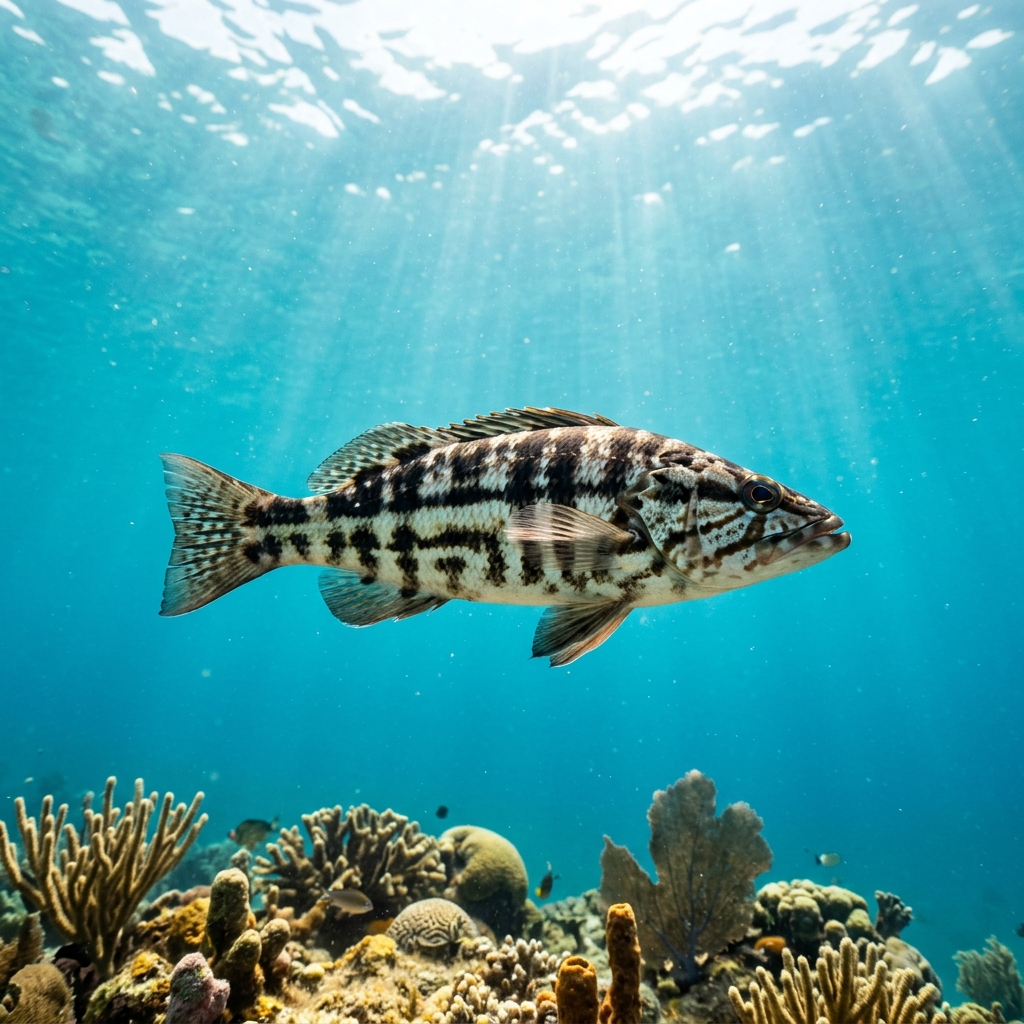
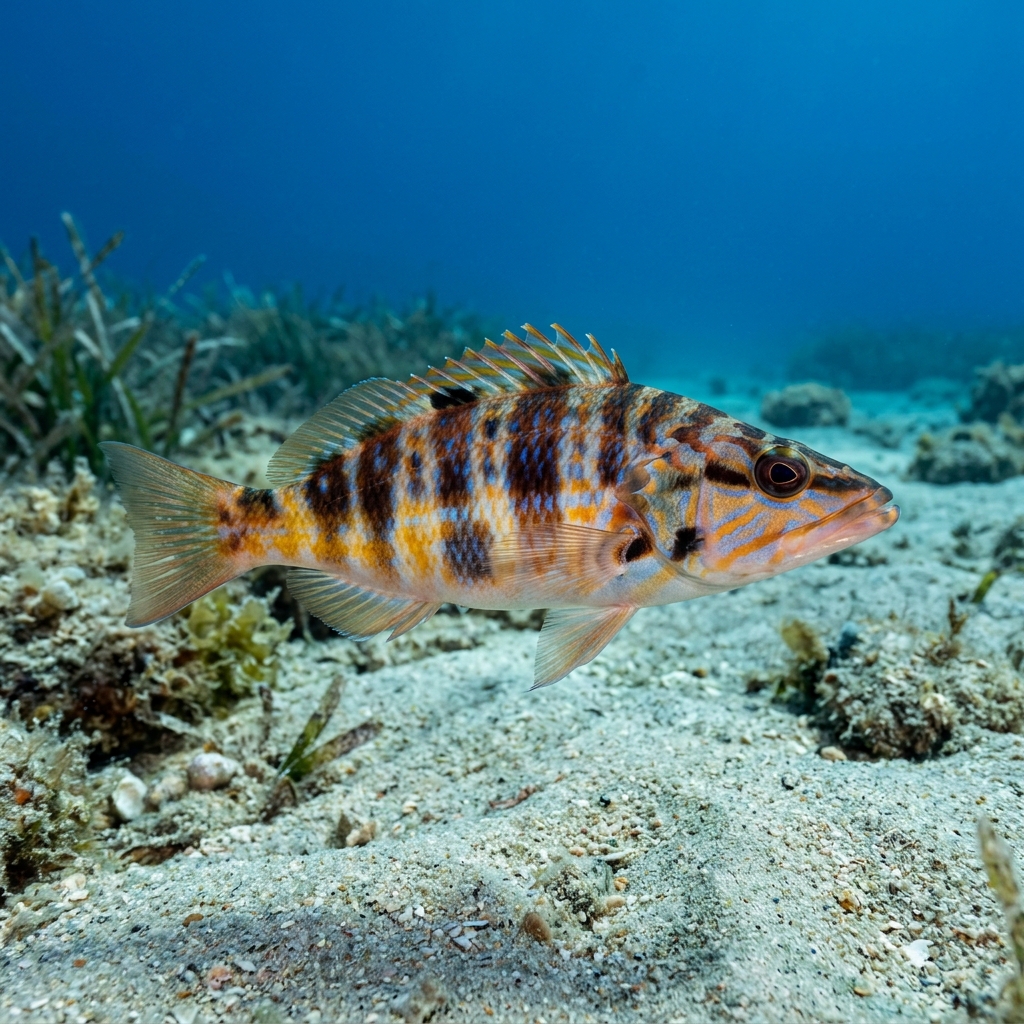
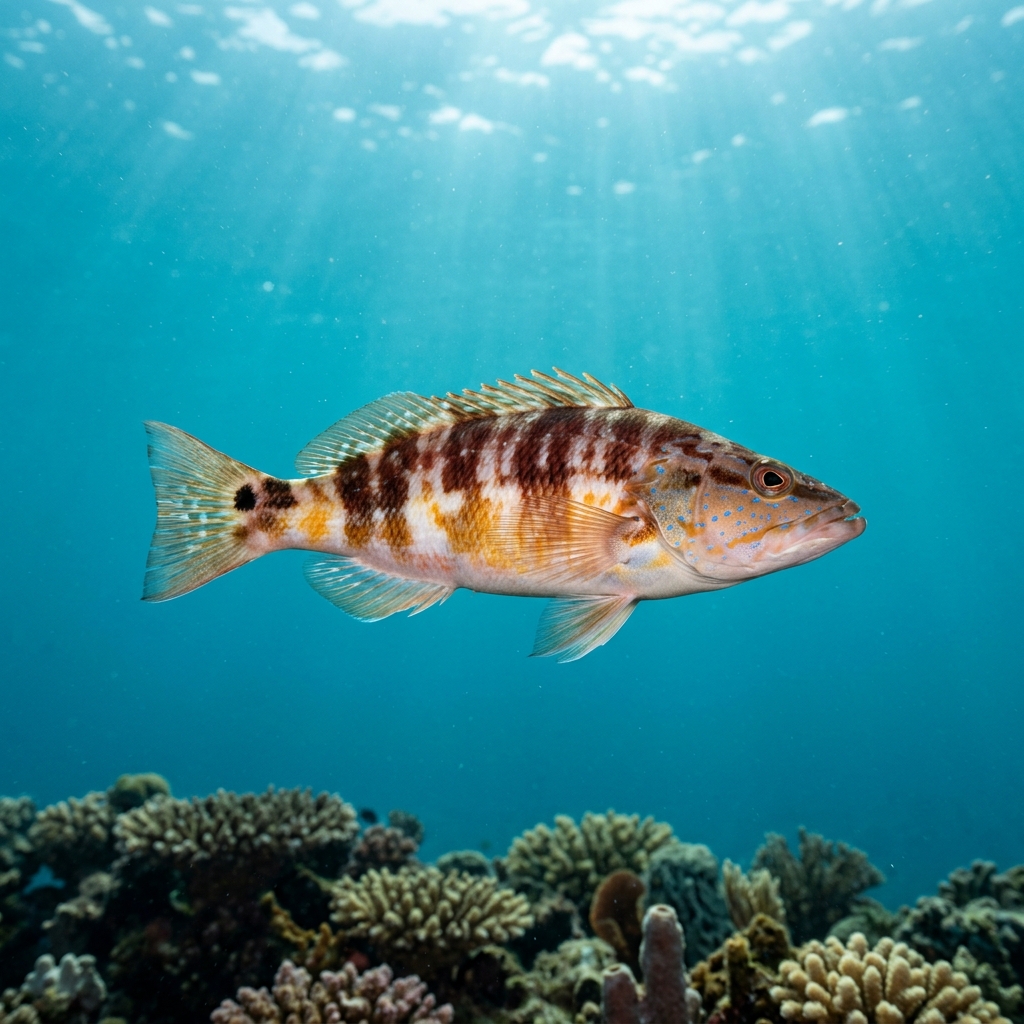
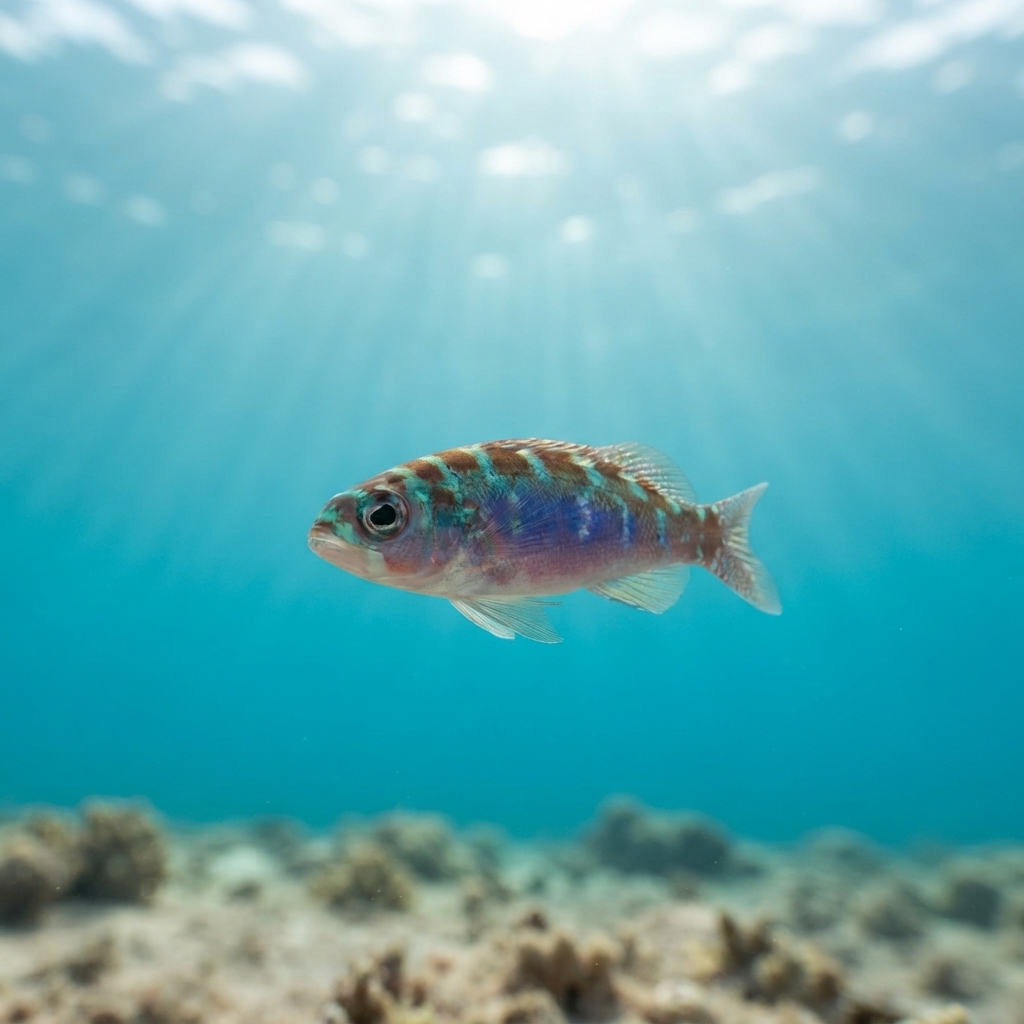
A tiny fish, rarely more than 6cm, with a body split between violet-blue on the upper half and lemon yellow below, the line between the two colours running straight along the flank. It hovers rather than swims flat against the reef, tail down, often just above rubble or coral heads rather than tucked inside them. Look for the pale blue streaks across the face and the fact it barely moves when you approach, unlike most small reef fish that dart for cover.
Chalk bass spend most of their time hovering in small loose groups a short distance above rubble patches and low reef structure, feeding on plankton drifting past rather than picking at the substrate. They're unhurried around divers, holding position or drifting off slowly rather than bolting for cover, which makes them an easy fish to sit and watch for a minute. Most sightings are logged as uncommon rather than abundant, so expect to find a handful together rather than a crowd.
Chalk bass are simultaneous hermaphrodites, meaning each individual carries both male and female reproductive tissue and pairs can swap roles between spawning bouts, a trait shared with several of their small Serranus relatives.
No clear season shows up in the sighting data, and with a comfort range of 23.3 to 28C, that tracks: Caribbean reef temperatures rarely drop outside that band, so chalk bass are a year-round sighting wherever they're found.
Chalk bass are a reliable find across the southern Caribbean, with strong logs from Sint Eustatius and Saba in the Dutch Caribbean, and consistent sightings on Mexico's Yucatán Peninsula. They also turn up regularly along Panama's Caribbean coast, around Saint John in the US Virgin Islands, in Honduras's Bay Islands, on Belize's Lighthouse Reef, and in the British Virgin Islands.
Mapping where Chalk Bass is logged…
Sint Eustatius and Saba in the Dutch Caribbean are the most consistent spots, alongside Mexico's Yucatán Peninsula and Panama's Caribbean coast. They're also regularly logged around Saint John in the US Virgin Islands, Honduras's Bay Islands, and Belize's Lighthouse Reef.
There's no strong seasonal pattern in the sightings, and their comfort range of 23.3 to 28C matches typical Caribbean reef temperatures year-round, so any month is generally fine.
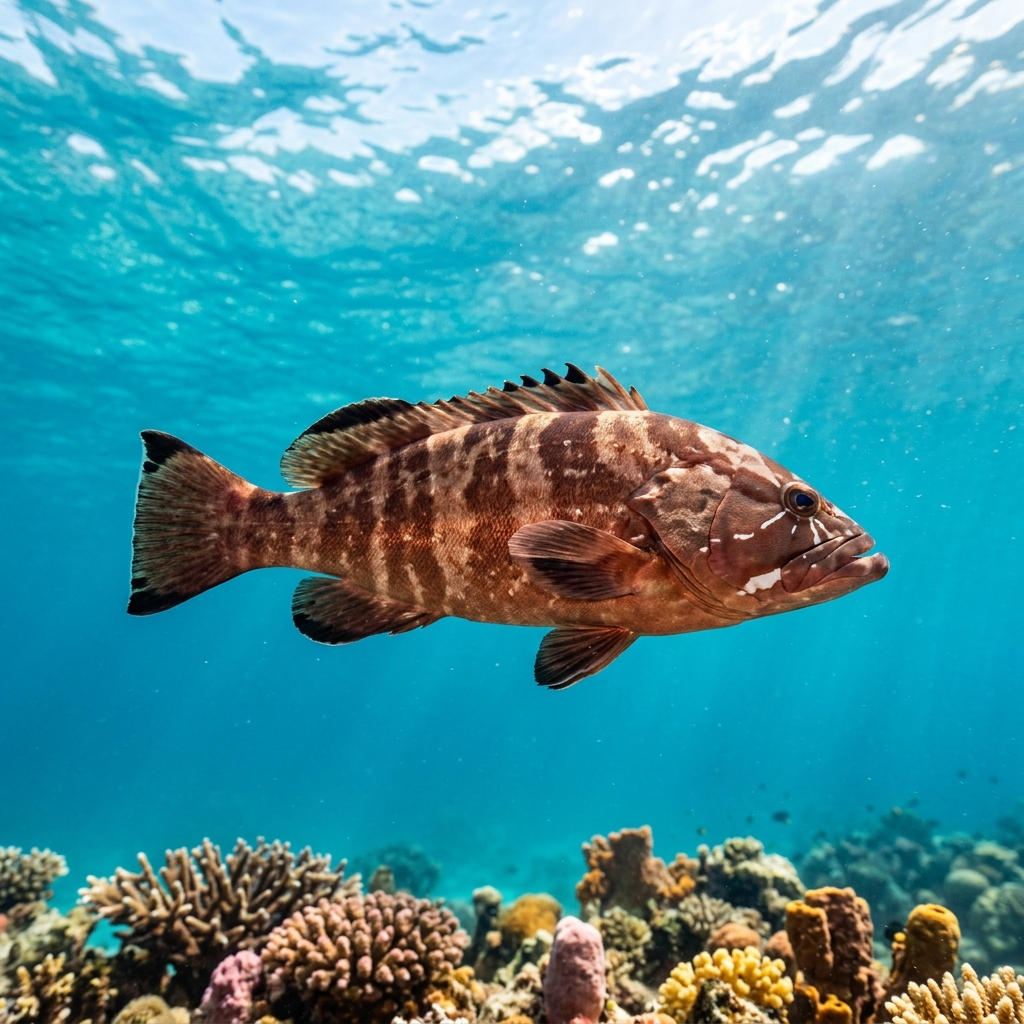
Chalk bass max out around 6cm, making them one of the smaller residents of the grouper family you'll spot on a Caribbean dive.
Look for a small fish with a sharp colour split, violet-blue on top and yellow underneath, hovering above rubble rather than hugging the reef. Pale blue streaks across the face and a relaxed, slow-moving posture help confirm it.
No, chalk bass pose no risk to divers. They're a small, docile plankton feeder that tends to hold its position rather than react defensively.
Chalk bass are simultaneous hermaphrodites, carrying both male and female reproductive tissue at once and able to switch sexual roles between spawning events with a partner.
Site and sighting data is aggregated from diver logs, iNaturalist and GBIF. For taxonomy and conservation status:
Blacktip Grouper
2,726 sites