Halichoeres leucurus
Common on reefs in Koror & Malakal, Palau and Palawan, Philippines in warm 27-29C water, year-round and easy to spot.
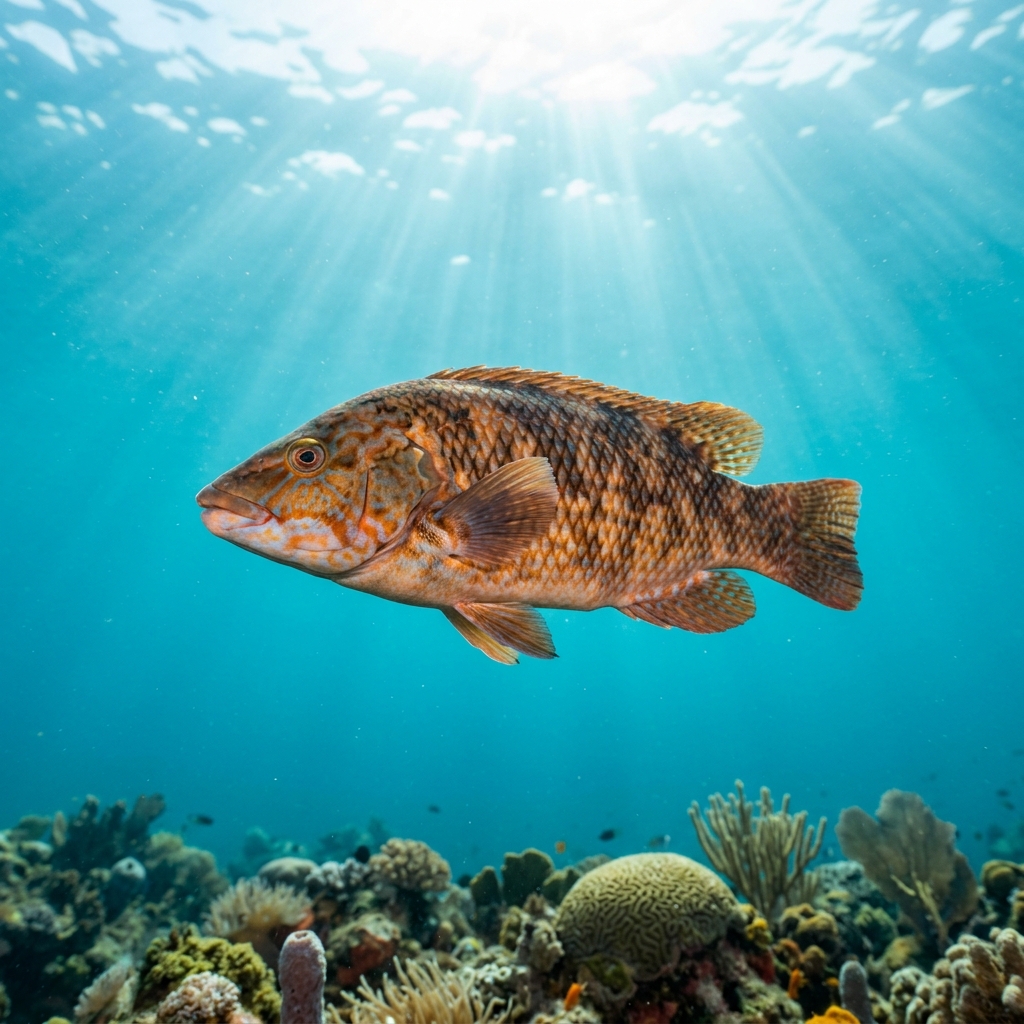
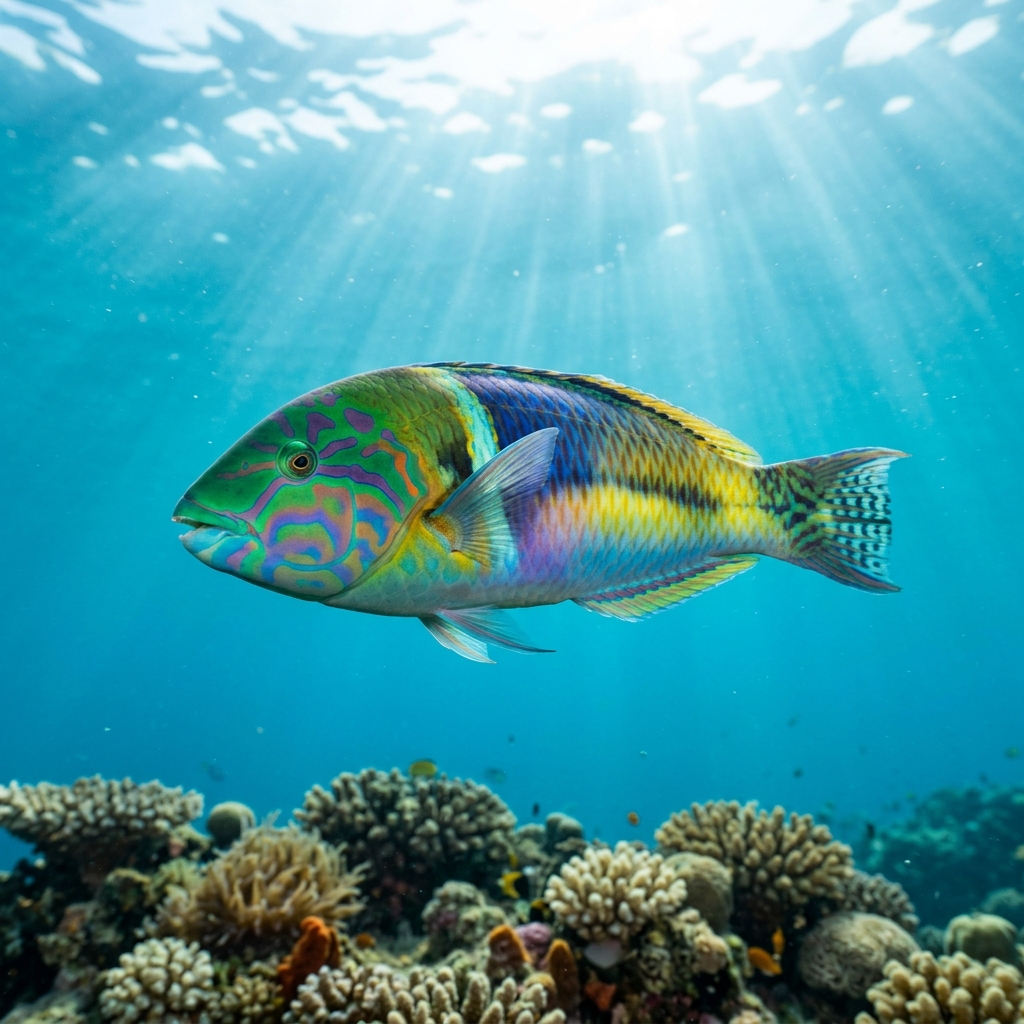
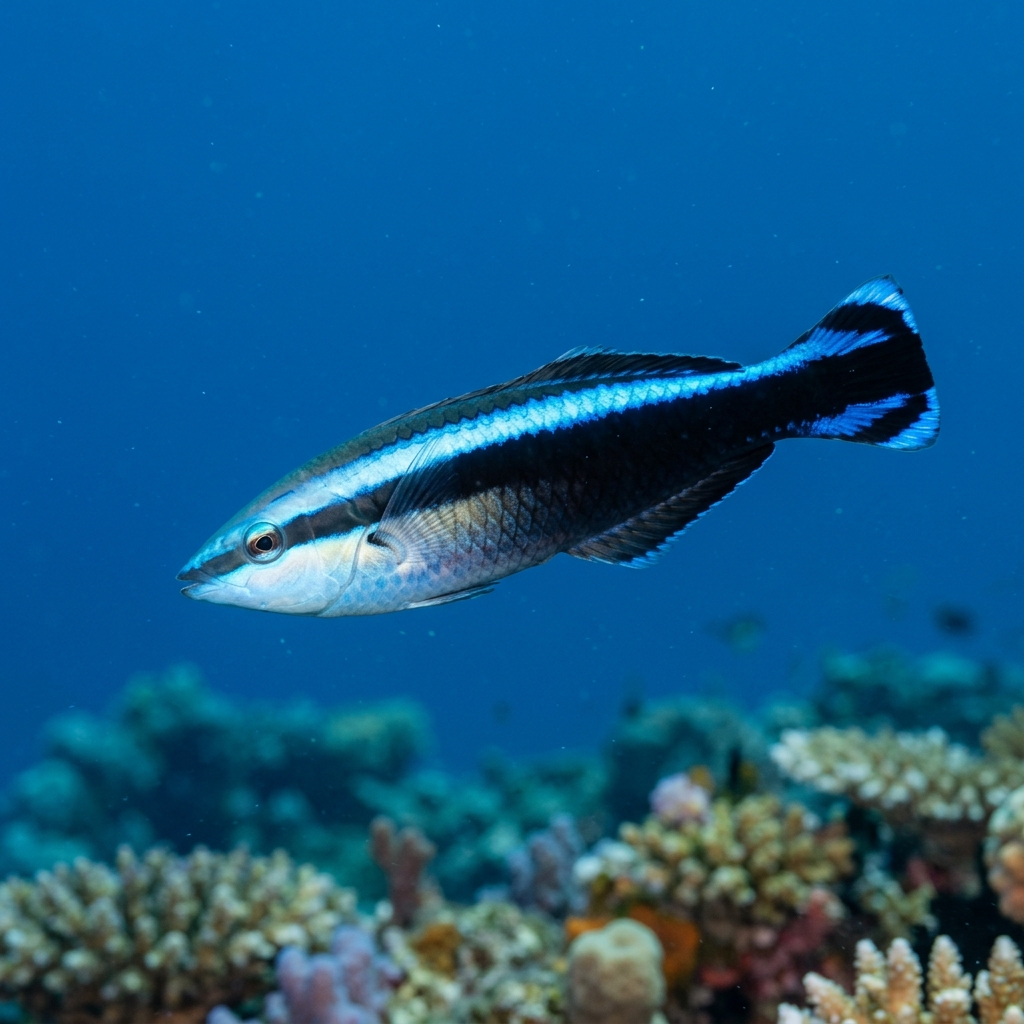
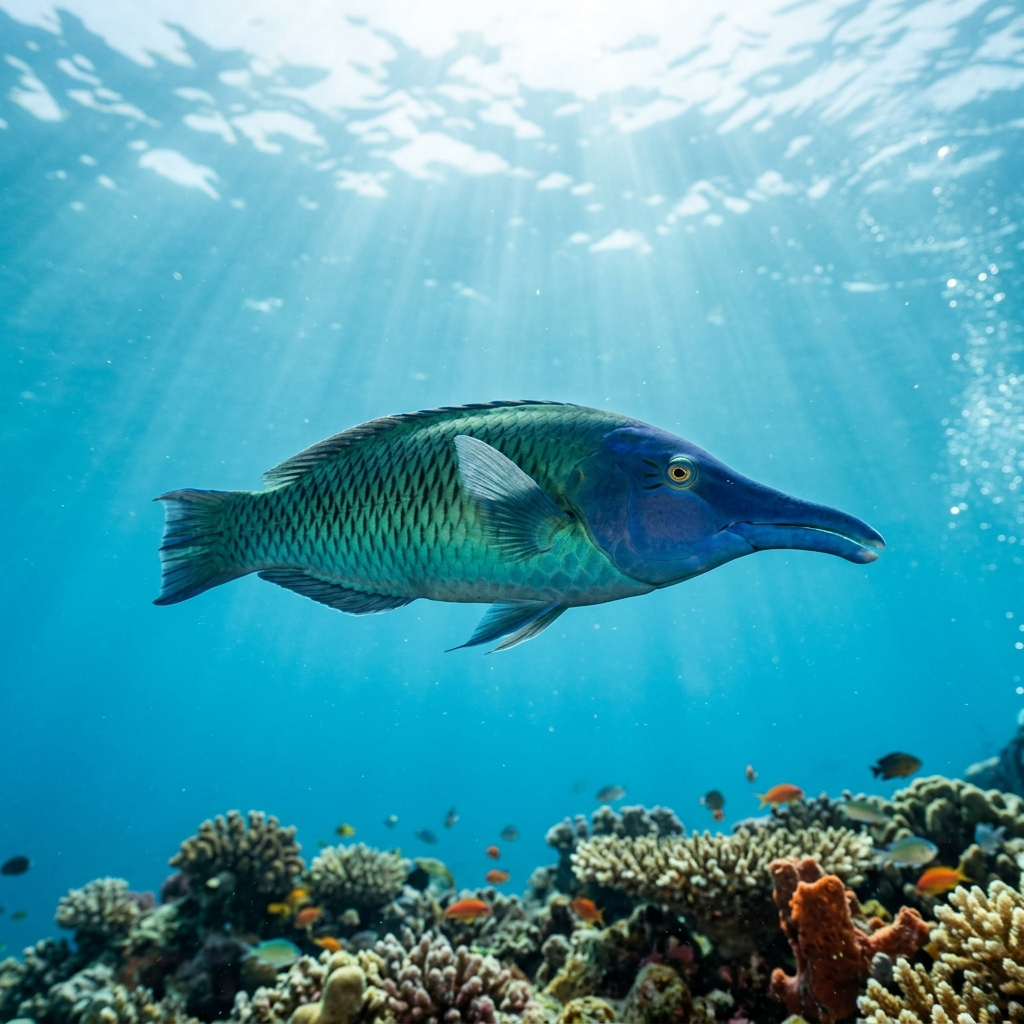
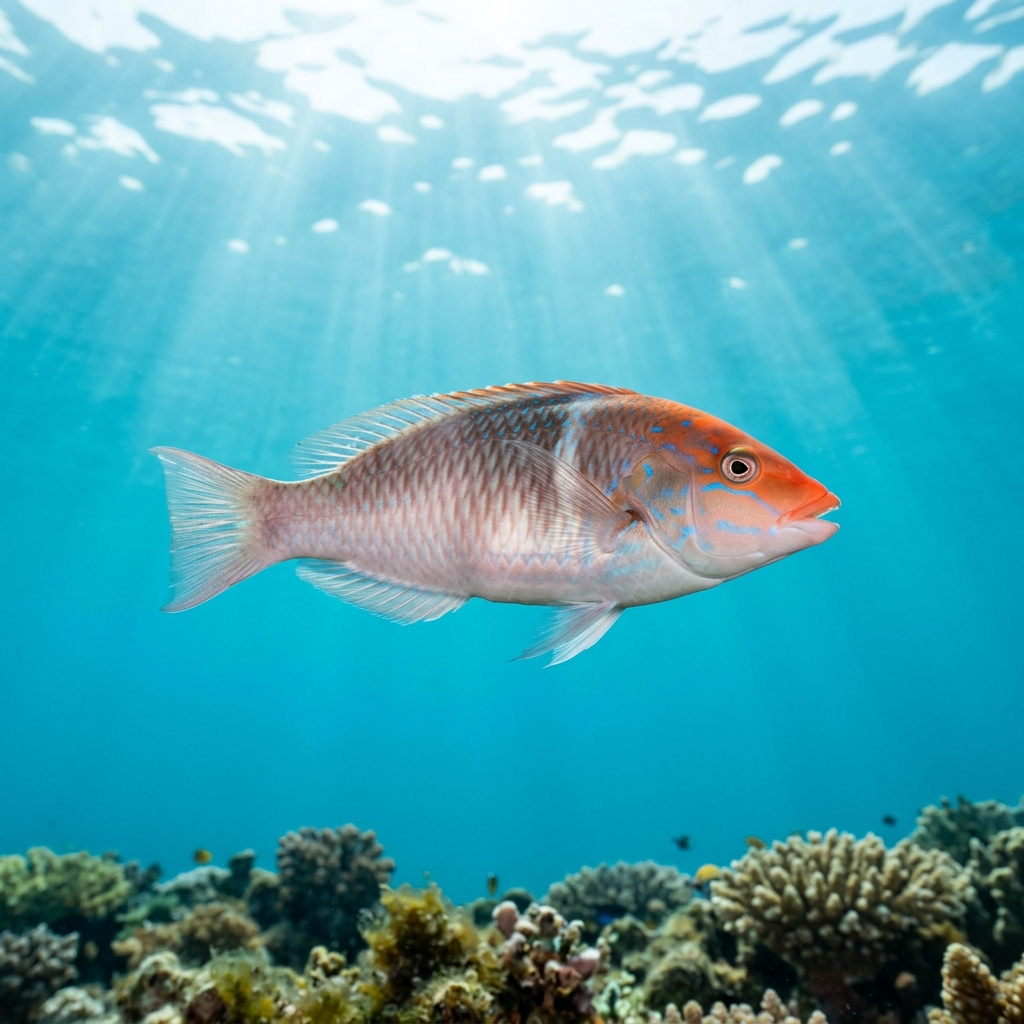
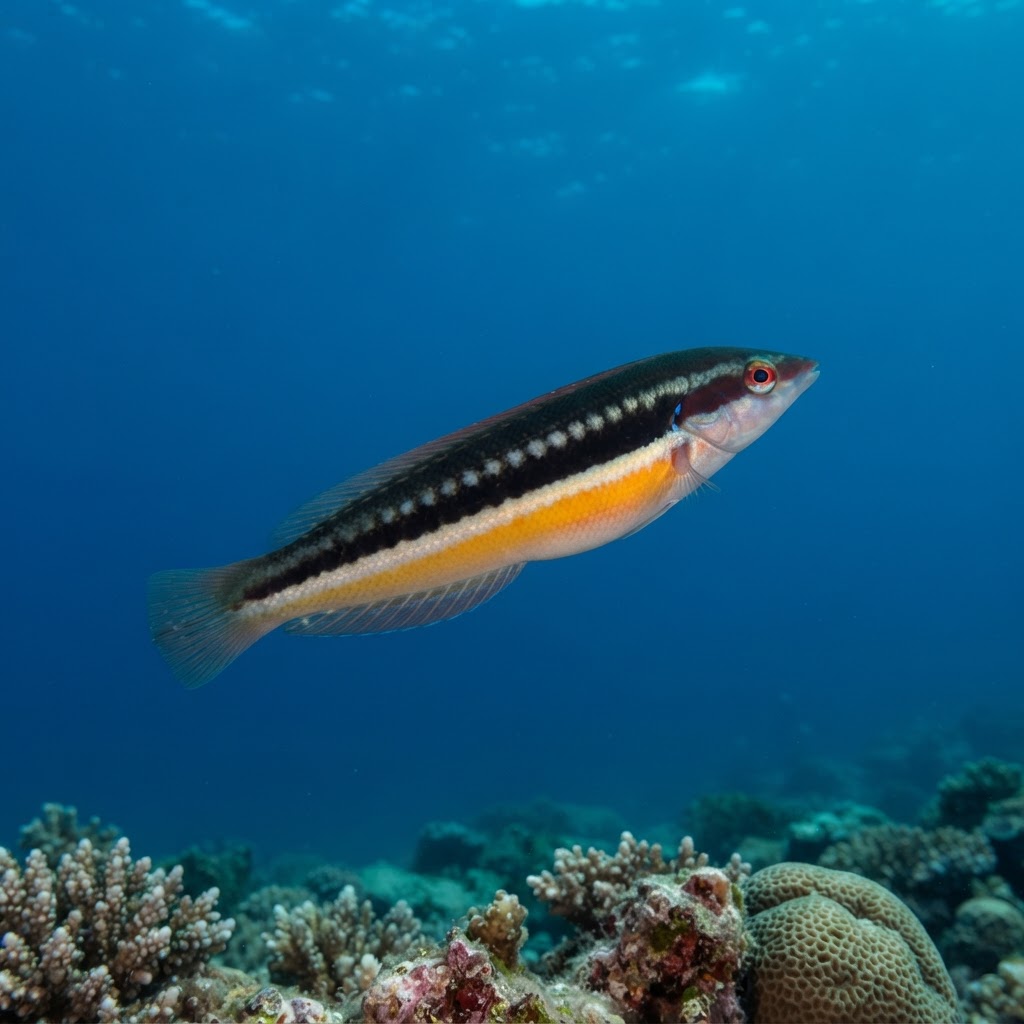
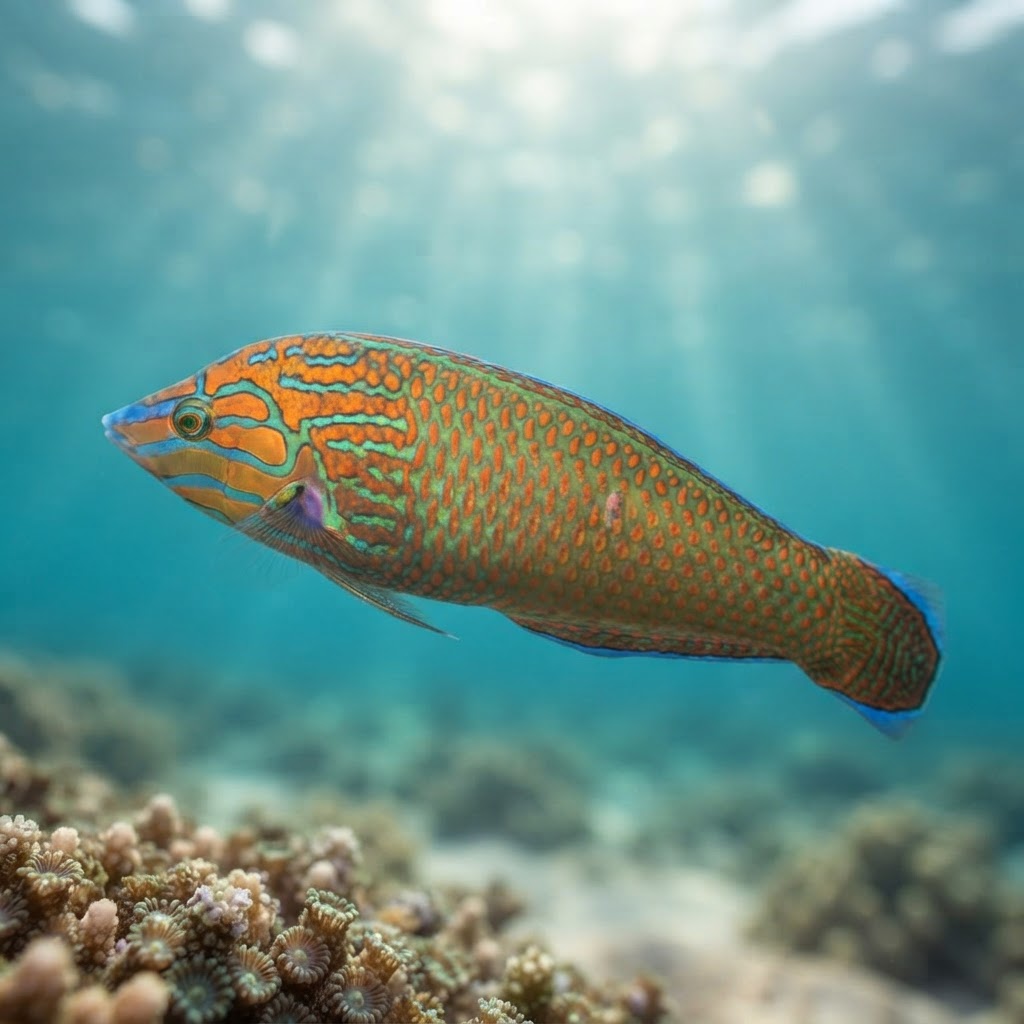
A slender, torpedo-shaped little wrasse that tops out around 9 cm, so it reads as a quick blur of colour low over the reef rather than a fish you fixate on from distance. Look for a pale body marked with a dark, chain-like lateral line pattern running down the flanks, which is the feature that gives it its name. It swims in short, darting bursts close to the substrate rather than cruising in open water.
Divers most often catch it picking around rubble patches, sand edges and low reef structure, hunting small invertebrates rather than holding station in the open. It is not shy exactly, but it rarely pauses for a photo, weaving in and out of cover as you pass. Expect to see it solo or loosely scattered rather than in tight schools.
Like many wrasses in the Halichoeres genus, this species is a protogynous hermaphrodite, meaning individuals typically start life as females and some later change into males as they grow.
No clear seasonal pattern shows up in the sightings, and with a comfortable range of 27.4 to 29.3C it stays active on these reefs all year, so any month works for a dive trip.
Your best odds are in Palau, especially around Koror & Malakal and the Rock Islands, where it turns up as a common reef fish rather than a rare find. It is also a reliable sighting across Palawan in the Philippines, with smaller but real populations logged in Sabah, Malaysia and around Tufi, Papua New Guinea.
Mapping where Chain-lined Wrasse is logged…
Palau is the strongest spot, particularly Koror & Malakal and the Rock Islands, with Palawan in the Philippines close behind. Smaller numbers are also logged in Sabah, Malaysia and Tufi, Papua New Guinea.
There is no strong seasonal pattern in the sightings, and warm water in the 27 to 29C range keeps it present on the reef year-round, so you can plan a trip for any month.
Look for a small, slim wrasse around 9 cm long with a pale body and a dark, chain-link pattern running along its sides. It moves in quick darts close to sand, rubble and low reef rather than swimming in open water.
They stay small, typically reaching around 9 cm in length, so they are easy to overlook against bigger reef fish.
No. They pose no threat to divers and simply go about foraging on the reef while you swim past.
Yes, like many wrasses in the Halichoeres genus they are protogynous hermaphrodites, starting out as females with some individuals later transitioning to male as they mature.
Site and sighting data is aggregated from diver logs, iNaturalist and GBIF. For taxonomy and conservation status:
Bird Wrasses
3,632 sites