Chaetodon xanthocephalus
Spot the Yellowhead Butterflyfish across the Maldives, Seychelles, and Mauritius. Year-round sightings in warm Indian Ocean waters between 24 and 29 °C.
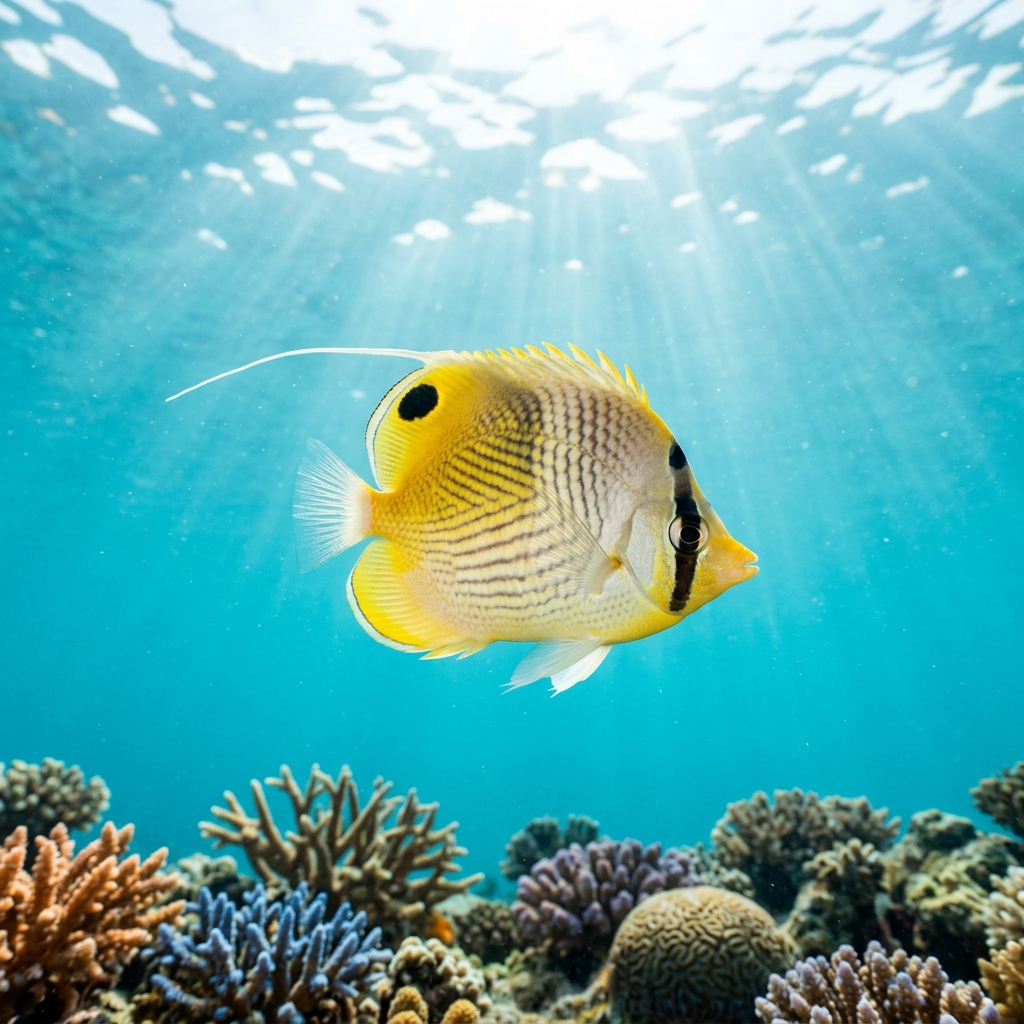
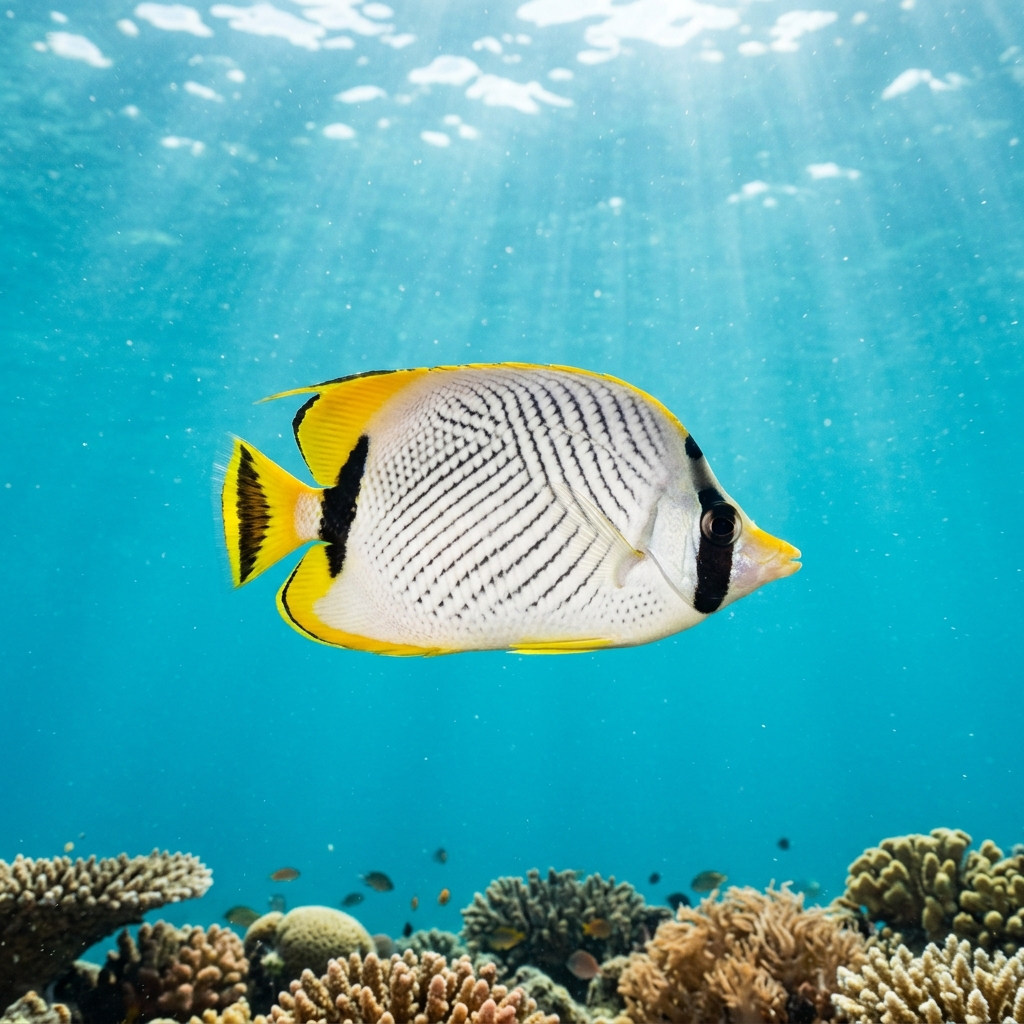
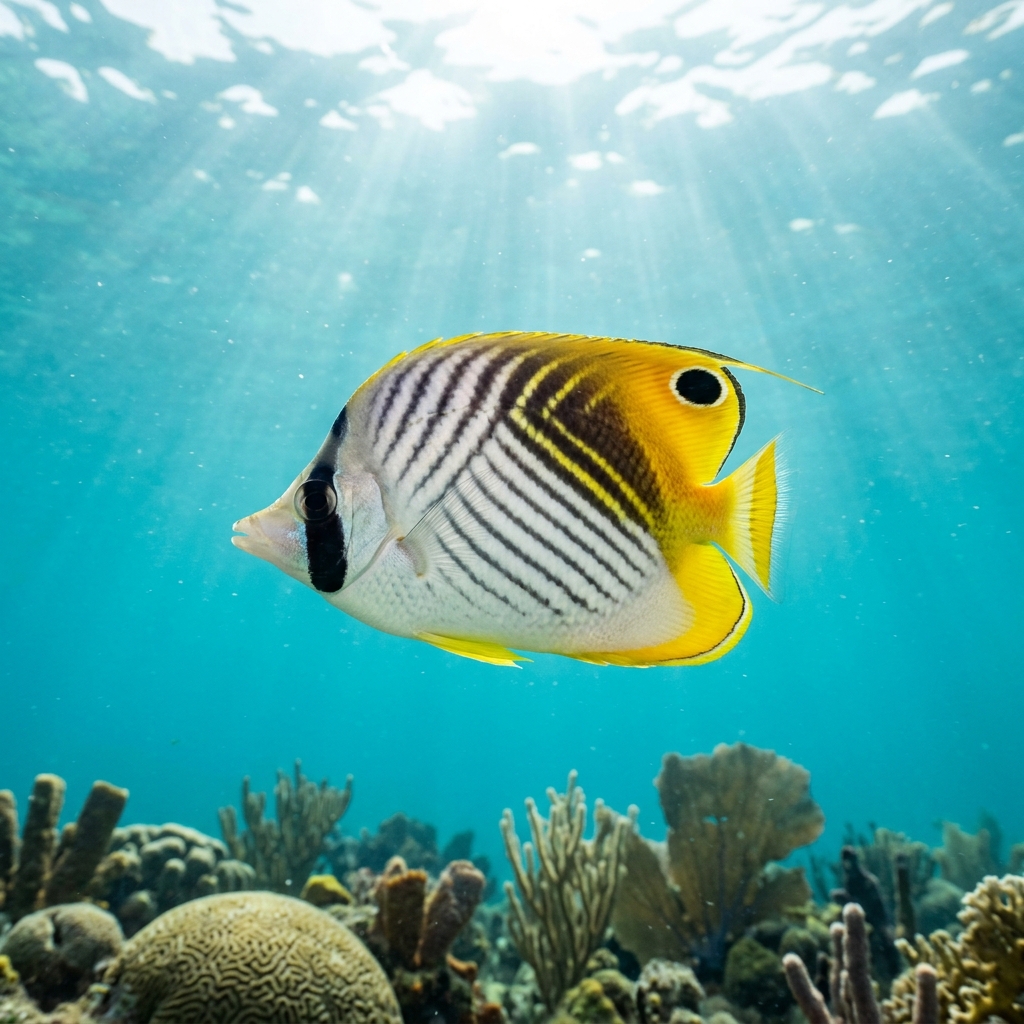
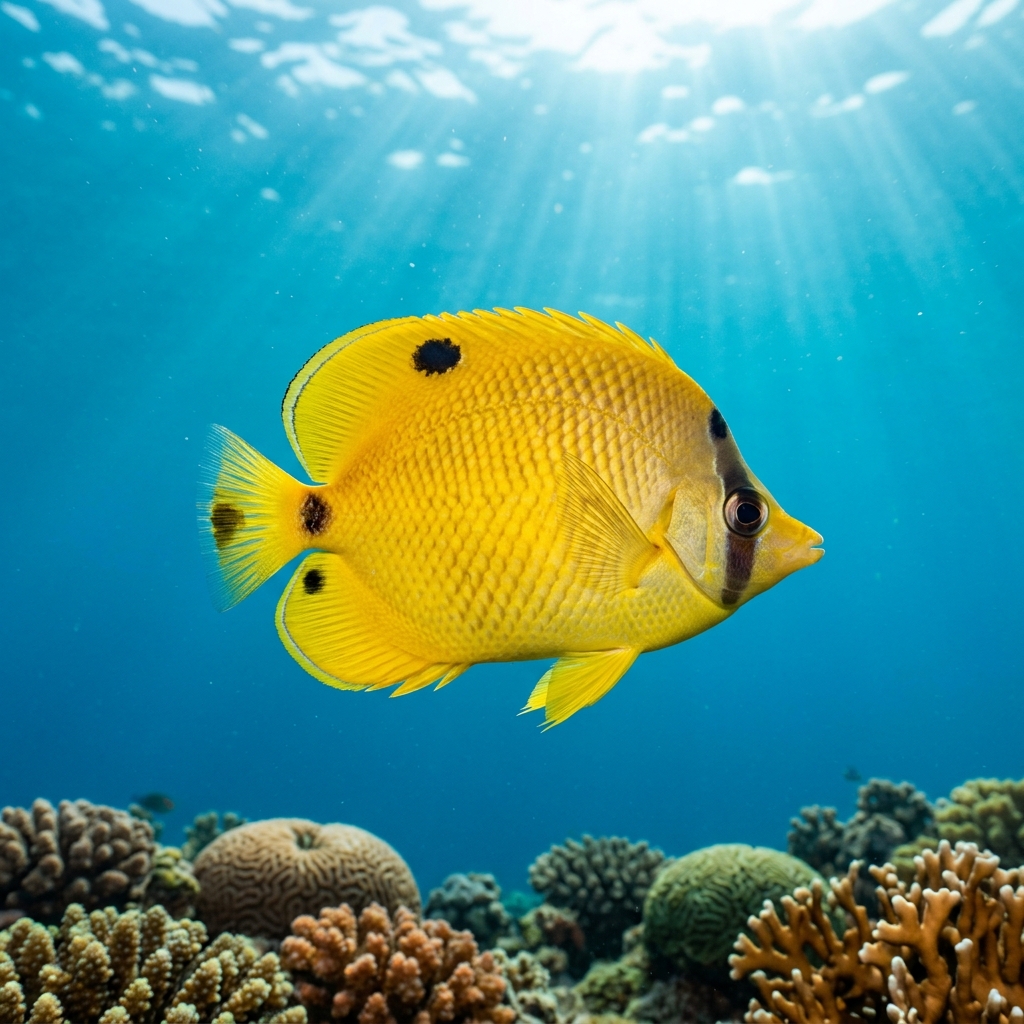
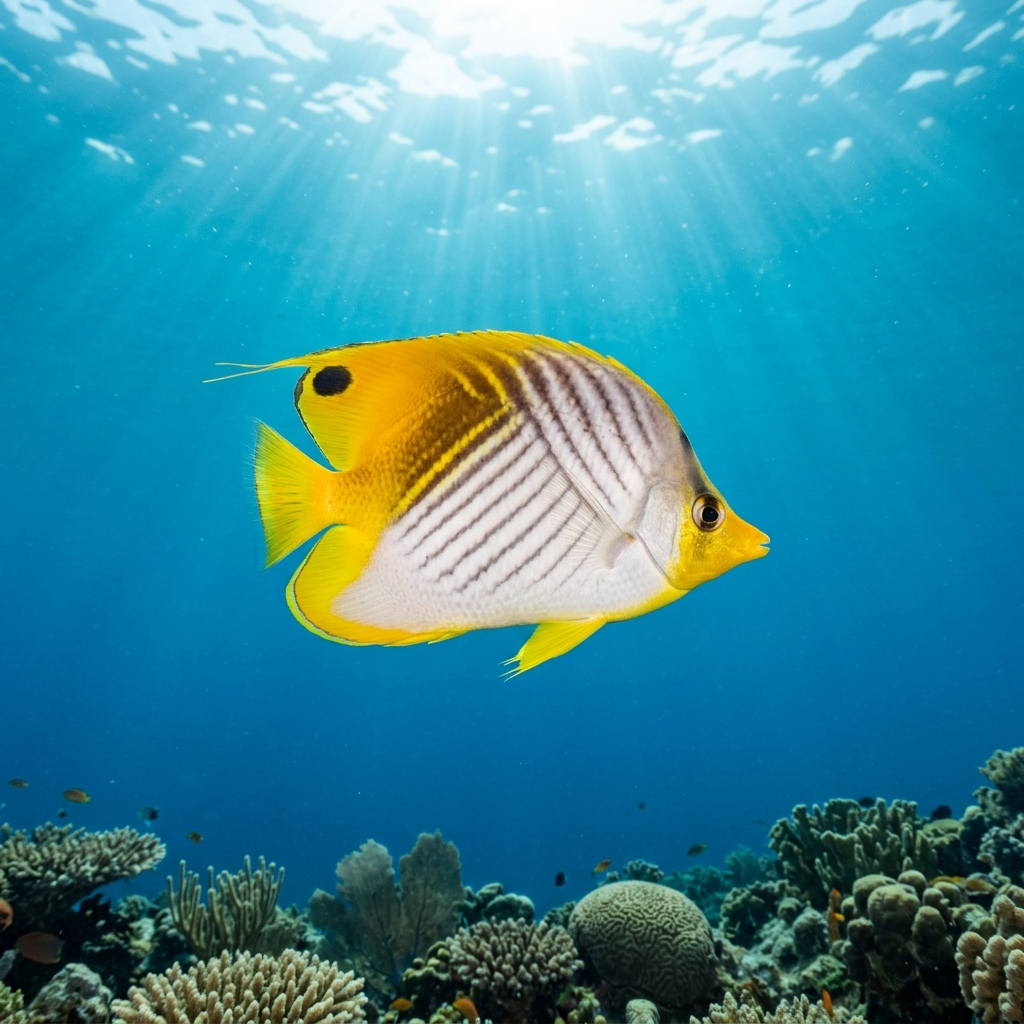
A medium-sized butterflyfish immediately recognisable by its vivid yellow head and nape, which contrasts sharply with a white to pale-grey body covered in fine diagonal dark chevron lines (chevrons are angled scale-edge markings that run across the flanks). A dark bar runs through the eye and a dusky posterior band frames the tail end. The disc-shaped, laterally compressed body is typical of the family, making it easy to spot hovering close to coral structure.
You will most often find it picking over live coral heads and rocky outcrops, probing for small invertebrates and coral polyps with its pointed snout. It typically moves in pairs or small groups, staying close to the reef rather than venturing into open water. It is generally unhurried around divers and will continue feeding if approached slowly, though it will retreat into coral gaps if pressured.
Like many butterflyfish, the yellowhead is thought to form long-term pair bonds, which is why sightings so often involve two fish moving in tight formation across the reef.
No clear seasonal peak has emerged from the sighting data, so this is treated as a year-round resident. It sits comfortably in the 24 to 29 °C band that characterises tropical Indian Ocean reefs throughout all months.
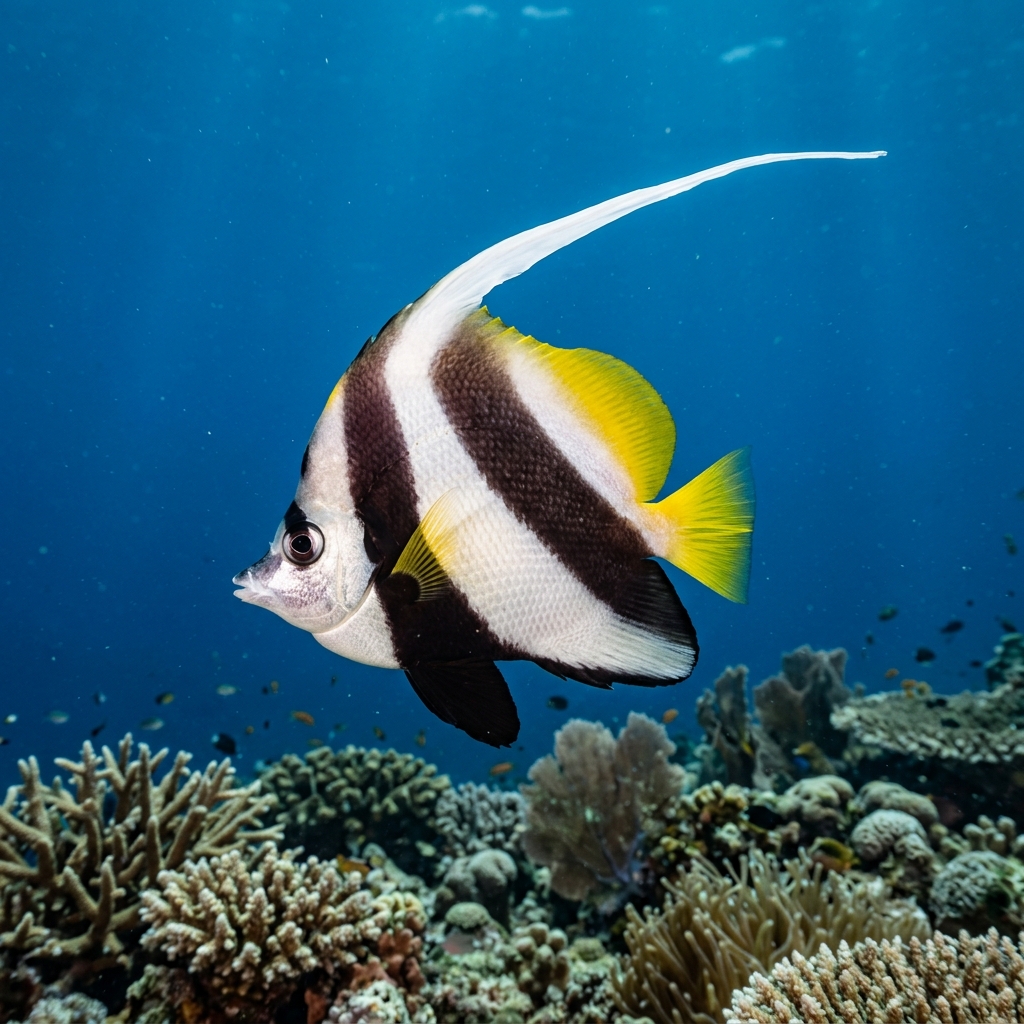
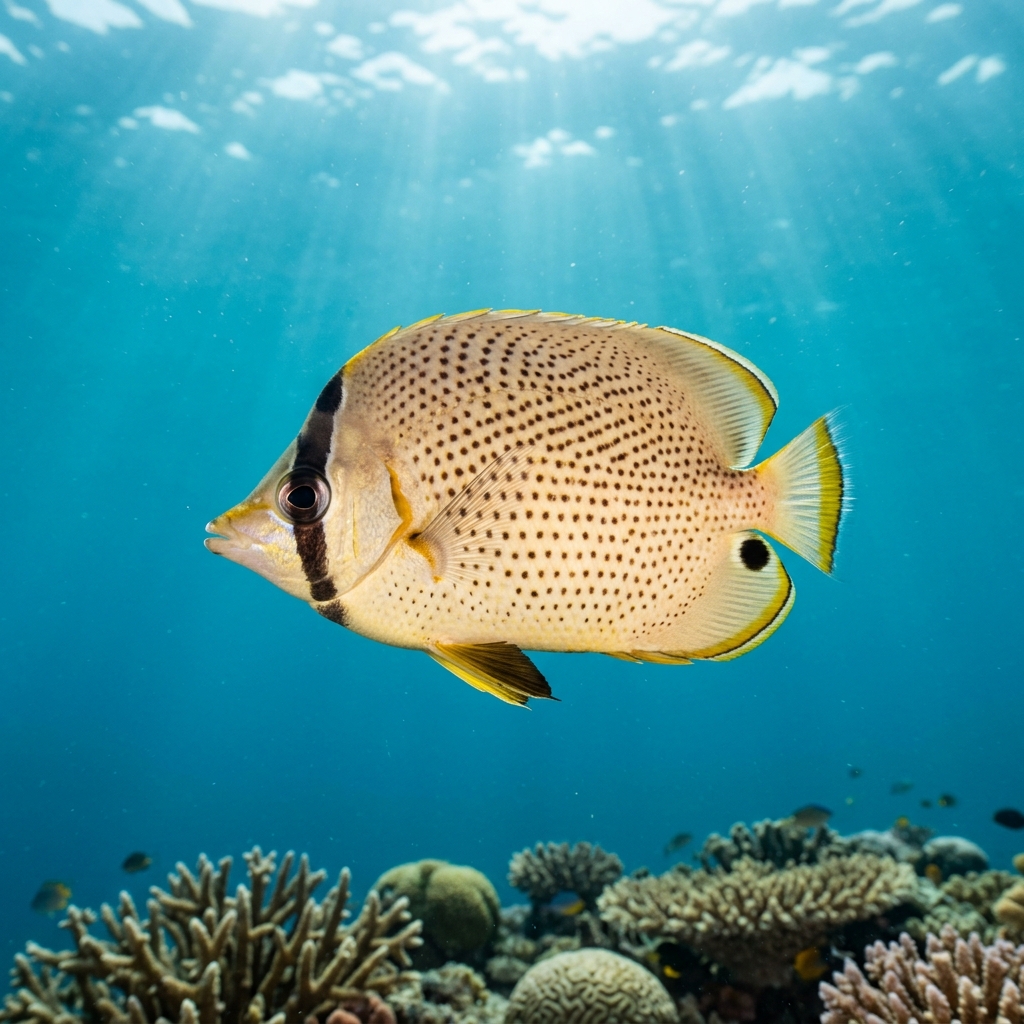
Reef neighbours a diver could mistake it for. Use the identification notes above to tell them apart.
By a wide margin, the Maldives is where divers log this species most often, particularly across the Male and Ari Atolls region. The Seychelles, especially around Praslin and La Digue, and the reefs of northern Mauritius are the next most reliable destinations. Smaller but consistent records also come from Zanzibar, Réunion, the Lakshadweep Islands, and Kenya.
Mapping where Yellowhead Butterflyfish is logged…
The Maldives, particularly the Male and Ari Atolls, is by far the strongest destination. Good numbers are also recorded around Praslin and La Digue in the Seychelles and along the northern reefs of Mauritius. Zanzibar, Réunion, the Lakshadweep Islands, and Kenya round out the known range.
Sighting data shows no concentrated season, so they can be encountered year-round on Indian Ocean reefs. The species is comfortable across the 24 to 29 °C temperature range that these reefs maintain throughout the year.
Look for the unmistakable bright yellow head and nape combined with a white body crossed by fine diagonal dark chevron lines. The dark eye bar and a dusky band near the tail help clinch the ID. No other common Indian Ocean butterflyfish pairs this bold yellow head with a chevron-patterned white body.
They are present across a large spread of Indian Ocean sites but are logged as uncommon at most of them. You have a reasonable chance of a sighting on a Maldivian reef dive, but multiple dives may be needed before one appears. Patience and slow movement along coral edges improve your odds.
No. They pose no threat to divers and will simply move away if approached too closely. Standard reef etiquette applies: move slowly and avoid touching the coral they feed on.
Site and sighting data is aggregated from diver logs, iNaturalist and GBIF. For taxonomy and conservation status: