Chaetodon melannotus
Spot the Blackback Butterflyfish across Bali, the Red Sea and the Philippines. Water temps 24-29 °C. Here's when and where divers see it most.
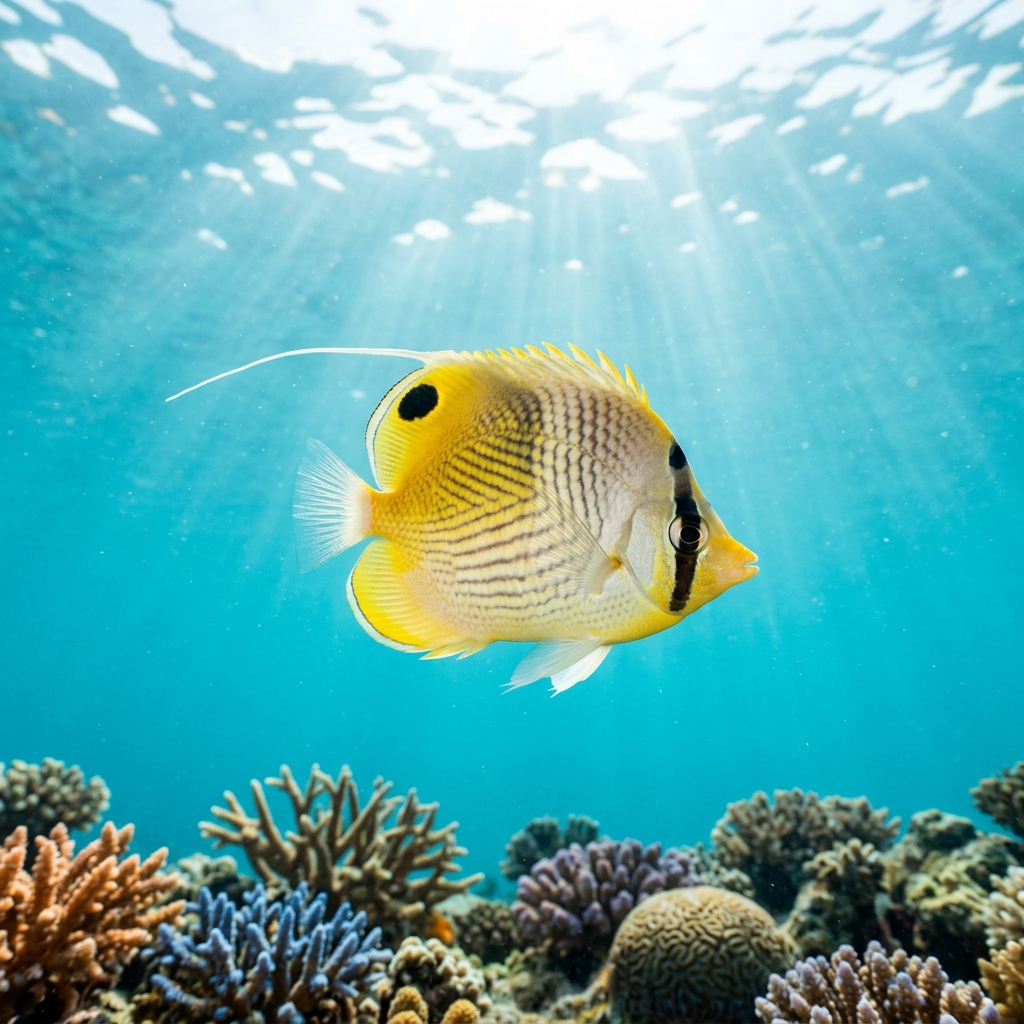
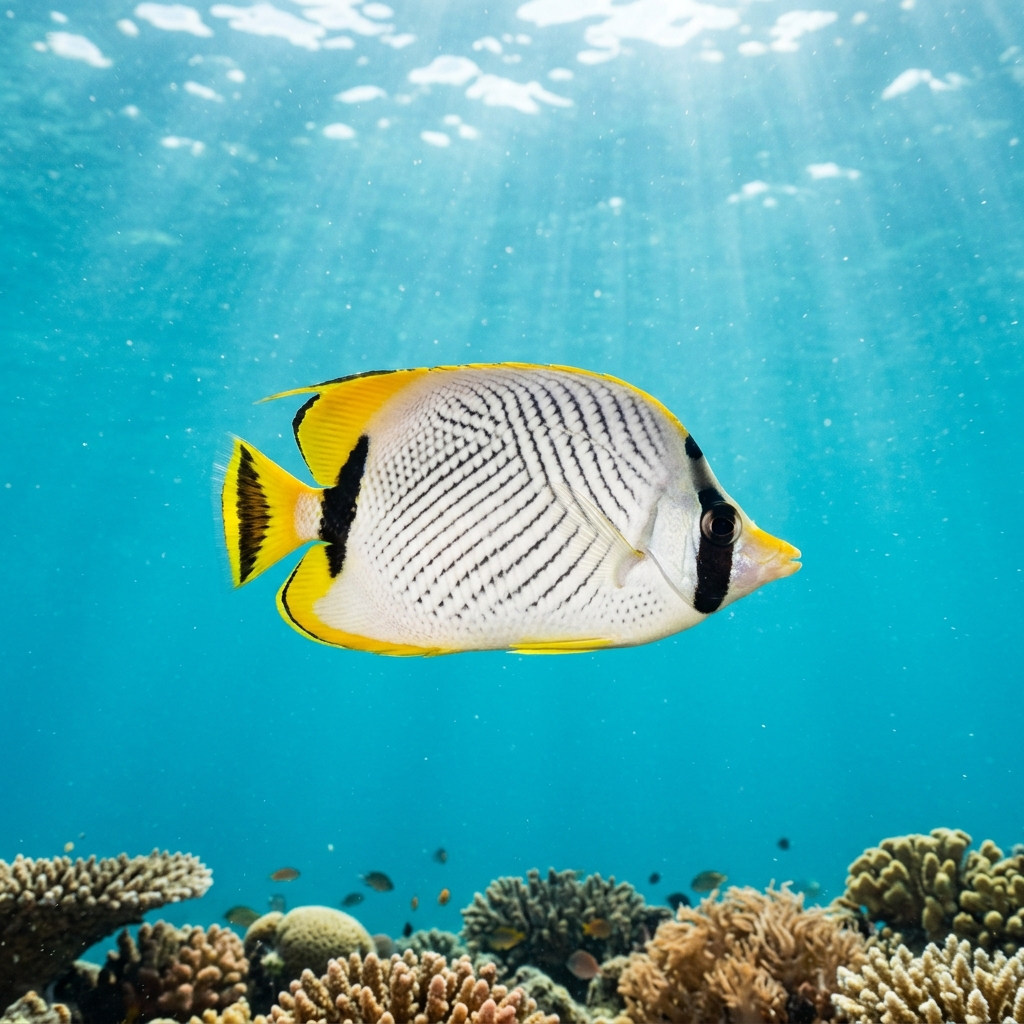
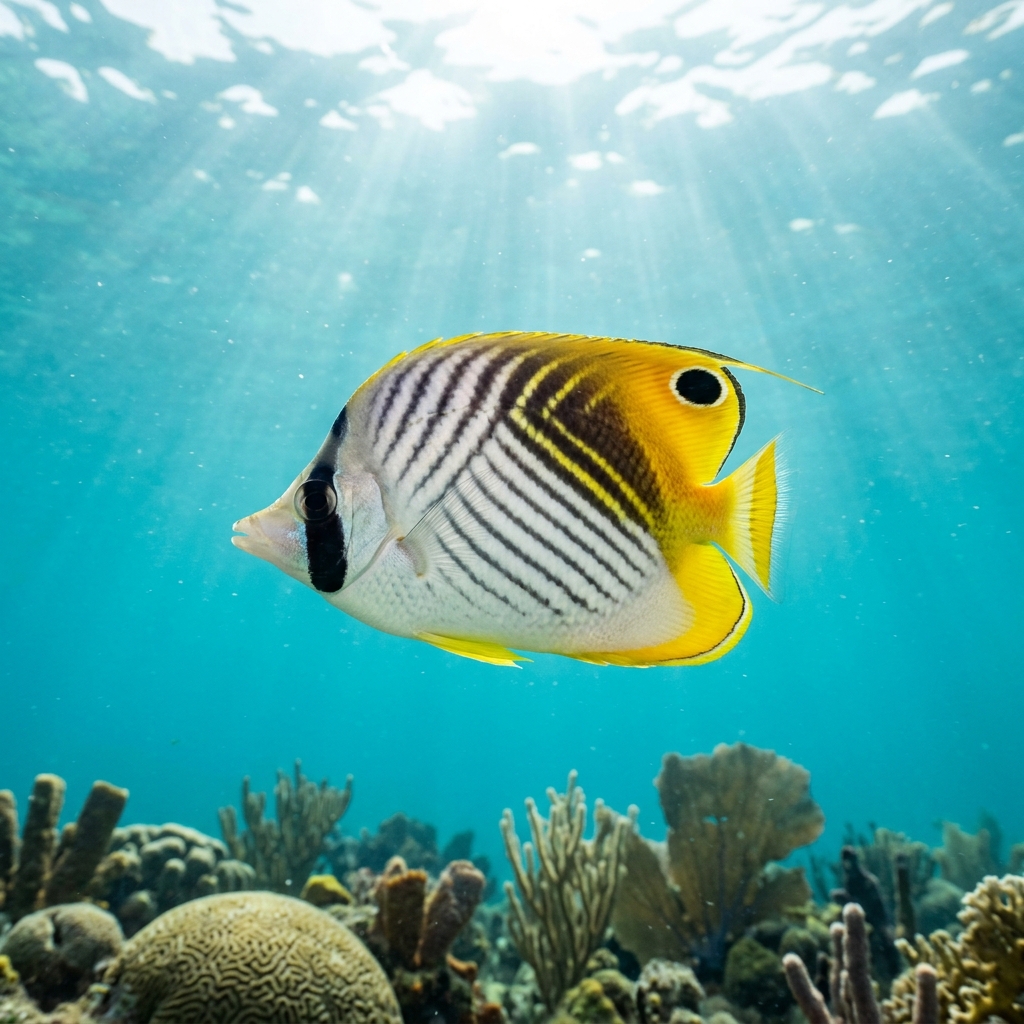
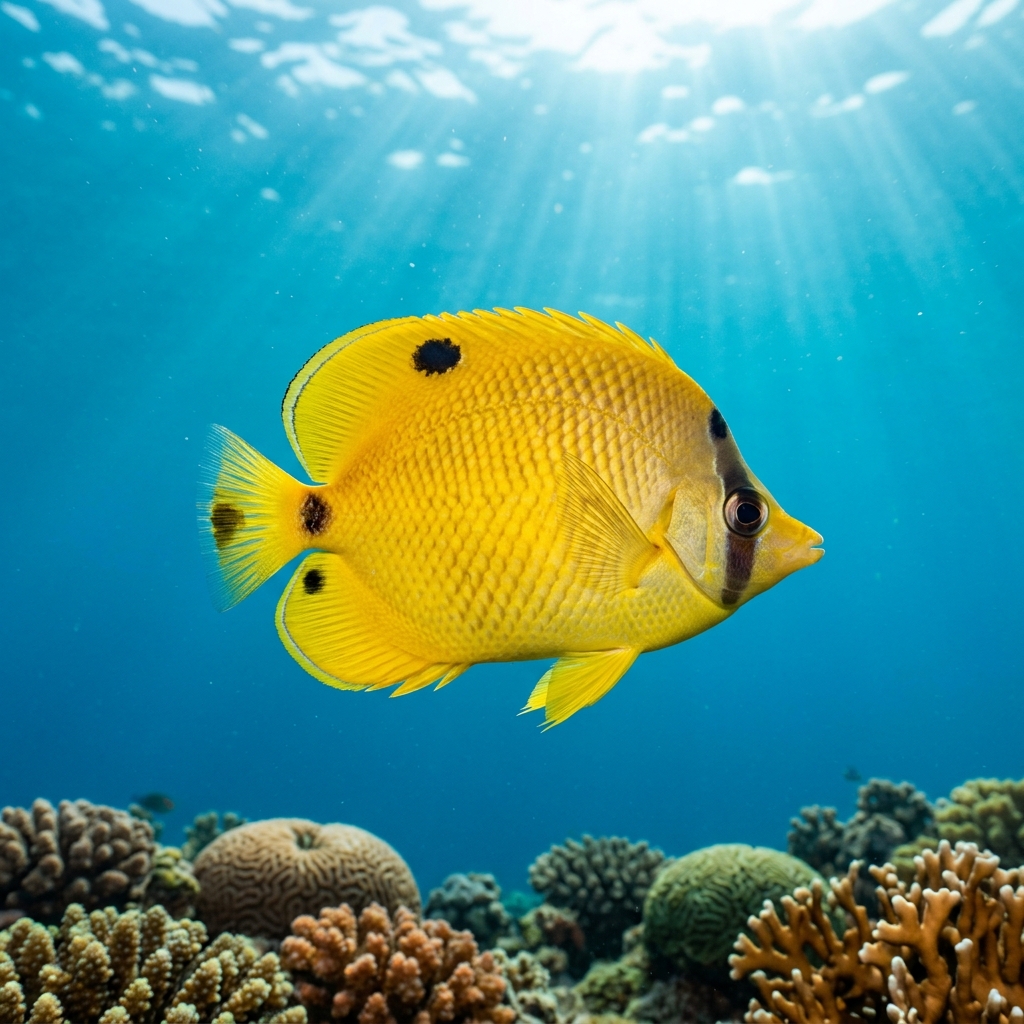
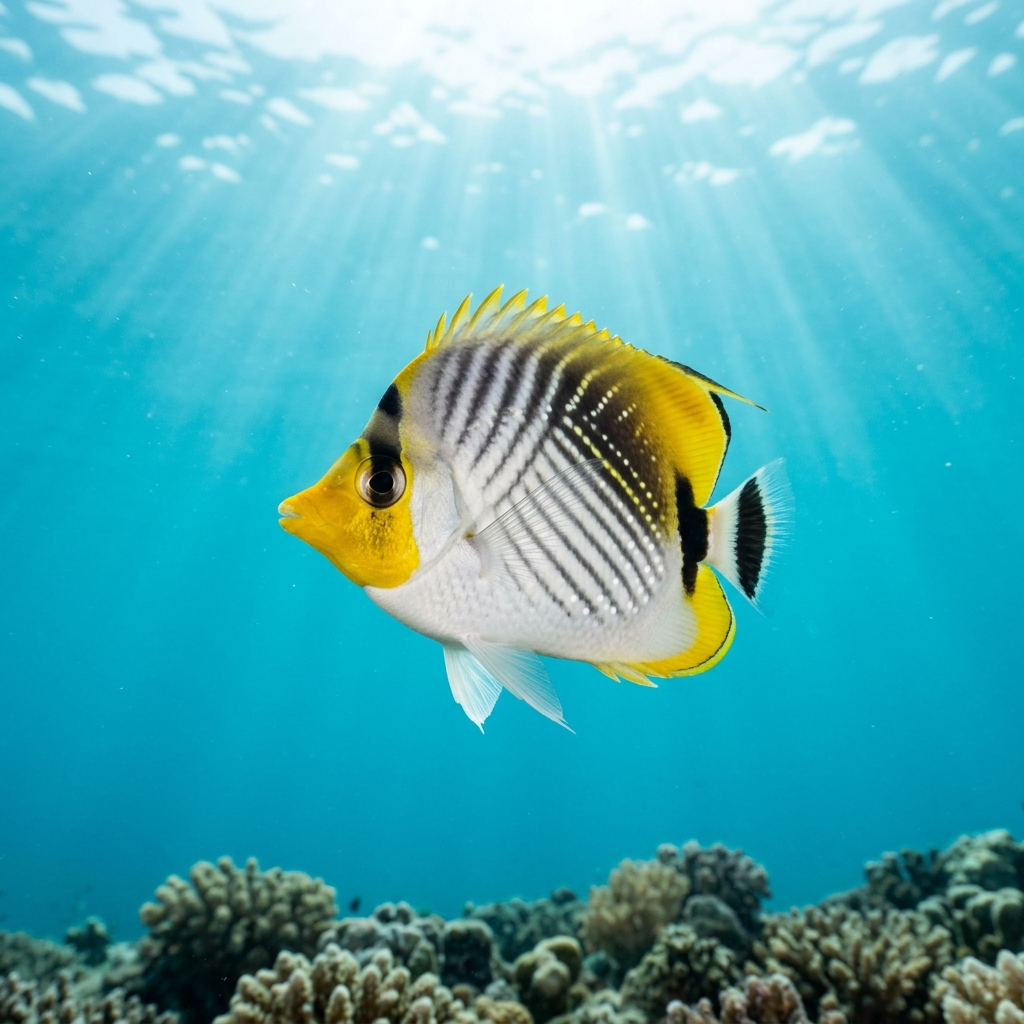
White-bodied and disc-shaped like most butterflyfish, this species is immediately picked out by the broad black saddle that blankets the upper back and dorsal fin, the marking that gives it its name. The lower body transitions to pale yellow and the tail is yellow, while thin diagonal lines cross the white flanks. A black eye stripe runs through the face, a classic butterflyfish feature. It is a small, flattened fish that holds close to the reef rather than venturing into open water.
Typically seen in pairs moving methodically along coral-rich sections of the reef, picking at coral polyps and small invertebrates with that pointed snout. It tends to stay close to the structure rather than rising into the water column, which means you need to look carefully along the reef face rather than in open water. Pairs are generally unhurried and tolerant of quiet divers, though they will ease away if approached too quickly.
Pairs of blackback butterflyfish are notably loyal to a home range on the reef, so if you spot a pair on a dive site, local dive guides often know exactly where to find them again on the next dive.
In Northern Hemisphere destinations such as the Red Sea and the Philippines, sightings concentrate from June through December. In Southern Hemisphere sites like Queensland, Australia, the peak runs from July through February, broadly overlapping with the warmer months when reef temperatures sit in the 24-29 °C range this species favours.
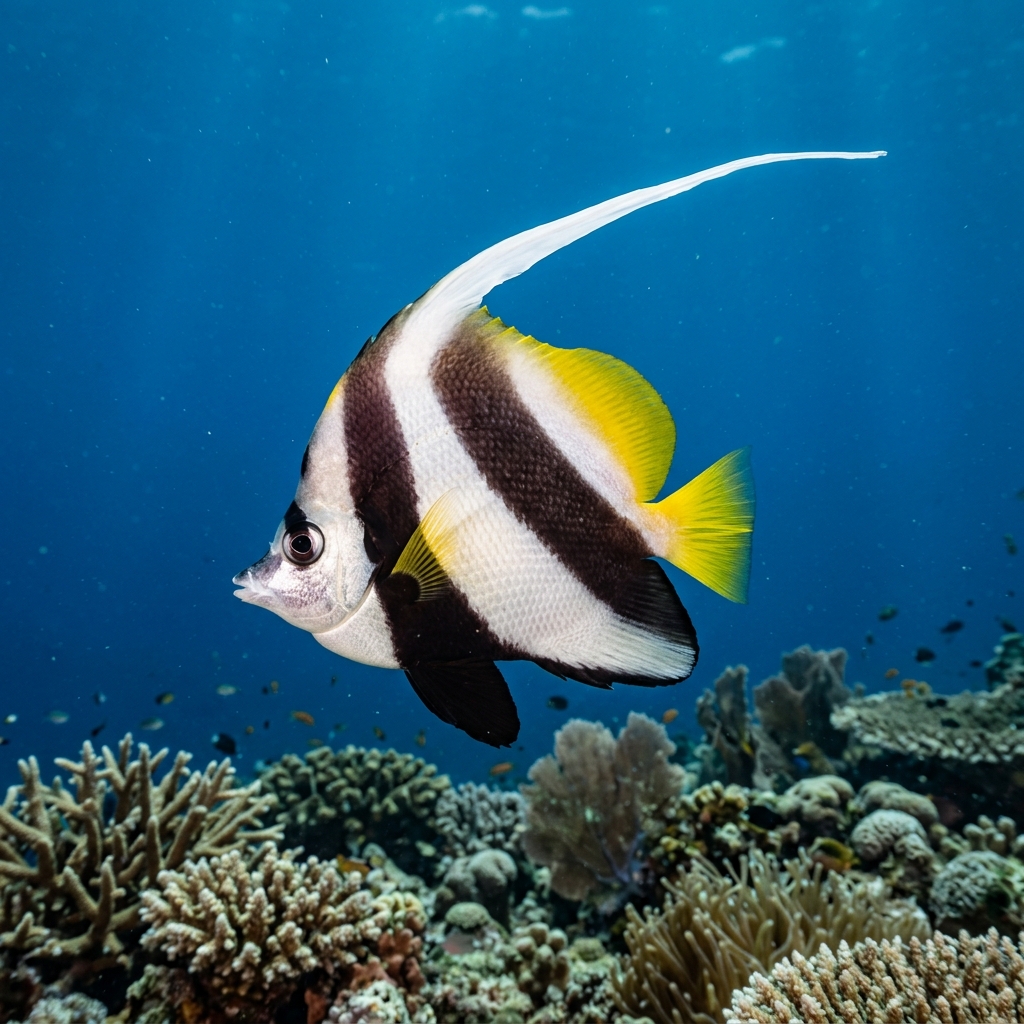
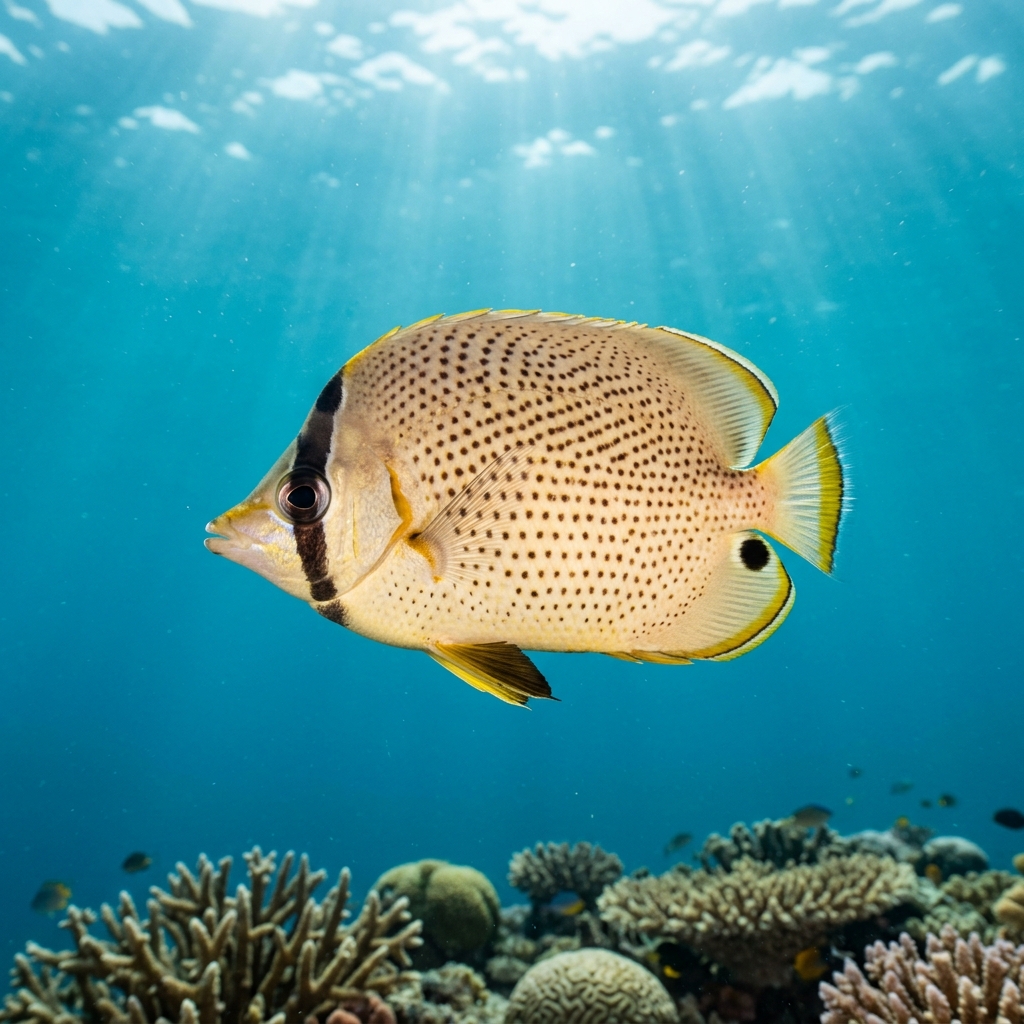
Reef neighbours a diver could mistake it for. Use the identification notes above to tell them apart.
Most commonly logged in Indonesia, with particularly strong representation around Bali, Lombok and the Maluku islands. Egypt's Sharm el Sheikh reefs are the other major hotspot, followed by the Philippines, especially the central Visayas, and East Sabah in Malaysia around Sipadan. Queensland in Australia rounds out the main sighting locations.
Mapping where Blackback Butterflyfish is logged…
The strongest sighting records come from Bali and Lombok in Indonesia, Sharm el Sheikh in Egypt, the central Visayas in the Philippines, and Sipadan in Malaysian Borneo. Queensland, Australia and Palau are also reliable locations. It is an Indo-Pacific species logged across a wide spread of tropical reef sites.
In Red Sea destinations, aim for June to December. For Australia's Queensland reefs, July through February gives the best odds. The species is tied to warm tropical water in the 24-29 °C range, so it is present year-round at equatorial sites like Indonesia and the Philippines, with sighting rates peaking during the warmer months.
Look for the bold black saddle across the upper back and dorsal fin, no other common butterflyfish in its range has quite that marking. The rest of the body is white with fine diagonal lines, and the tail and lower body are yellow. It travels in pairs and hugs the reef structure closely.
Across all the sites where divers log them, the most typical result is an uncommon sighting, you may well see one on a given dive, but it is not guaranteed. A small number of sites report them as common, so asking local guides at popular reef sites like Bali or Sharm el Sheikh for their usual haunts is a worthwhile strategy.
No. The species is assessed as Least Concern on the IUCN Red List, meaning populations are currently considered stable across its wide Indo-Pacific range.
Site and sighting data is aggregated from diver logs, iNaturalist and GBIF. For taxonomy and conservation status: