Chaetodon lineolatus
Spot the largest butterflyfish in the Indo-Pacific on reefs in Egypt's Red Sea, Thailand, and Queensland. Tips on ID, look-alikes, and best seasons.
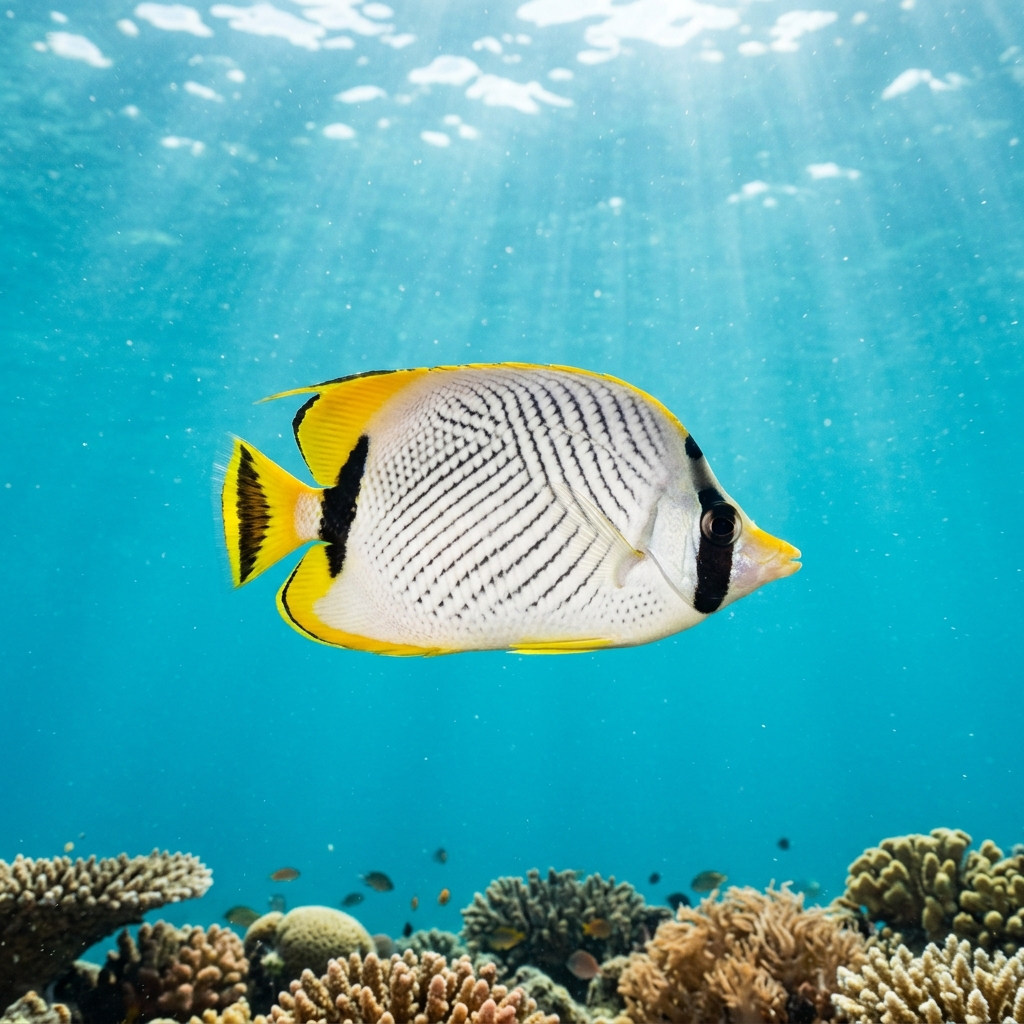
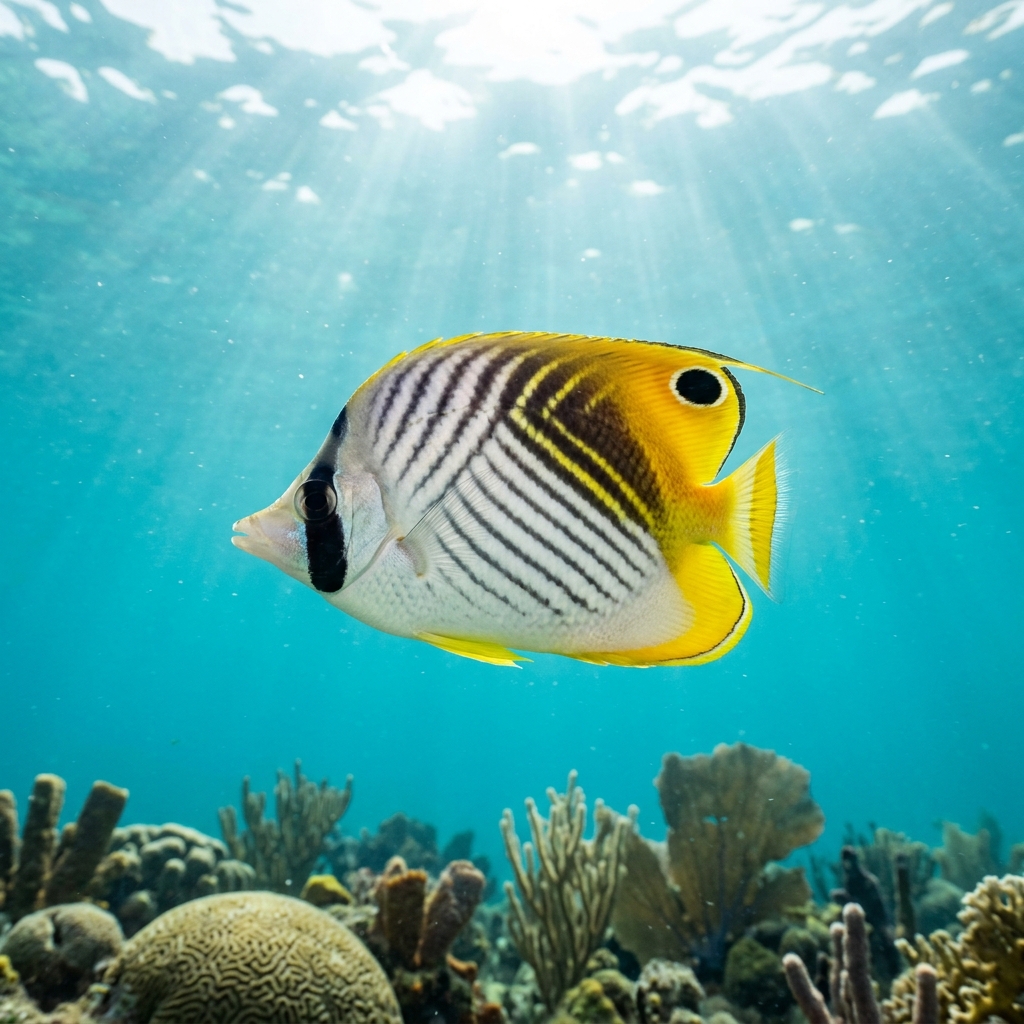
The lined butterflyfish is the largest of all butterflyfishes, and that size alone is a useful cue underwater. The white body is covered with fine, closely spaced black horizontal lines running from head to tail, creating an almost pinstriped look no other butterflyfish shares. A broad black bar runs through the eye, and the rear body and tail carry a bold black margin with a yellow wash just in front of it. The disc-shaped, laterally compressed body typical of all butterflyfishes makes it easy to place in the family at a glance.
You will usually encounter lined butterflyfish in pairs or alone, moving slowly and methodically across coral heads as they pick at coral polyps and small invertebrates. They are not particularly shy but tend to keep a comfortable distance, circling away from divers who approach too directly rather than bolting outright. Look for them on well-developed reef slopes and walls, typically in the mid-water column close to coral structure rather than hovering in open water.
As the largest butterflyfish species, adults can reach around 30 cm, noticeably bigger than the other members of the family you are likely to see on the same reef, which makes a big individual stand out even before you clock the striped pattern.
Northern Hemisphere sightings concentrate between July and November, so the Red Sea and Thai Andaman reefs are the most productive window during those months. In Queensland and other Southern Hemisphere sites the data do not show a strong seasonal peak, and the species' tolerance for water temperatures from 22.5 to 29 °C keeps it present on tropical reefs across much of the year.
Reef neighbours a diver could mistake it for. Use the identification notes above to tell them apart.
Most logged across the Egyptian Red Sea, with Sharm el Sheikh and Marsa Alam both showing strong records, and Thailand's Andaman reefs around Phuket, Phi Phi, and the Southern Andaman coast are also reliable ground. Queensland, Australia and Okinawa, Japan round out the best-documented locations, with further sightings in the Maldives, New Caledonia, and Indonesia.
Mapping where Lined Butterflyfish is logged…
The Egyptian Red Sea is the single most frequently logged location, with Sharm el Sheikh and Marsa Alam both standing out. Thailand's Andaman coast around Phuket and Phi Phi is another strong destination, and Queensland in Australia and the Okinawa Islands in Japan also have solid records. Smaller numbers are reported from the Maldives, New Caledonia, and Indonesia.
On Northern Hemisphere reefs such as Egypt and Thailand, sightings are most concentrated from July through November. The species tolerates water temperatures from around 22.5 to 29 °C, so on warm tropical reefs in Queensland and comparable Southern Hemisphere sites it can be encountered across multiple seasons.
Look for a noticeably large disc-shaped fish with a white body covered in fine, close-set black horizontal lines running its full length. The black eye-bar and the dark-edged, yellow-washed tail are the fastest field marks. Its size alone is a reliable cue because it is the largest butterflyfish species on Indo-Pacific reefs.
Lined butterflyfish are the largest species in the butterflyfish family, reaching around 30 cm. On the reef this size difference is immediately obvious compared to other butterflyfishes, which mostly top out well below 20 cm.
They are logged as uncommon or rare at the vast majority of sites where divers encounter them, so a sighting is always worth noting. They occur across a wide Indo-Pacific range but tend to be solitary or in pairs, which keeps encounter rates low even where the species is present on healthy reef.
Site and sighting data is aggregated from diver logs, iNaturalist and GBIF. For taxonomy and conservation status: