Chaetodon ephippium
Spot the Saddled Butterflyfish by its bold black saddle patch. Strong populations in French Polynesia, Indonesia and Hawaii, comfortable at 24-29°C.
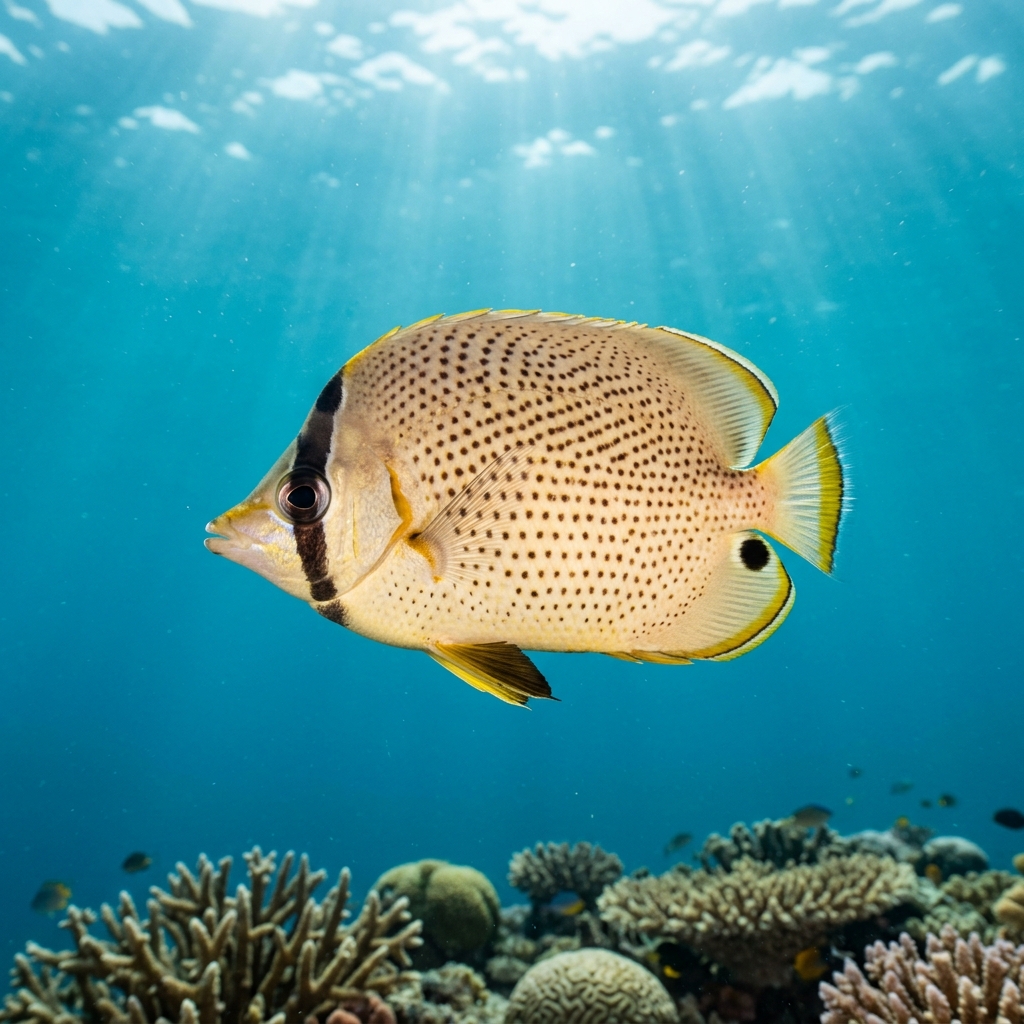
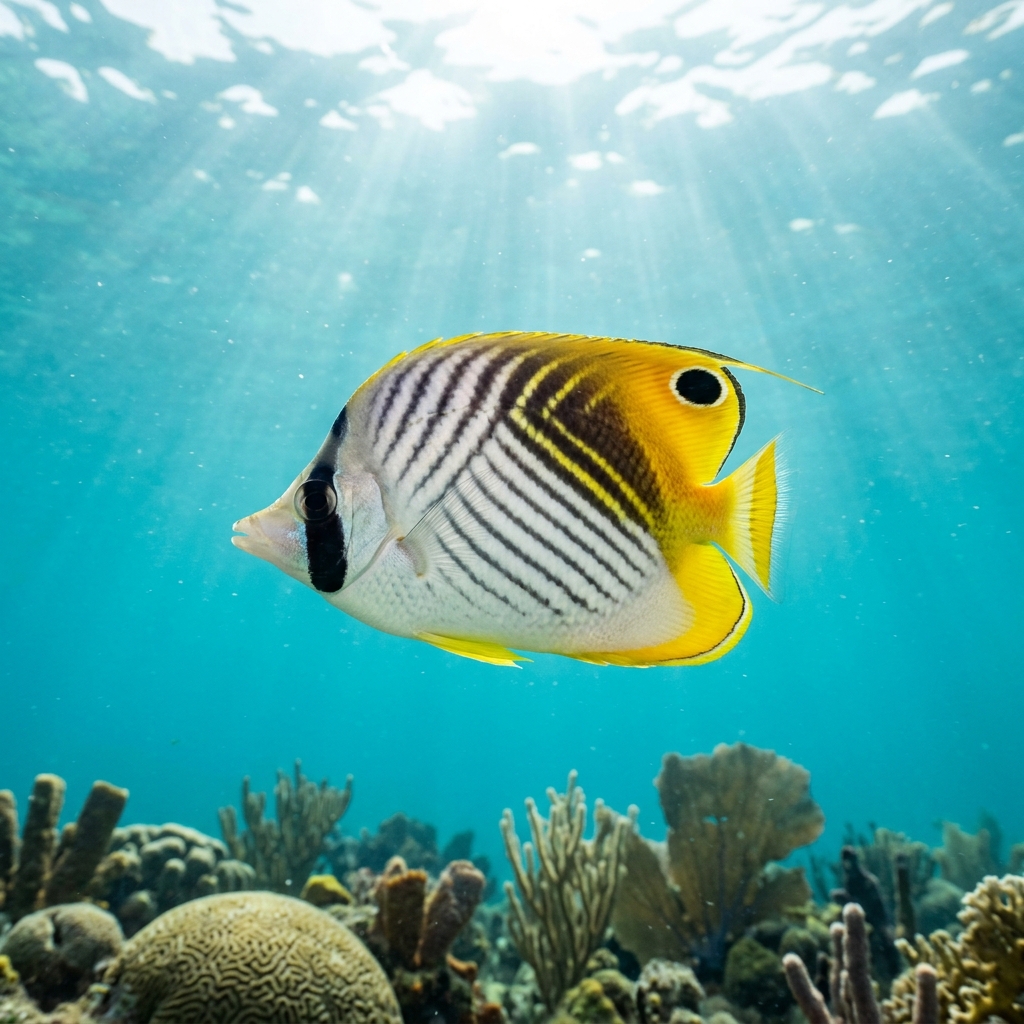
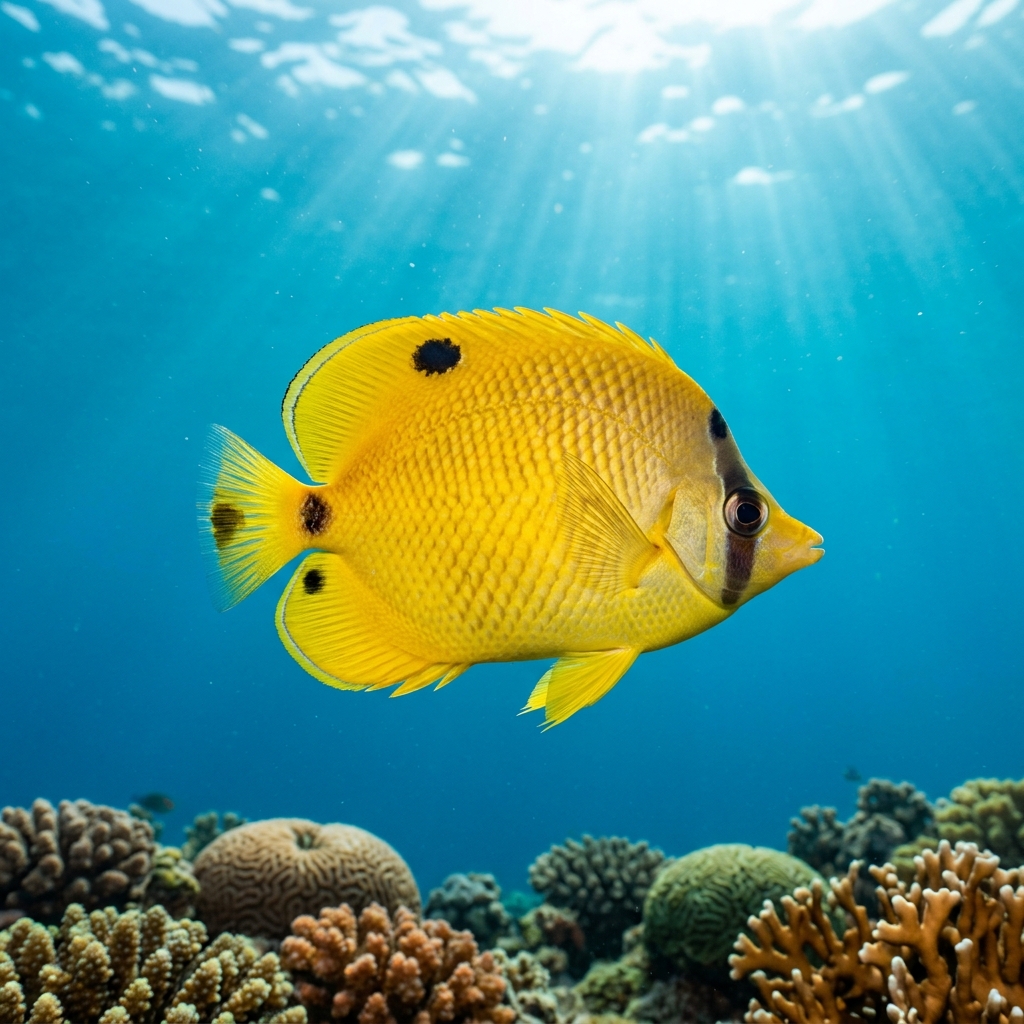
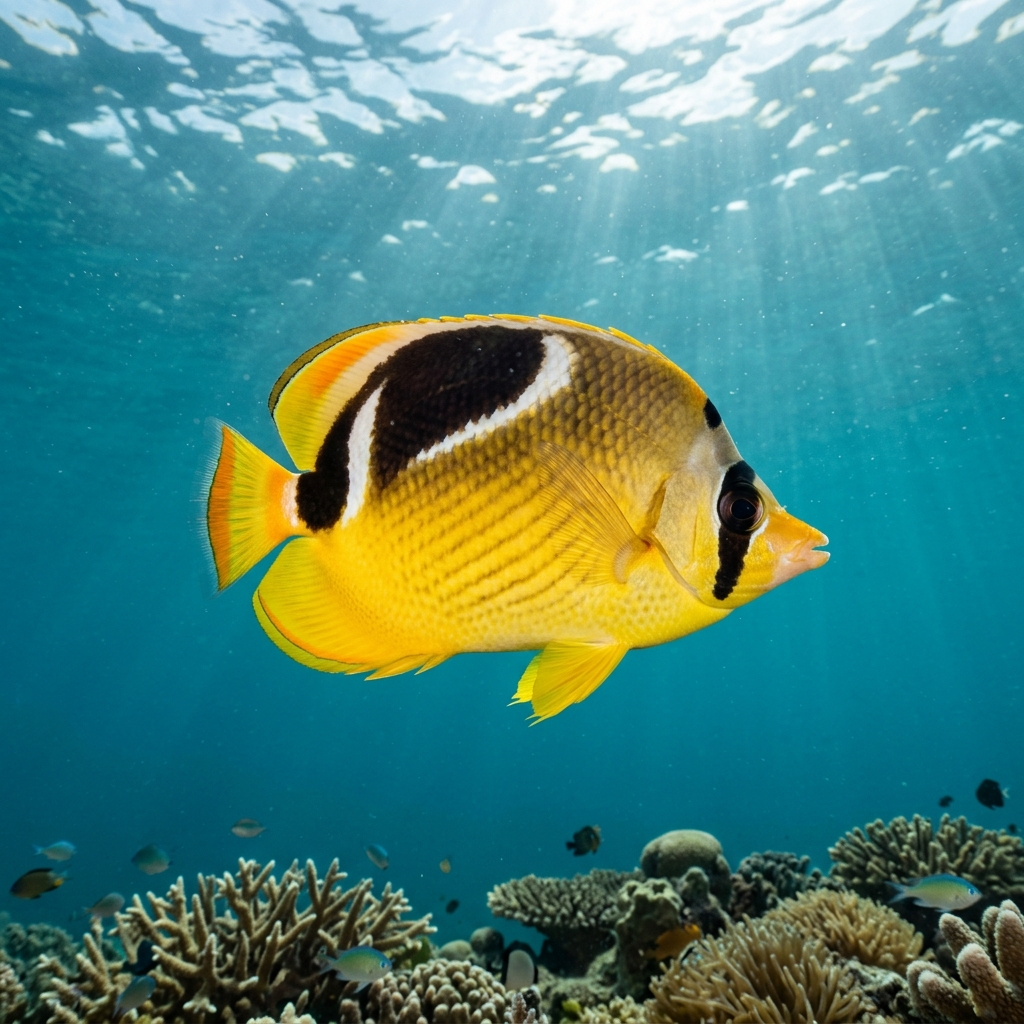
Look for the large, bold black saddle patch that sweeps across the rear of the body and upper tail, it is the feature that names the fish and makes it unmistakable at a glance. The rest of the body is pale grey-white to cream, the fins are bright yellow, and a narrow black bar crosses the eye. Juveniles carry a prominent dark eyespot (ocellus) near the rear of the dorsal fin that fades as they mature into the classic saddle pattern.
Usually spotted in pairs or small groups picking at live coral polyps and invertebrates on the reef, often staying within a well-defined home territory. It tends to be moderately wary of divers, swimming slowly ahead rather than fleeing outright, which gives patient observers a decent look. Most sightings are on shallow to mid-depth coral reef structures during the day.
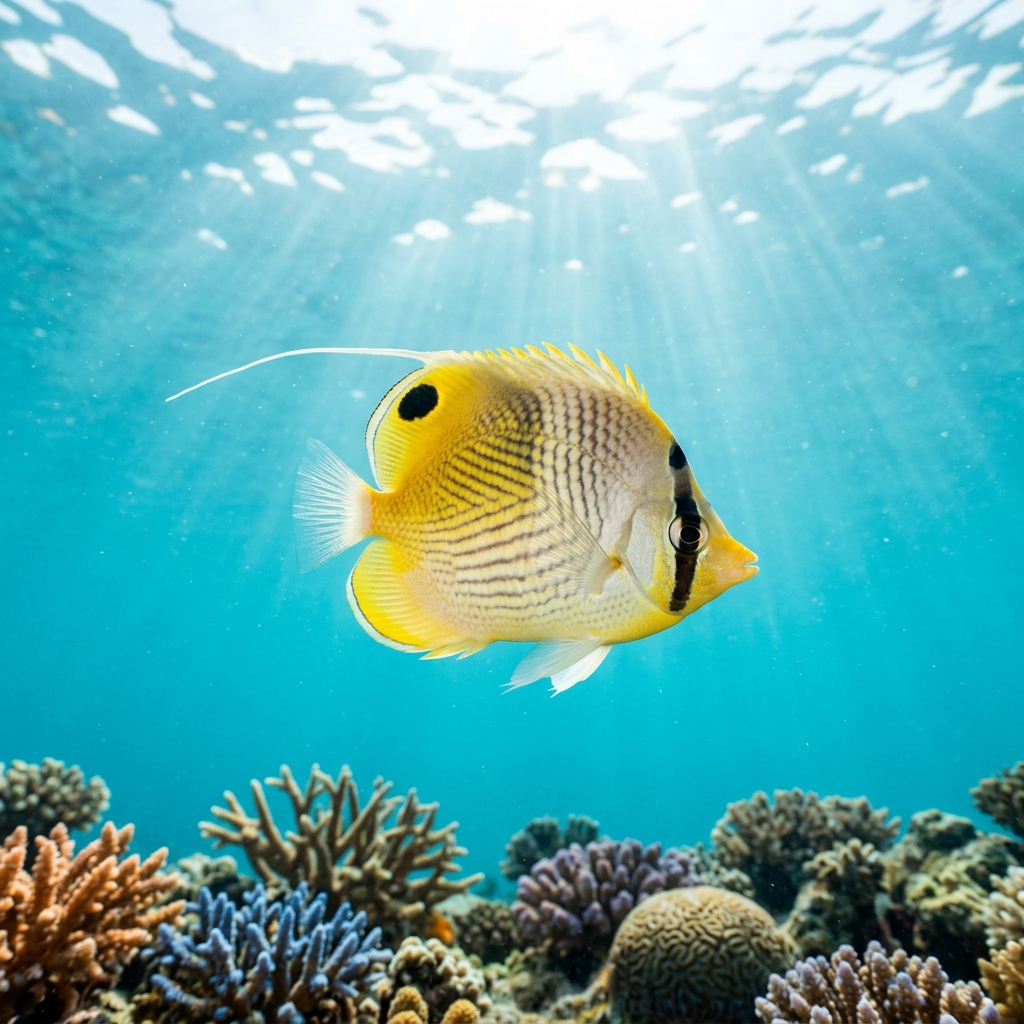
The juvenile's false eyespot near the tail is thought to redirect predator strikes away from the real head, as the fish grows, the spot disappears and the bold saddle takes over as the dominant marking.
In Southern Hemisphere locations such as French Polynesia and Queensland it is present year-round, which fits its preference for water in the 24 to 29°C range on warm tropical reefs. In Northern Hemisphere destinations like Hawaii and Okinawa, sightings concentrate between October and February.
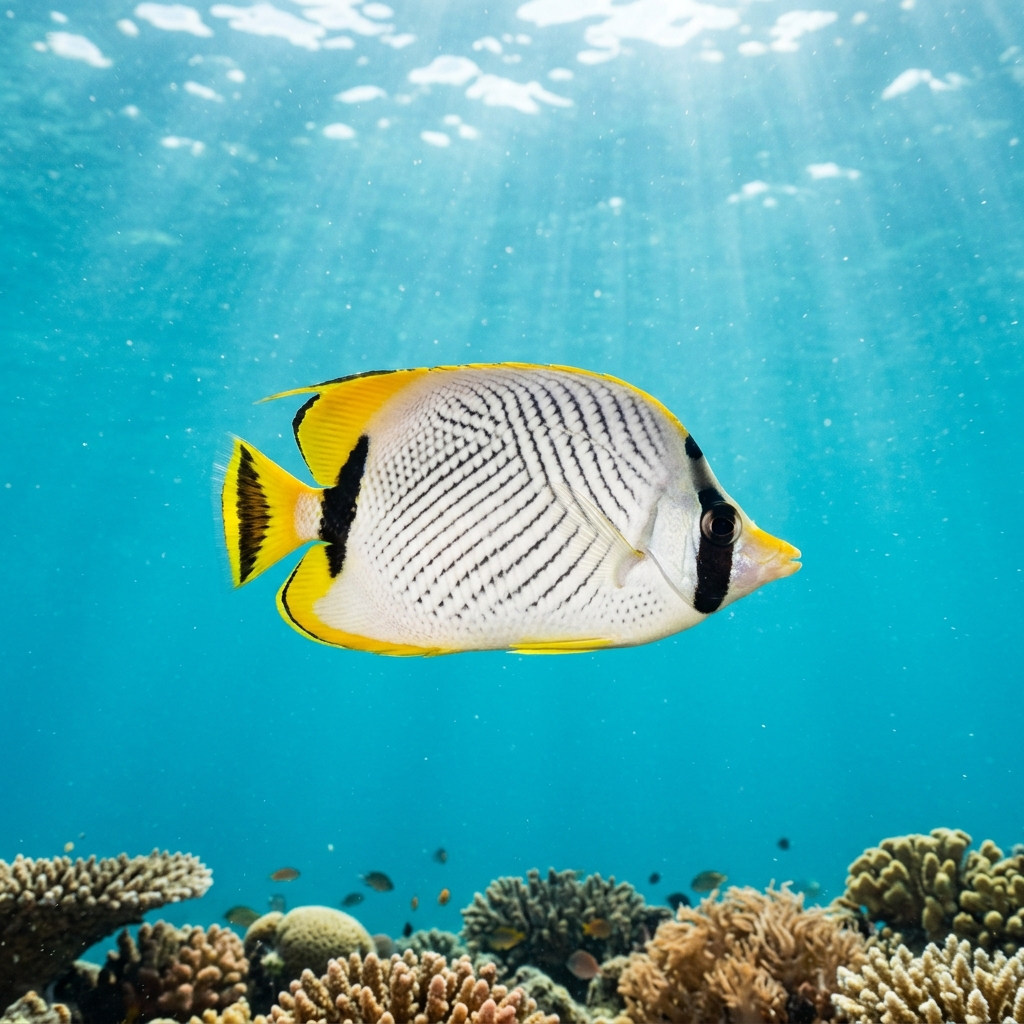
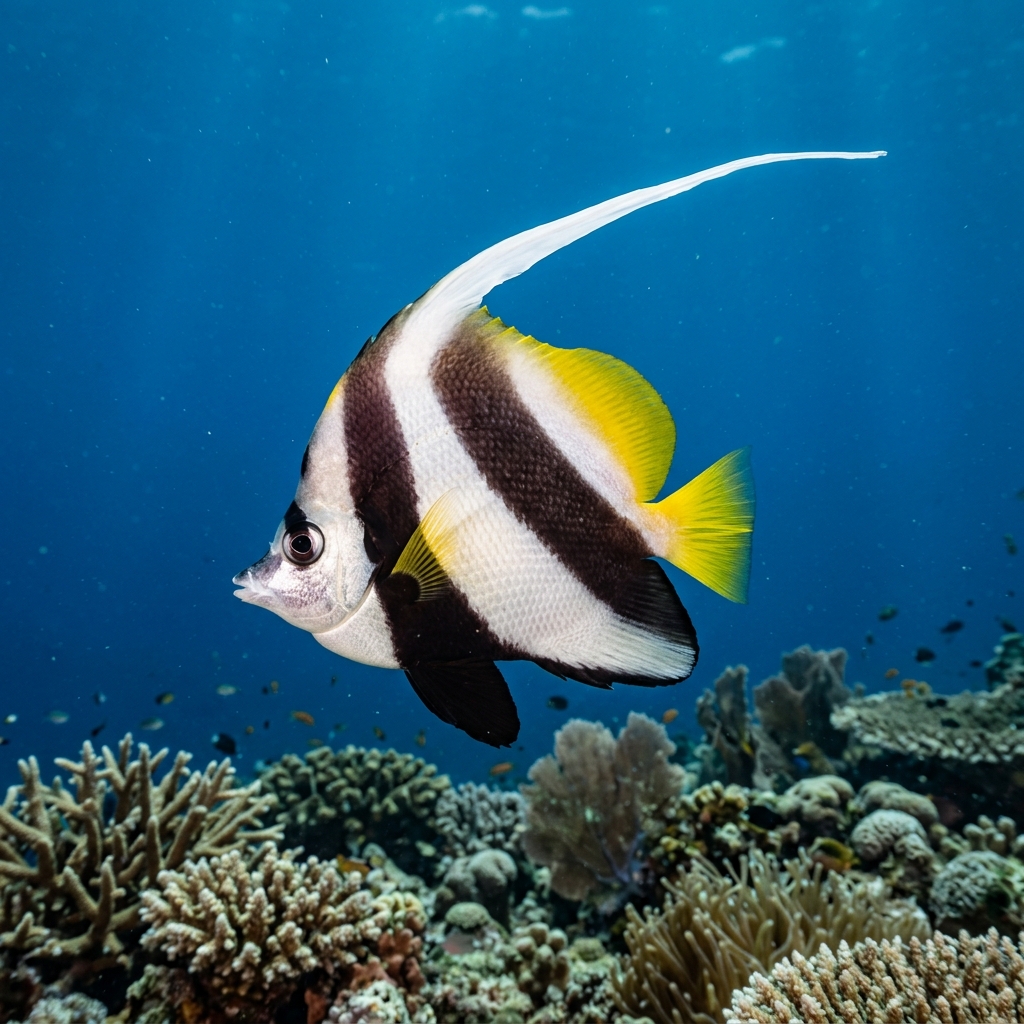
Reef neighbours a diver could mistake it for. Use the identification notes above to tell them apart.
Most commonly logged in French Polynesia and Indonesia, with Tahiti and the Society Islands being standout hotspots alongside Sulawesi and Maluku and Papua. Strong records also come from Hawaii, Queensland in Australia, the Rock Islands of Palau, and the Okinawa Islands of Japan, making it a reliably sighted species across the tropical Indo-Pacific.
Mapping where Saddled Butterflyfish is logged…
They are most reliably found in French Polynesia, particularly around Tahiti and the Society Islands, and across Indonesia including Sulawesi and Maluku. Hawaii, Queensland in Australia, the Rock Islands of Palau, and the Okinawa Islands of Japan are also strong destinations for this species.
In Southern Hemisphere locations like French Polynesia and Australia, they are present year-round on warm tropical reefs. If you are diving in Northern Hemisphere spots such as Hawaii or Okinawa, sightings are most concentrated from October through February.
The large black saddle patch on the rear body is the key feature, no other common butterflyfish in the Indo-Pacific carries quite that bold a marking in that position. Add bright yellow fins, a pale body, and a black eye bar and the ID is straightforward. Juveniles look different, carrying a white-ringed eyespot near the tail that fades with age.
Saddled Butterflyfish are a medium-to-large butterflyfish, typically reaching around 23 cm in length, noticeably bigger than many of their family members, which helps them stand out on the reef.
The dark eyespot on a juvenile's rear dorsal fin is thought to be a deflection marking, drawing a predator's strike toward the tail and away from the real head and eyes. It disappears as the fish matures and the distinctive saddle pattern develops.
Site and sighting data is aggregated from diver logs, iNaturalist and GBIF. For taxonomy and conservation status: