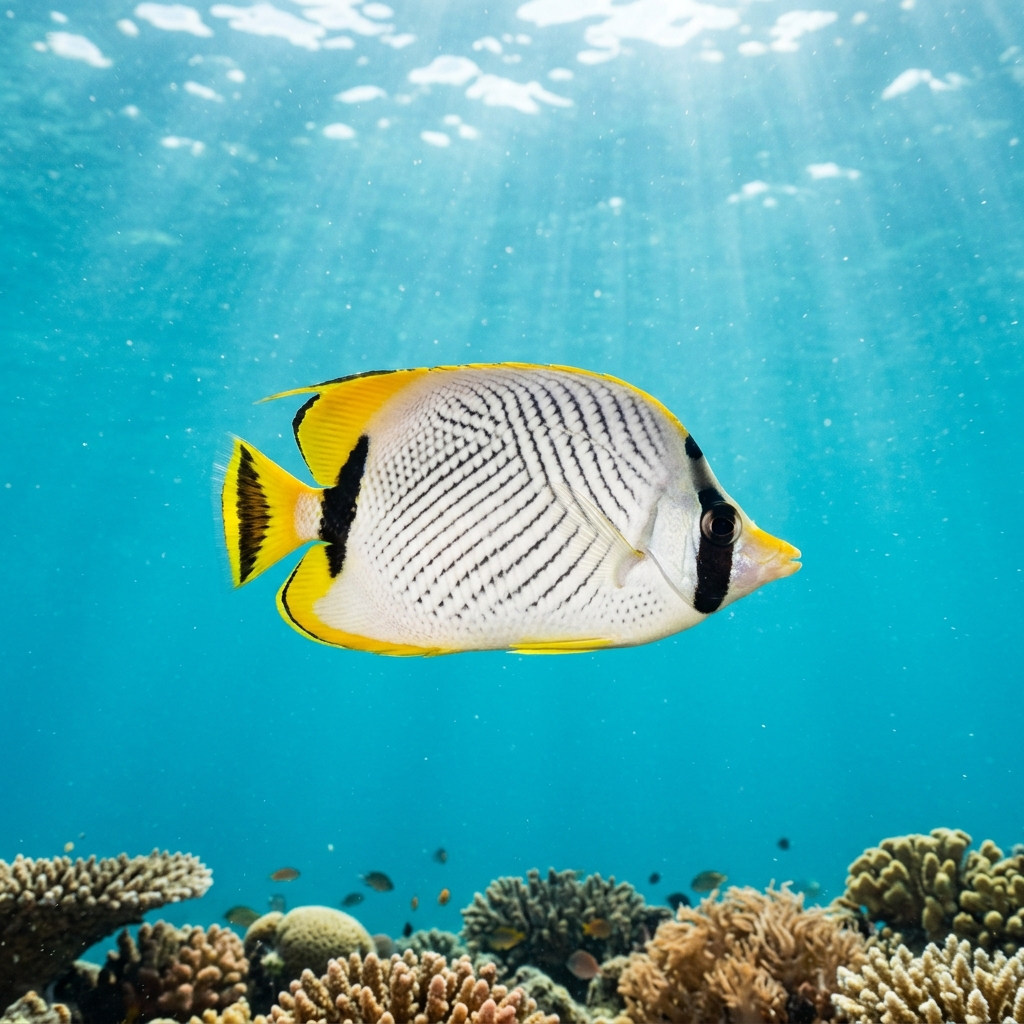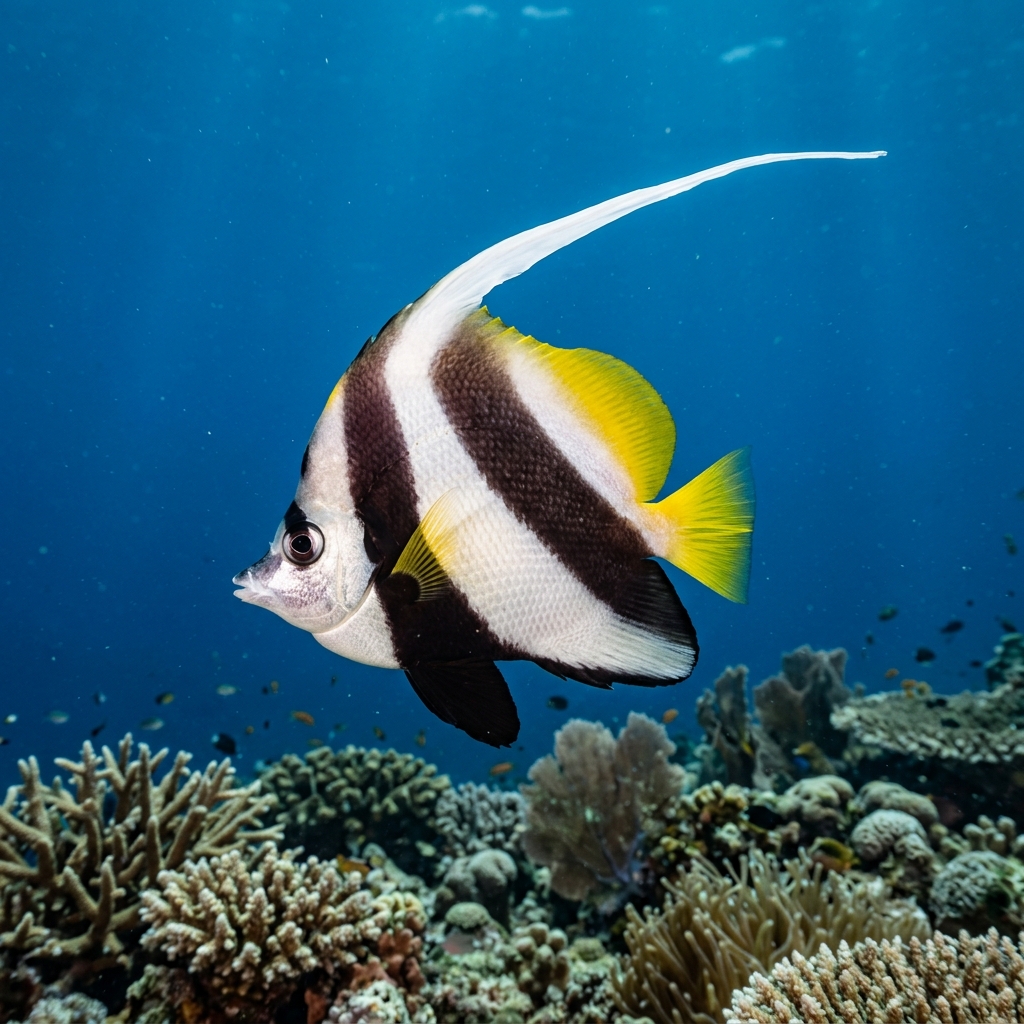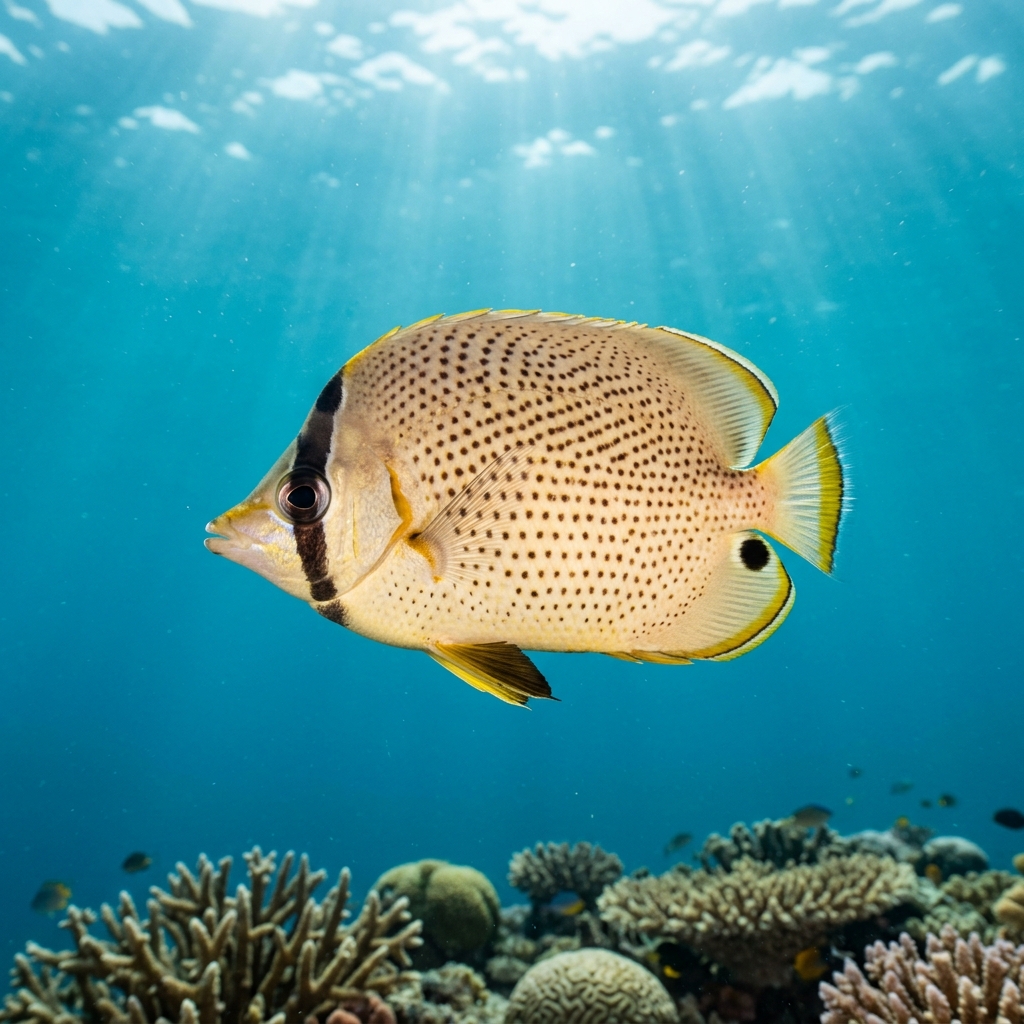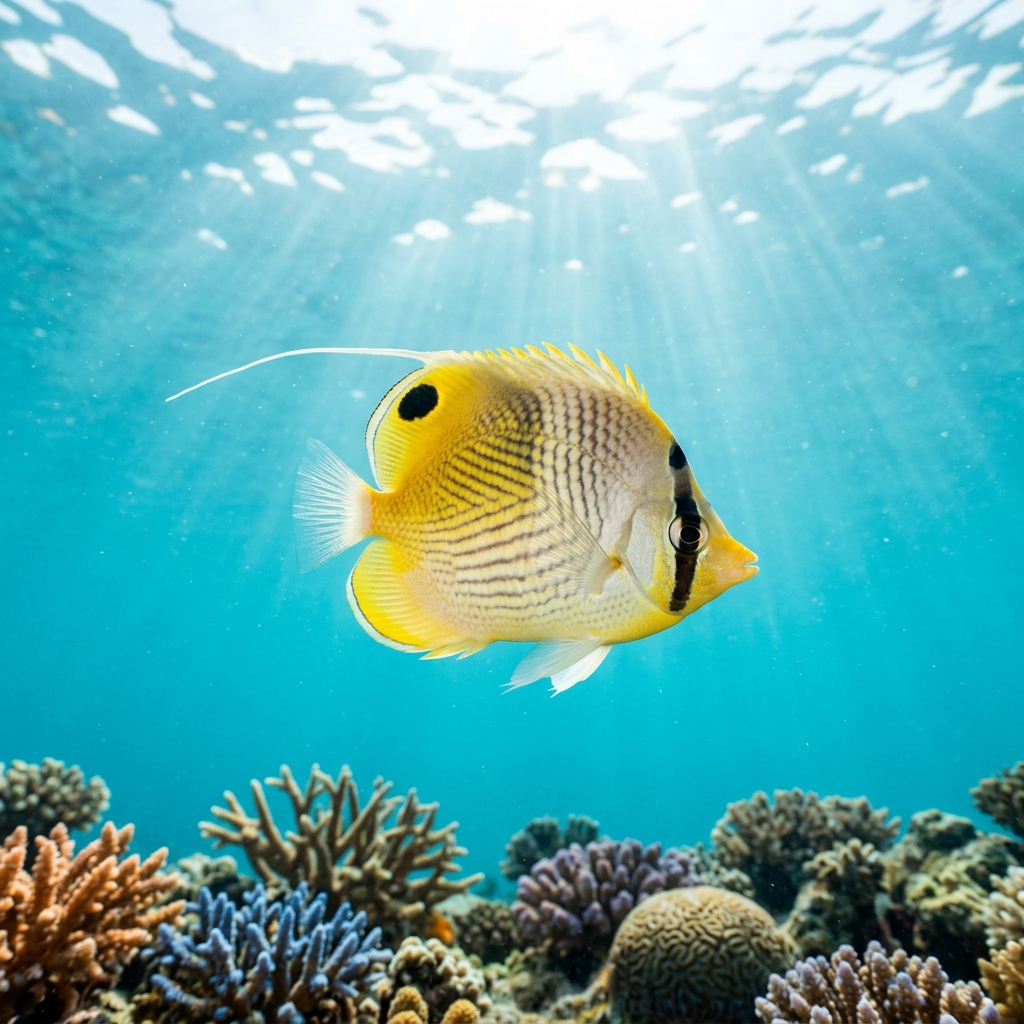
Chaetodon collare
Spot Brown Butterflyfish in the Maldives and Thailand year-round. Learn to ID this warm-water species by its chocolate-brown scales and red tail.
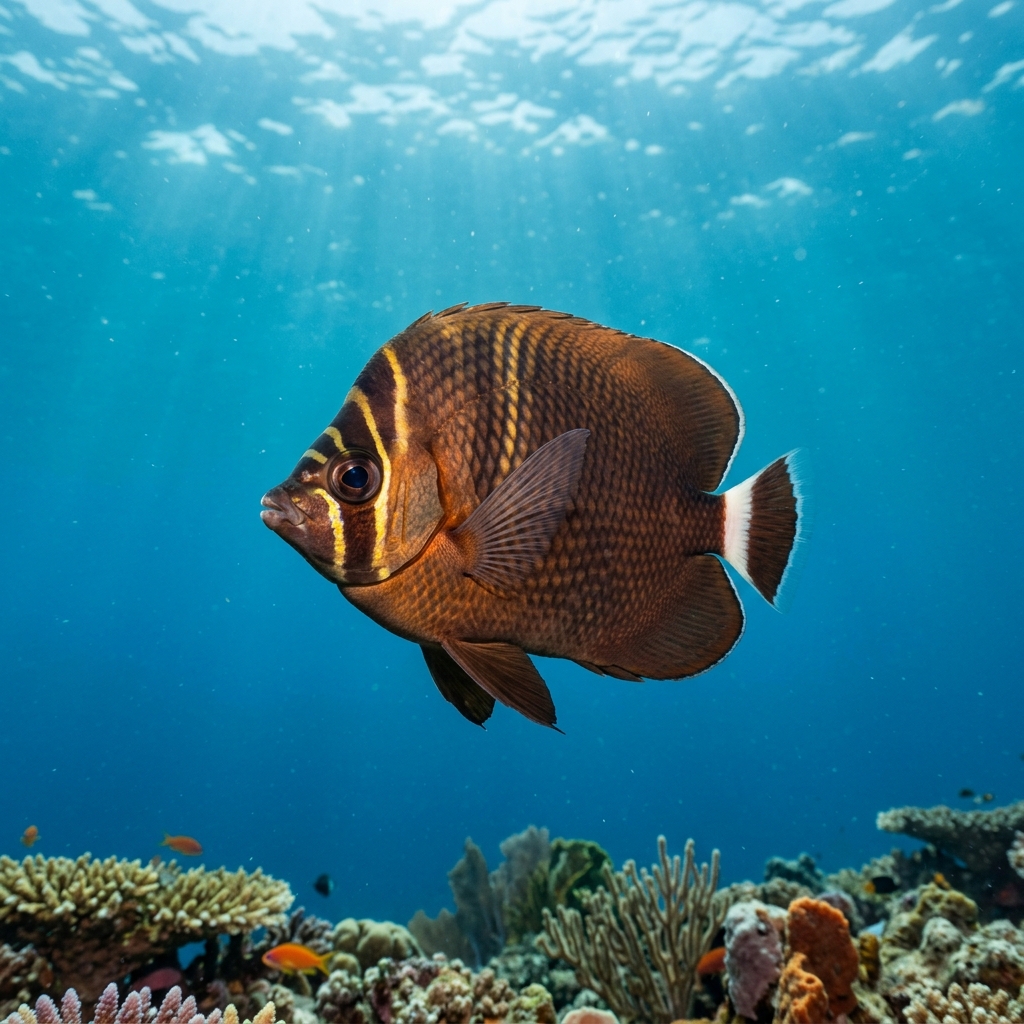
A compact, disc-shaped butterflyfish dressed in a fine lattice of dark brown and white scales that gives the body a net-like texture visible even at a distance. The face is pale to whitish, often with a dark eye-bar, and the tail fades into a warm reddish-orange that stands out against the brown body. Unlike most of its relatives, there is no bold spot or stripe pattern to distract from that overall chocolate-brown colouring. Juveniles carry a more contrasting black-and-white pattern that gradually browns out as they mature.
Brown butterflyfish are typically seen picking at coral heads and rocky reef surfaces, probing for small invertebrates and coral polyps with their pointed snouts. They often move in pairs and tend to hold a small territory on the reef rather than roaming widely, so if you spot one on a dive site you can often predict roughly where it will be again. They are cautious around divers and will drift a short distance away if approached directly, so slow and steady observation works far better than chasing.
Pair bonds in this species appear to be long-term, and the two individuals of a bonded pair are rarely seen more than a metre or two apart on their home section of reef.
Sightings concentrate between July and April across northern-hemisphere sites, suggesting a slight dip in encounters during May and June. Water temperatures in the 28 to 30 C range align with peak activity, so the warmest reef months across the Maldives and Thai Andaman are your best bet.
Reef neighbours a diver could mistake it for. Use the identification notes above to tell them apart.
Most commonly logged in the Maldives, where Male and Ari Atolls account for the majority of records, making it the single strongest destination for this species. Thailand is a very strong second, with Phuket and Phi Phi leading and the northern Andaman sites contributing solid numbers as well. Oman's Muscat coast and India's Netrani Island round out the reliable options if you are travelling through the Indian Ocean or Arabian Sea.
Mapping where Brown Butterflyfish is logged…
The Maldives, particularly Male and Ari Atolls, is the top destination by a wide margin. Thailand's Phuket, Phi Phi, and northern Andaman sites are a strong second. Oman's Muscat coast, Netrani Island in India, and parts of Indonesia and Sri Lanka also produce reliable sightings.
Sightings are strongest from July through April across northern-hemisphere sites. The May to June window sees a relative dip in records, so planning around the longer July-to-April window gives you the best odds.
Look for the fine dark-and-white lattice (net-like) scale pattern covering most of the body, a pale face with a dark eye-bar, and a reddish-orange tail. No other common Indian Ocean butterflyfish combines all-over brown colouring with that reddish tail flush.
Most divers log them as uncommon at the sites where they appear. Seeing one is a pleasant find rather than a guaranteed encounter, even in the Maldives and Thailand. Moving slowly along the reef and checking coral heads carefully improves your chances.
Site and sighting data is aggregated from diver logs, iNaturalist and GBIF. For taxonomy and conservation status: