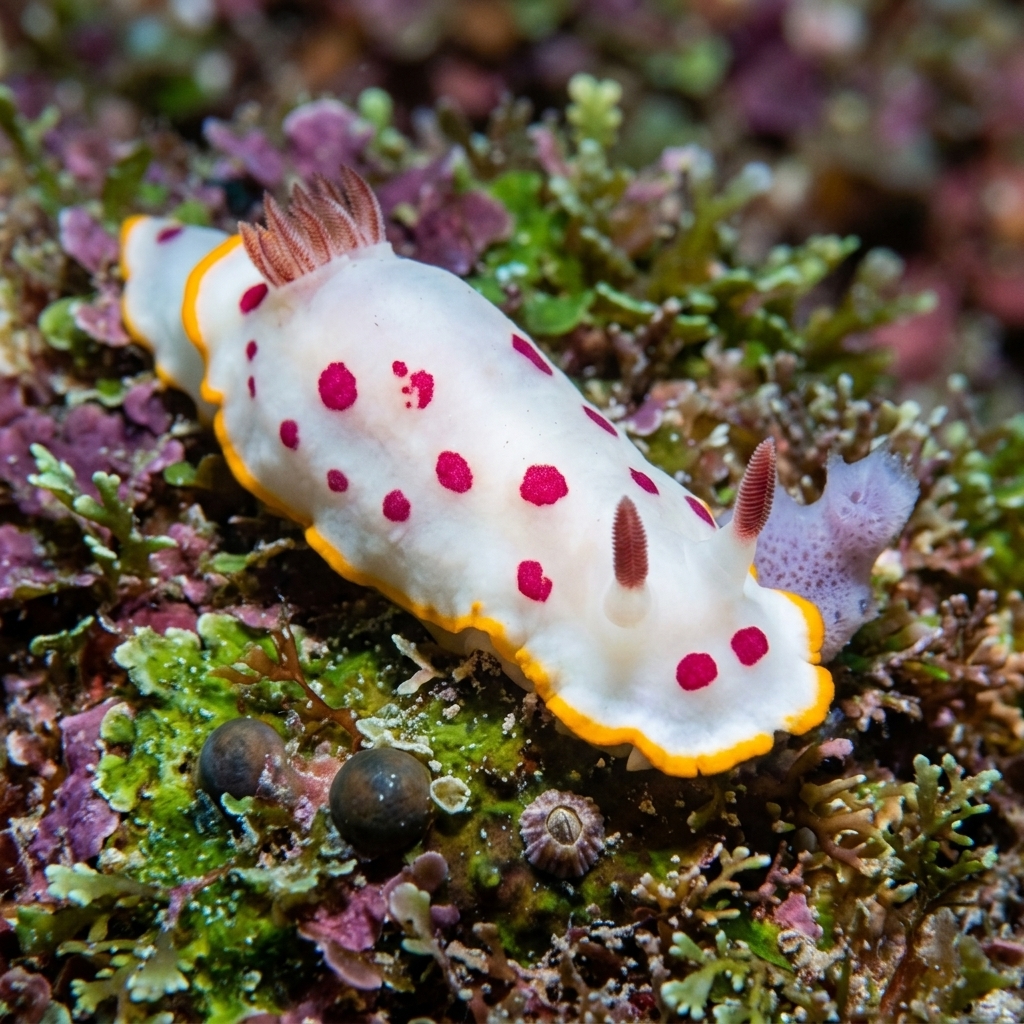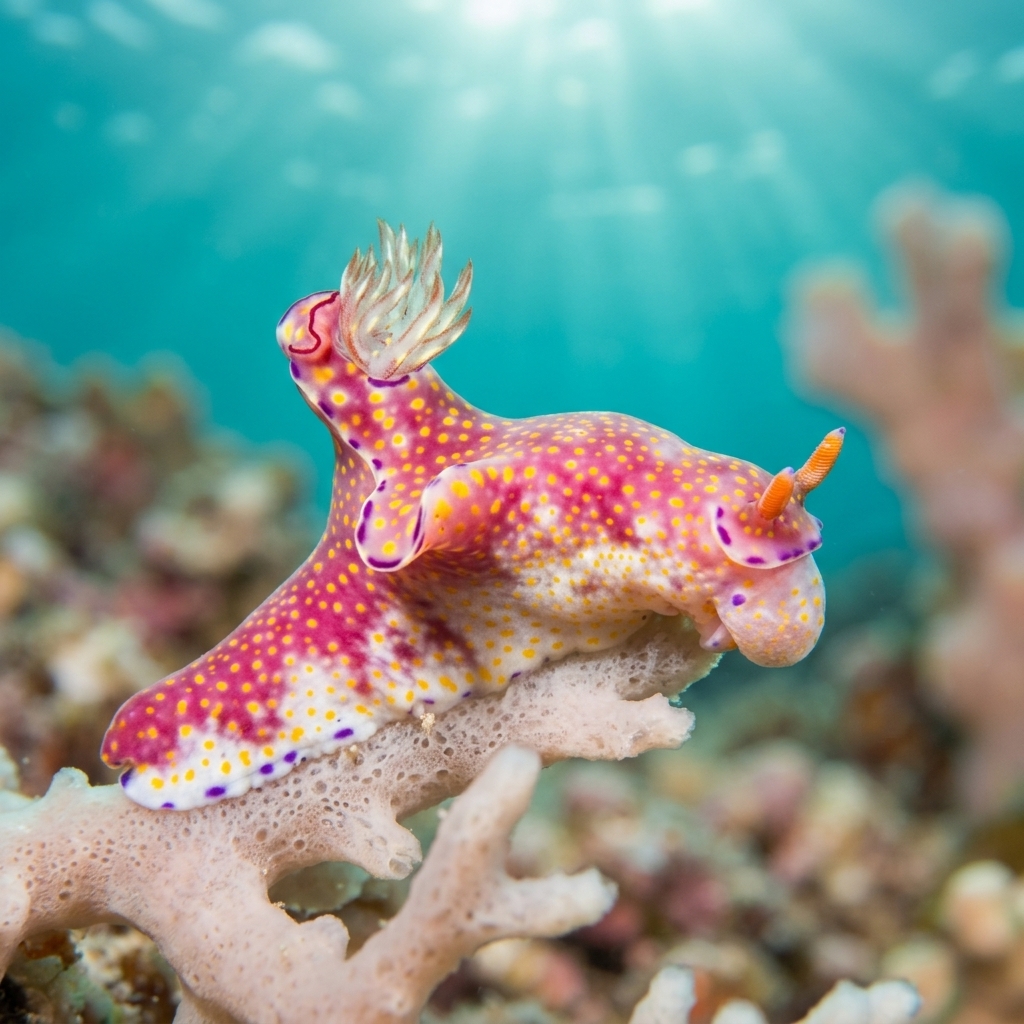
Ceratosoma gracillimum
Find the Slender Ceratosoma Nudibranch in the Visayas, Sulawesi, and Singapore in warm 27-29 °C water. Best sightings Jan, May. ID tips inside.
A slender, elongated body sets this nudibranch apart from the chunkier Ceratosoma relatives, look for the proportionally narrow mantle and the characteristic lateral lobes (fleshy projections along the sides) that the genus is known for. Colouration typically involves vivid contrasting bands or patches, making it eye-catching against reef rubble or sponge surfaces despite its small size. The elongated silhouette is the single best field mark underwater: if the body looks stretched and slim relative to its width, you are likely on the right animal.
Like most nudibranchs, it is a slow, deliberate crawler, typically found working its way across sponges, tunicates, or reef rubble as it forages. It shows little reaction to divers, it will not flee, but it also will not perform, so patience and a good eye at close range are what get you the shot. Sightings are most often made by divers actively searching reef substrate rather than by chance encounters in open water.
Ceratosoma nudibranchs are believed to sequester toxic or distasteful compounds from the sponges they eat, and the bold, contrasting colouration likely serves as a warning signal (aposematism) to potential predators, making the vivid patterning both a field mark and a survival strategy.
In Northern Hemisphere sites, sightings concentrate between January and May, so plan a Philippine or Sulawesi trip in that window. Water temperatures across its range hold between 27 and 29 °C, reflecting a warm-water preference that keeps it tied to tropical reef systems.
Reef neighbours a diver could mistake it for. Use the identification notes above to tell them apart.
Most sightings come from the Philippines, particularly the Visayas East and North and the Luzon and North regions, making these the strongest bet. Sulawesi in Indonesia is a close second, with Bali, Lombok and Java adding further Indonesian options. Smaller but consistent records also exist in the Southern Islands of Singapore, Northern Taiwan, the Musandam Peninsula in Oman, and the Diani and South Coast area of Kenya.
Mapping where Slender Ceratosoma Nudibranch is logged…
The Philippines leads all other locations, with strong records across the Visayas and Luzon regions. Sulawesi in Indonesia is the next most reliable area. Singapore, Taiwan, Oman's Musandam Peninsula, and Kenya's Diani coast all have confirmed sightings too.
Northern Hemisphere data points to January through May as the peak window. If you are diving the Philippines or Sulawesi, targeting that period gives you the best chance. The species favours warm water between 27 and 29 °C year-round.
Focus on the body shape: it is noticeably slim and elongated compared to other Ceratosoma species. Lateral lobes run along the sides of the mantle, and the colouration features bold contrasting markings. Finding it on sponge or tunicate surfaces is also a useful context clue.
It is most often logged as uncommon at the sites where it appears, with a smaller number of sites where it is rare and a few where it is relatively common. Expect to search for it rather than stumble across it, slow, methodical reef scrutiny pays off.
Not at all. They pose no threat to divers. Like many nudibranchs they may carry distasteful chemicals from their diet, but this is a defence against fish predators and has no bearing on diver safety. Feel free to observe closely without concern.
Site and sighting data is aggregated from diver logs, iNaturalist and GBIF. For taxonomy and conservation status:
Light-spotted Aegires
3,168 sites