Ceratophyllidia papilligera
A tiny warty nudibranch turning up uncommonly across Honduras's Bay Islands and Sosúa, Dominican Republic, year-round in warm reef water.
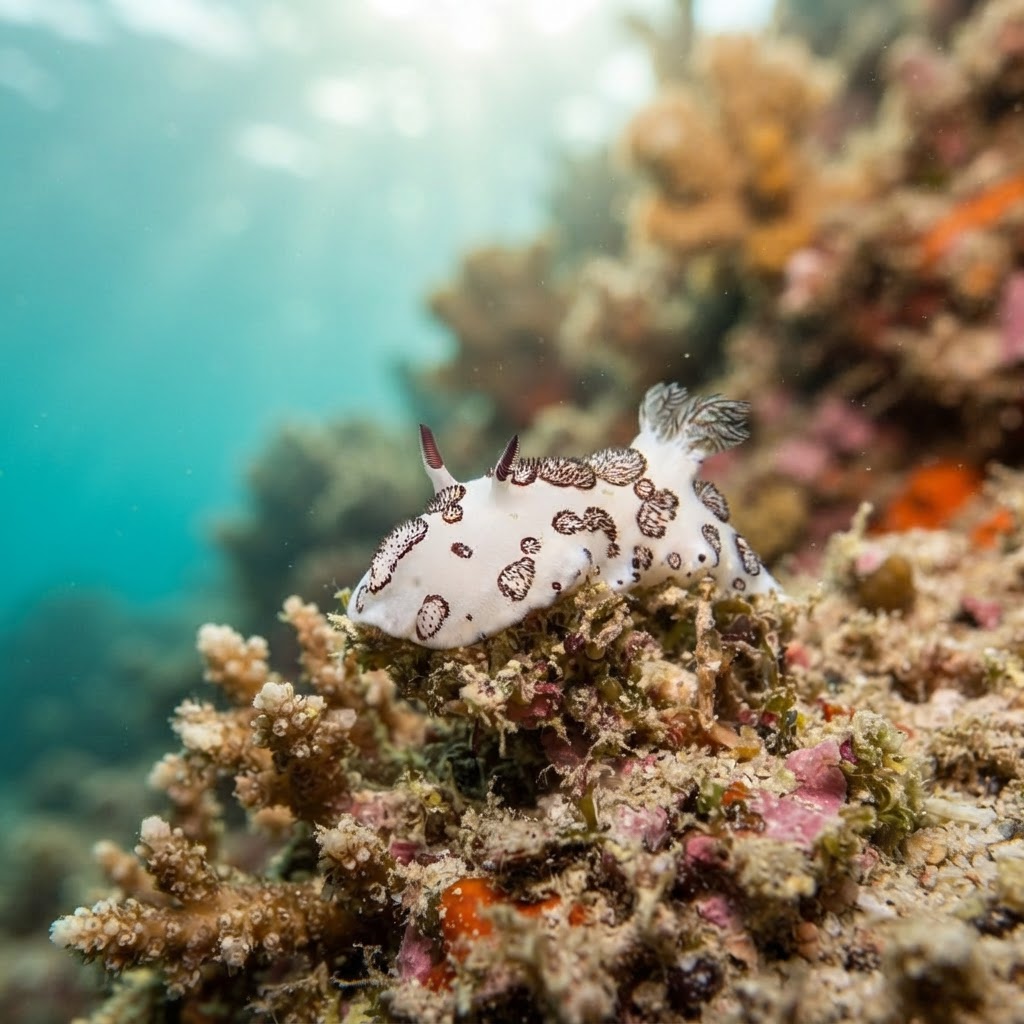
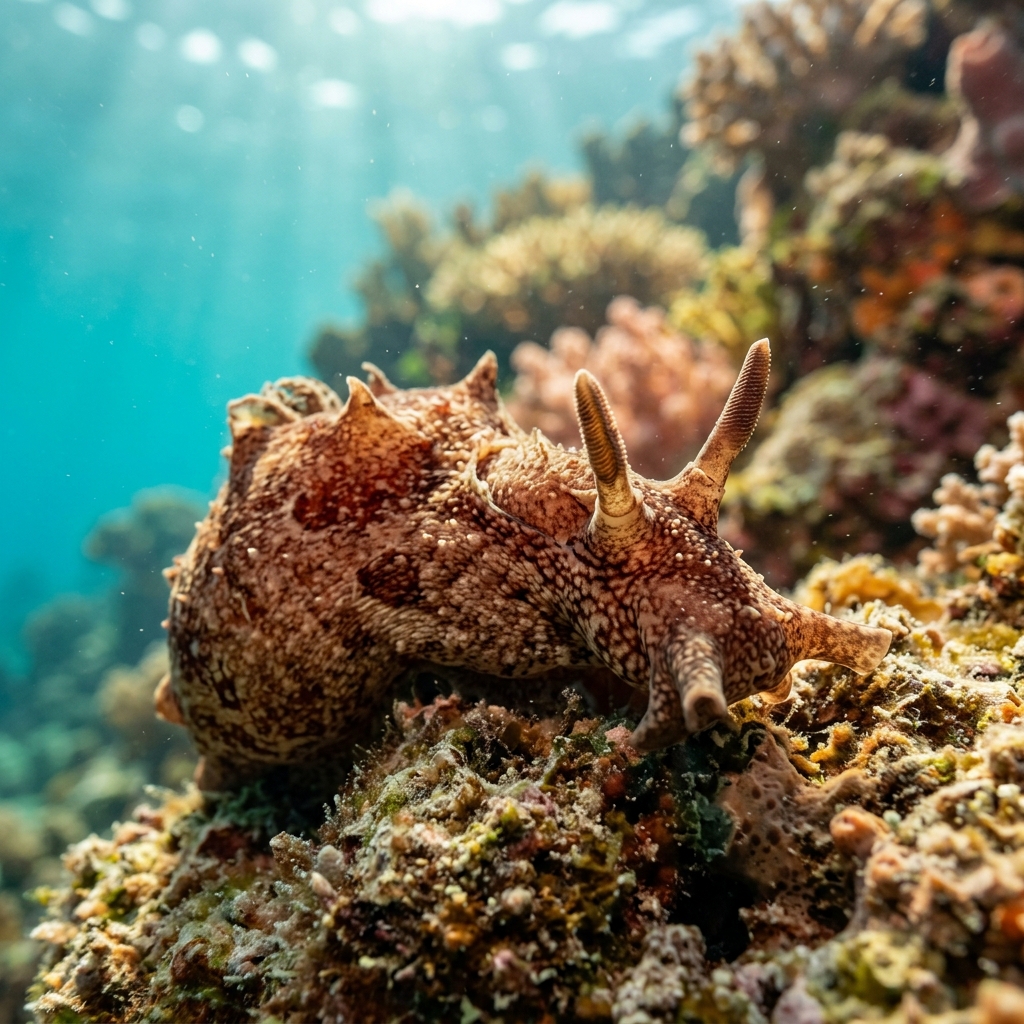
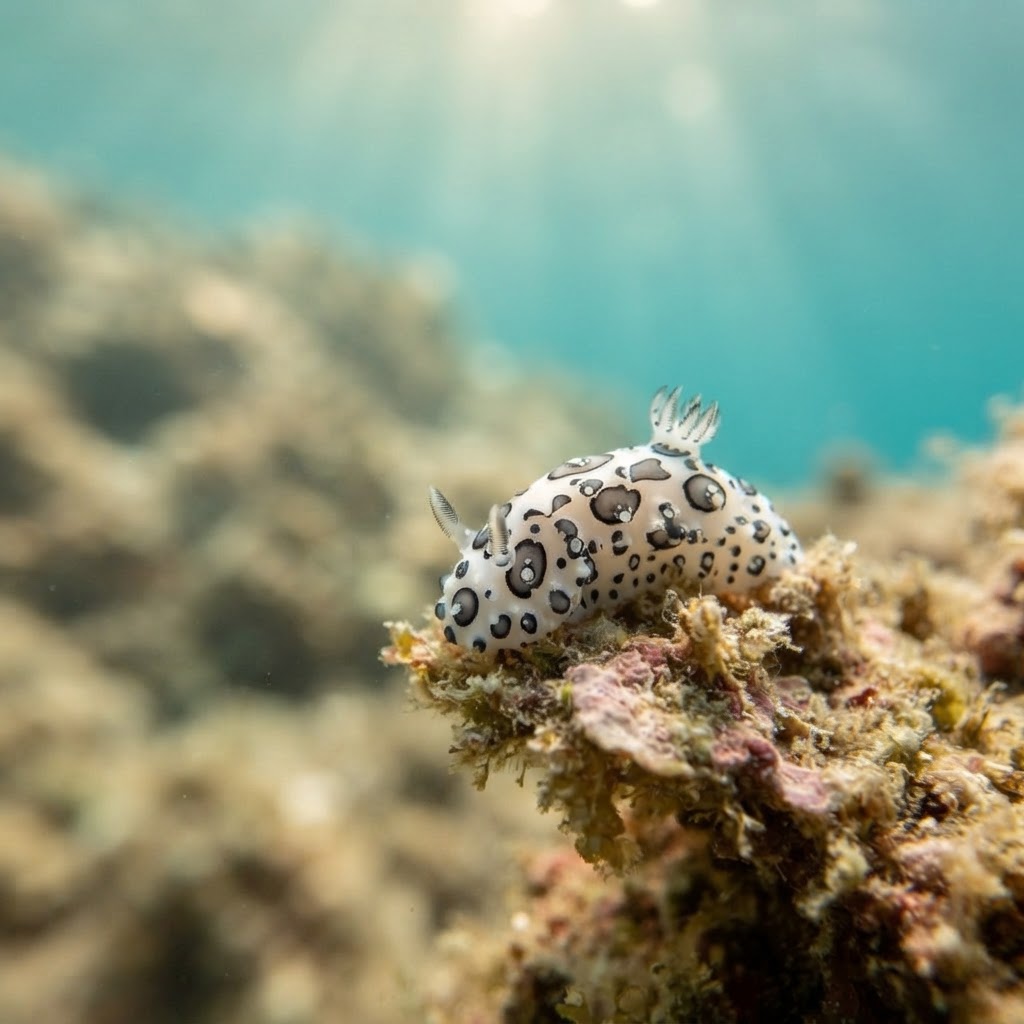
A tiny nudibranch, rarely more than 2cm, with a firm, warty-looking body covered in rounded tubercles rather than a smooth or gilled surface. Base colour runs pale grey to white, giving it a mottled, encrusted look that blends into rubble and sponge. It lacks the showy stripes and spots of the larger dorid nudibranchs divers usually photograph, so it reads more as a small textured lump than a classic 'colourful' nudibranch until you get close.
Divers find it sitting still on rubble, sponge or encrusted reef surfaces rather than out cruising in the open, which fits its camouflage-first strategy. It shows no reaction to divers beyond staying put, so a slow, close look with a torch or macro lens is the way to actually spot one. Most logs come from typical daytime reef dives rather than night dives.
Like other phyllidiid nudibranchs, it likely feeds on sponges and can concentrate sponge toxins in its tissue, which is probably why it does not bother hiding its slow, exposed crawl across the reef.
No clear season shows up in the data, and with a comfortable range of roughly 25 to 31C it has no reason to disappear seasonally, so treat it as a year-round find on Caribbean reef dives.
Reef neighbours a diver could mistake it for. Use the identification notes above to tell them apart.
Most reliably logged in Honduras's Bay Islands, with a strong secondary population around Sosúa in the Dominican Republic, and occasional sightings off Grand Cayman. Outside these three countries it has not been widely reported, so the Caribbean is currently the place to look.
Mapping where Black Spotted Nudibranch is logged…
Your best odds are in Honduras's Bay Islands, where it turns up most consistently, followed by Sosúa in the Dominican Republic. It has also been logged occasionally around Grand Cayman.
There is no strong season in the sighting data, and it tolerates warm water from about 25 to 31C year-round, so any time you are diving the Bay Islands or Sosúa is worth a careful look.
Look for a small, warty-textured nudibranch under 2cm, pale grey to white, sitting still on rubble or sponge rather than moving across open reef. Its lumpy tubercle-covered back is the main giveaway compared with smoother or brighter dorids.
It stays tiny, typically around 2cm as an adult, so it is easy to swim past without noticing on a reef dive.
No, it poses no danger to divers. It is a small, slow-moving nudibranch that can only be handled if you get close enough to look, and it has no means of harming a diver.
Like related phyllidiid nudibranchs, it likely absorbs toxins from the sponges it feeds on, which may explain why it crawls openly across the reef without hiding.
Site and sighting data is aggregated from diver logs, iNaturalist and GBIF. For taxonomy and conservation status:
Light-spotted Aegires
3,168 sites