Centropyge potteri
Spot Potter's Angelfish in Hawaii between October and February. Rare but rewarding, this reef fish thrives in 24-27 °C Hawaiian waters.
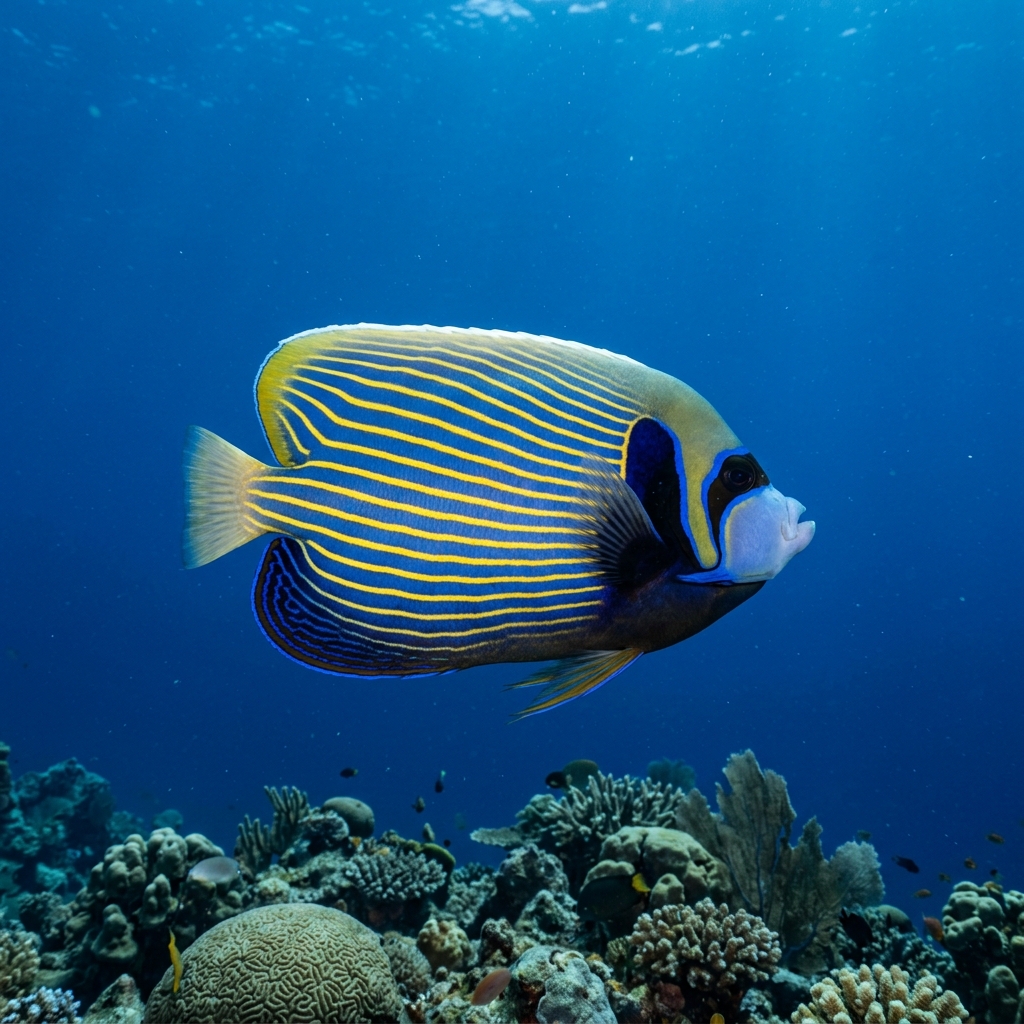
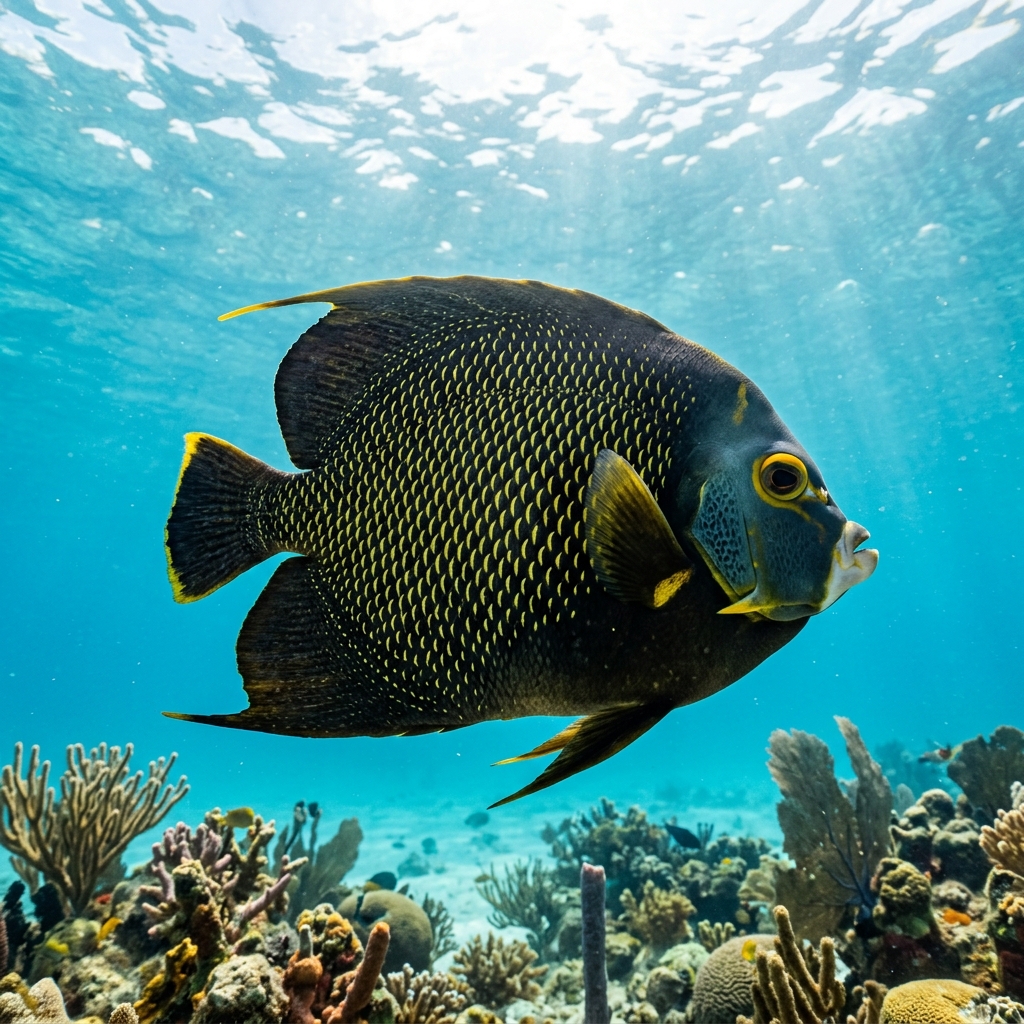
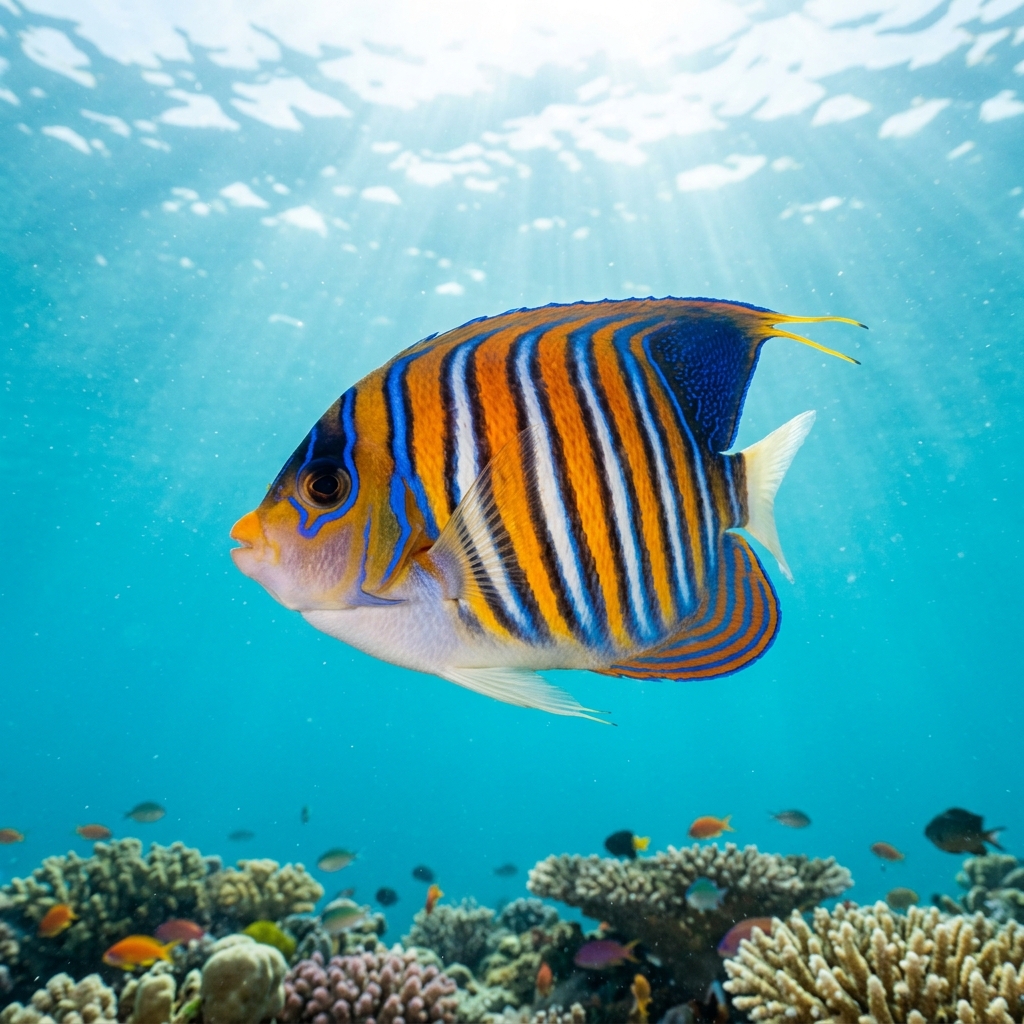
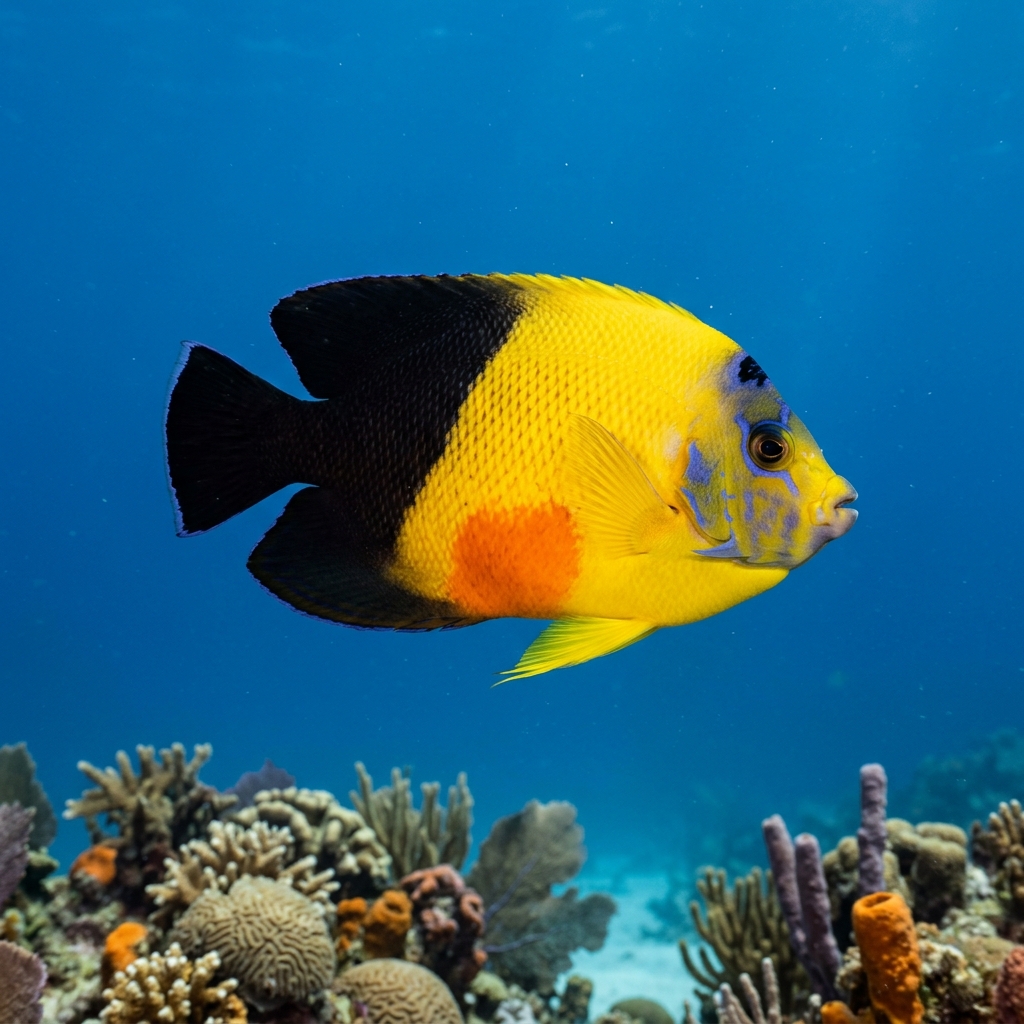
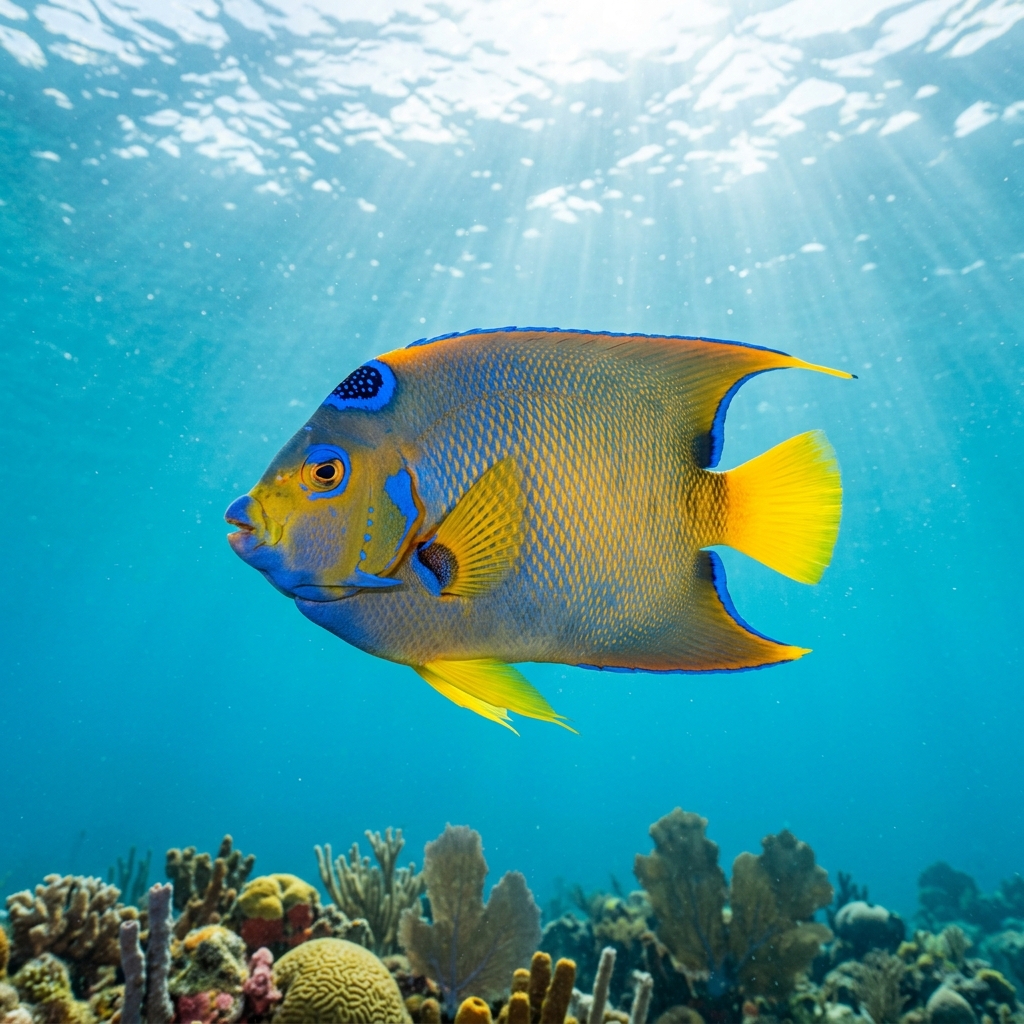
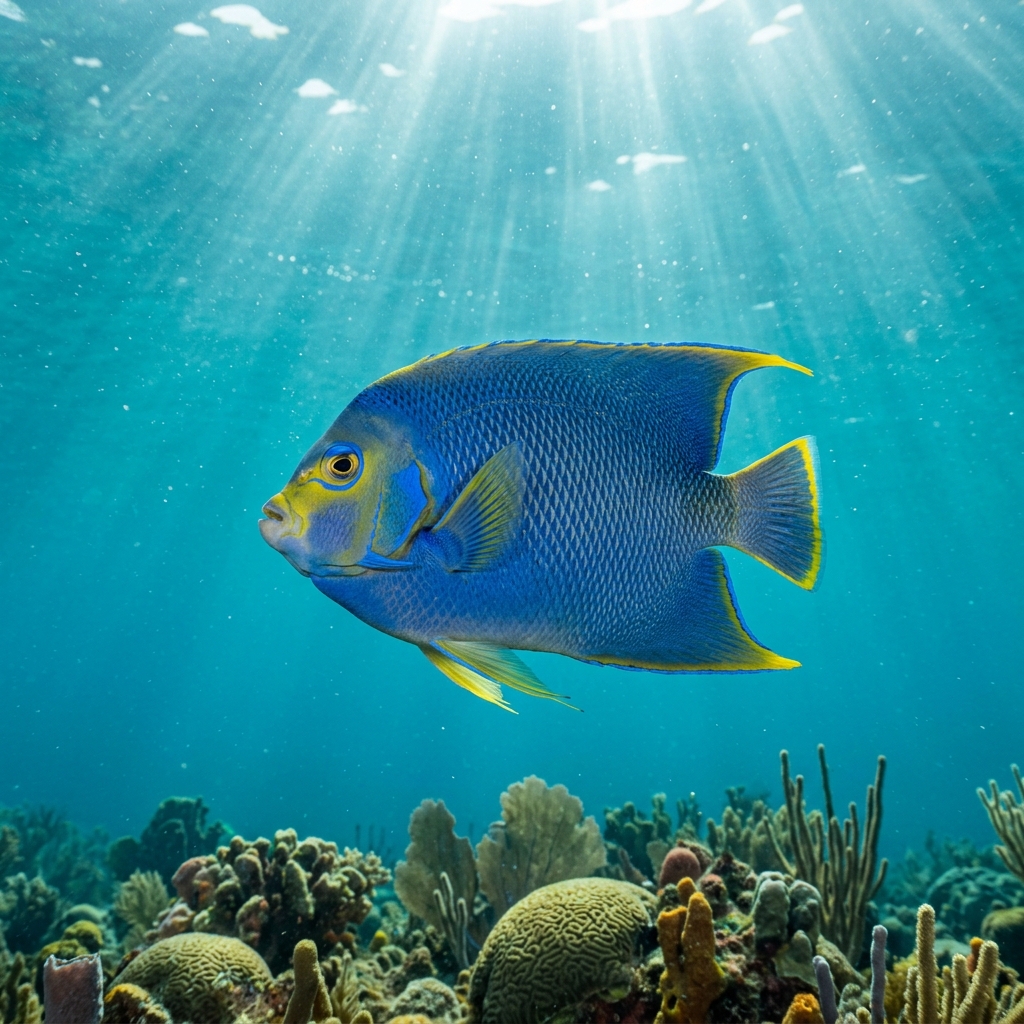
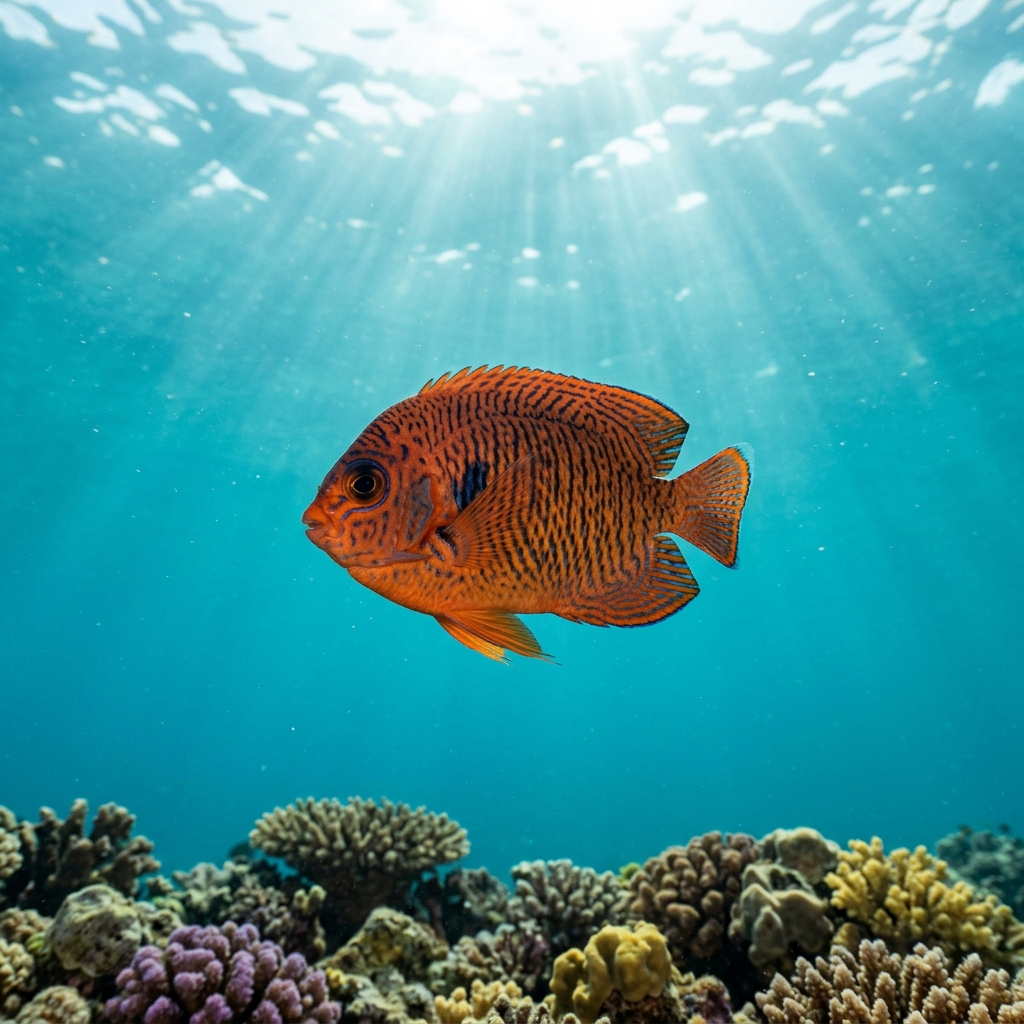
A small, disc-shaped angelfish with a warm orange-rust body overlaid with fine blue-purple reticulations (net-like markings) that intensify toward the rear. The trailing portion of the body and dorsal fin fade into deep blue-black, creating a striking two-tone contrast that is unlike anything else on Hawaiian reefs. Juveniles show a similar pattern but with more vivid blue barring on the flanks. Being endemic to Hawaiʻi, geography alone is often your best first clue.
Potter's Angelfish hugs the reef closely, typically working over rubble, coral outcroppings, and algae-covered rock in the 15-80 m range where it grazes on algae and detritus. It is shy and will often duck into a crevice when a diver approaches, so slow, unhurried movement and patience pay off. Encounters tend to be brief glimpses of a solitary fish or a small loose group, rarely hovering in the open for long.
Potter's Angelfish is a protogynous hermaphrodite: females can transition into males when a dominant male is absent from the social group. A single male typically holds a small harem of females, and the largest female will change sex if he disappears.
Sightings concentrate from October through February, so the autumn-to-winter window is your best bet in Hawaii. The species is found in water between roughly 24 and 27 °C, which reflects Hawaii's slightly cooler winter temperatures.
Potter's Angelfish is essentially a Hawaiian endemic, and all recorded dive-site sightings sit within Hawaii. It is logged across a wide spread of Hawaiian dive sites, from the Big Island to Maui and Oʻahu, making Hawaii the only reliable destination in the world to find it.
Mapping where Potter's Angelfish is logged…
Hawaii is the only place in the world to see Potter's Angelfish, as it is endemic to the Hawaiian archipelago. Dive sites across the main Hawaiian islands, including the Big Island, Maui, and Oʻahu, have all produced sightings.
Diver sightings concentrate between October and February. Visiting during this autumn-to-winter window in Hawaii gives you the best odds of an encounter.
Look for a small disc-shaped fish with a two-tone pattern: the front half is orange-rust with fine blue-purple reticulations, while the rear half and dorsal fin turn deep blue-black. No other Hawaiian reef fish shares this combination. Being in Hawaii narrows it down immediately, since this species lives nowhere else.
Potter's Angelfish is one of the smaller Hawaiian angelfishes, typically reaching around 10 cm in length. Their compact, disc-like shape makes them look neat and well-defined on the reef even at that size.
Across the Hawaiian sites where it is recorded, it is rated rare at the majority of locations and uncommon at most others, with only a handful of sites rating it as common. Slow, calm dives with patient observation give you the best chance of spotting one before it retreats into a crevice.
Site and sighting data is aggregated from diver logs, iNaturalist and GBIF. For taxonomy and conservation status:
Rock Beauty
1,573 sites