Centropyge multifasciata
Spot the multibarred angelfish in Sulawesi, Tahiti, or the Visayas. Warm-water reefs, year-round presence, but expect an uncommon sighting, here's where to look.
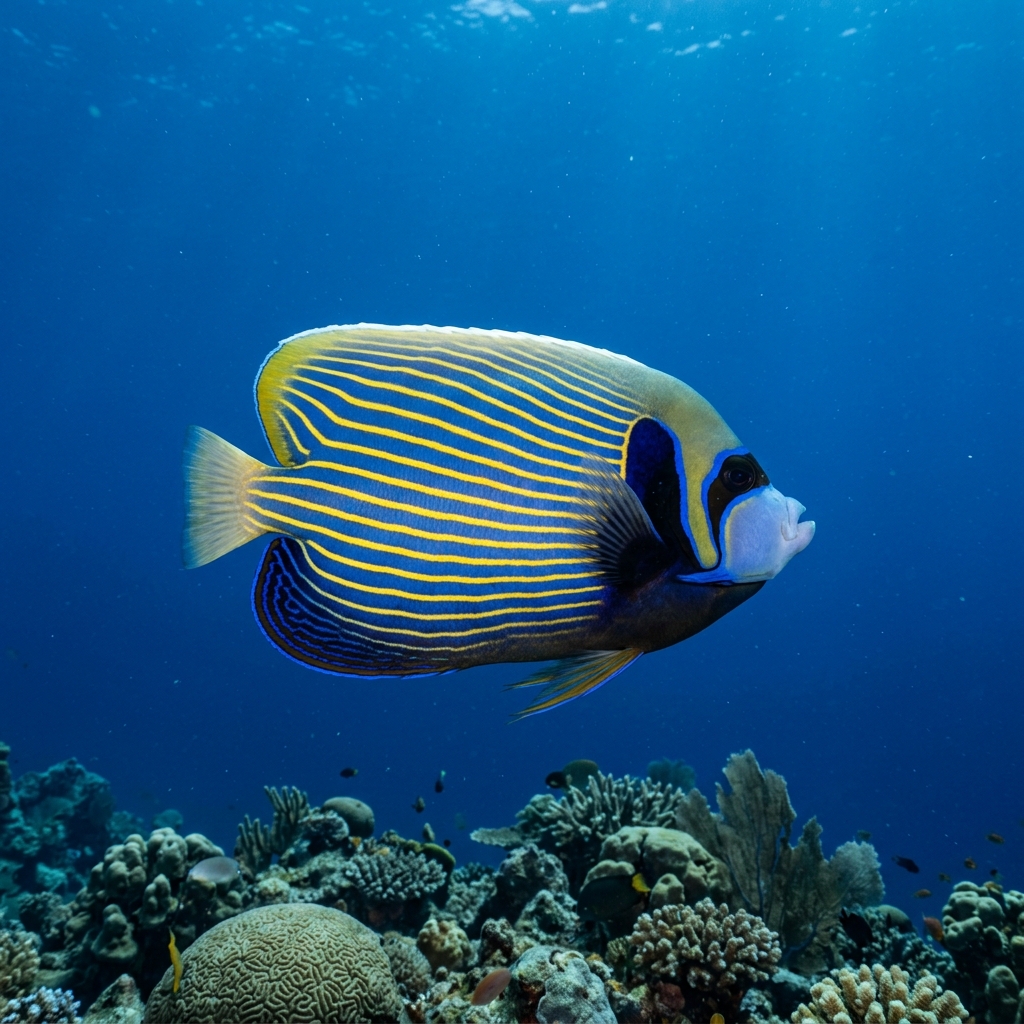
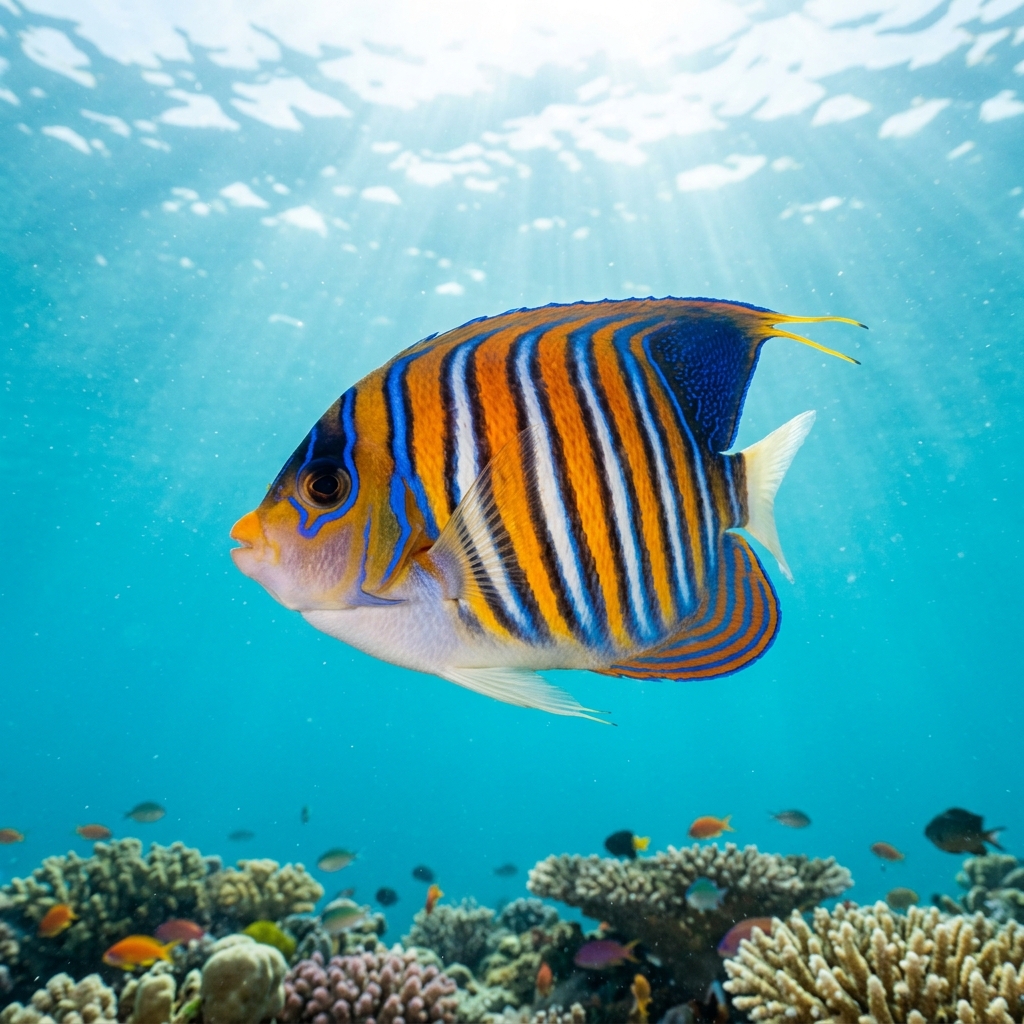
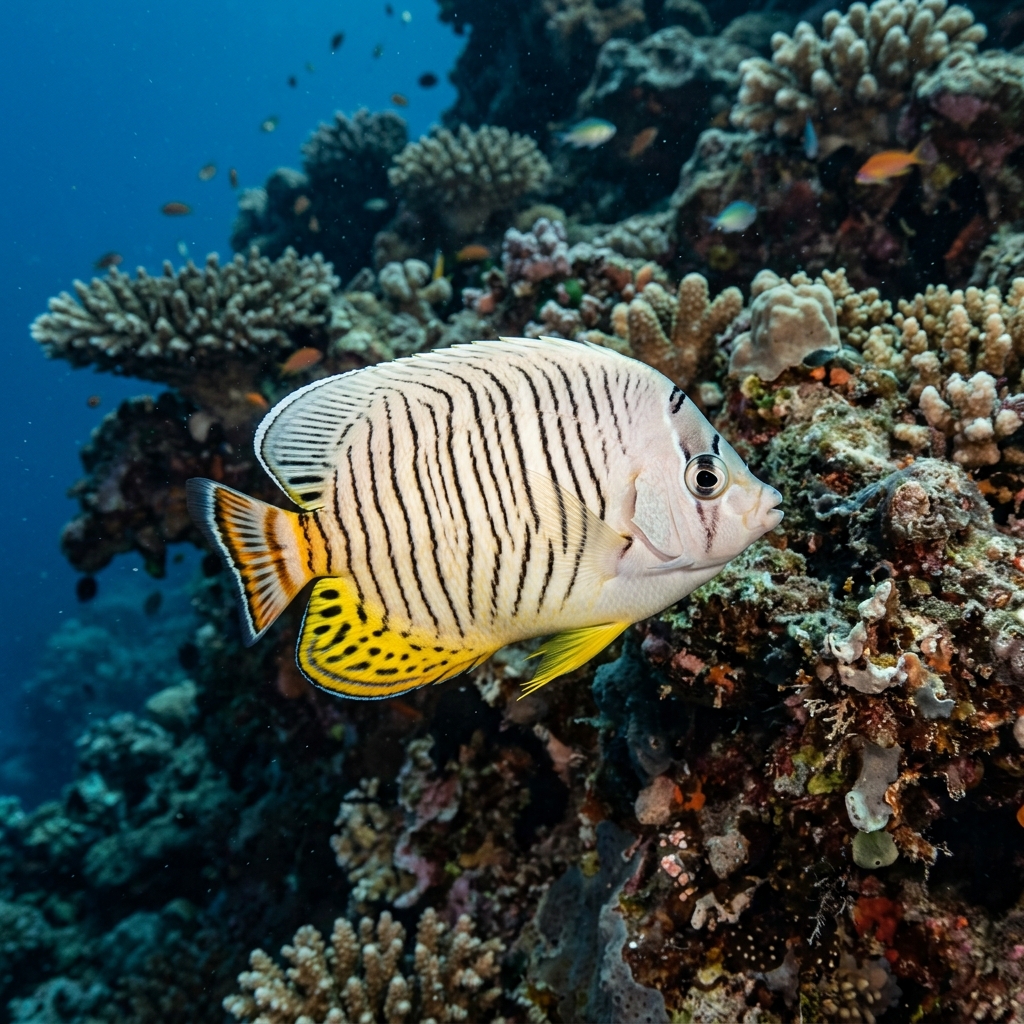
Dozens of thin, alternating dark and pale vertical bars running from head to tail give this small angelfish its name and make it unmistakable once you know what to look for. The body is deep and disc-shaped, typical of pygmy angelfish (dwarf members of the Pomacanthidae family), and the overall impression underwater is of a compact, boldly striped coin. Look for the dark bar running through the eye, which anchors the pattern at the front end. Found in warm, tropical water between roughly 27 and 29 °C, it tends to stay close to the reef rather than venturing into open water.
When spotted, it is usually picking at the reef surface, grazing on algae, detritus, and encrusting organisms in the way most pygmy angelfish feed. It tends to stay low, darting into crevices or coral heads at the first sign of a diver approaching too quickly, so a slow, patient approach yields a much longer look. Sightings are typically of solitary individuals or small groups, rarely far from cover.
Like most angelfish, multibarred angelfish are protogynous hermaphrodites, females can transition to males when social circumstances require it, which is a common reproductive strategy across the family.
No clear seasonal peak has emerged from the data, so this is treated as a year-round species. Its comfort zone of 27 to 29 °C matches the typical conditions on Indo-Pacific tropical reefs throughout the year, so timing a trip around other factors makes sense.
By far the strongest concentration of sightings comes from Sulawesi, Indonesia, making it the go-to destination for anyone targeting this species. French Polynesia, particularly around Tahiti, and the Central Visayas in the Philippines also provide reliable encounters, with smaller numbers of records from Pohnpei in Micronesia, Maluku and Papua, Kadavu in Fiji, and the Rock Islands of Palau.
Mapping where Multibarred Angelfish is logged…
Sulawesi, Indonesia is comfortably the top location, followed by the waters around Tahiti in French Polynesia and the Central Visayas in the Philippines. Smaller numbers of sightings come from Pohnpei in Micronesia, parts of Maluku and Papua, Kadavu in Fiji, and the Rock Islands of Palau.
No strong seasonal pattern has been identified, so any time of year is reasonable. The species favours consistently warm tropical water around 27 to 29 °C, which is available year-round across most of its range.
The pattern does all the work: a dense series of thin, alternating dark and pale vertical bars covering the entire body. The disc-shaped profile and small size place it among the pygmy angelfish, and no other species in its range carries quite that many narrow bars. A dark bar through the eye is a useful anchor point when lighting is poor.
No. They are small, shy fish that retreat from divers rather than approaching them. There is no risk associated with encountering one.
Like most members of the angelfish family, they are protogynous hermaphrodites, individuals that start life female can become male if the social structure of their group requires it. This flexibility allows small populations to sustain themselves even when one sex is lost.
Site and sighting data is aggregated from diver logs, iNaturalist and GBIF. For taxonomy and conservation status:
Rock Beauty
1,573 sites