Oxycheilinus celebicus
Small reef wrasse most reliably found around Sabah and Koror, Palau, in warm water between 25 and 29 C, mostly year-round.
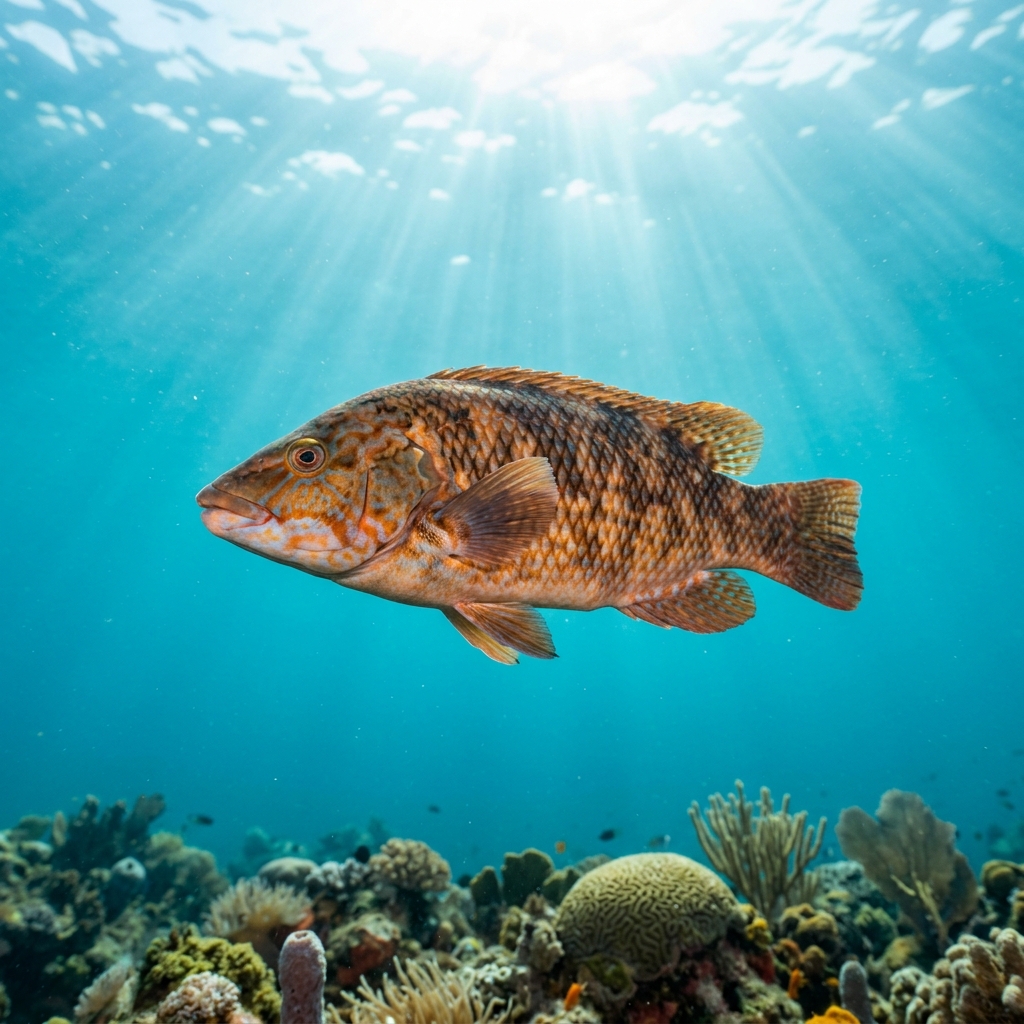
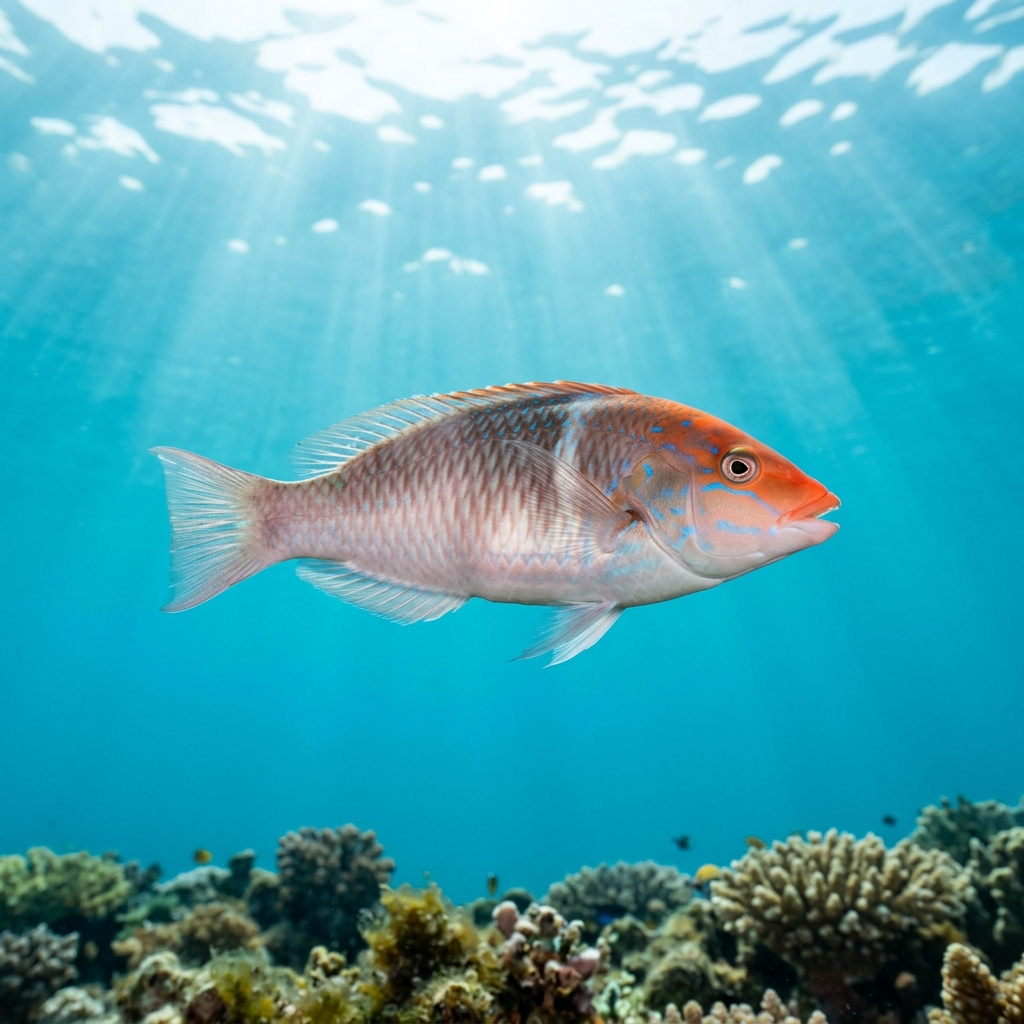
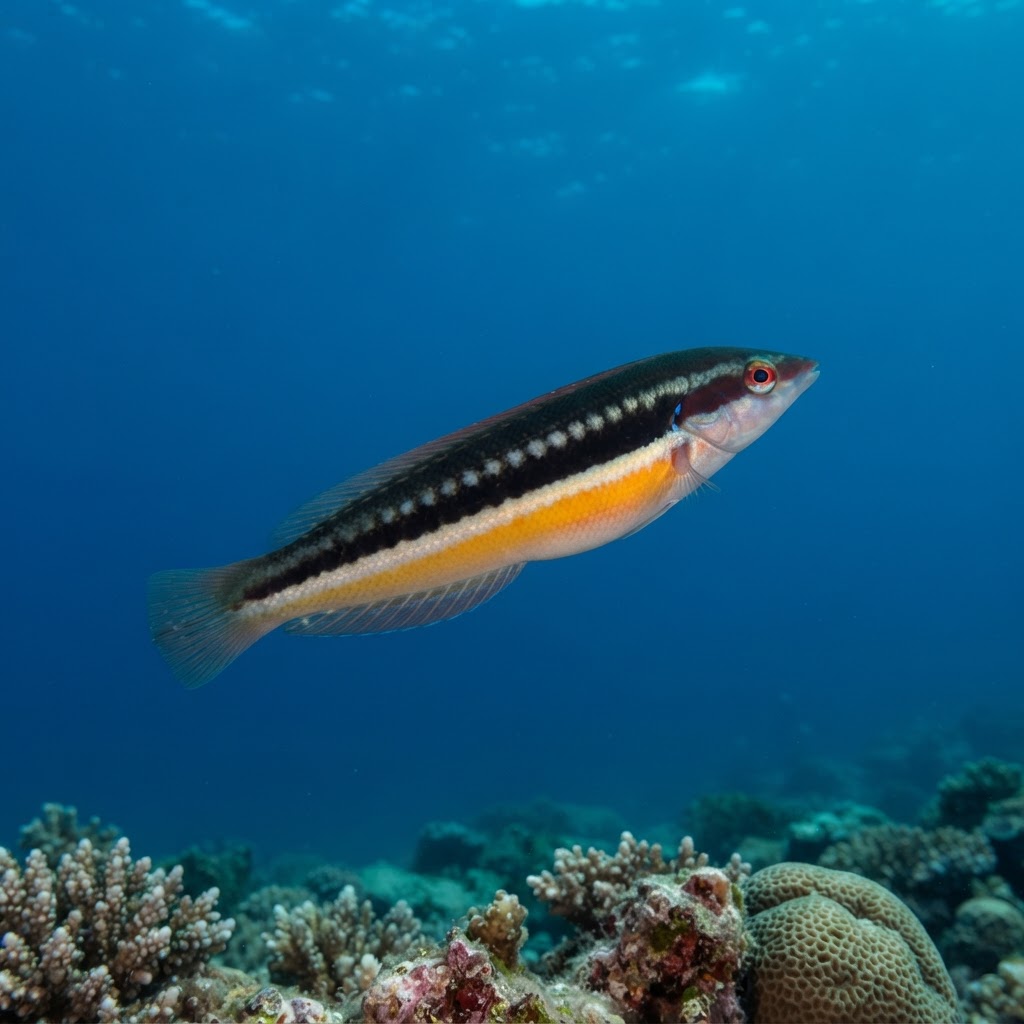
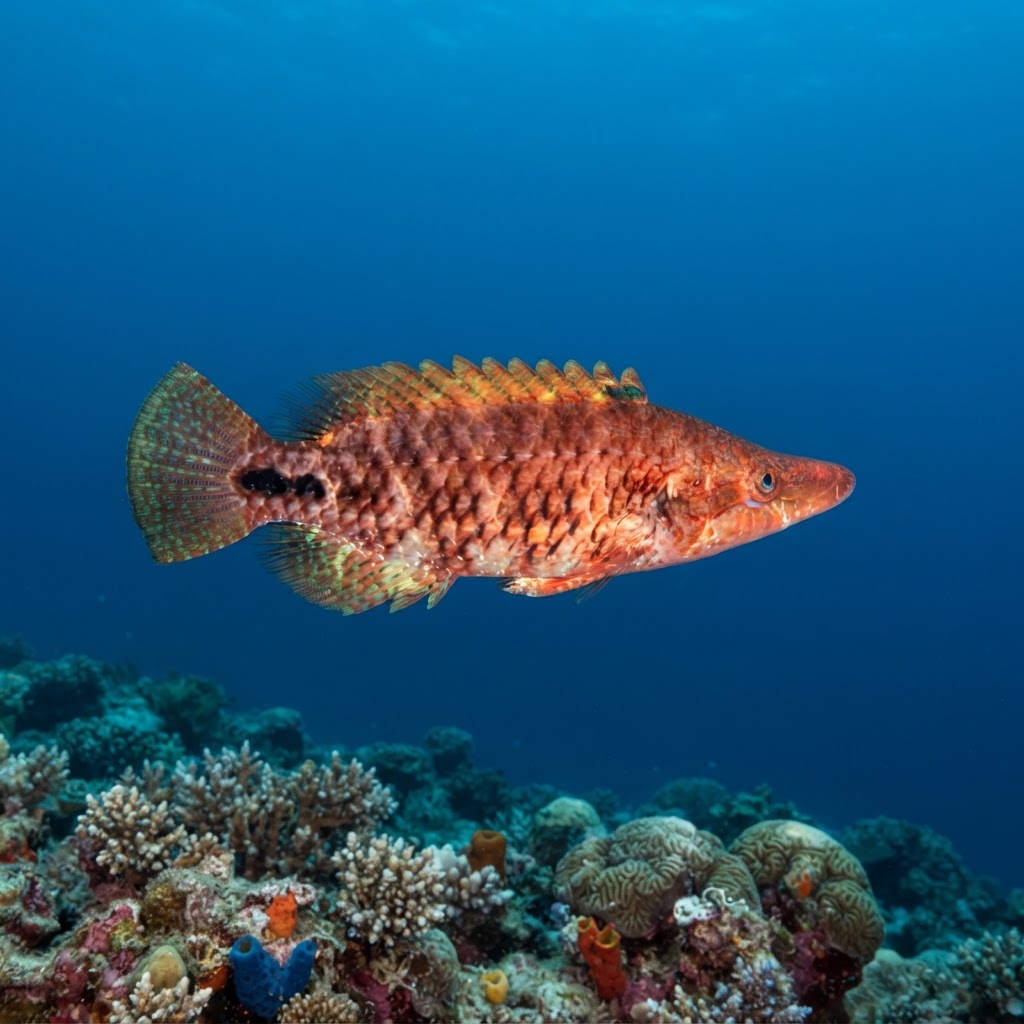
A slim, elongated wrasse that tops out around 16 cm, so easy to overlook against reef structure. Look for the pointed, slightly downturned snout typical of Oxycheilinus wrasses and a body pattern of muted reddish-brown to olive tones with faint stripes or blotches rather than bold, high-contrast markings. It tends to sit low and still near rubble or coral heads rather than swimming in open water, which combined with its size makes it a fish you find by looking closely rather than spotting from a distance.
Divers most often log this wrasse hovering close to the reef or rubble patches, staying low rather than cruising in open water. It is generally logged as uncommon rather than common, so sightings tend to come from divers scanning slowly and checking crevices and coral bases rather than swimming past at pace. It shows the typical wrasse habit of darting for cover the moment it feels watched too closely, so a slow approach gives the best look.
Like other Oxycheilinus wrasses, it likely feeds by picking small invertebrates and fish off the reef surface, using that pointed snout to probe into crevices and rubble that bulkier reef fish cannot reach.
No clear seasonal pattern shows up in the data, and with a comfortable range of 25.4 to 29.0 C this fish is present on tropical reefs across all these regions year-round. Plan around general dive conditions at each site rather than chasing a season for this species specifically.
Sabah, Malaysia is the most reliable place to log this species, with strong numbers also coming from Koror and Malakal in Palau. Palawan and Mindanao in the Philippines add further sightings, and it also turns up around Atauro Island in Timor-Leste, Sulawesi in Indonesia, and Tufi in Papua New Guinea.
Mapping where Celebes Wrasse is logged…
Sabah in Malaysia and Koror and Malakal in Palau are the strongest areas for sightings, with further records from Palawan and Mindanao in the Philippines, Atauro Island in Timor-Leste, Sulawesi in Indonesia, and Tufi in Papua New Guinea.
There is no strong seasonal pattern in the sightings, and its comfortable temperature range of 25.4 to 29.0 C means it is present on these reefs throughout the year, so any time you are diving Sabah or Palau gives a fair chance.
Look for a slim, elongated wrasse around 16 cm with a pointed snout and muted reddish-brown to olive colouring, usually sitting low near rubble or coral rather than swimming in open water.
They typically reach about 16 cm in length, making them one of the smaller reef-associated wrasses divers encounter, easy to miss unless you are looking closely at rubble and coral bases.
No, they pose no danger to divers. They are small, retiring reef fish that dart for cover when approached rather than showing any defensive or aggressive behaviour.
Site and sighting data is aggregated from diver logs, iNaturalist and GBIF. For taxonomy and conservation status:
Bird Wrasses
3,632 sites