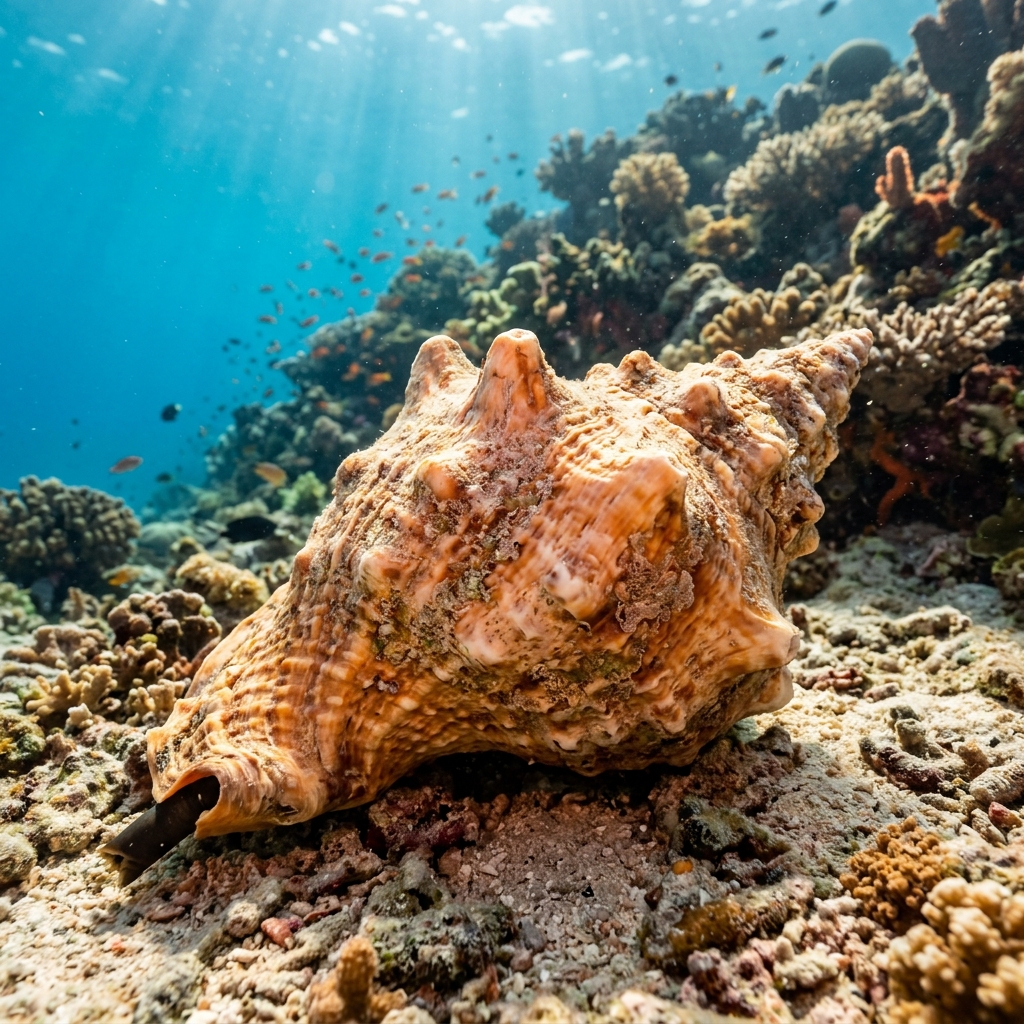
Cassis cornuta
Spot the Giant Helmet in Zanzibar or the Philippines, a rare but rewarding find on tropical reefs in warm 25-29 °C waters.
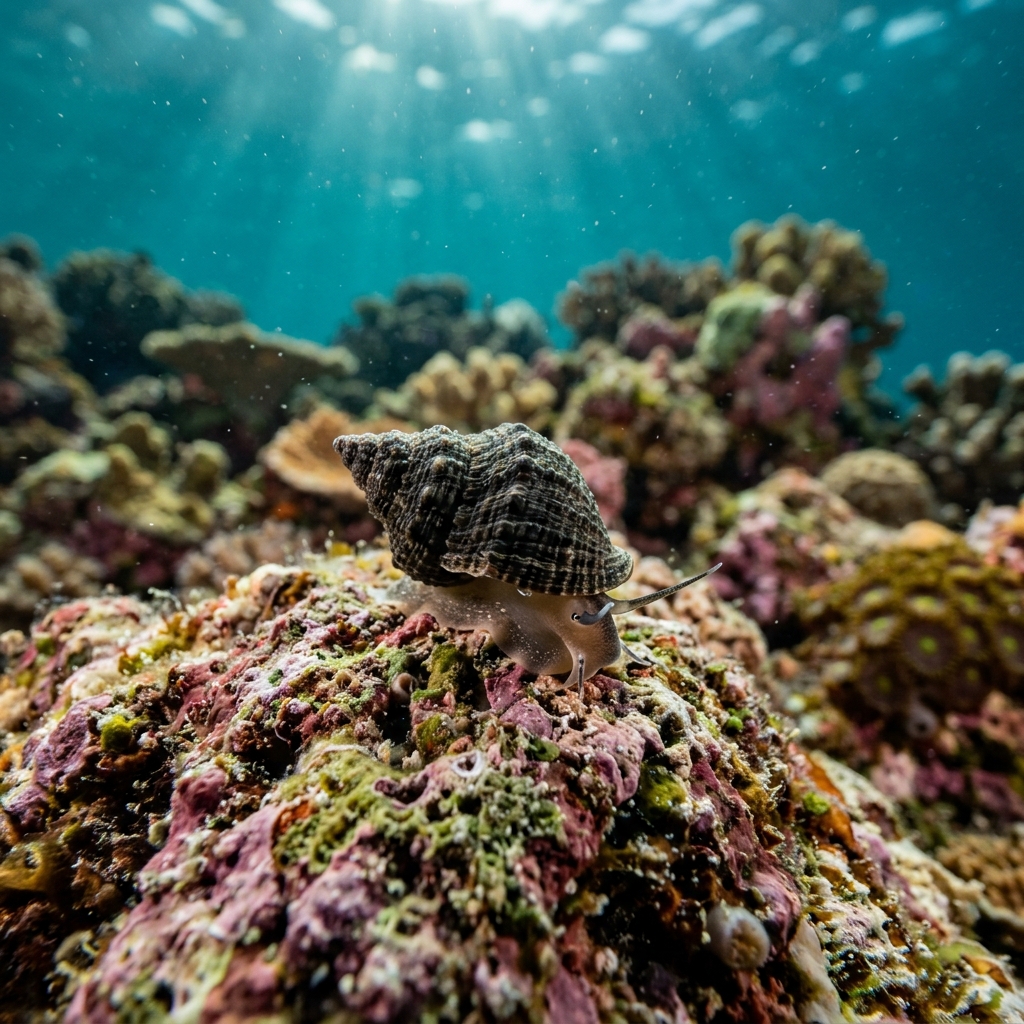
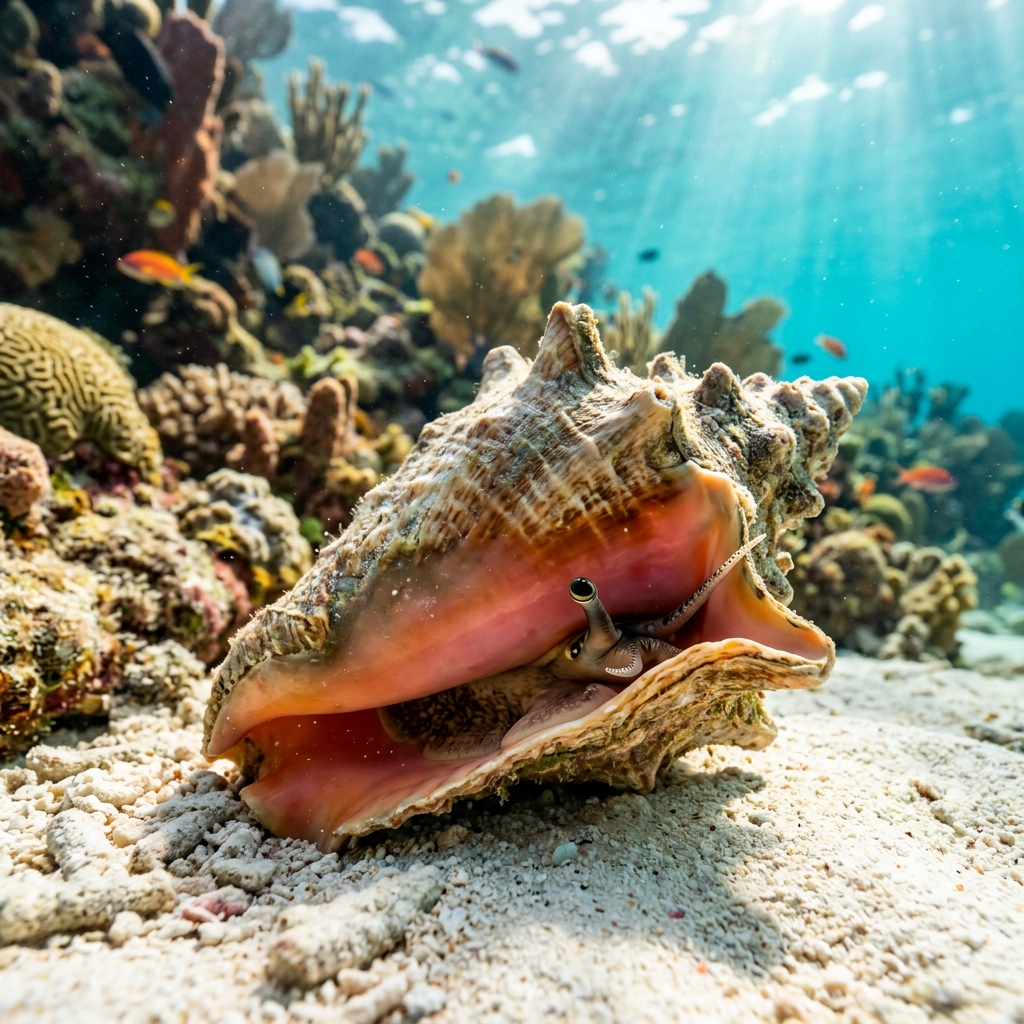
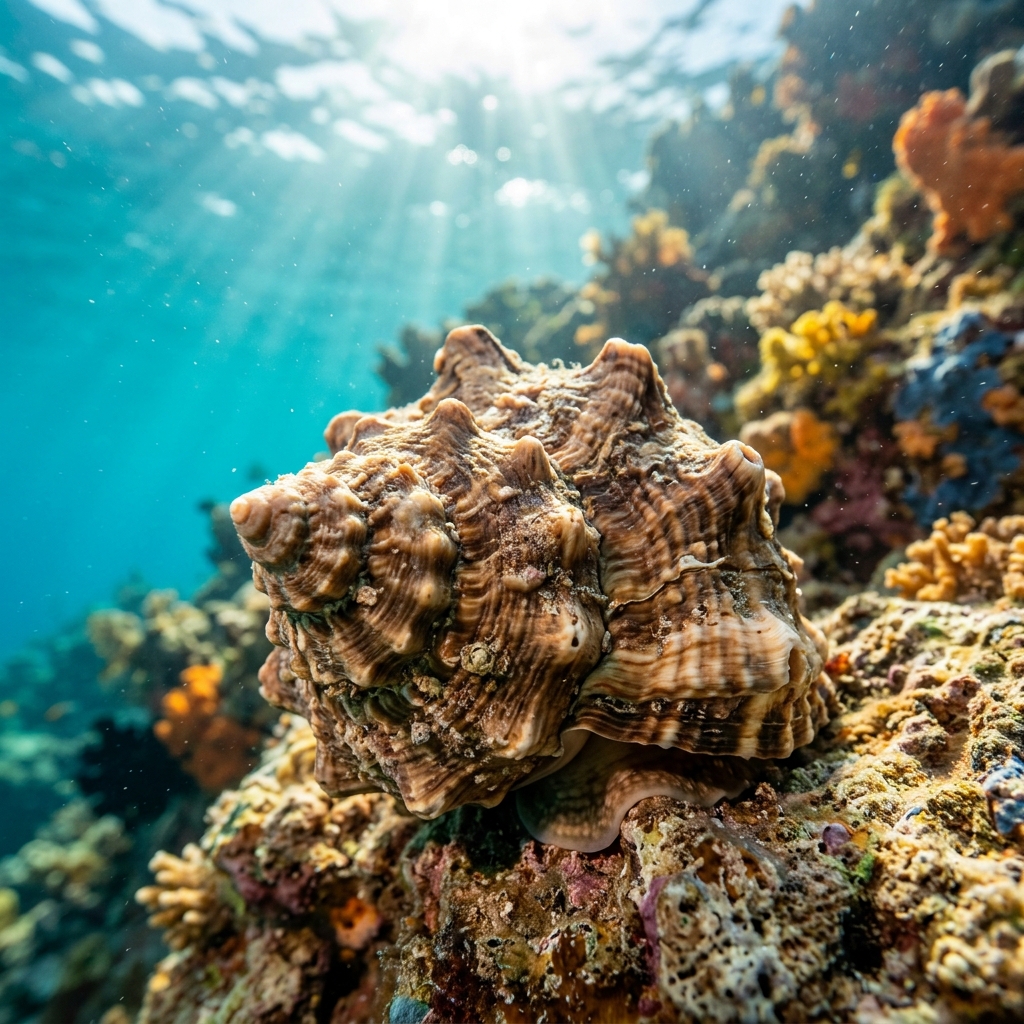
One of the largest gastropod shells in the sea, the giant helmet is hard to miss when you do find one, the shell alone can exceed 30 cm and is heavy, roughly triangular in profile, and cream to pale orange with brown spiral markings. The outer lip (the flared edge of the shell opening) is thick, toothy, and often bright orange or pink, which is the standout field mark underwater. The living animal extends a large, mottled foot when active, making it look even more substantial. Nothing else on a tropical reef quite resembles this combination of size and that distinctive flared, tooth-lined aperture.
Giant helmets are most often found moving slowly across sandy patches and rubble adjacent to reef, typically at night when they are most active, daytime encounters often reveal one sitting motionless on the sand. They tend to ignore divers entirely, continuing to plough forward or remaining still. Their main prey is sea urchins, and you may encounter one with a shell pressed against an urchin mid-feed.
Giant helmets are one of the few predators capable of tackling large, spiny sea urchins; they immobilise prey with a paralysing secretion before consuming them, making them an important natural check on urchin populations on Indo-Pacific reefs.
There is not enough monthly data to point to a peak season, so treat it as a year-round possibility. Its observed temperature range of 25 to 29 °C means tropical reefs in all of these regions can host it at any time of year.
Most sightings come from the Philippines and Tanzania, with Zanzibar and the Mindanao and Central Visayas regions of the Philippines leading the logged records. A smaller cluster of observations exists around Liuqiu Island in Taiwan, and there is a single logged sighting from Hawaii.
Mapping where Giant Helmet is logged…
The Philippines and Tanzania are the best-represented countries in diver records, with Zanzibar, the Mindanao region, and the Central Visayas all producing consistent sightings. Liuqiu Island in Taiwan and Hawaii have also produced logged encounters.
There is no clear seasonal peak in the data, so sightings are possible year-round across its tropical range. Water temperatures of 25 to 29 °C suit it well, which describes most Indo-Pacific dive destinations throughout the year.
Look for a very large, heavy shell with a cream and brown patterned exterior and a thick, flared opening edged with prominent teeth, often tinged orange or pink. No other common reef gastropod reaches this size with that distinctive lip. It is usually found on sandy or rubble substrate rather than hard coral.
They are among the largest gastropods in the world. Shells regularly exceed 30 cm in length, and exceptional specimens can approach 40 cm. Underwater, the sheer bulk of the shell makes them easy to spot on open sand.
It feeds almost exclusively on echinoderms, particularly large sea urchins. It pins the urchin under its foot, delivers a paralysing chemical secretion, and then uses its toothed radula to consume the soft tissue. This predatory role helps prevent urchin population explosions on coral reefs.
Site and sighting data is aggregated from diver logs, iNaturalist and GBIF. For taxonomy and conservation status:
Triton Shell
2,297 sites