Dorippe frascone
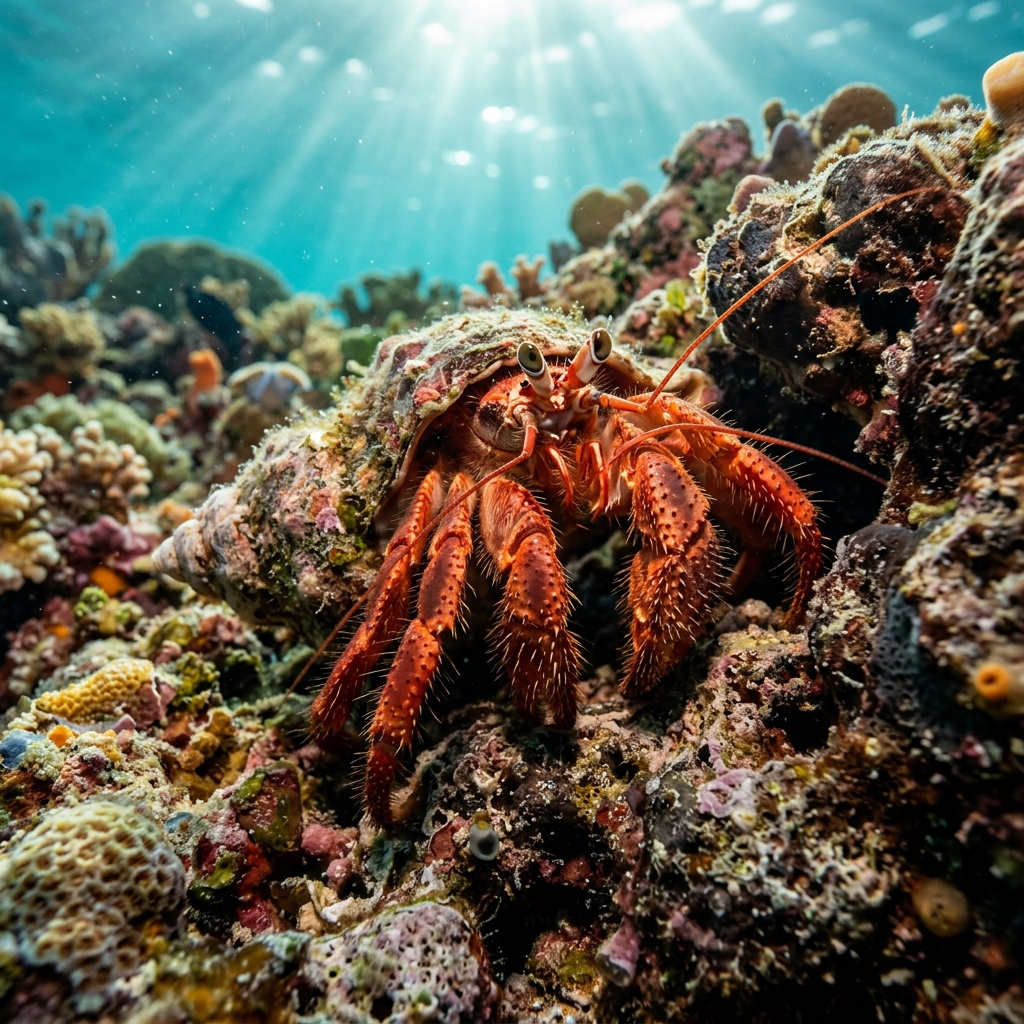
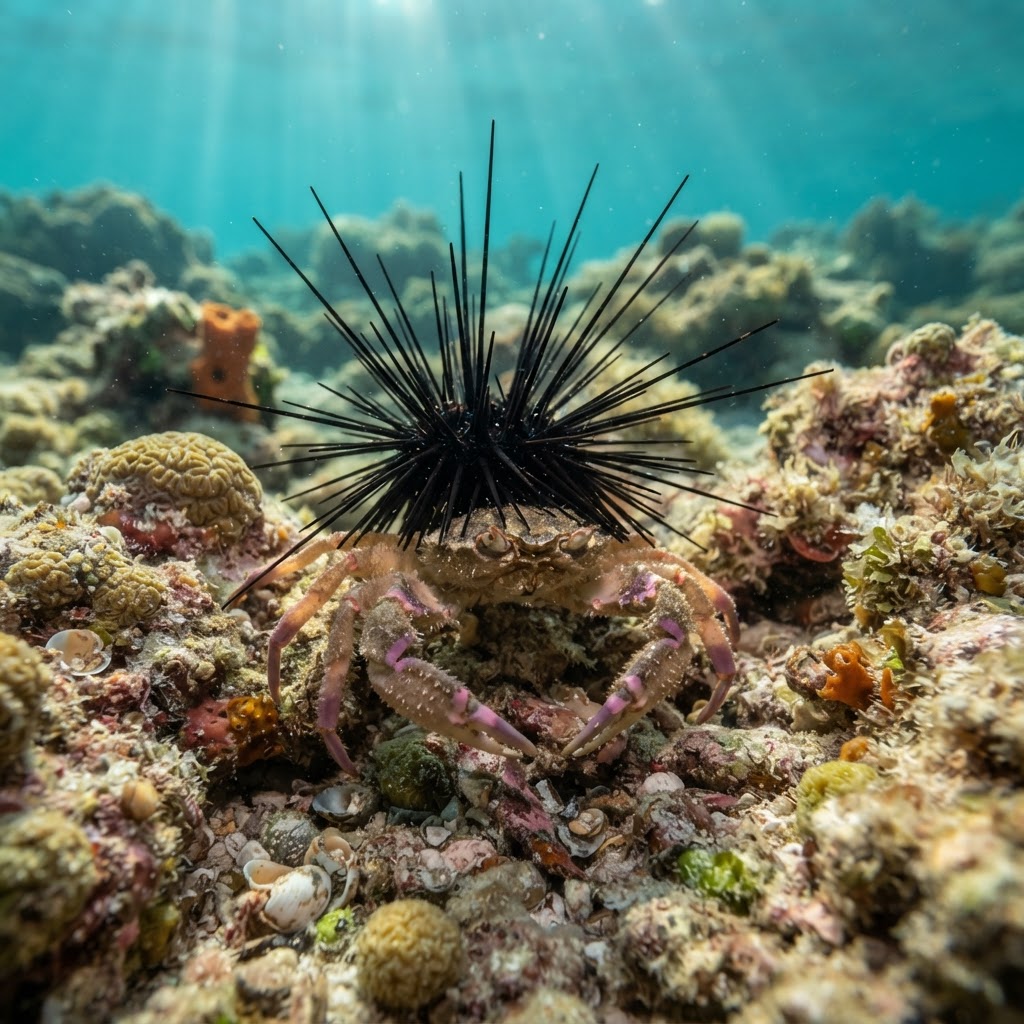
A rare find in Luzon, Philippines, this crab hides under a living shell or urchin it carries on its back like a shield.
Small, flattened crab that is often hard to spot because it is carrying something else on its back: a dead shell, a piece of coral rubble, or a live sea urchin held in place with its rear pair of legs. The carapace itself is a dull mottled brown or grey, built low and wide rather than tall, and the last two pairs of legs are twisted upward to grip the carried object rather than for walking. Look for a moving lump of debris on the sand rather than for the crab's own colouring.
Divers usually notice it moving slowly across sand or rubble patches, often mistaken at first for a bit of drifting shell or a small live urchin. It tends to stay low and still when a torch or camera comes close, relying on its disguise rather than fleeing. Most sightings are casual finds during a macro-focused dive rather than a targeted search, since it turns up more by chance than by habitat pattern.
It carries a shell, coral fragment, or even a live sea urchin over its back using specially adapted rear legs, using the object as portable camouflage and armour against predators.
No clear seasonal pattern shows up in the data, and its warm-water niche of roughly 25 to 31 C fits tropical reef conditions year-round in both the Philippines and Queensland, so there is no known best month to look for it.
Most reports come from Luzon in the Philippines, with a smaller number logged from Queensland, Australia. It is a rare find at every site where it has been recorded, so treat any sighting as a bonus rather than a target for a specific dive site.
Mapping where Carrier Crab is logged…
The most reliable region is Luzon in the Philippines, with additional sightings logged in Queensland, Australia. It is uncommon to rare everywhere it has been recorded, so sightings are a matter of luck rather than a guaranteed find.
There is no detected season in the sighting data. Its water-temperature niche of about 25 to 31 C matches year-round tropical reef conditions in both the Philippines and Queensland, so any time of year is fair game.
Look for a small, flat-bodied crab carrying a shell, coral chunk, or even a live urchin on its back, held in place by its rearmost pair of legs. The crab itself is dull brown or grey and easy to overlook until the carried object moves.
Exact size data is not confirmed for this species, but like other dorippid crabs it is small, typically fitting easily in the palm of a hand, which is part of why it is so easy to miss on a reef.
It deliberately picks up and carries objects such as empty shells, coral rubble, or a live urchin using its modified back legs, using the load as a mobile disguise and shield against predators.
Site and sighting data is aggregated from diver logs, iNaturalist and GBIF. For taxonomy and conservation status:
European Green Crab
2,469 sites