Liachirus melanospilos
A flat, spotted sand-dweller easy to miss: find carpet sole on reef bottoms in Bali and the Philippines in warm 24-29C water year-round.
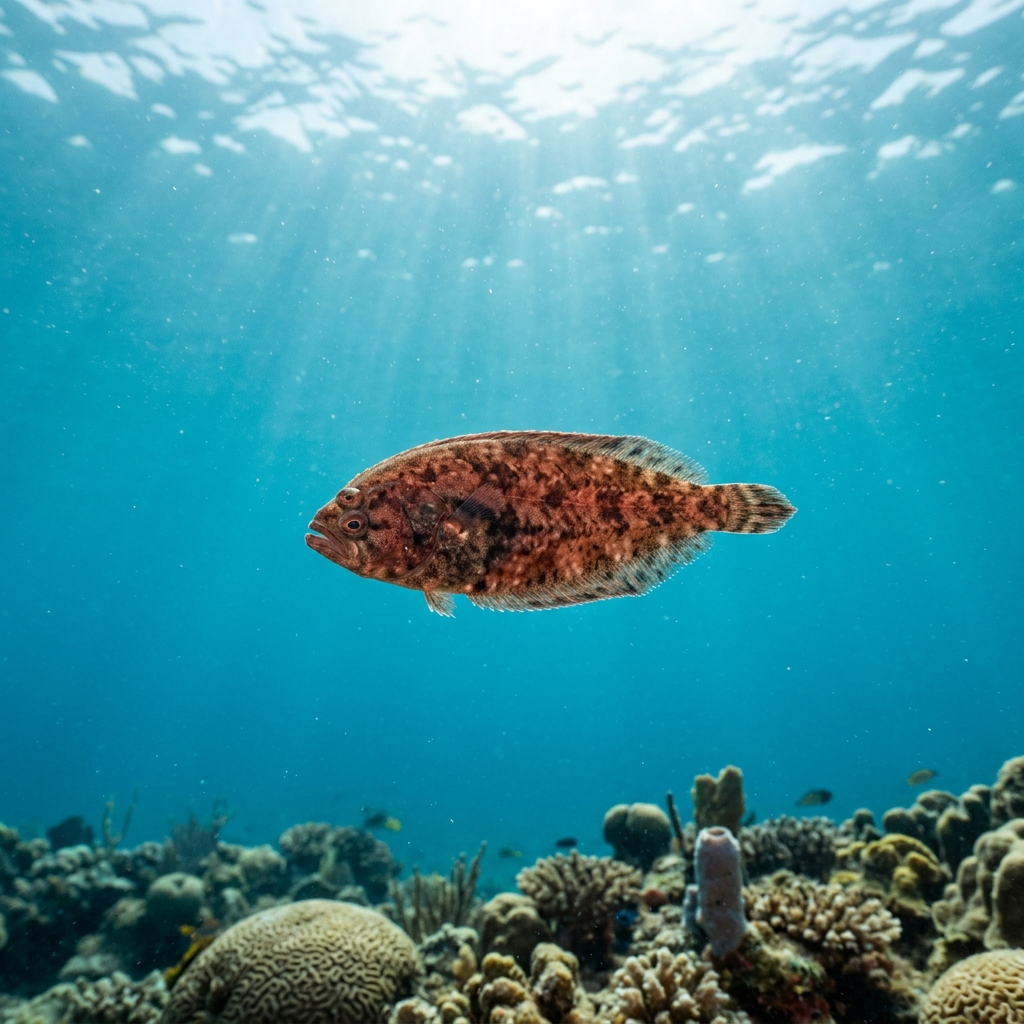
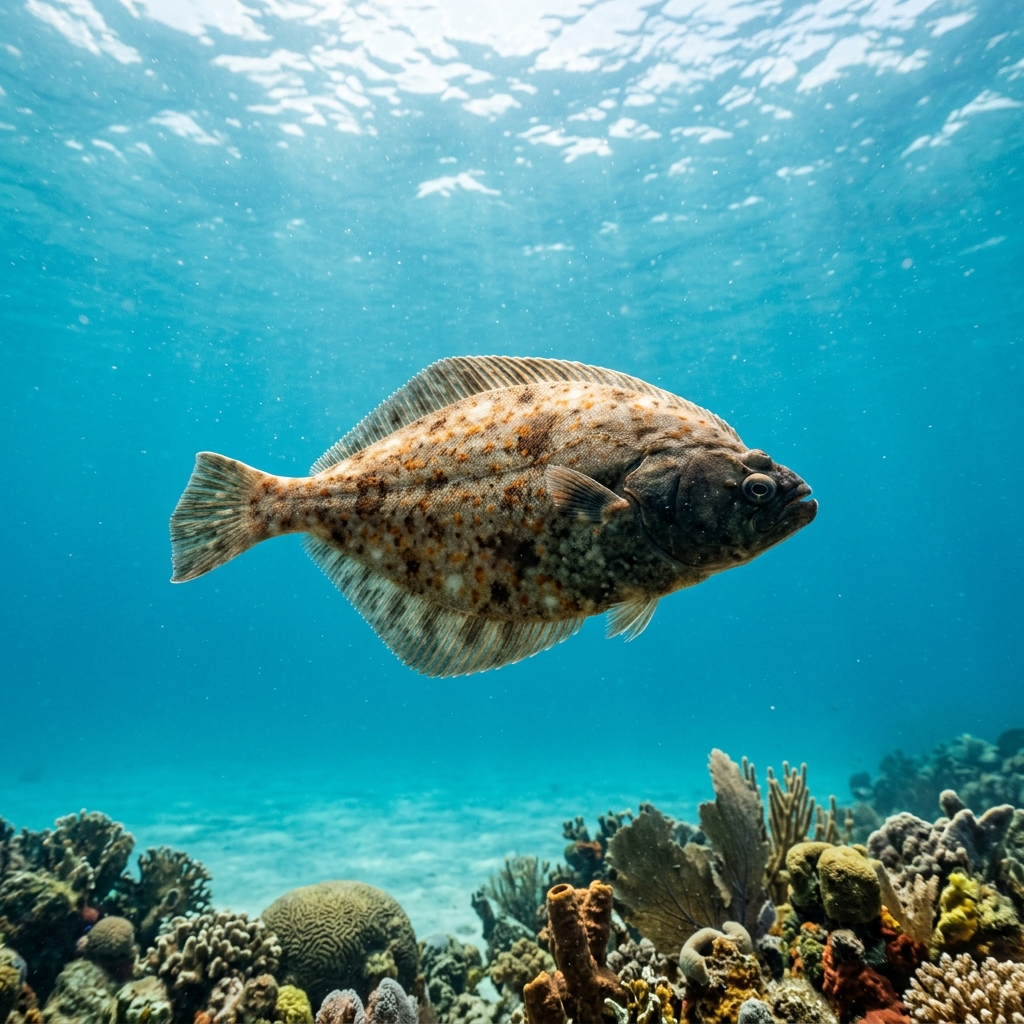
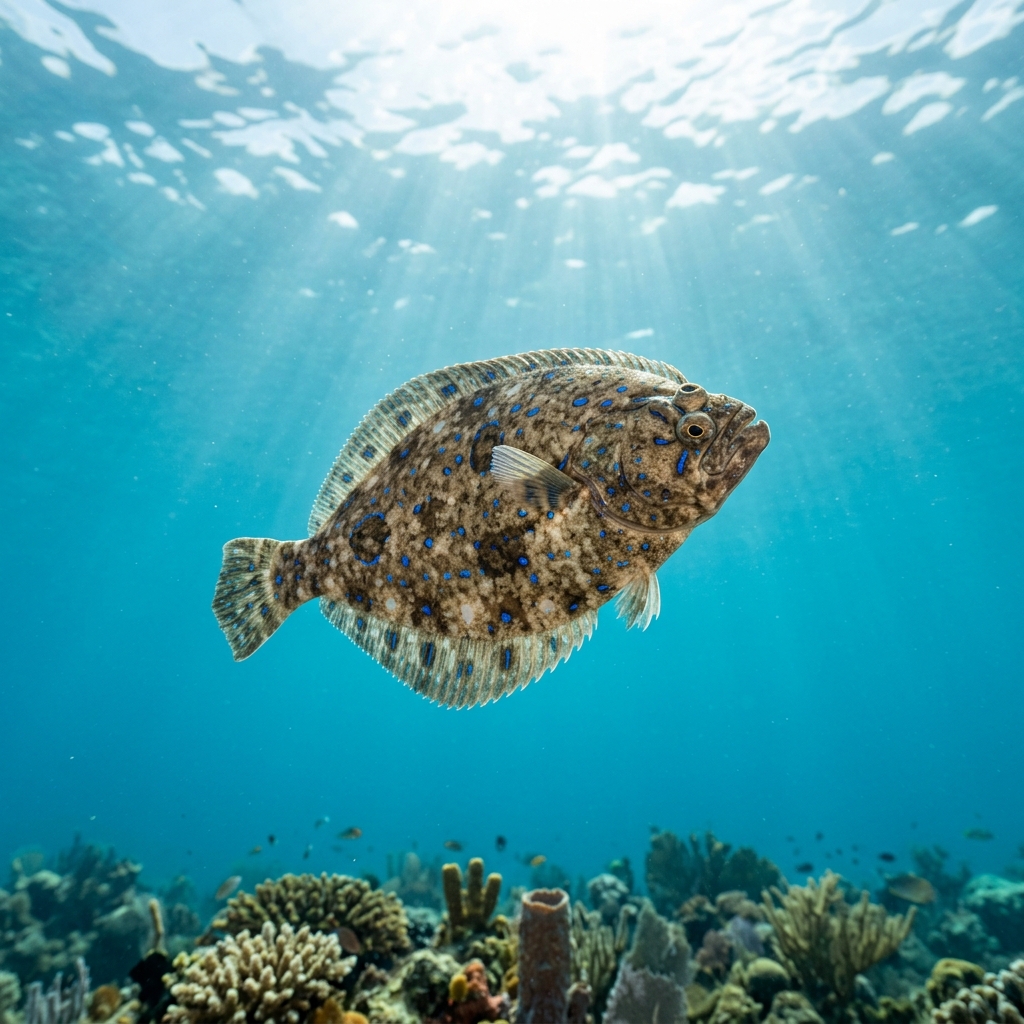
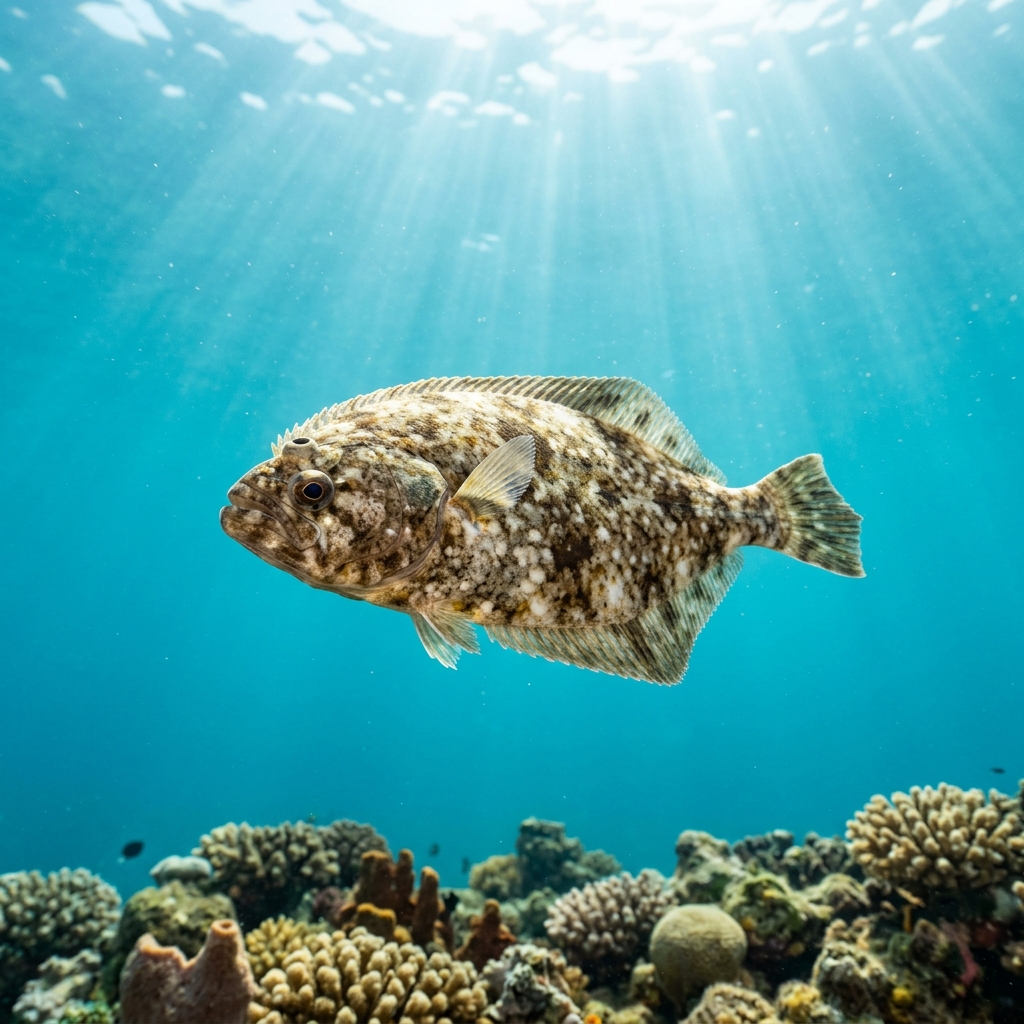
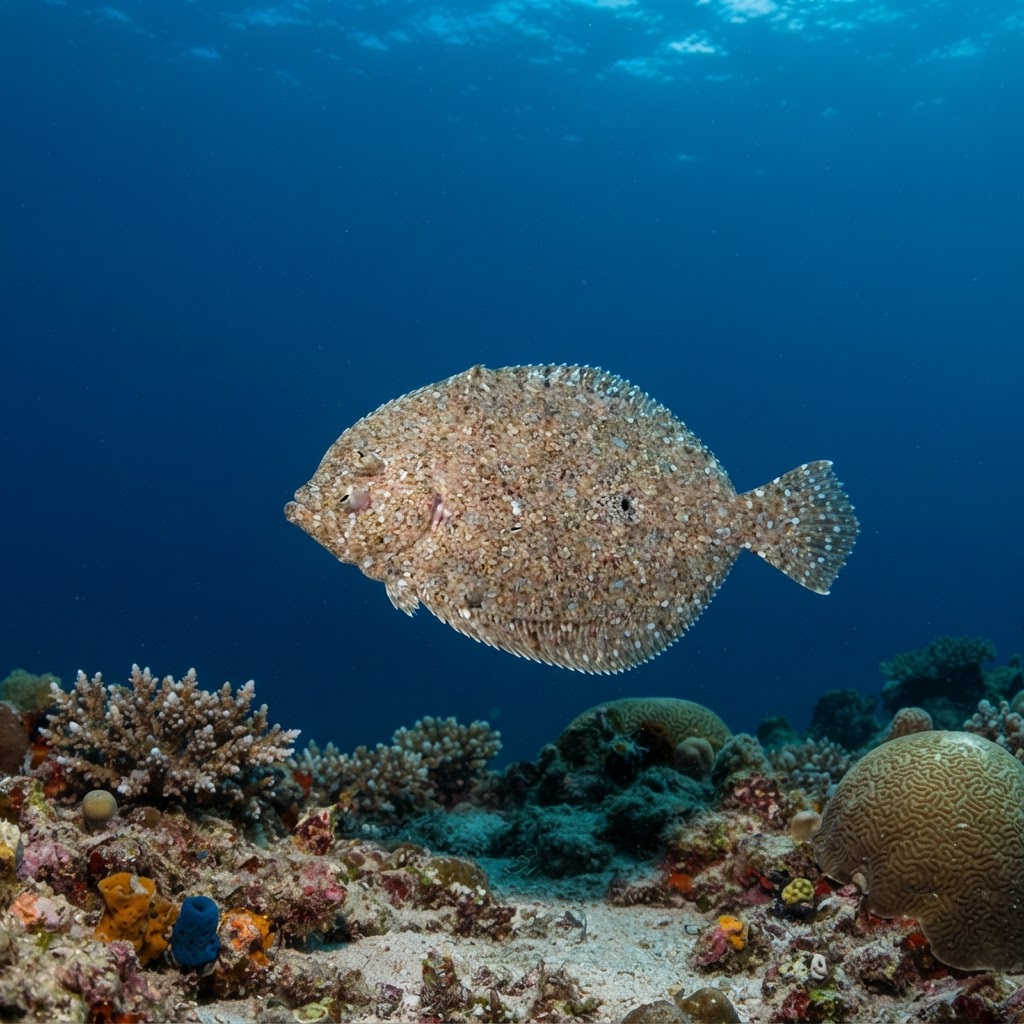
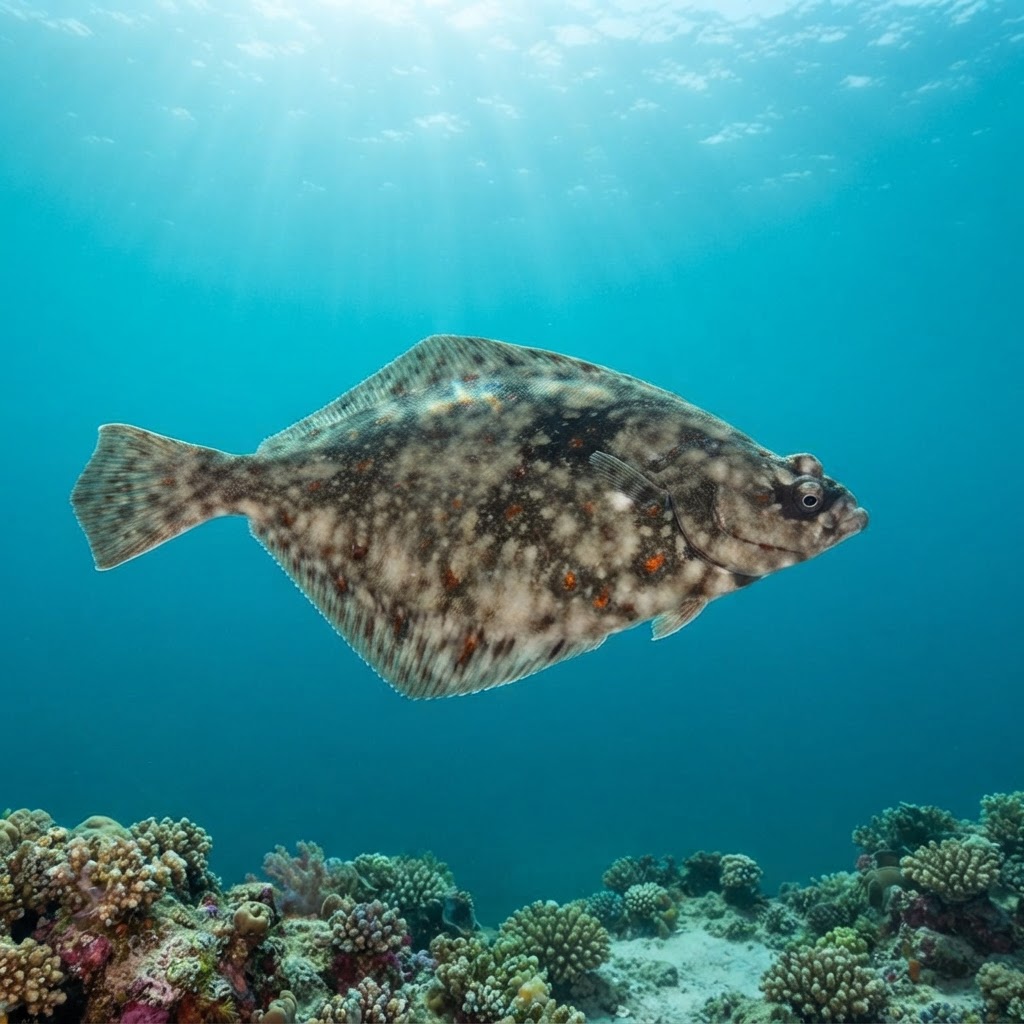
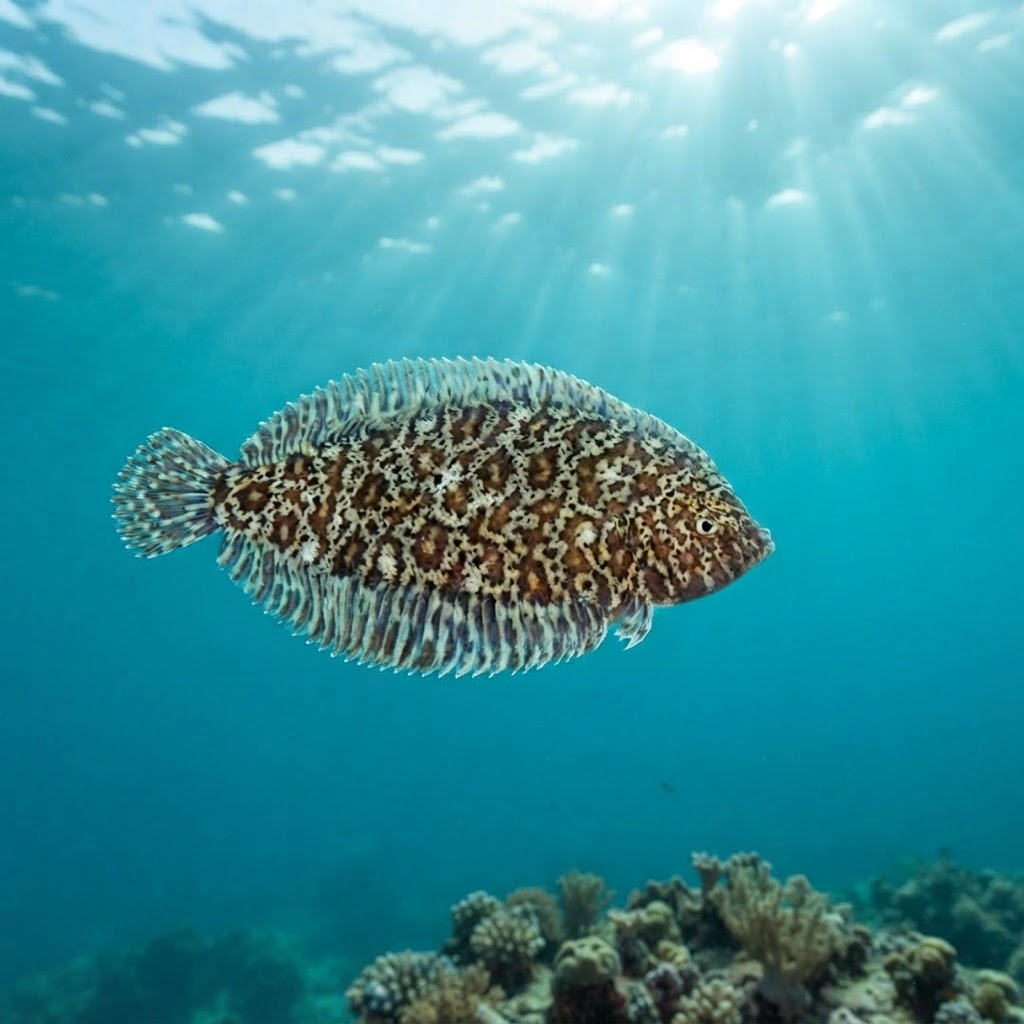
A small, flattened fish that lies pressed against sand or rubble, easy to swim right past. Grows to about 10 cm, with a mottled brown to grey body covered in dark blotches that break up its outline against the seabed. Both eyes sit on the same side of the head, the classic flatfish (sole family) build, and it tends to stay dead still unless disturbed.
Spends most of its time motionless on sand or rubble, often half-buried, relying on its blotchy camouflage rather than fleeing. Divers usually find it during slow bottom-scanning dives or muck dives rather than on open reef swims. It tends to stay put even with a diver close by, making it a good subject for macro photography once spotted.
Like other soles, it's born with eyes on opposite sides of its head like a normal fish, then one eye migrates across the skull as it matures so both end up on the upward-facing side, a transformation that lets it lie flat and still see everything above it.
No clear seasonal pattern in the sightings data, and it sits comfortably in 23.6 to 29.2C water, so it's a year-round find on these tropical reefs rather than a seasonal target.
Most reliably logged in Bali, Indonesia, and across Luzon and the Visayas in the Philippines. These sand and rubble patches near reef structure are where divers doing slow, close-focus dives tend to spot it.
Mapping where Carpet Sole is logged…
Bali in Indonesia and the Luzon and Visayas regions of the Philippines have the most logged sightings, usually on sandy or rubble patches near reef.
There's no strong season in the data. It lives in warm water between about 24 and 29C, so it's present on these reefs all year round.
Look for a flat, roughly 10 cm fish lying still on sand or rubble, mottled brown to grey with dark blotches. Both eyes are on the same side of its head, and it rarely moves unless you get very close.
They stay small, typically around 10 cm long, which combined with their flat shape and camouflage makes them easy to overlook on the seabed.
As with other sole species, juveniles start out symmetrical with one eye on each side of the head. As they grow, one eye migrates around to join the other, letting the adult lie flat with both eyes facing upward.
No, they pose no threat to divers. They are small, sedentary bottom-dwellers that rely on camouflage and stillness rather than any defensive behaviour.
Site and sighting data is aggregated from diver logs, iNaturalist and GBIF. For taxonomy and conservation status:
Wide Eyed Flounder
1,624 sites