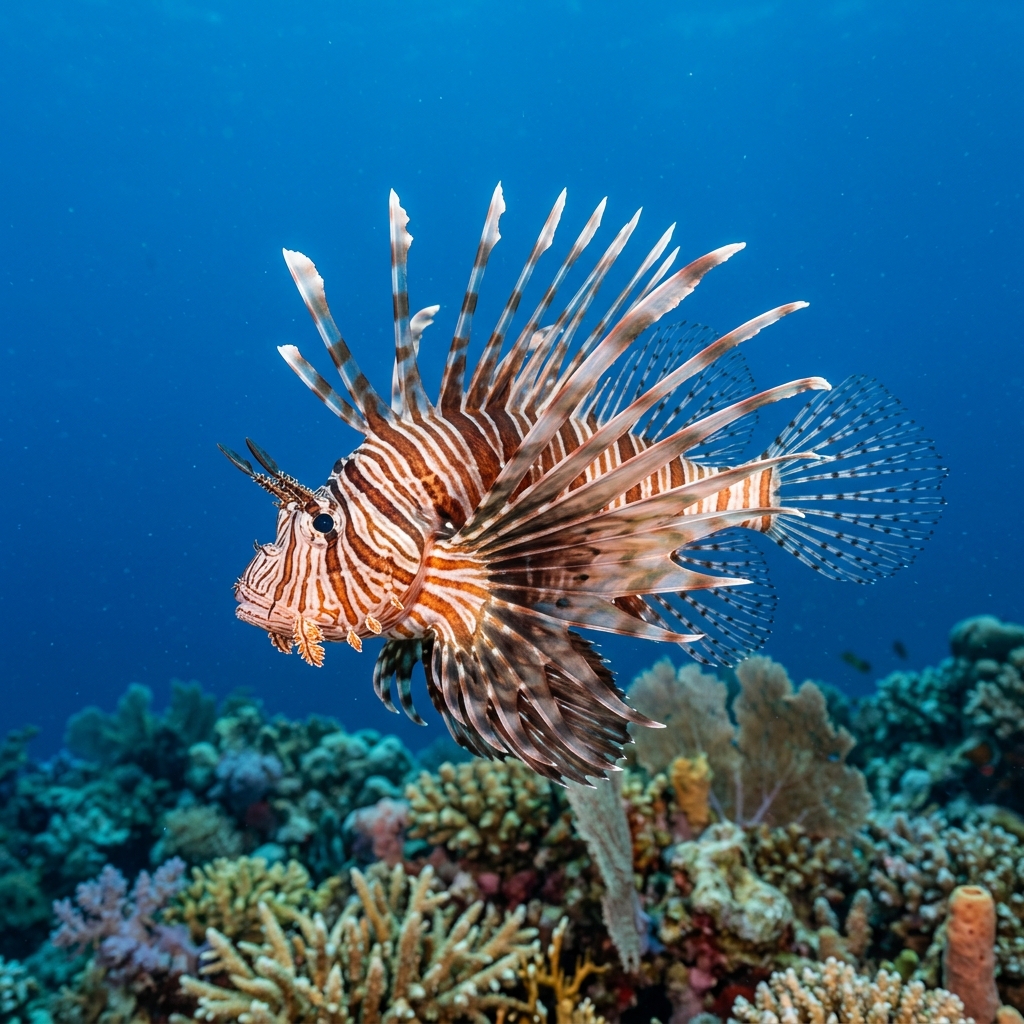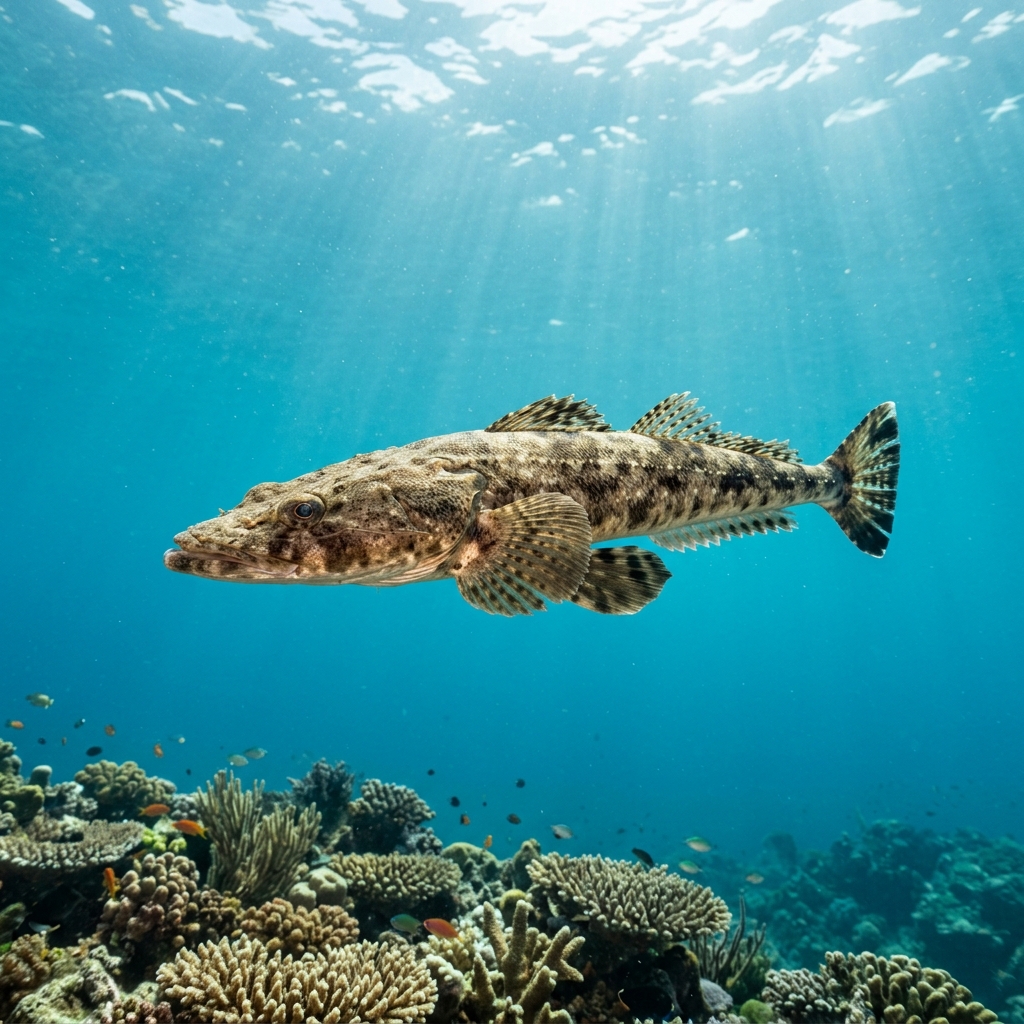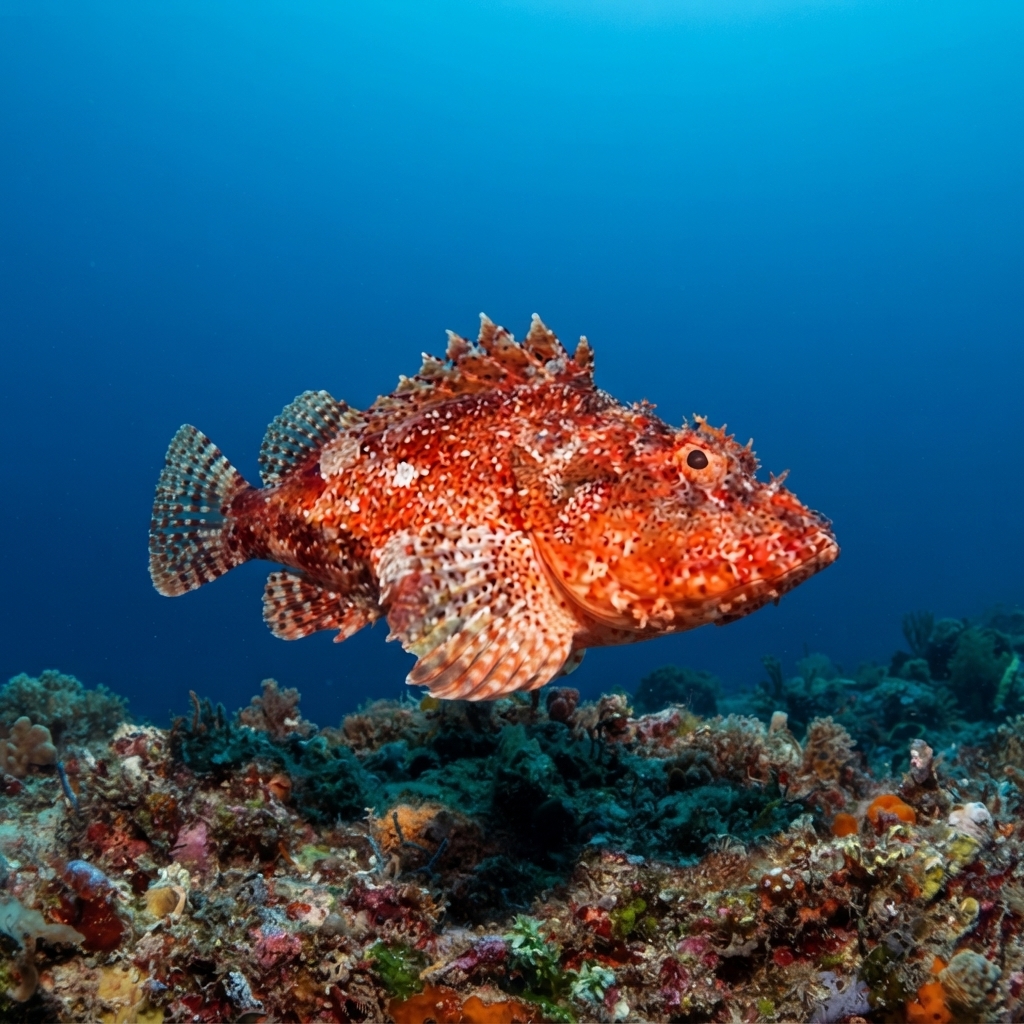
Scorpaena cardinalis
Mottled reef ambush predator found year-round off New Zealand's North Island, often camouflaged on rocky reef between 16-22 C.
Safety warning
Venomous spines run along the dorsal fin, and because this fish is so well camouflaged it is easy to put a hand or knee down on one without seeing it. Keep hands off the reef in areas where it has been logged and watch where you kneel or steady yourself, since a sting causes significant pain and swelling and warrants first aid and medical attention.
If you're stung
Venomous spinesGeneral first-aid guidance, not a substitute for professional medical care. In an emergency, call your local emergency number.
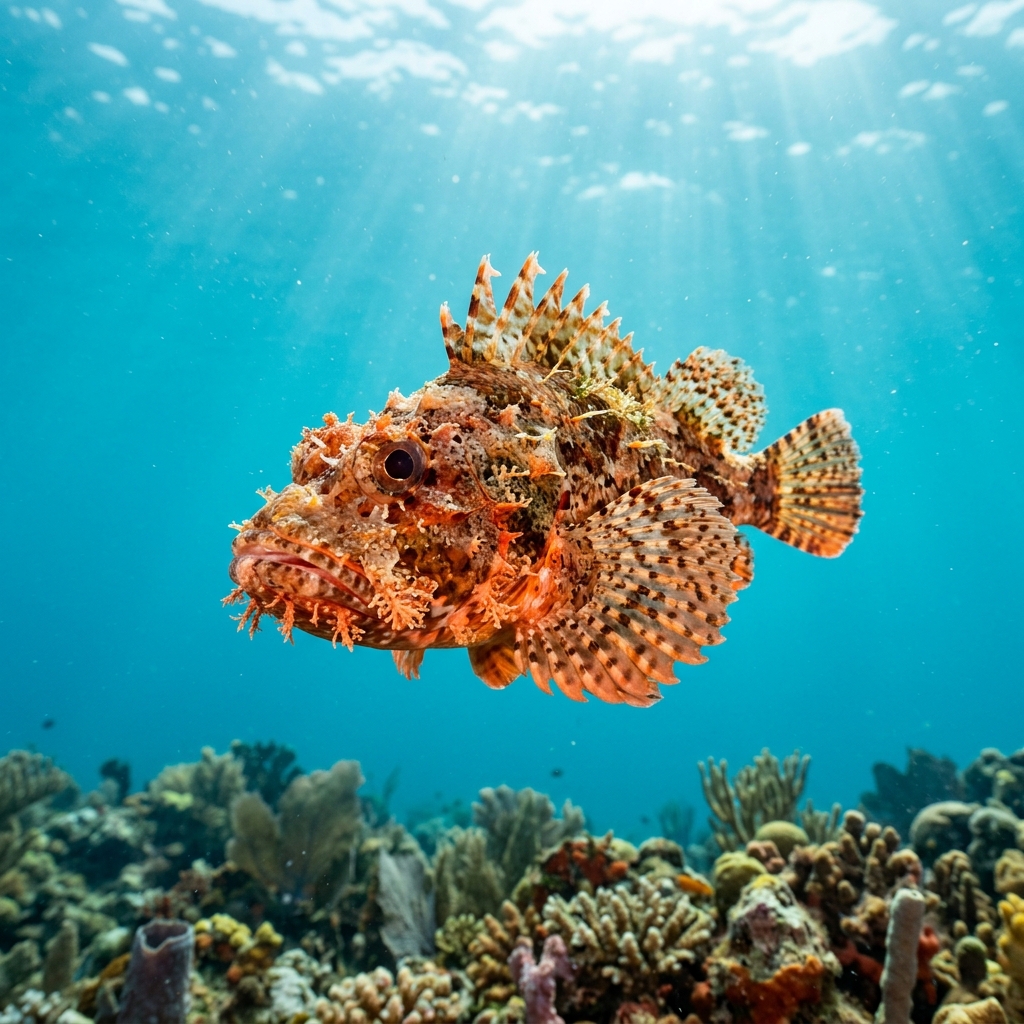
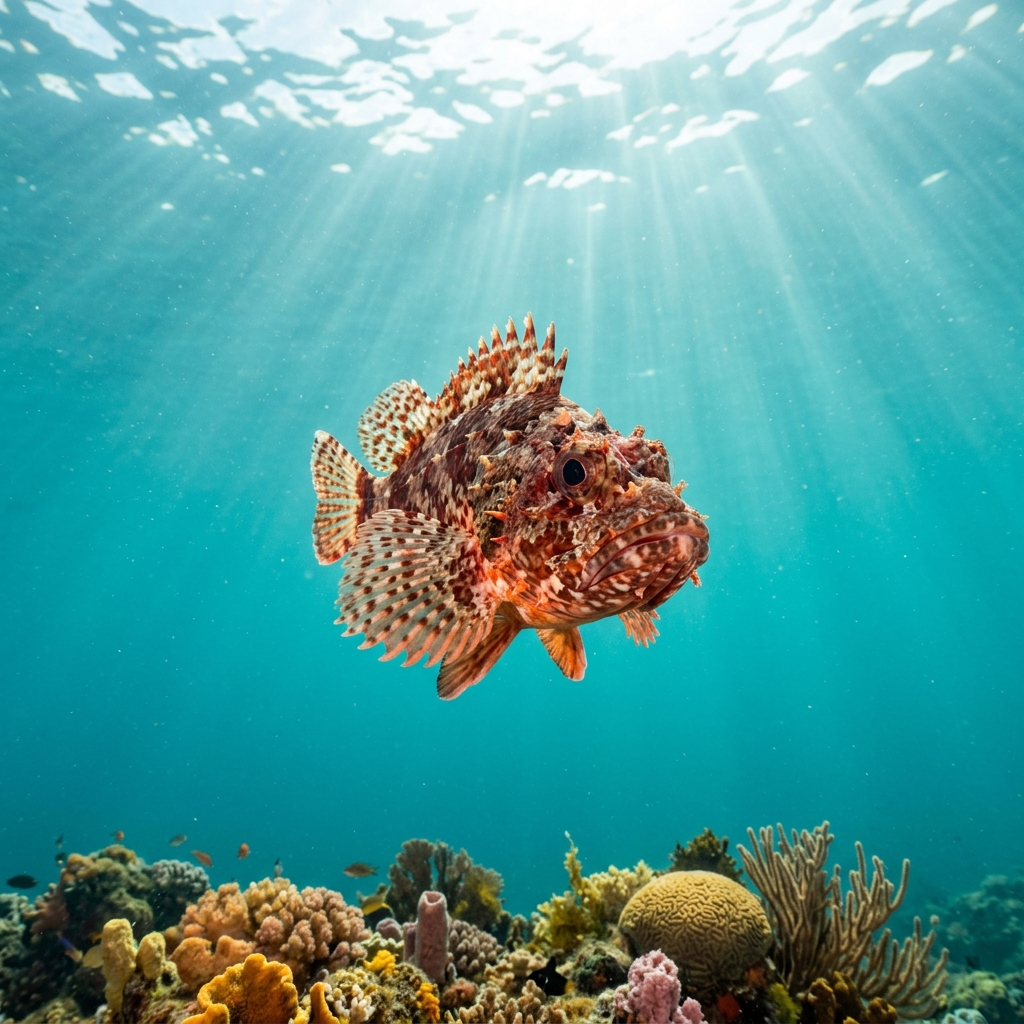
Grows to around 28 cm and sits motionless on rock or rubble, its mottled red, brown and cream skin breaking up its outline against encrusted reef. Look for the heavy, spine-crowned head, the wide downturned mouth and the loose flaps of skin along the jaw and body that help it disappear against algae-covered rock. The pectoral fins are broad and fan out low against the substrate, and the whole fish has a squat, boulder-like profile rather than a streamlined one.
Expect to find it wedged into a rock crevice or lying flat on open reef, relying entirely on camouflage rather than flight. It barely moves as divers approach, often only revealing itself when you get close enough to notice the eyes or a slight fin twitch, and it feeds by ambushing small fish and crustaceans that wander within striking range. Most sightings are during the day on rocky reef rather than in the open water column.
Like other scorpionfish, it relies on stillness and texture rather than speed, letting prey come to it before an explosive close-range strike that is over in a fraction of a second.
Sightings show no strong seasonal pattern, and with a comfortable range of about 16 to 22.6 C it holds station on New Zealand's reefs across the year rather than showing up for a narrow window.
This is a North Island, New Zealand fish through and through, logged very commonly across a long run of sites there, with occasional records extending to Norfolk Island and New South Wales in Australia. If you are diving temperate reef anywhere around New Zealand's North Island, this is one of the more reliable scorpionfish encounters you will have.
Mapping where Cardinal Scorpionfish is logged…
North Island, New Zealand is by far the strongest area for this species, where it turns up very commonly on rocky reef. Smaller numbers have also been logged around Norfolk Island and New South Wales, Australia.
There is no clear seasonal pattern in sightings, and the species tolerates a fairly wide temperature range of roughly 16 to 22.6 C, so it is seen on New Zealand reefs throughout the year.
Yes, they carry venomous spines and their camouflage makes them easy to miss. Avoid touching the reef or kneeling on rock in areas where they are common, and treat any sting as a medical situation requiring prompt care.
Look for a squat, spiny-headed fish around 28 cm long with mottled red-brown-cream skin lying motionless on rocky reef. Skin flaps along the jaw and a wide flat mouth help it blend into encrusted rock rather than stand out.
They typically reach around 28 cm in length, making them a solid, chunky-bodied scorpionfish rather than a small or slender one.
They rely on staying completely still rather than fleeing, using camouflage to ambush passing prey at close range with a fast strike. This same stillness is exactly why divers and snorkellers need to watch where they place hands and knees.
Site and sighting data is aggregated from diver logs, iNaturalist and GBIF. For taxonomy and conservation status:
Madeira Rockfish
2,773 sites