Jasus lalandii
Long orange antennae under Western Cape ledges, 13 to 19C water, uncommon but a reliable find year-round for divers who look under rocks.
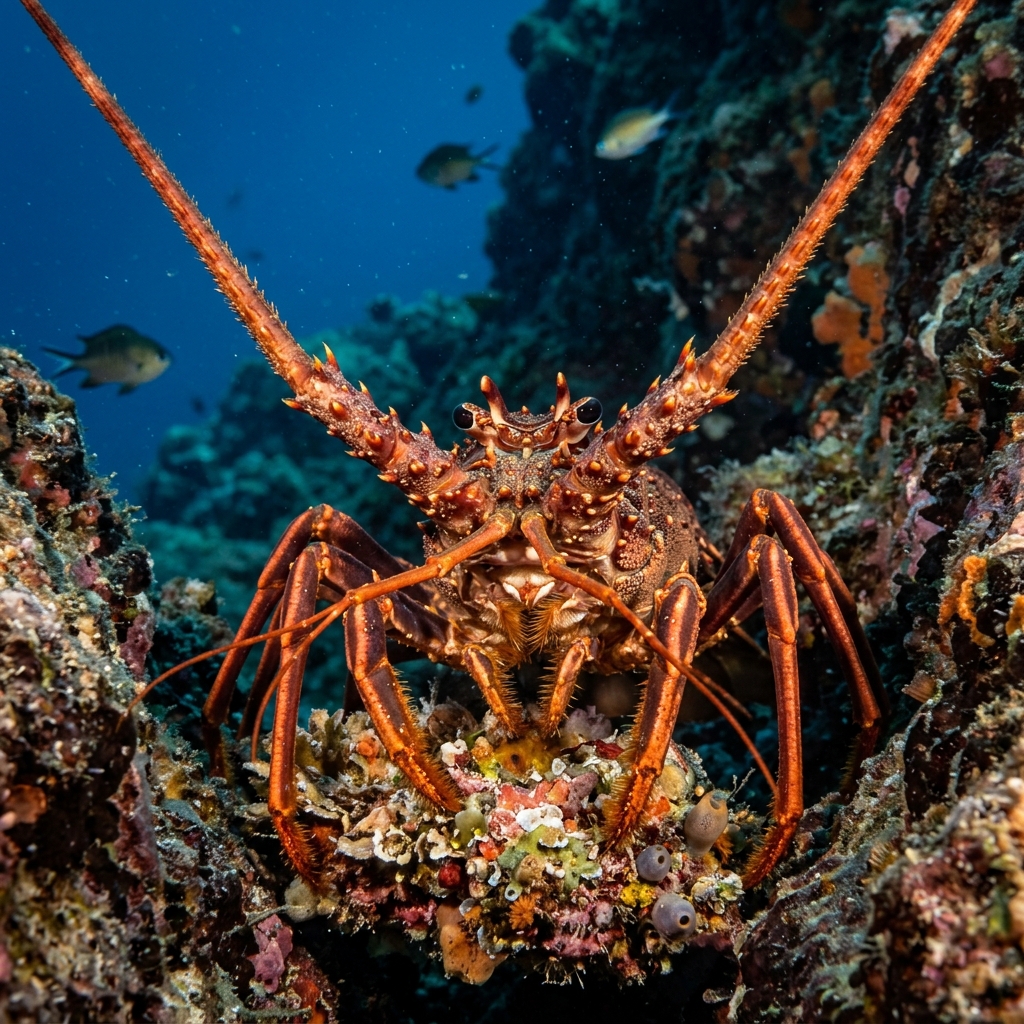
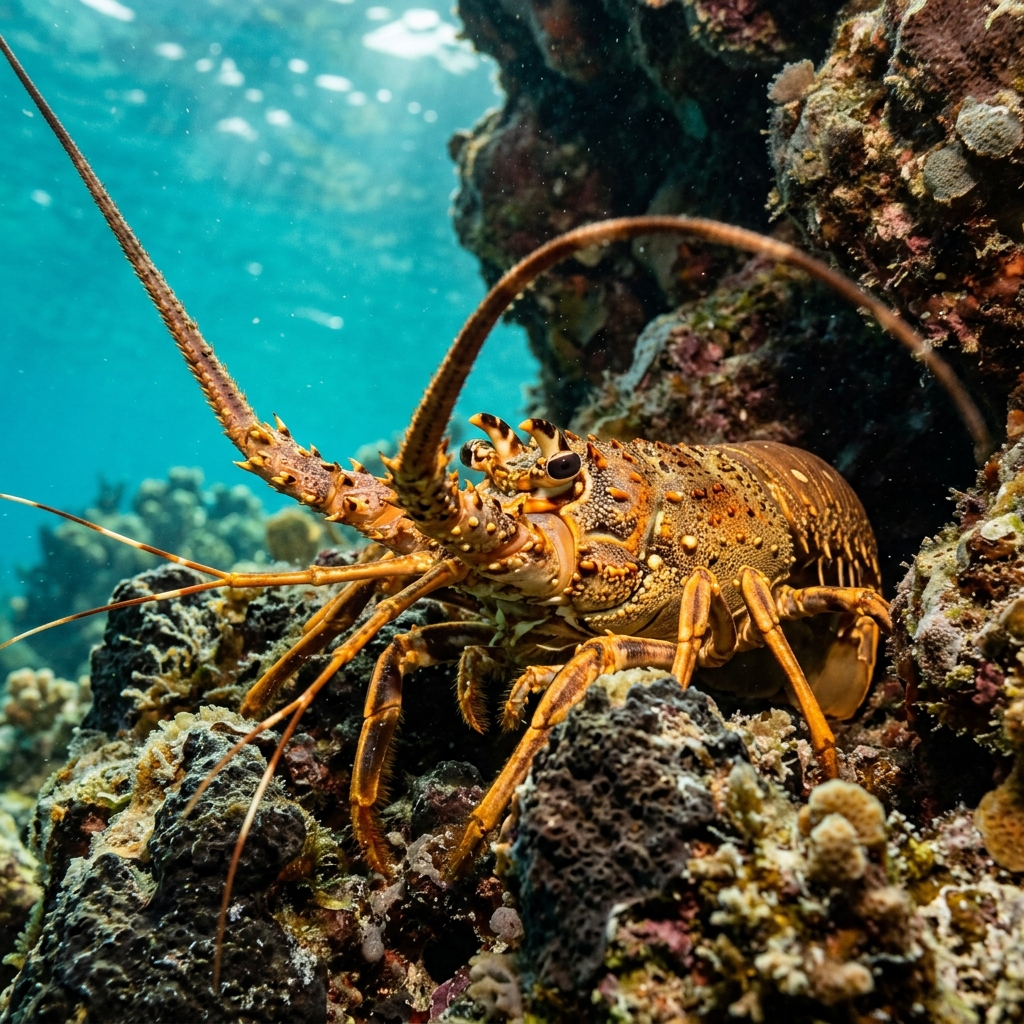
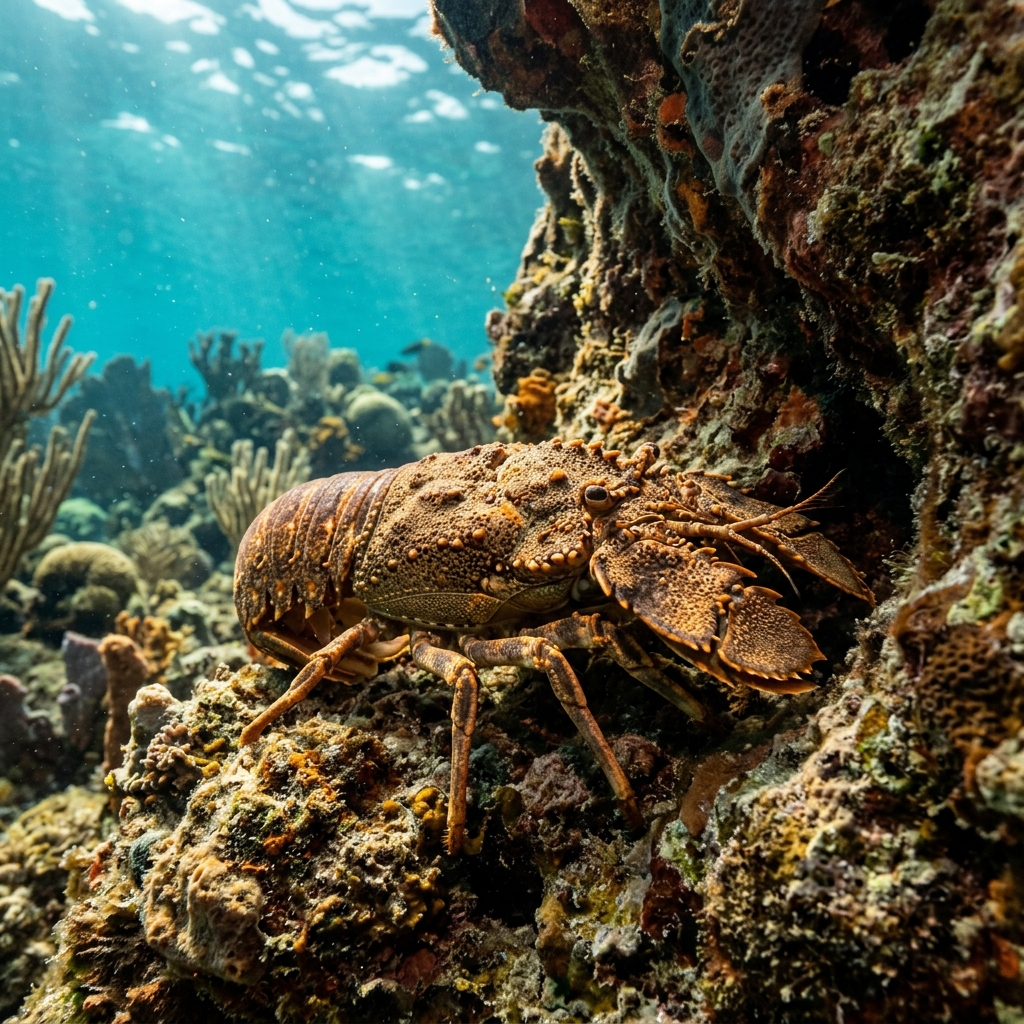
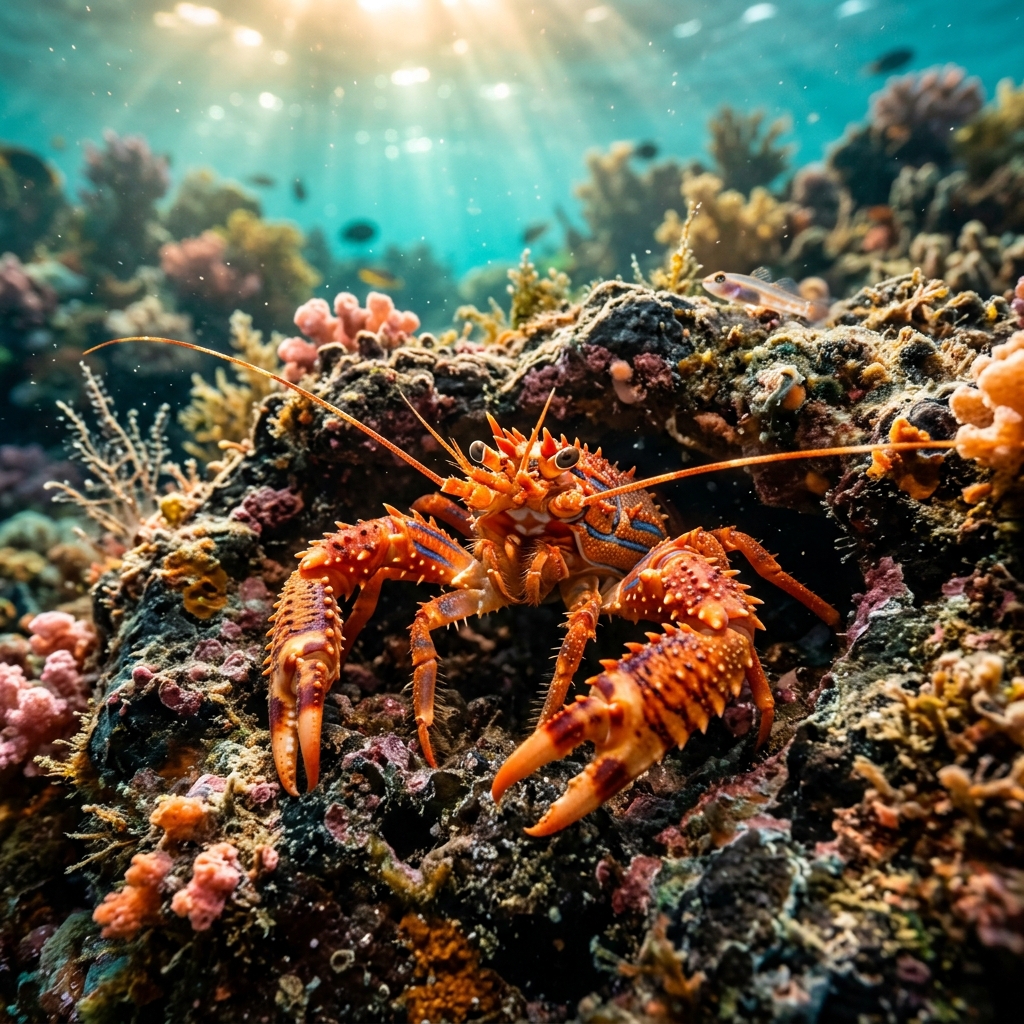
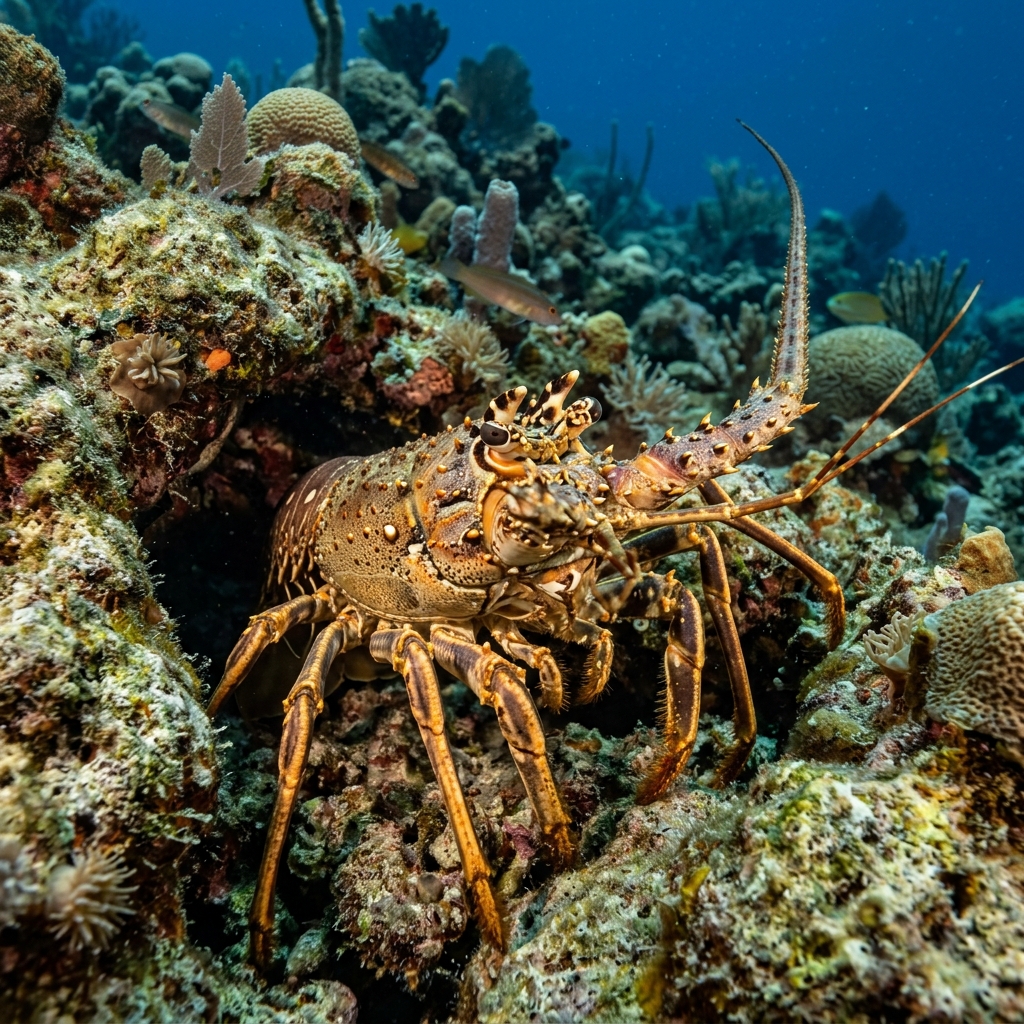
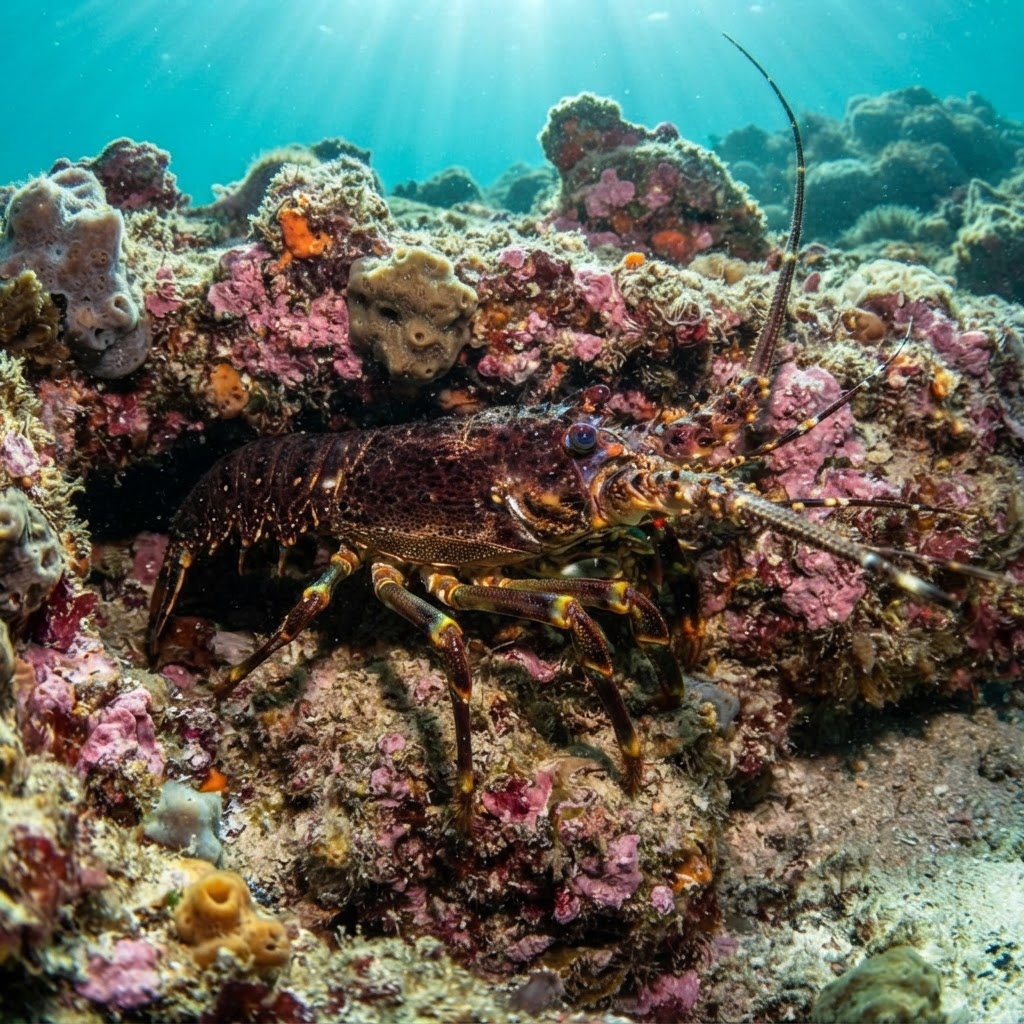
Look for a heavy, spineless-looking reddish-brown to orange carapace with a pair of very long, thick antennae poking out from under ledges before the animal itself comes into view. There are no large front claws like a true lobster, just the walking legs and those whip-like antennae sweeping the water. Adults reach around 32 cm and usually sit tucked into crevices or overhangs rather than out in the open, so divers often spot the antennae first and the body second.
Expect to find them wedged into rock crevices and under ledges during the day, antennae extended and sweeping for information rather than the animal itself being on the move. They're not bothered much by divers at a respectful distance, more likely to retreat deeper into a crack than bolt across open reef. Most sightings come from divers deliberately checking overhangs and rubble zones on the Western Cape's reef and kelp habitat rather than spotting them cruising in the open.
Like other spiny lobsters, it has no large claws for defence and relies instead on a spiny carapace and those long antennae, which it can lash forward as a deterrent if something pokes too close.
Sightings don't show a strong seasonal pattern, so it's fundamentally a year-round animal in the 13 to 19C water it favours. Any time you're diving the Western Cape's cooler reefs is fair game, though patience under ledges helps more than picking a particular month.
Reef neighbours a diver could mistake it for. Use the identification notes above to tell them apart.
This one is essentially a South Africa story, most logged along the Western Cape, where cold Atlantic water and rocky reef ledges give it plenty of places to hide. Divers exploring the kelp forests and reef walls around Cape Town and the surrounding coast have the best odds of a sighting.
Mapping where Cape Rock Lobster is logged…
Almost all logged sightings come from South Africa's Western Cape, where rocky reef ledges and kelp forest habitat give divers a reasonable chance of spotting one tucked under an overhang.
There's no strong season in the data, so they're around year-round in the 13 to 19C water typical of the Western Cape. Any dive on the region's cooler reefs gives you a shot, provided you check under ledges.
Look for long, thick orange-brown antennae extending from a rocky crevice before the reddish carapace comes into view. Adults grow to around 32 cm and have no large claws, just spiny walking legs and those distinctive antennae.
They typically reach around 32 cm in length, making them a solid, chunky presence when you finally spot the whole animal tucked into a ledge.
No, they pose no danger to divers. They tend to retreat further into crevices rather than confront anything approaching, and their only defence is a spiny shell and long antennae.
Site and sighting data is aggregated from diver logs, iNaturalist and GBIF. For taxonomy and conservation status:
Caribbean Spiny Lobster
2,209 sites