Romaleon setosum
Cool-water crab logged along Peru's coast near Pucusana and Chile's Valparaíso and Concepción, typically in 12 to 20C water year-round.
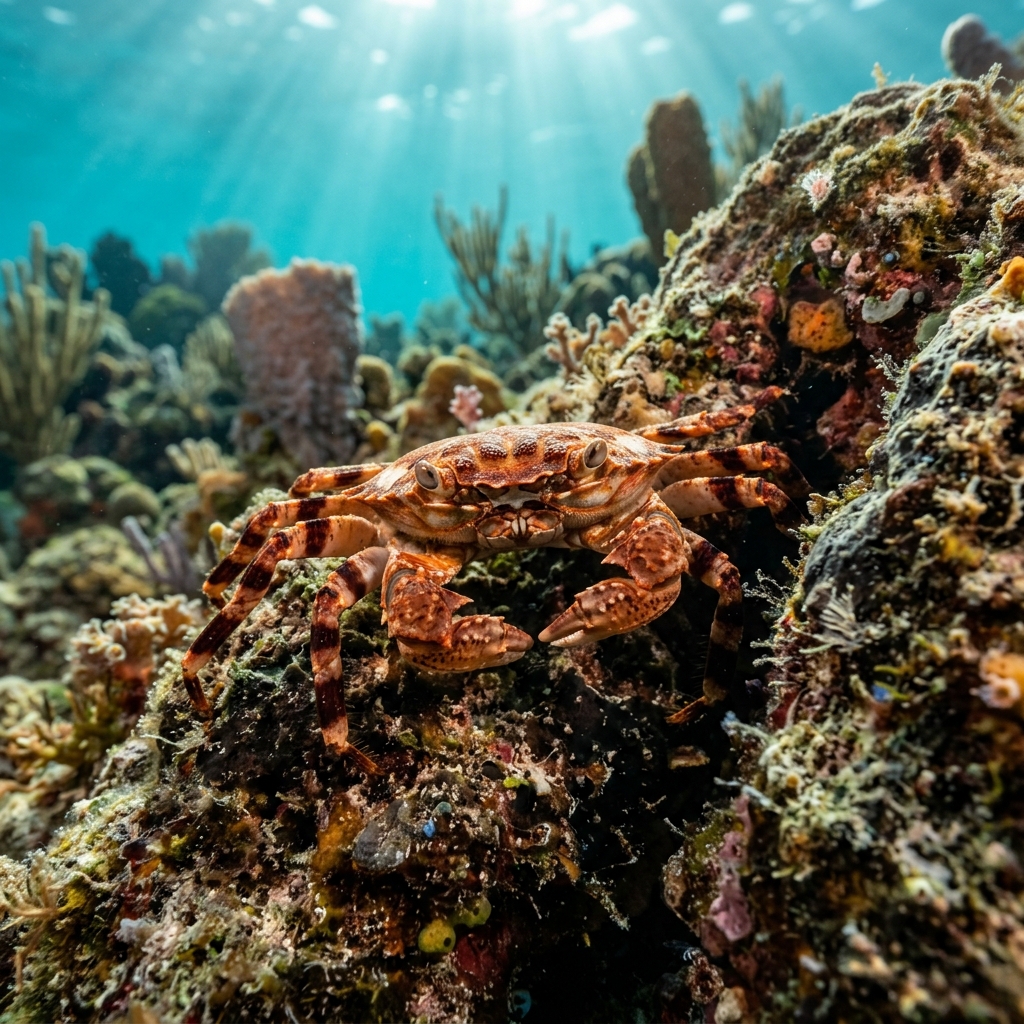
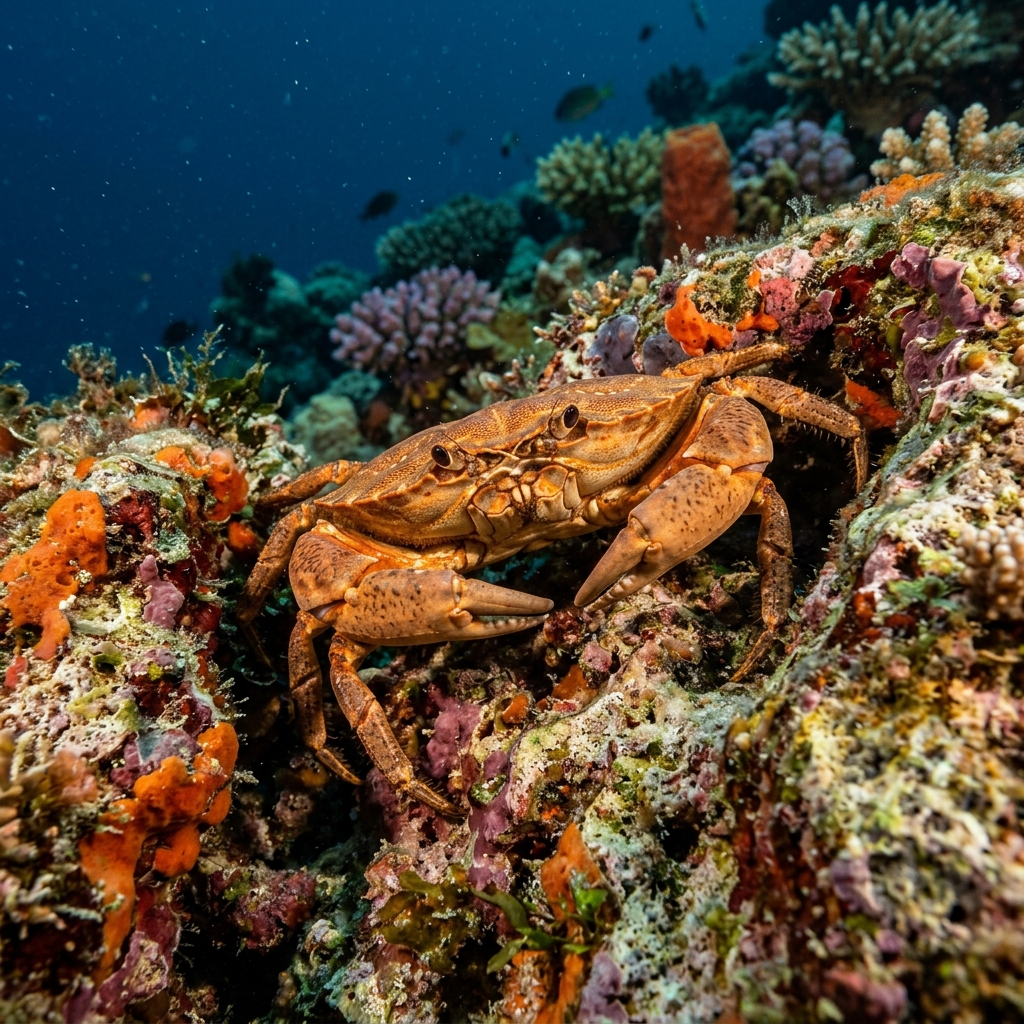
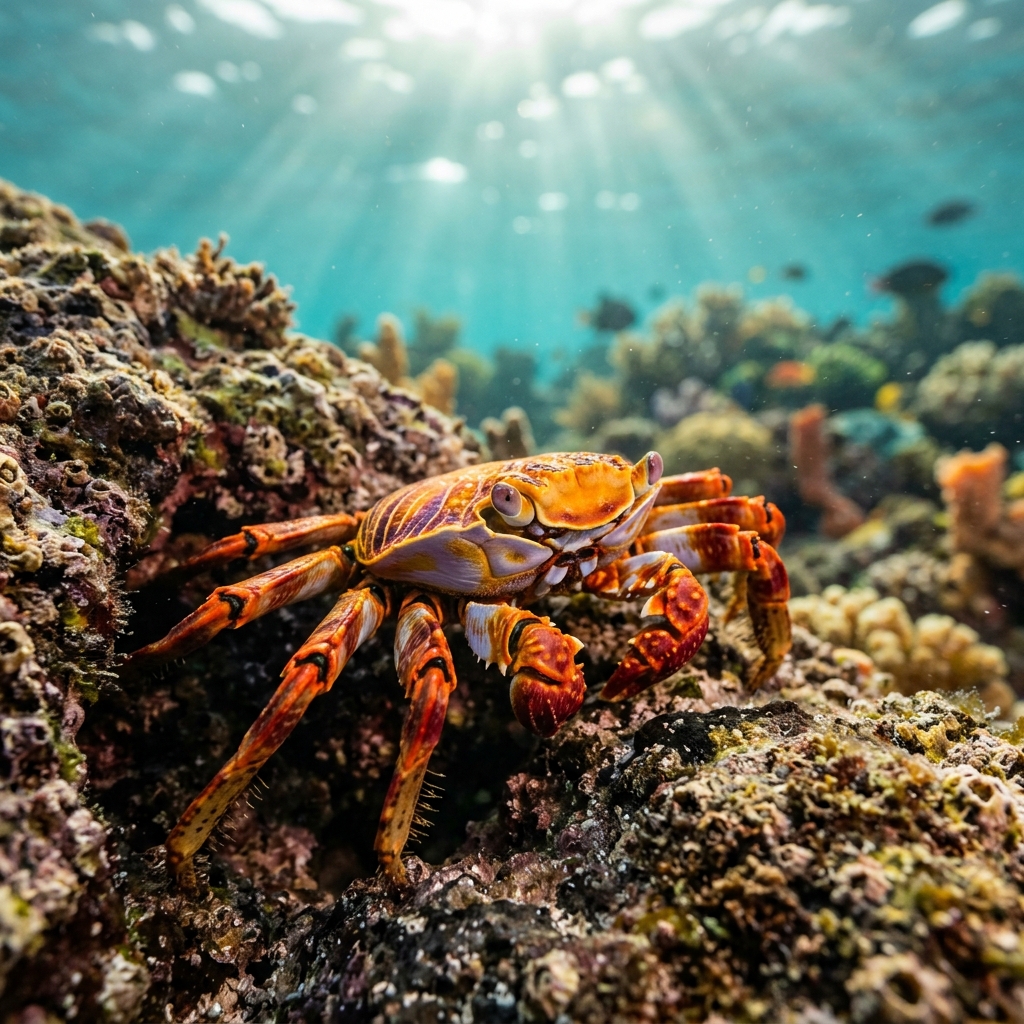
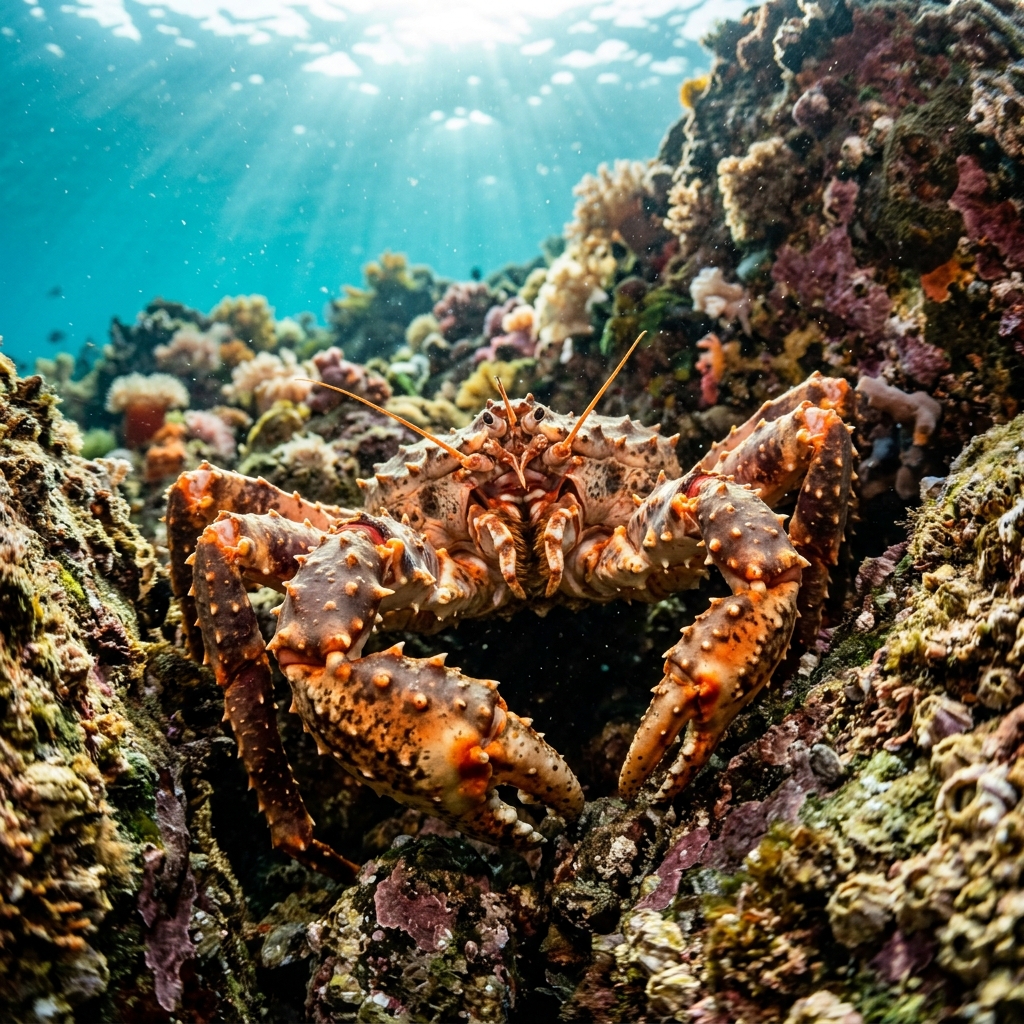
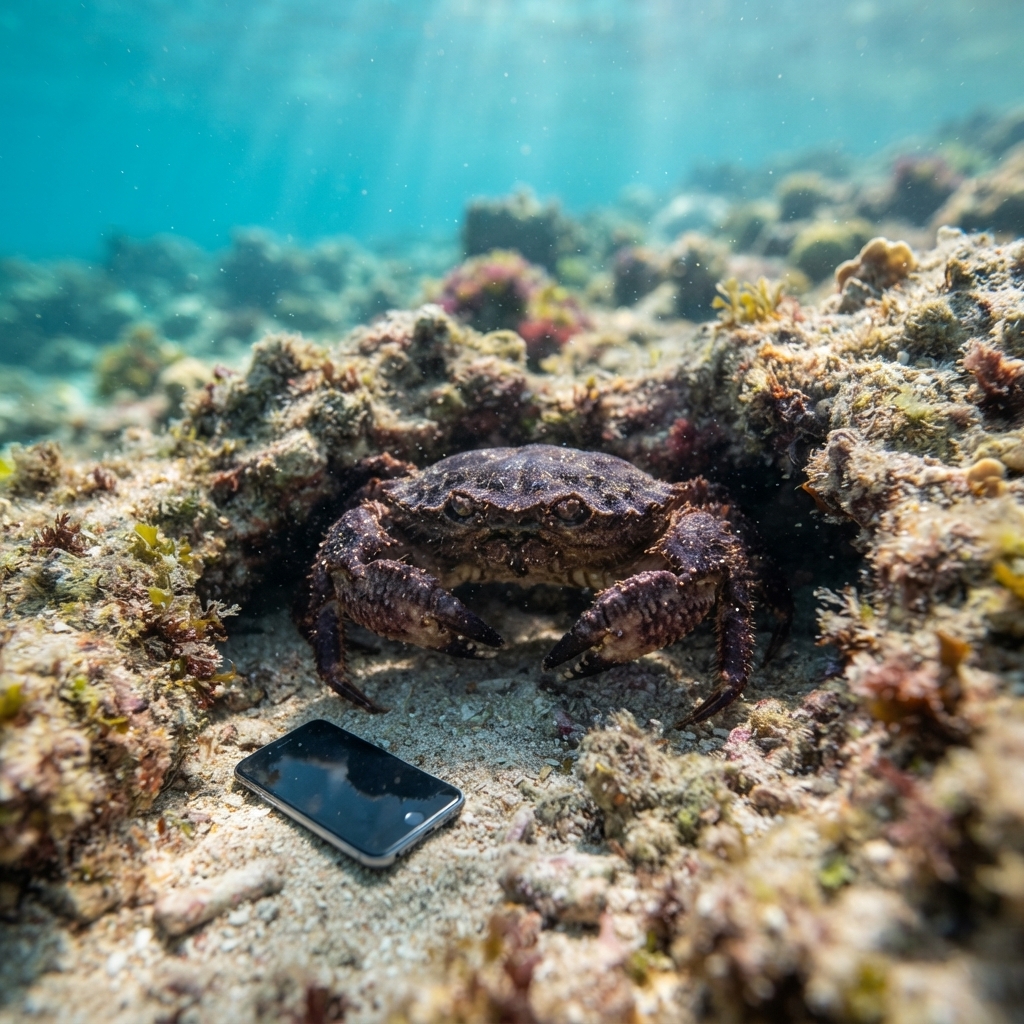
Broad, oval carapace (shell) with a bristly, hair-fringed edge that gives it a slightly rough, dusty look underwater. Colour runs from reddish-brown to dull orange-brown, usually close in tone to the rocky or sandy bottom it sits on. Sturdy claws are shorter and heavier than a swimming crab's, built for crushing rather than speed, and it tends to hold them tucked in close to the body when undisturbed.
Divers typically find it sitting still or moving slowly over rock and rubble bottoms rather than out in the open water column, often tucked against boulders or in crevices. It doesn't scatter the moment a diver approaches, which makes it an easy, unhurried subject for a closer look or a photo. Most sightings come from the same rocky, cooler-water habitat rather than sand flats or reef structure.
It's most often logged as uncommon rather than rare across its known sites, meaning it's not something you'll trip over on every dive, but a patient look under ledges and among boulders in these regions has a real chance of turning one up.
No clear seasonal pattern shows up in the sightings, so treat it as a year-round find. It sits comfortably in the 12.1 to 19.8C range these dive sites run, which likely explains why divers turn it up in any month.
Most consistently logged along Peru's coast near Pucusana, and across Chile at Valparaíso and Concepción, with fewer sightings further north at Coquimbo. It's a cold-water Pacific species, so these South American temperate rocky-reef sites are the reliable bet rather than tropical destinations.
Mapping where Cancer Crab is logged…
The strongest sightings come from Peru, especially around Pucusana, and Chile, particularly Valparaíso and Concepción, with occasional finds near Coquimbo. It favours cool, rocky Pacific coastlines rather than tropical reefs.
There's no strong seasonal pattern in the sightings, so it can turn up in any month. It's found in water between about 12 and 20C, which these sites hold across the year.
No, it poses no danger to divers. It's a slow-moving bottom dweller that will simply sit tight or shuffle away if you get close.
Look for a broad, oval, reddish-brown to orange-brown shell with a bristly fringed edge, sitting low on rocky or rubble bottoms. Its claws are stocky and held close to the body rather than raised or fast-moving.
Most divers who log it describe it as uncommon rather than rare or frequent, so it's a real find rather than a guaranteed sighting. A handful of sites report it as rare, so patience helps.
Site and sighting data is aggregated from diver logs, iNaturalist and GBIF. For taxonomy and conservation status:
European Green Crab
2,469 sites