Cambarus robustus
Spot Big Water Crayfish in Canada's Great Lakes & Ontario region. Logged across freshwater dive sites in cold water down to 2.4 °C.
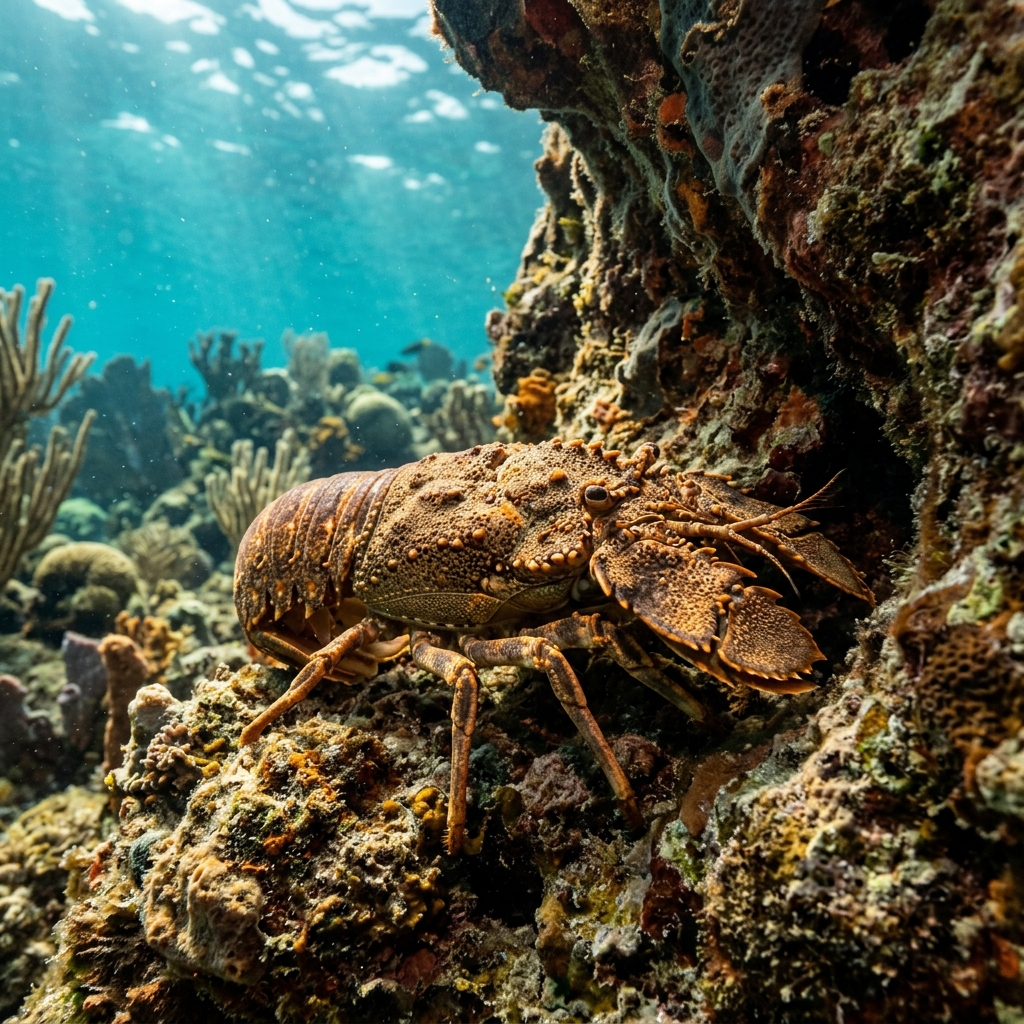
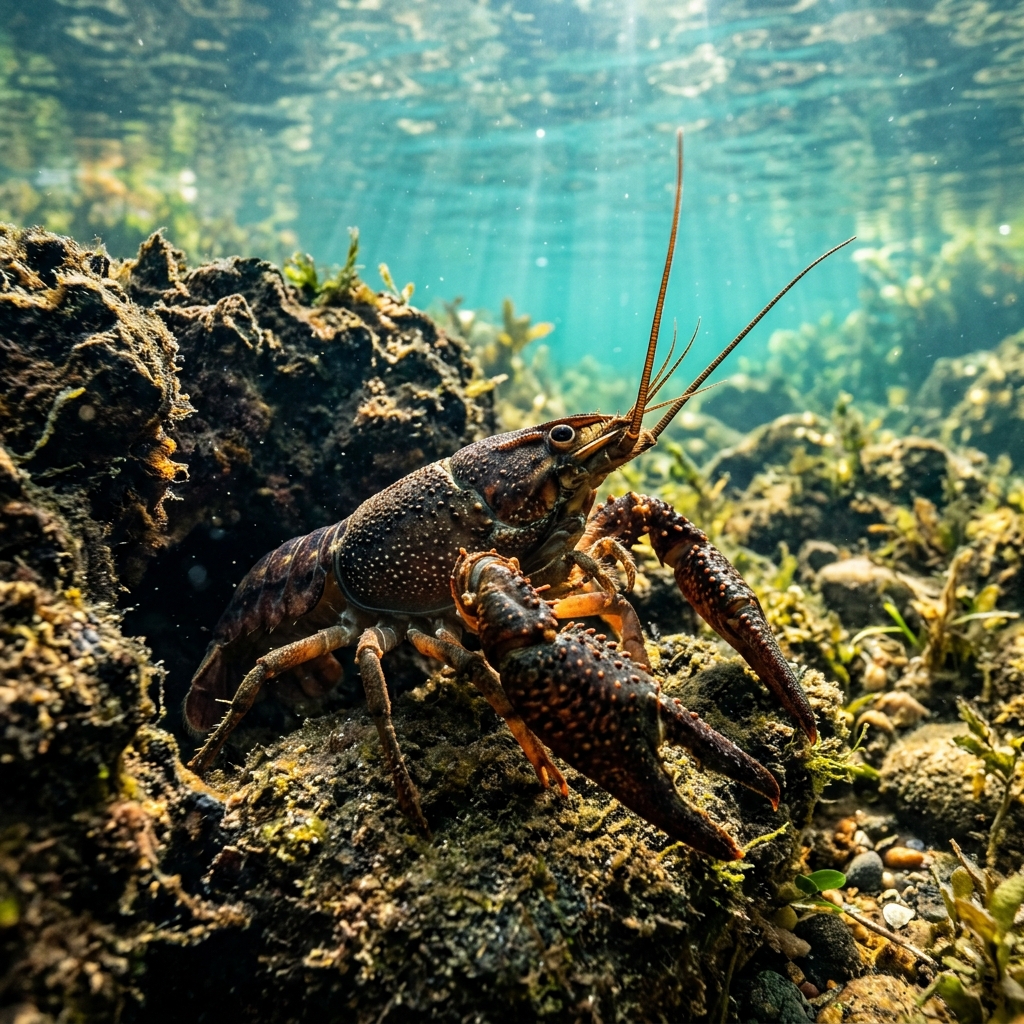
A stocky, large-bodied crayfish with a robust, well-armoured carapace (the fused shell covering the head and thorax) in shades of olive-brown to dark greenish-grey. The claws are notably heavy and wide relative to body size, which is the key underwater feature that separates it from smaller crayfish species sharing the same habitat. Overall body form is low-slung and compact, with long antennae that are often the first thing you spot as it rests beneath a rock ledge.
Big Water Crayfish are most likely to be found sheltering under flat rocks or along rocky lake and river bottoms where they can wedge themselves in. When a diver approaches, they typically freeze or back slowly away rather than fleeing outright, which makes them relatively straightforward to observe if you move unhurriedly. Like most crayfish, they are more active foragers in low-light conditions, so late-afternoon dives may offer slightly better views of them out in the open.
The 'big water' in the name is a nod to its association with large lake and river systems, it is one of the larger crayfish species native to northeastern North America, which is why that imposing claw size stands out compared with smaller relatives in the same waters.
There is not enough seasonal data to point to a peak month, so treat it as a year-round possibility. Its observed temperature range of 2.4 to 21.7 °C means it remains active across much of the year in cold Canadian freshwater systems.
All confirmed sightings come from Canada, concentrated in the Great Lakes and Ontario region. This is a freshwater species, so dive sites are rivers, lakes, and quarries rather than coastal reefs, Ontario's clear, cold lakes and the Georgian Bay area represent the heartland for encounters.
Mapping where Big Water Crayfish is logged…
All logged sightings are from Canada, specifically the Great Lakes and Ontario region. Look for them on rocky substrates in cold, clear freshwater lakes and rivers in Ontario. These are freshwater dive sites, not ocean or coastal locations.
There is no confirmed peak season based on available data. Big Water Crayfish tolerate a wide temperature range, from just above freezing to around 21 °C, so they are present year-round in their habitat. Diving in late afternoon may improve your chances of seeing them active outside their rocky shelters.
Look for a large, heavily built crayfish with a broad olive-brown carapace and distinctly thick, wide claws. The robust claw size relative to body length is the most reliable field mark. They are typically found resting on or beneath flat rocks on the bottom in cold freshwater.
Big Water Crayfish are among the larger crayfish species in northeastern North America. Exact size data for wild-encountered individuals is limited, but their common name reflects their notably robust build compared with most co-occurring crayfish species.
No. Big Water Crayfish pose no meaningful risk to divers. Like any crayfish, they may pinch if handled, but their natural reaction to divers is to retreat or hold still. Leave them undisturbed and you will have no issues.
No, Big Water Crayfish are currently assessed as Least Concern on the conservation scale. They are considered stable across their range in northeastern North American freshwater systems.
Site and sighting data is aggregated from diver logs, iNaturalist and GBIF. For taxonomy and conservation status:
Caribbean Spiny Lobster
2,209 sites