Callorhinchus milii
Spot elephant shark in Victoria, Australia and Central New Zealand in cool 12-17 °C waters. Rare but unmistakable with that bizarre trunk-like snout.
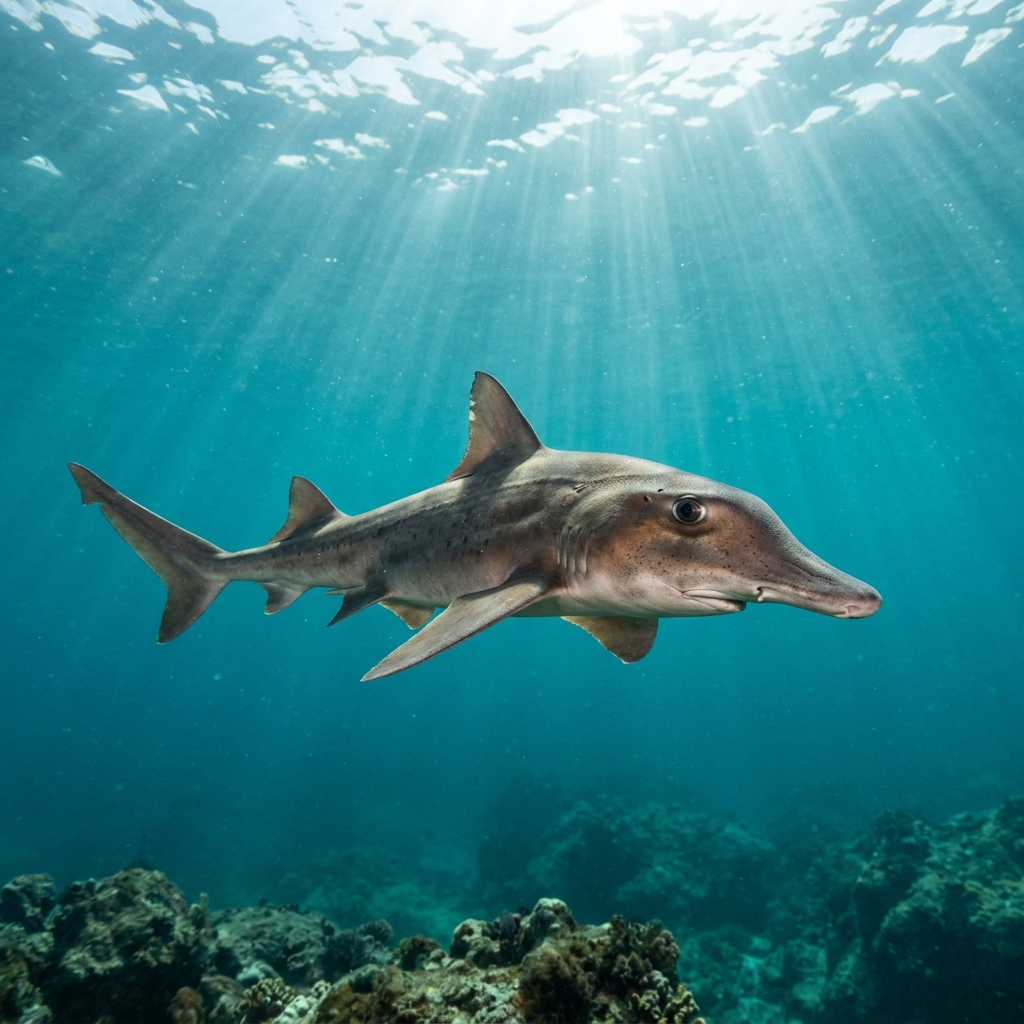
That fleshy, trunk-like rostral plate (the hoe-shaped snout extension) makes elephant shark unlike anything else you'll encounter underwater, one look and the ID is settled. The body is silvery-brown with darker blotches, slender and somewhat flattened, closer in shape to a chimaera than a true shark. In the water they have a slow, almost languid wing-like pectoral fin beat that further separates them from true sharks. Adults can reach roughly 120 cm, appearing medium-sized but relatively slim.
Elephant shark are typically encountered slowly cruising over sandy or muddy substrate, using that remarkable snout to detect prey buried beneath the sediment. They tend to be unhurried and largely indifferent to divers, neither fleeing immediately nor approaching, which can make for a calm and prolonged encounter if you move slowly. Encounters are generally solitary.
Despite the common name, elephant shark is not a shark at all, it is a chimaera, a member of an ancient lineage that split from sharks and rays around 400 million years ago. Its skeleton is made entirely of cartilage, and it has a venomous spine in front of its dorsal fin.
There is not yet enough monthly sighting data to point to a specific season, so treat sightings as possible year-round in the right habitat. The observed water temperature range of 12 to 17 °C is a useful guide, focus on sites where those cool temperate conditions hold.
Sightings are split almost evenly between southern Australia and New Zealand, with records in Victoria, Australia and Central New Zealand accounting for the bulk of logged encounters. Both regions share the cool, temperate waters this species favours, so divers targeting either destination stand a reasonable chance if conditions and timing align.
Mapping where Elephant Shark is logged…
Logged sightings come from Victoria in southern Australia and Central New Zealand. Both areas offer the cool, temperate water conditions this species prefers, and local dive operators in each region occasionally encounter them on sandy-bottomed dives.
There is not enough monthly data to define a peak season, so sightings should be treated as year-round in suitable habitat. Look for sites with water temperatures between 12 and 17 °C, that cool temperate range is the most reliable environmental cue.
The hoe-shaped, fleshy snout extension is unmistakable and makes field identification straightforward. The silvery-brown body, wing-like pectoral fin movement, and overall chimaera body shape further distinguish it from any true shark species in the same waters.
Elephant sharks are not considered dangerous to divers. They are slow-moving, non-aggressive, and generally indifferent to human presence. The single precaution worth noting is a venomous dorsal spine, so avoid handling or cornering one.
Adults typically reach around 100 to 120 cm in length, occasionally slightly larger. In the water they appear slender and medium-sized, nothing like the bulk of a large true shark.
No, despite the name, elephant shark is a chimaera (sometimes called a ghost shark), representing a lineage that diverged from sharks and rays roughly 400 million years ago. Its genome is notably slow-evolving, making it of significant interest to evolutionary biologists.
Site and sighting data is aggregated from diver logs, iNaturalist and GBIF. For taxonomy and conservation status:
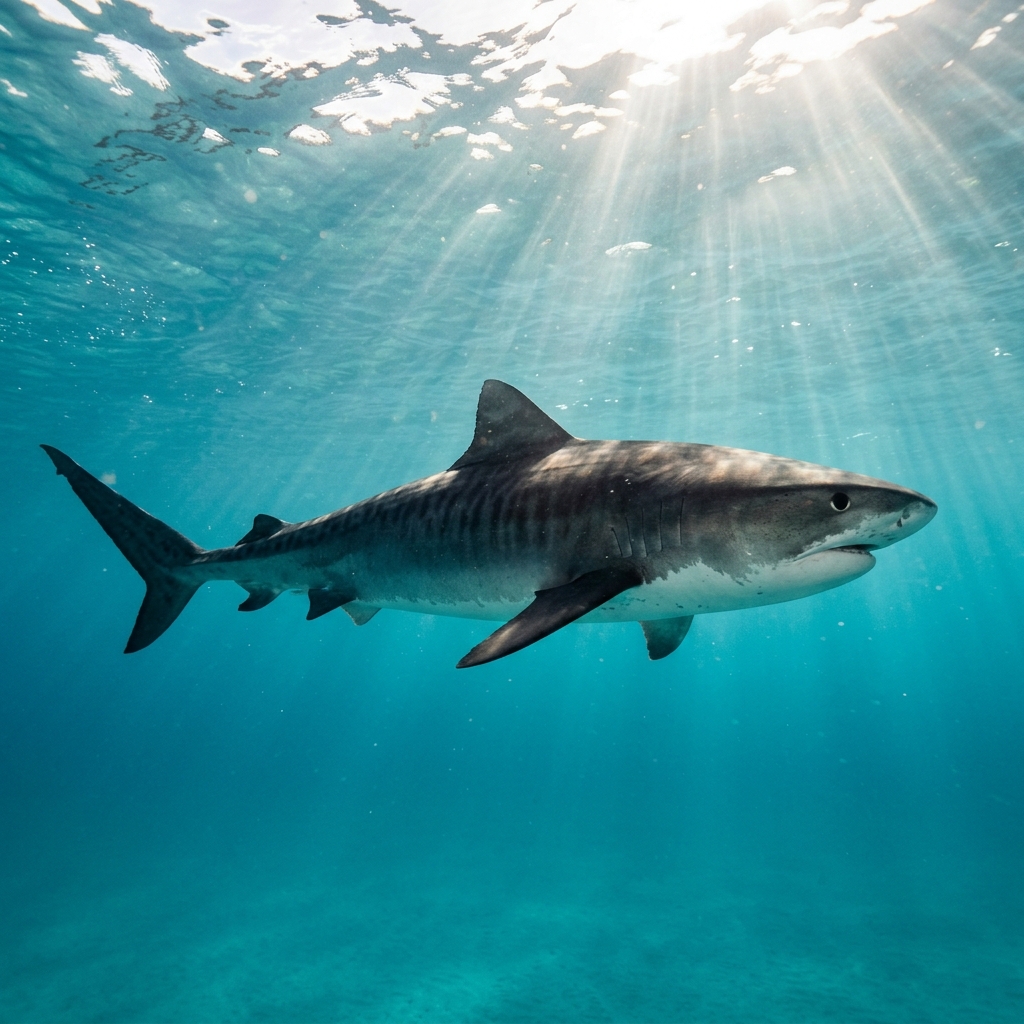
Tiger Shark
1,616 sites