Bodianus pulcher
A rare, unmistakable find on California kelp reefs, spotted in waters between 16.6 and 22.9 C year-round.
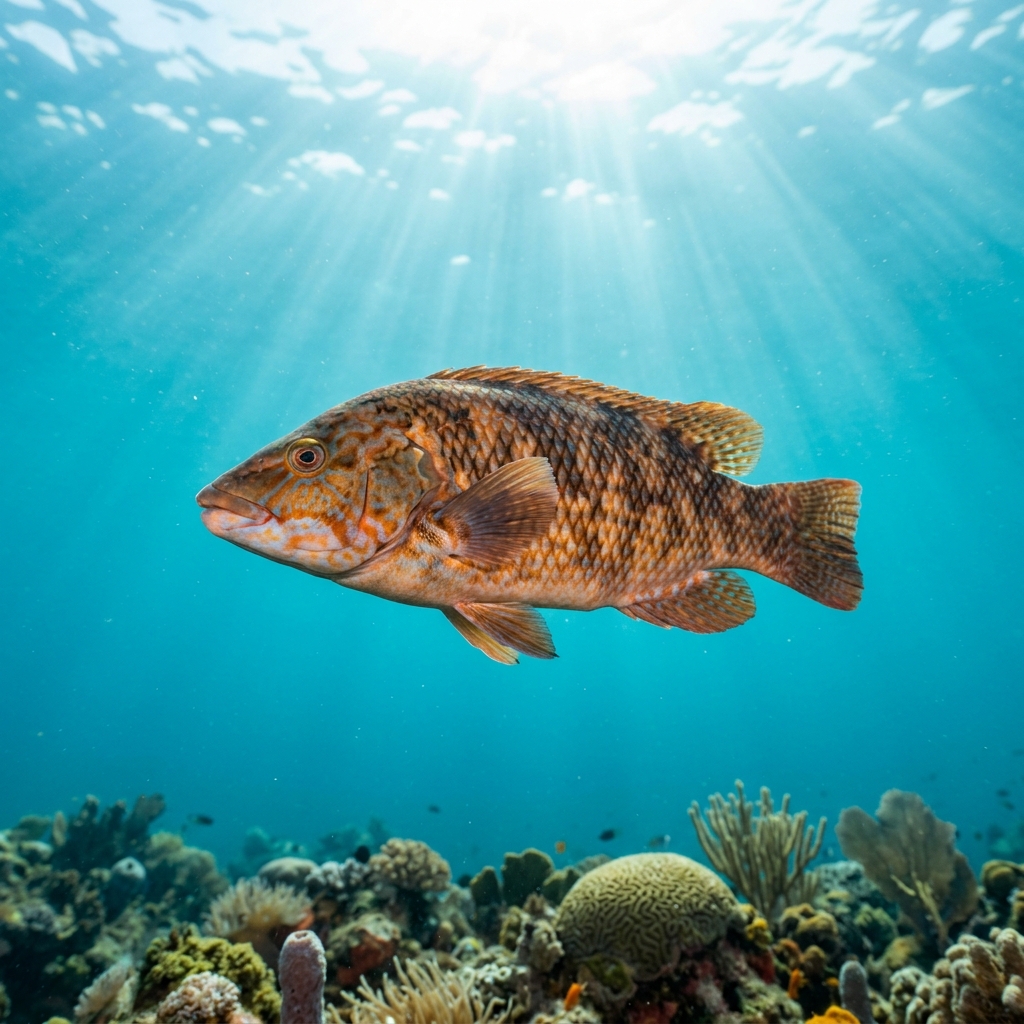
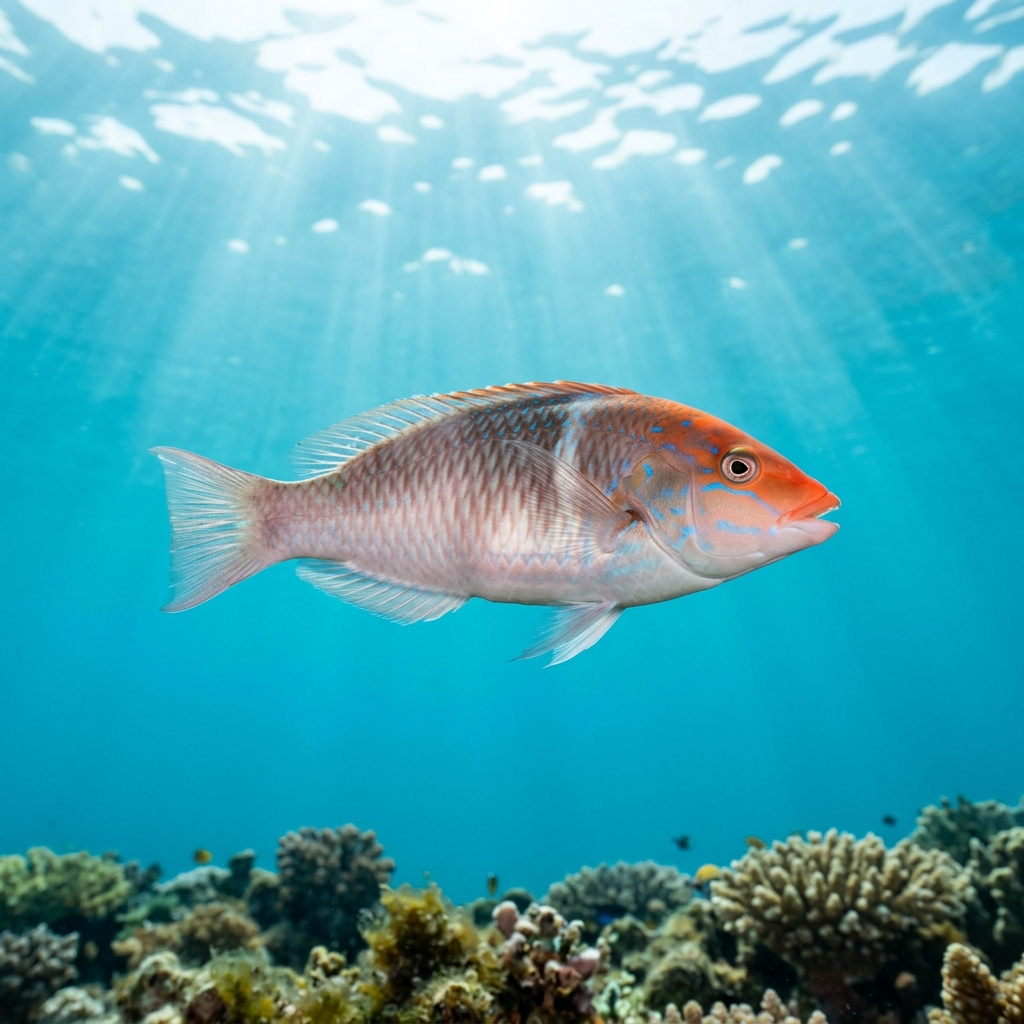
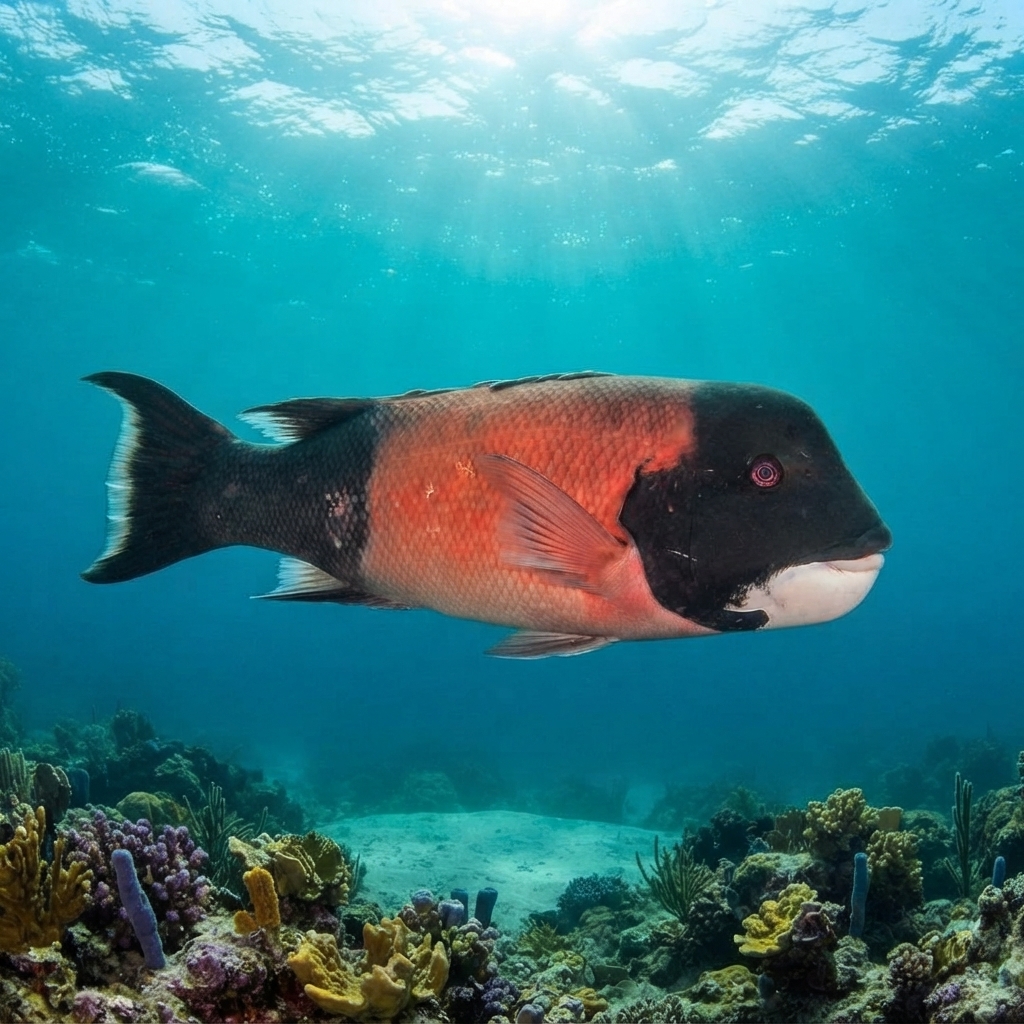
Adults are hard to mistake for anything else on a California reef: a blunt, almost humped head that darkens to black, a bright red-orange saddle across the mid-body, and a black tail. Males run larger and show this bold three-block colour pattern, while females are smaller and a more uniform pinkish-red, since this species changes sex as it grows. Watch for the thick lips and heavy jaw, built for crunching shellfish off rock and reef.
Divers typically find them working slowly over rock and kelp reef, nosing into crevices and cracks to root out urchins, crabs and other hard-shelled prey. They tend to keep a working distance from divers rather than approach, and sightings logged so far have been rare to uncommon, so treat any encounter as a bit of a bonus rather than a given.
Every California sheephead starts life as a female and some later transform into males, a reproductive strategy called sequential hermaphroditism that explains why the big, boldly coloured black-and-red fish you see are always males.
No clear seasonal pattern shows up in the sighting data, and with a temperature range of 16.6 to 22.9 C it can turn up on California dives across the year rather than in one narrow window.
Logged sightings come from California, with all recorded sites in the United States, making it a Pacific coast specialty rather than a species you will find on tropical reef trips.
Mapping where California Sheephead is logged…
Sightings so far are concentrated in California, on rocky reef and kelp forest dive sites along the US Pacific coast.
There is no strong season in the data, and with a comfortable range of roughly 16.6 to 22.9 C they can be encountered on California dives throughout the year.
Look for a heavy-jawed fish with a black head, a red-orange midsection, and a black tail on adult males, while females are smaller and plain pinkish-red. The blunt head and thick lips, used for crushing shellfish, are a giveaway up close.
They typically reach around 64 cm, with males growing larger and more boldly coloured than females.
Yes. They start life as females and some transition into males as they grow, a trait called sequential hermaphroditism that explains the size and colour differences between sexes.
Site and sighting data is aggregated from diver logs, iNaturalist and GBIF. For taxonomy and conservation status:
Cleaver Wrasse
2,700 sites