Synodus lucioceps
Mottled, torpedo-shaped bottom-dweller spotted on California dives at 15 to 26 C, most often logged as an uncommon find.
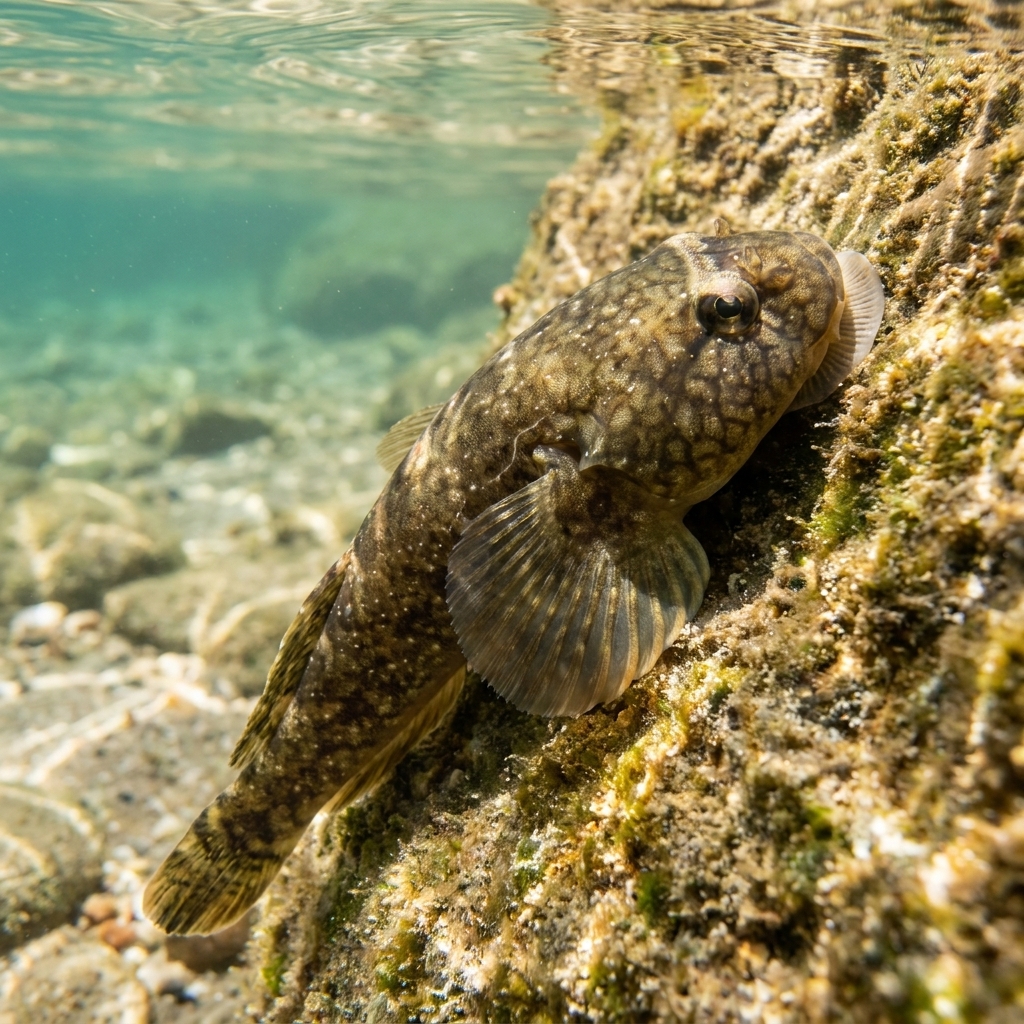
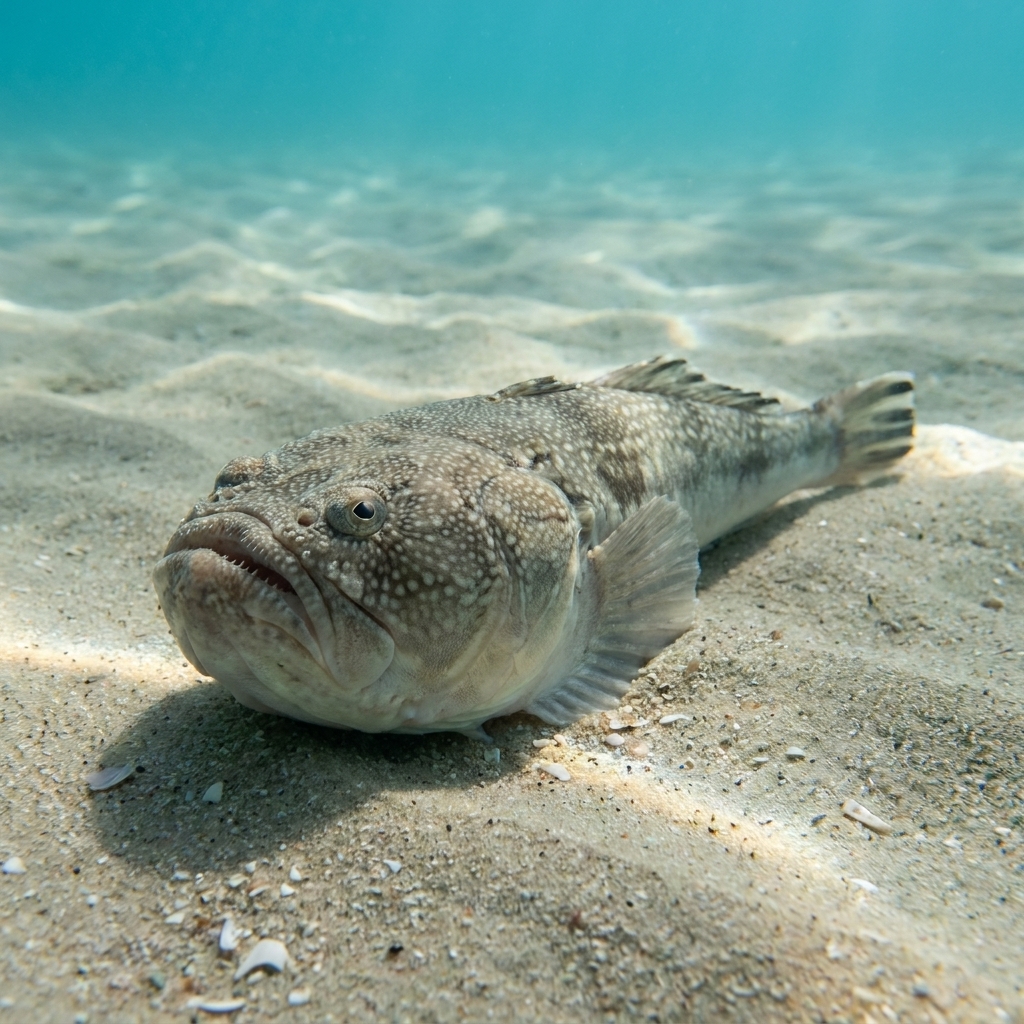
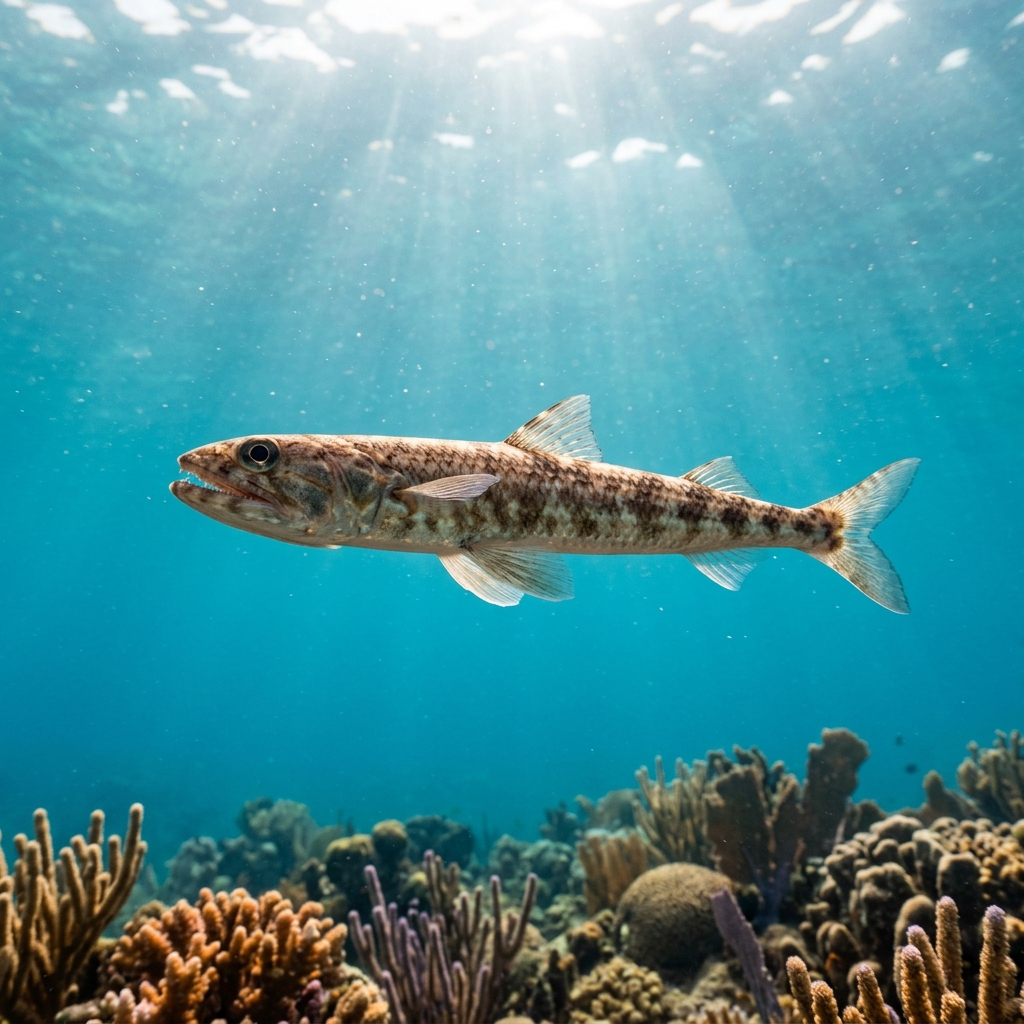
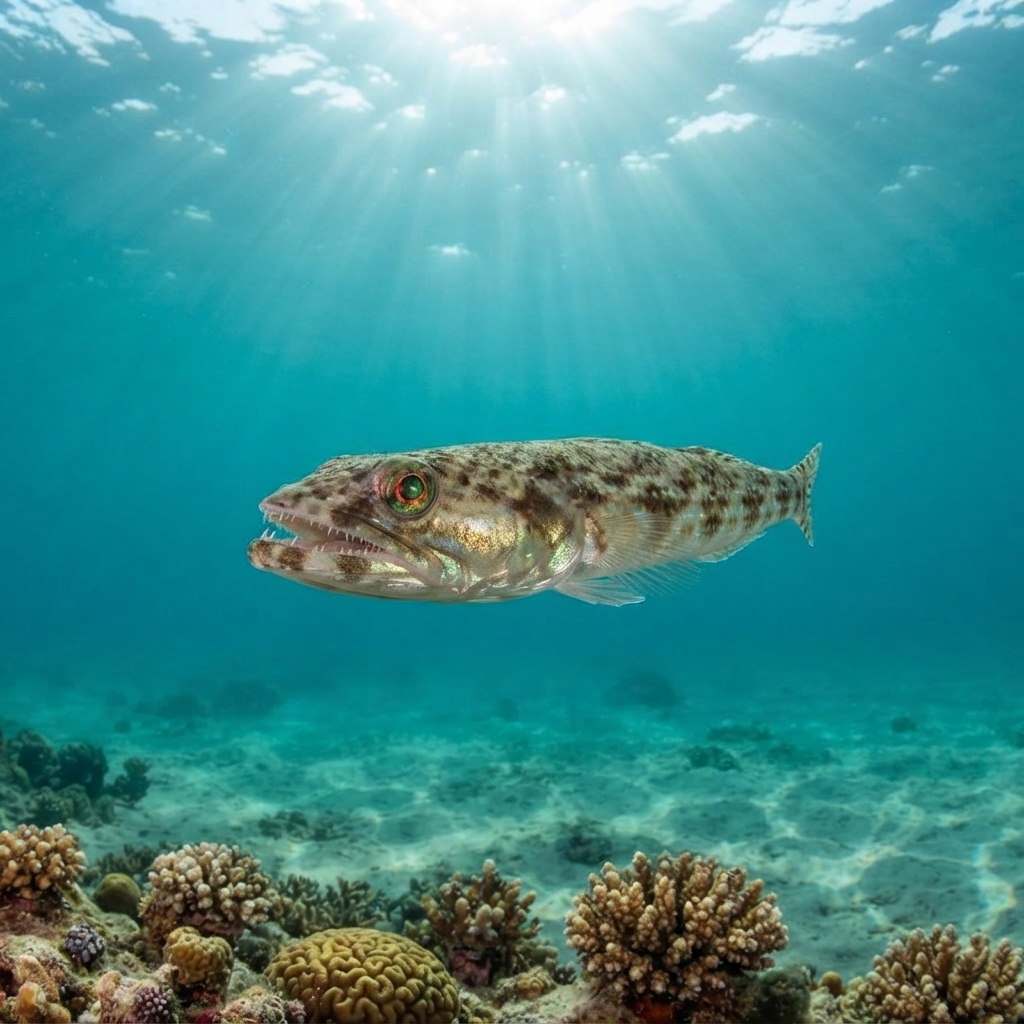
Long, cylindrical body up to 45 cm with a flattened, pointed head that gives it a reptilian look, hence the name. Mottled brown, tan and olive blotching along the flanks lets it blend into sand and rubble almost completely. It rests propped on its lower fins like a tripod, and the large mouth is packed with visible needle-like teeth if it yawns. Look for the slight upward tilt of the eyes, adapted for watching prey pass overhead.
Spends most of its time motionless on sand or rubble, propped on its pelvic fins and relying on camouflage rather than flight to avoid notice. It is an ambush predator, staying still for long stretches before darting up to snatch a passing small fish, then settling straight back down. Divers who cruise slowly over open sand patches, rather than reef structure, are the ones who tend to spot it.
Its ambush strategy depends almost entirely on stillness: rather than fleeing an approaching diver, it typically stays frozen and trusts its blotchy camouflage, so slow, careful scanning of sand patches is the best way to find one.
Sightings show no clear seasonal pattern, and the observed temperature range of 15.2 to 25.9 C spans California's typical year-round dive conditions, so it can turn up on any dive regardless of month.
Logged exclusively along the California coast in the United States, making it a distinctly Californian sighting rather than a species you will encounter on tropical reefs. Divers most reliably find it on sand and rubble patches around California dive sites, where it is usually an uncommon but expected find rather than a highlight species.
Mapping where California Lizardfish is logged…
They are logged specifically along the California coast in the United States, on sand and rubble patches near dive sites rather than on reef structure itself. Outside California, sightings in the diver record are essentially absent.
There is no strong seasonal pattern in sightings, and they are found across a wide temperature range of roughly 15 to 26 C, so they can be seen on California dives in any month.
Look for a long, torpedo-shaped body up to 45 cm long, mottled brown and tan blotching, and a pointed, reptilian head propped up on the seafloor. It usually sits motionless on sand or rubble rather than swimming in open water.
They typically reach around 45 cm in length, giving them a noticeably elongated, torpedo-like profile compared to most fish found resting on the same sand patches.
No, they pose no danger to divers. They are ambush predators of small fish and have no interest in and no real ability to threaten anything diver-sized.
It relies on camouflage and stillness, lying propped on sand or rubble until a small fish swims within range, then darting up in a quick ambush strike before settling back down.
Site and sighting data is aggregated from diver logs, iNaturalist and GBIF. For taxonomy and conservation status:
Soldierfish
3,612 sites