Menticirrhus undulatus
An uncommon but distinctive find along California's sandy shorelines, active in water from 18 to 29 C year-round.
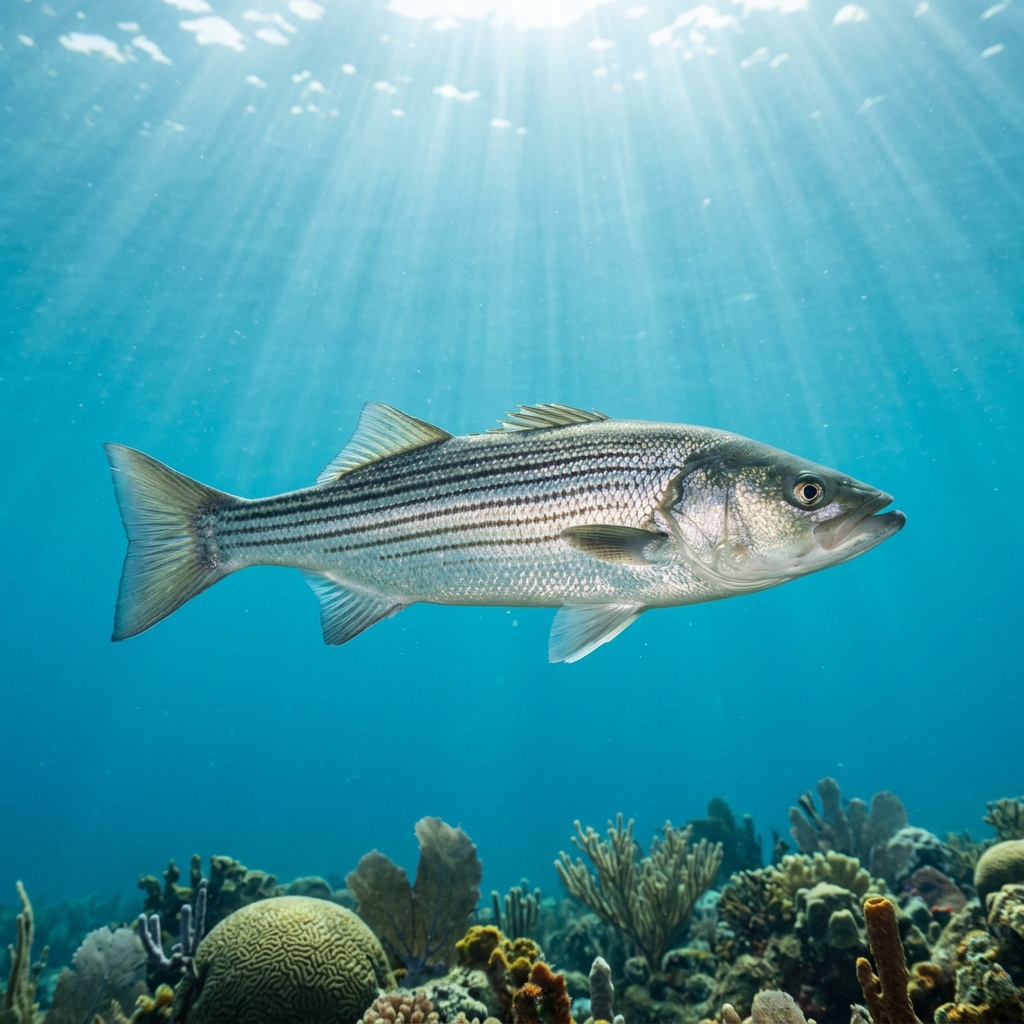
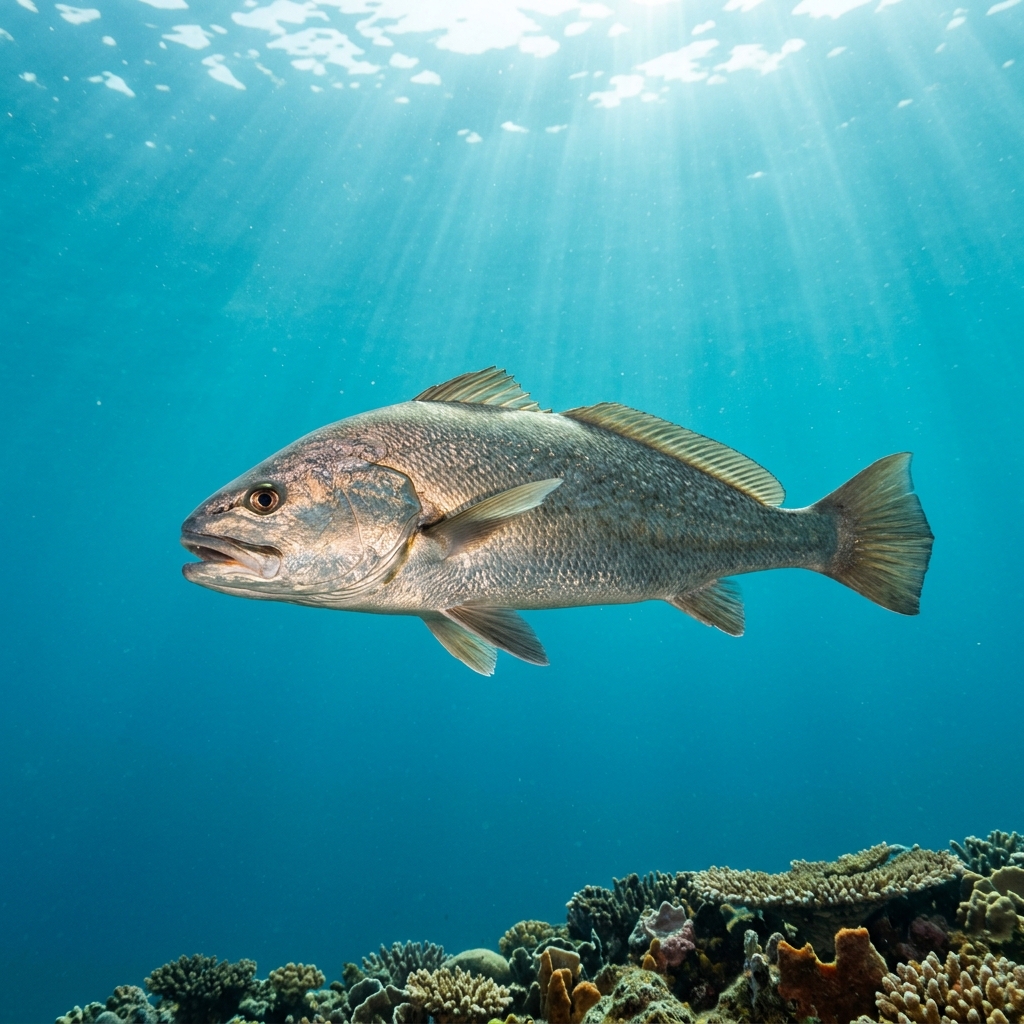
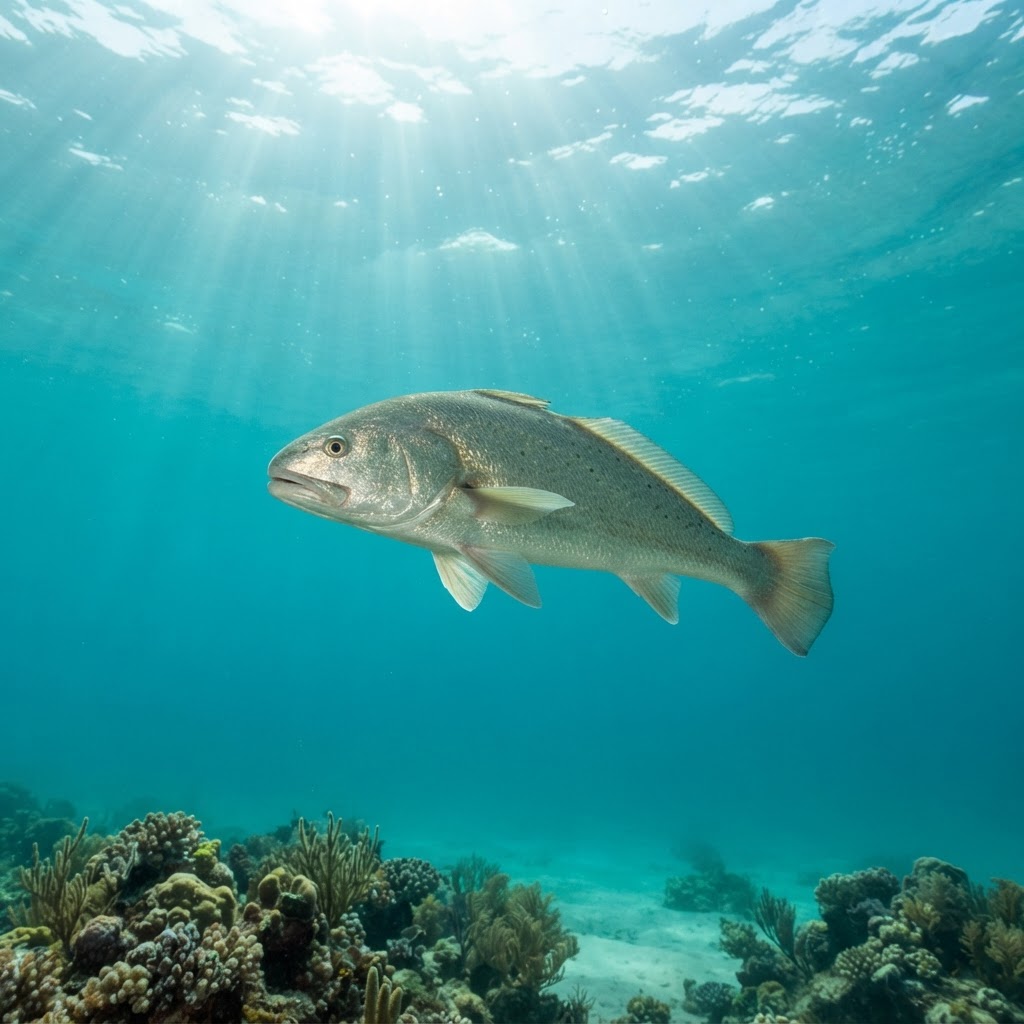
Look for a slim, silvery-grey body with faint dark diagonal wavy lines along the flanks, growing to around 50 cm. The mouth sits low and points downward, with a single small barbel (whisker-like sensory organ) under the chin used to probe sand for food. Its tail is squared off rather than forked, and there's no obvious spotting or bold colour to key on, so the overall shape and that chin barbel are the giveaways.
Divers typically find it working close to the sand, nose down, using that chin barbel to feel out buried invertebrates in the shallows. It tends to stay near the bottom in surf-adjacent, sandy terrain rather than around reef structure, and it's generally unbothered by divers, continuing to forage rather than bolting. Logged as uncommon at every site where it's been seen, so patience over sand flats pays off more than reef scanning.
That single chin barbel is packed with taste buds, letting it locate sand crabs and other buried prey by feel and taste alone, a handy trick for a fish that spends its life over featureless sand rather than structure.
Sightings don't show a clear seasonal pattern, and the observed temperature range of roughly 18 to 29 C spans most of the year in California waters, so it's best treated as a year-round possibility rather than a seasonal target.
Every logged sighting in the data comes from California, United States, making it the only real region to plan around. Within California it turns up at a handful of sites rather than being widespread, so treat any encounter as a bonus rather than the main target of a dive.
Mapping where California Corbina is logged…
All recorded sightings come from California, United States, where it's found over sandy bottoms near the surf zone rather than on reef structure. It's not widespread even there, so it's an uncommon find at the handful of sites where it's been logged.
There's no strong seasonal pattern in the sighting data, and it's been recorded in water from about 18 to 29 C, so it's reasonable to look for it year-round in California.
Look for a silvery-grey, slim-bodied fish up to about 50 cm with faint diagonal wavy markings, a downturned mouth, and a small barbel under the chin. It's usually seen close to sand rather than around rocks or reef.
They typically reach around 50 cm in length, giving them a noticeably elongated, torpedo-like profile in the water.
Its chin barbel is loaded with taste receptors, letting it detect buried prey like sand crabs by feel and taste as it works along the sand, a specialised trick for a fish living on featureless sandy bottoms.
Site and sighting data is aggregated from diver logs, iNaturalist and GBIF. For taxonomy and conservation status:
Meagre
1,159 sites