Gobiesox rhessodon
A rare 4cm find under California's kelp and rocky reefs, seen year-round in waters from 14 to 26C.
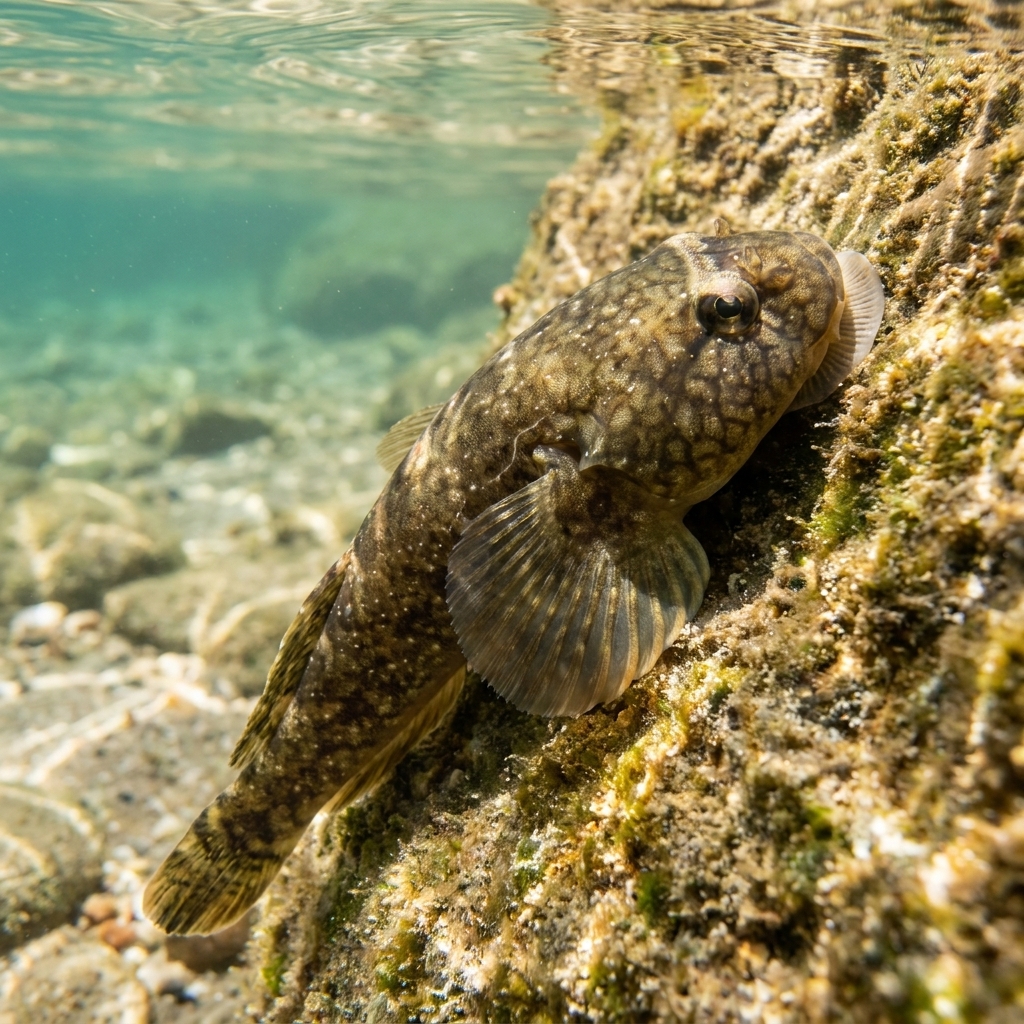
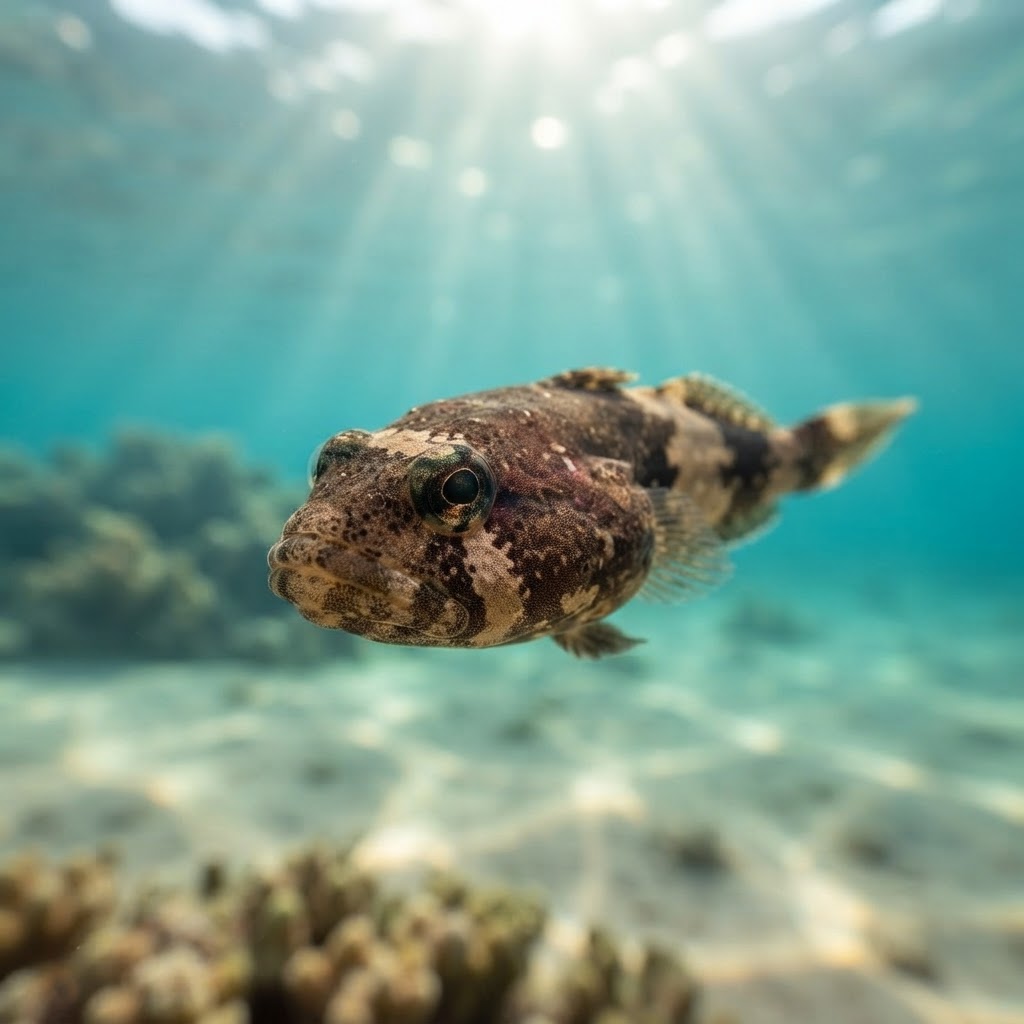
Barely 4 centimetres long, this fish is easy to miss unless you're peering under rocks or into crevices. Its body is flattened and mottled brown to olive, blending closely with encrusted rock surfaces, and it has a modified sucking disc on its underside formed from fused pelvic fins, which is the real giveaway once you flip a rock and see it hold fast against current or wave surge. There's no dramatic pattern to key on here, it's shape and that suction grip that separate it from other small reef fish.
Look for it tucked under loose rocks or wedged into crevices on rocky reef and kelp forest bottoms, where it uses its sucking disc to stay clamped against the substrate even in surge. It doesn't swim off dramatically when disturbed, more often it just grips tighter or shuffles a few centimetres deeper into cover. Most divers who log it do so by deliberately turning over rocks rather than spotting it out in the open.
That sucking disc on its belly, built from fused pelvic fins rather than gills or a mouth like other suction-feeders, lets it anchor to rock faces strongly enough to resist the wave surge typical of the shallow rocky reefs it lives on.
Sightings show no clear seasonal pattern, and with a wide observed temperature range of 14 to 26.3C, it seems to tolerate both California's cooler winter water and warmer summer conditions. Treat it as a year-round possibility rather than something tied to a particular month.
Every logged sighting comes from California, United States, making it a distinctly Californian find rather than a species you'll encounter on tropical reefs elsewhere. Rocky reef and kelp forest sites along the California coast are where divers turn it up, though always as a rare, look-hard find rather than a guaranteed sighting.
Mapping where California Clingfish is logged…
Sightings are concentrated in California, United States, particularly on rocky reef and kelp forest sites along the coast. It hasn't been logged as a common find outside that region.
There's no strong season in the data, and it's been observed across a wide temperature range from 14 to 26.3C. It's best treated as a year-round possibility rather than a seasonal target.
Look for a tiny, flattened fish around 4cm long, mottled brown to blend with rock, tucked under loose stones or in crevices. The real ID feature is its sucking disc underneath, formed from fused pelvic fins, which lets it grip rock against surge.
They stay small, typically around 4 centimetres long as adults, making them one of the easier reef fish to overlook entirely unless you're checking under rocks.
Its most notable feature is the sucking disc on its underside, built from fused pelvic fins, which lets it clamp onto rock surfaces and resist strong wave surge in shallow rocky habitats.
No, they pose no danger to divers. They're small, sedentary, and spend most of their time tucked against rock rather than interacting with anything nearby.
Site and sighting data is aggregated from diver logs, iNaturalist and GBIF. For taxonomy and conservation status:
Soldierfish
3,612 sites