Synodus lacertinus
Spot this mottled seafloor lurker on Pacific dives from Baja to Gorgona, Colombia, in water between 21 and 29 C.
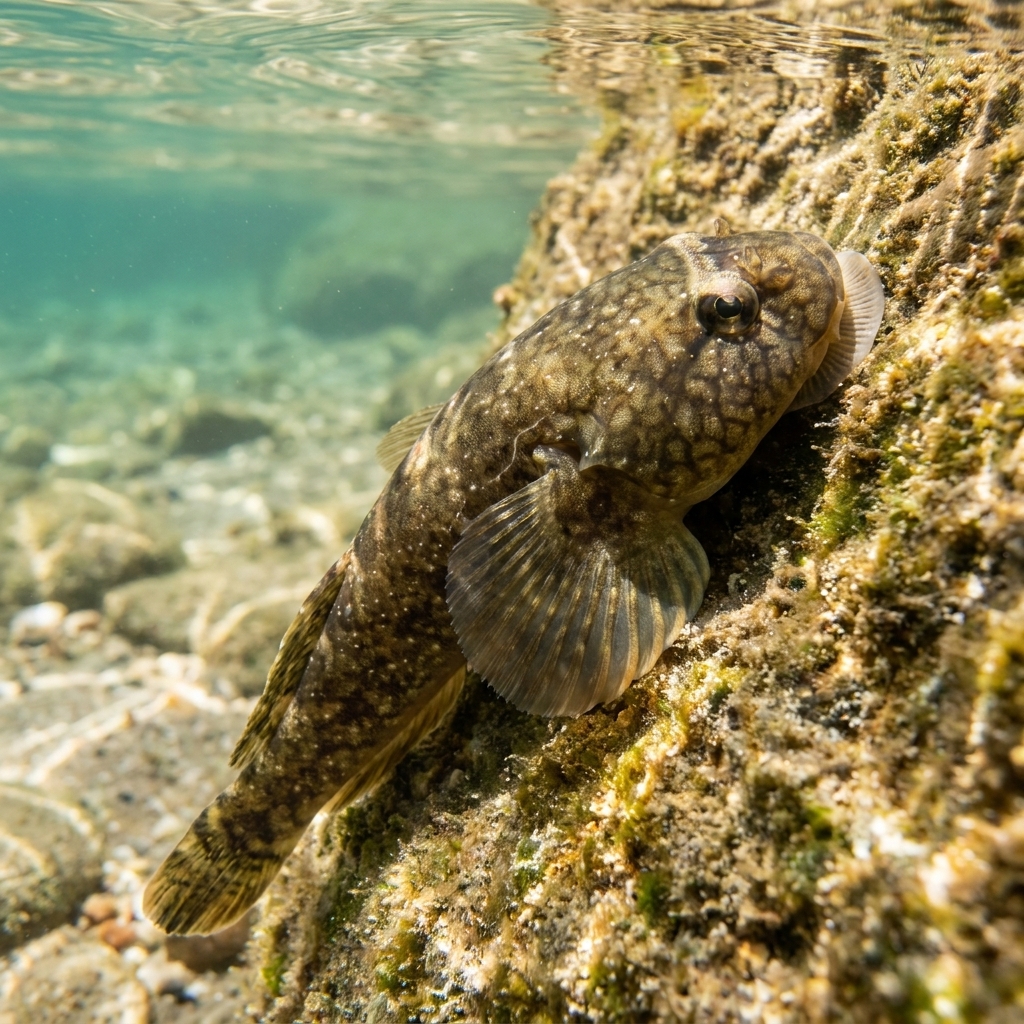
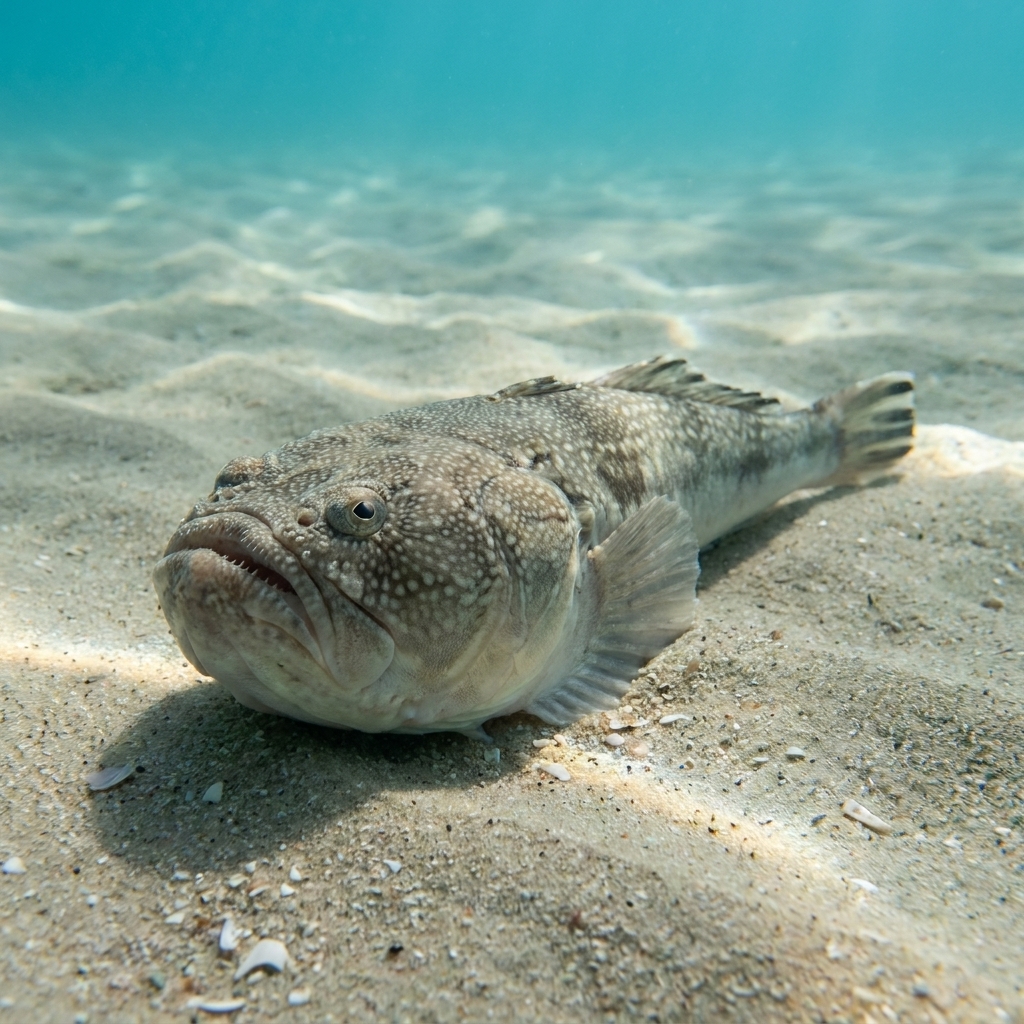
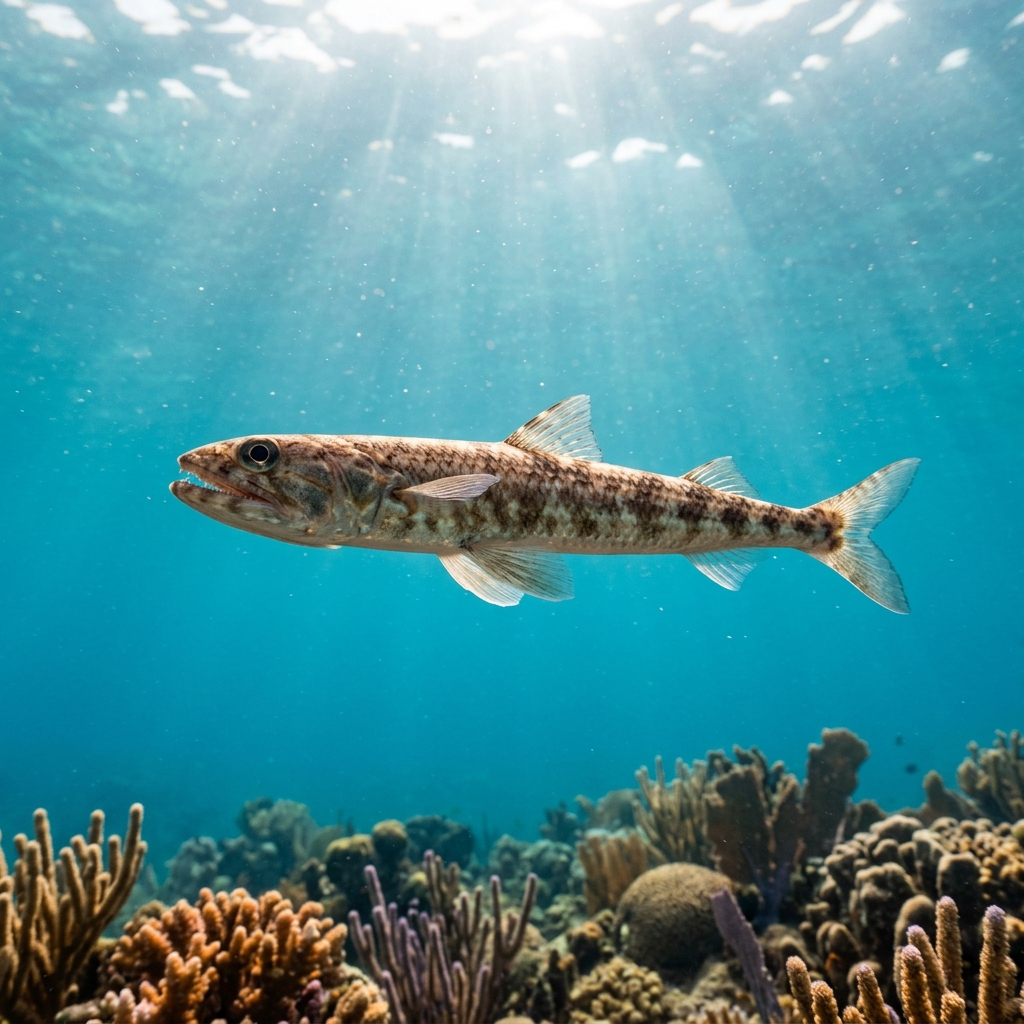
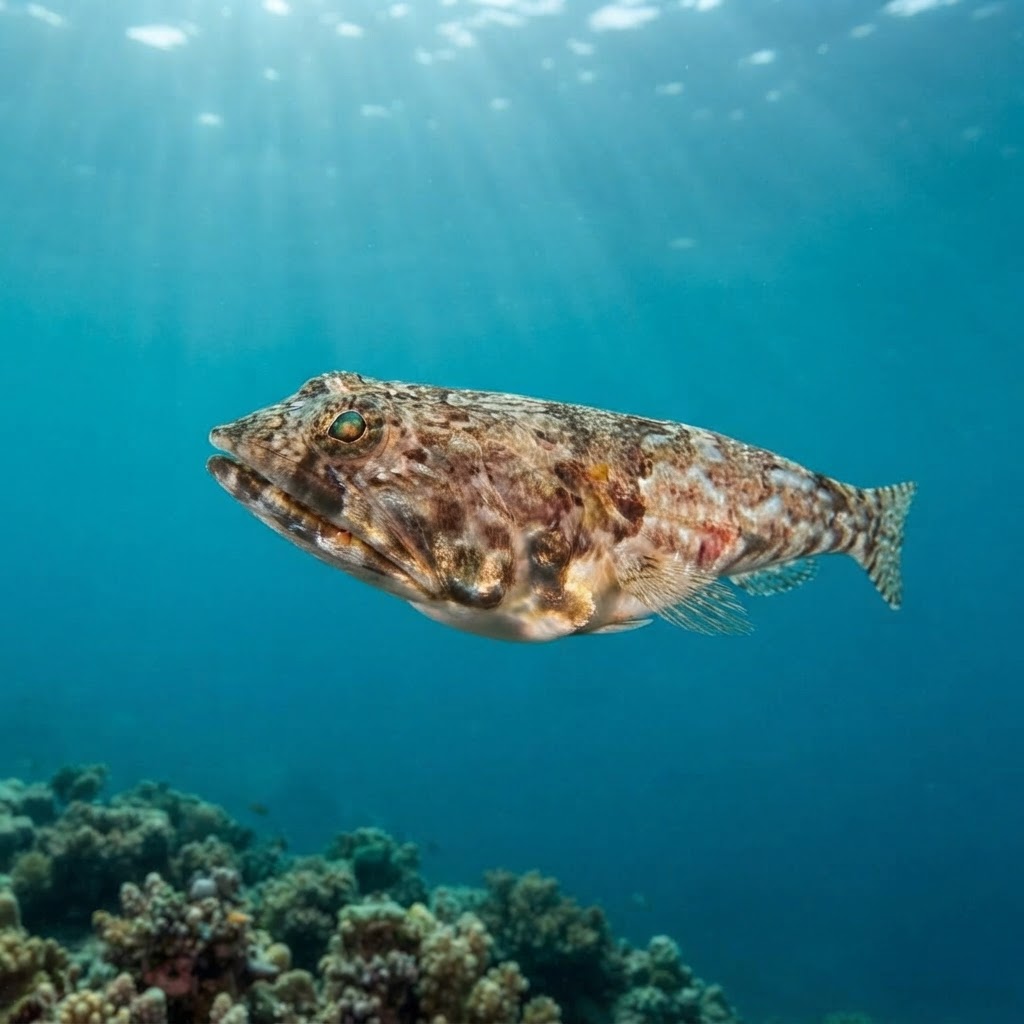
Slender, torpedo-shaped body around 14 cm long with a pointed, reptilian snout and a mouth full of visible small teeth. Skin carries a mottled calico pattern of tan, brown and cream blotches that breaks up its outline against sand and rubble. Found propped up on its pelvic fins, motionless, rather than swimming in open water, which is often the first clue to spotting one.
Spends most of its time perfectly still on sand, rubble or low reef structure, propped on its fins and blending into the substrate. It relies on that camouflage rather than fleeing, only darting off in a short burst if a diver gets too close or a fin nearly lands on it. Most sightings happen on the bottom during daylight dives, when divers scanning sandy patches near reef edges pick out its blotched pattern.
Like other lizardfish, it is an ambush predator: it stays motionless to avoid detection by small fish and then lunges upward in a fast, short strike to grab prey rather than chasing it down.
Logged year-round with no clear seasonal pattern, consistent with its comfort range of roughly 21 to 29 C across these Pacific sites. Any time you are diving Baja, the Galápagos or Gorgona is a fair time to look for one on the sand.
Most reliably found along the Pacific Coast of Mexico and Baja California, with strong numbers also logged around the Galápagos Islands in Ecuador and at Gorgona in Colombia. Panama's Pacific coast turns up occasional sightings too, making this a Pacific-side specialty rather than a Caribbean one.
Mapping where Calico Lizardfish is logged…
Pacific Mexico is the strongest area, especially the Pacific Coast and Baja California, with good numbers also around the Galápagos Islands in Ecuador and Gorgona in Colombia. It has also been logged along Panama's Pacific coast.
There is no strong seasonal pattern, so it is seen year-round at its known sites. It tolerates water from about 21 to 29 C, which covers most conditions divers encounter on these Pacific coasts.
Look for a slim, pointed-snout fish around 14 cm long lying still on sand or rubble rather than swimming. Its mottled tan and brown calico pattern camouflages it against the seafloor, so scan carefully near reef edges.
They stay small, reaching around 14 cm in length, and are usually seen resting on the bottom rather than in open water.
No, they pose no danger to divers. They are small ambush predators of tiny fish and invertebrates and will simply dart away if disturbed.
They hunt by staying completely motionless on the seafloor, using camouflage to disappear against sand and rubble, then striking upward in a quick burst to catch passing prey rather than chasing it.
Site and sighting data is aggregated from diver logs, iNaturalist and GBIF. For taxonomy and conservation status:
Soldierfish
3,612 sites