Trimma caesiura
A tiny reef goby logged around Apra Harbor, Guam and Saipan, active year-round in warm 26-32C water. Here's how to spot one.
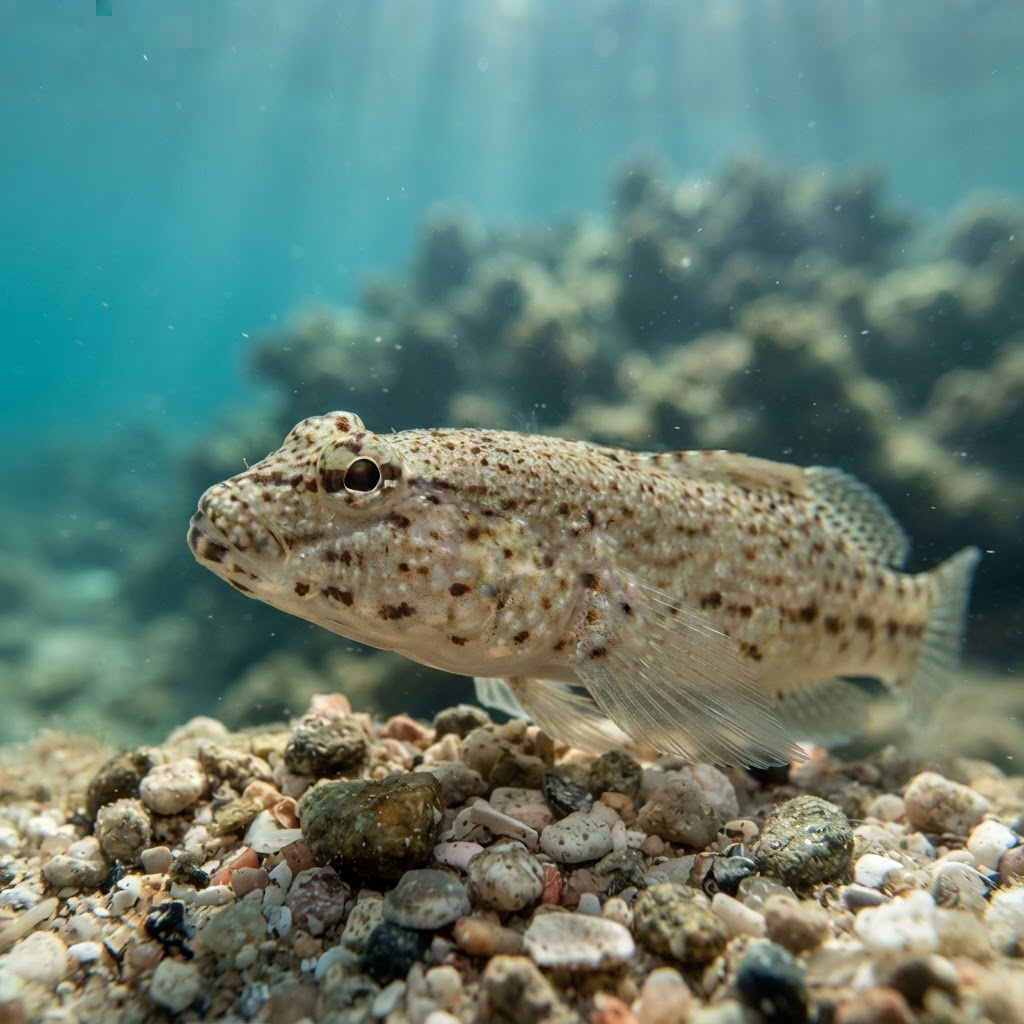
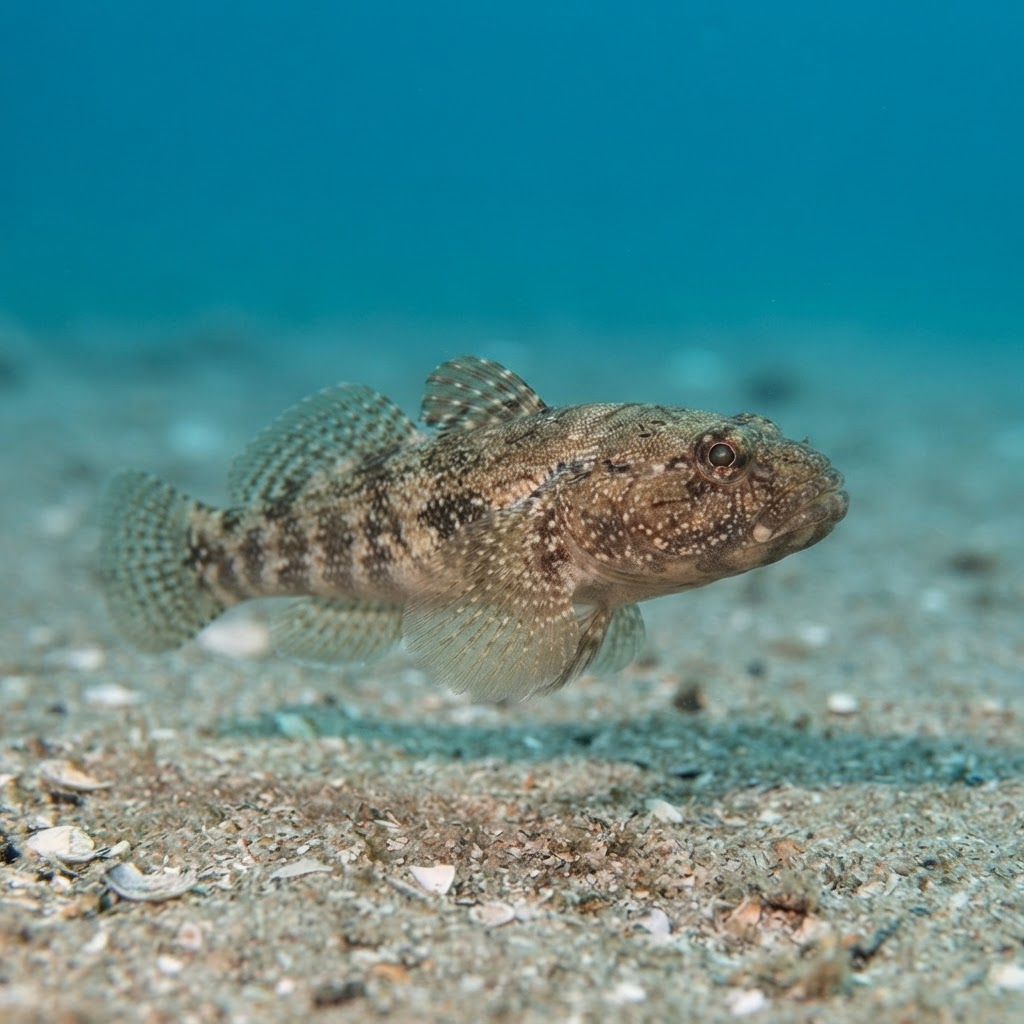
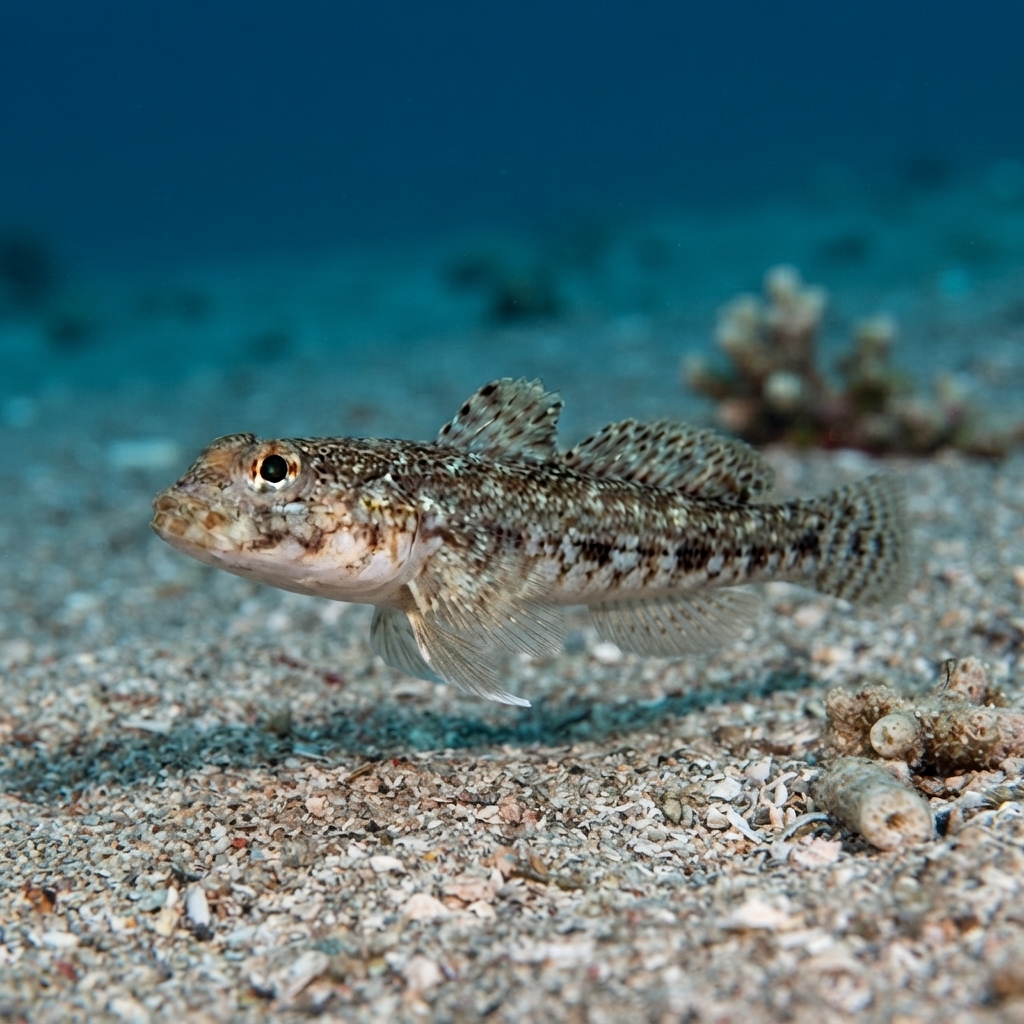
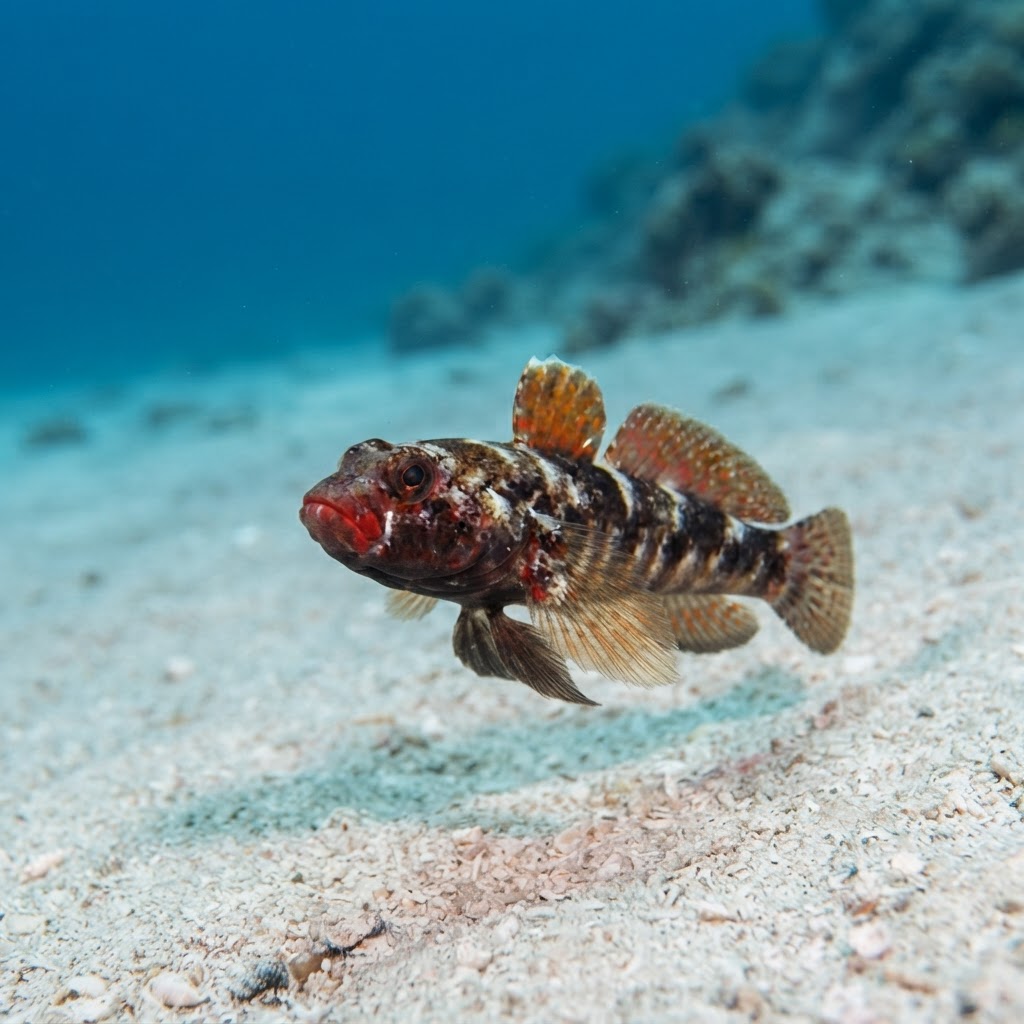
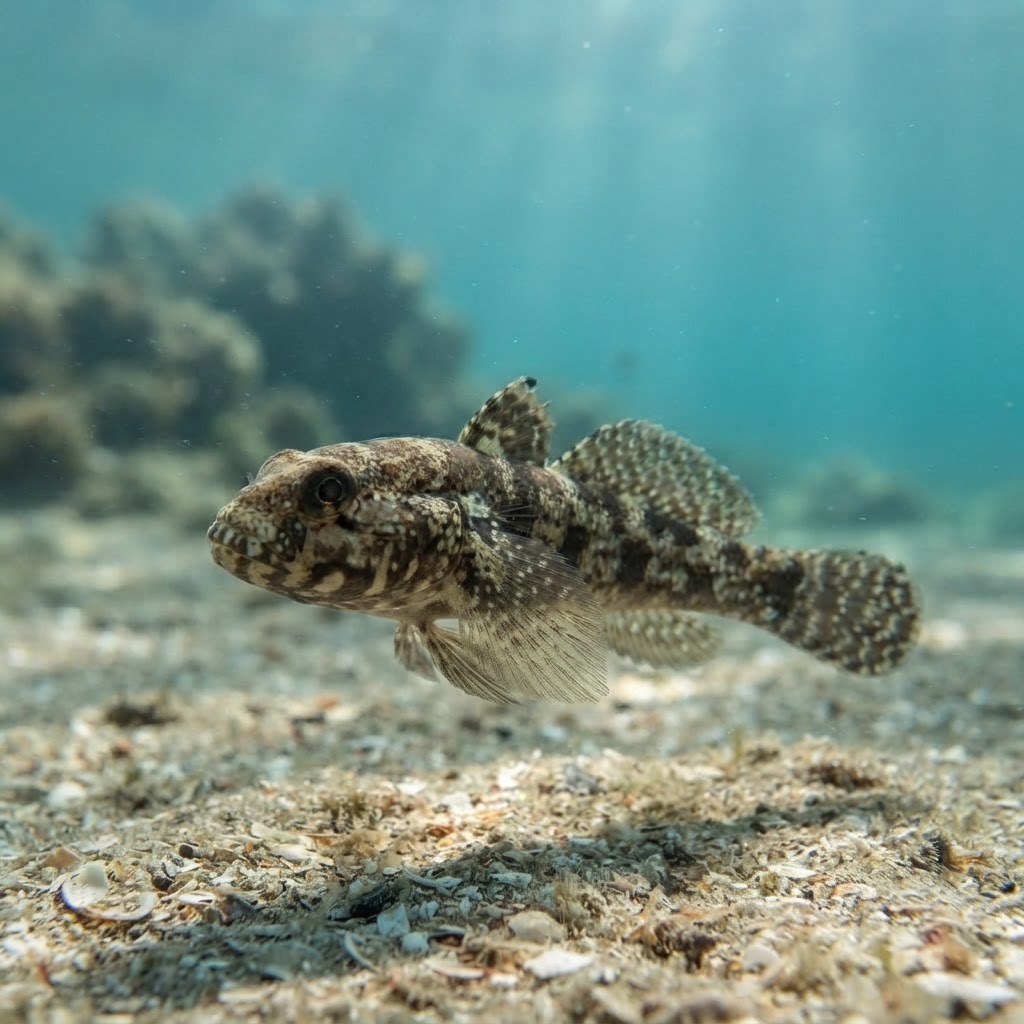
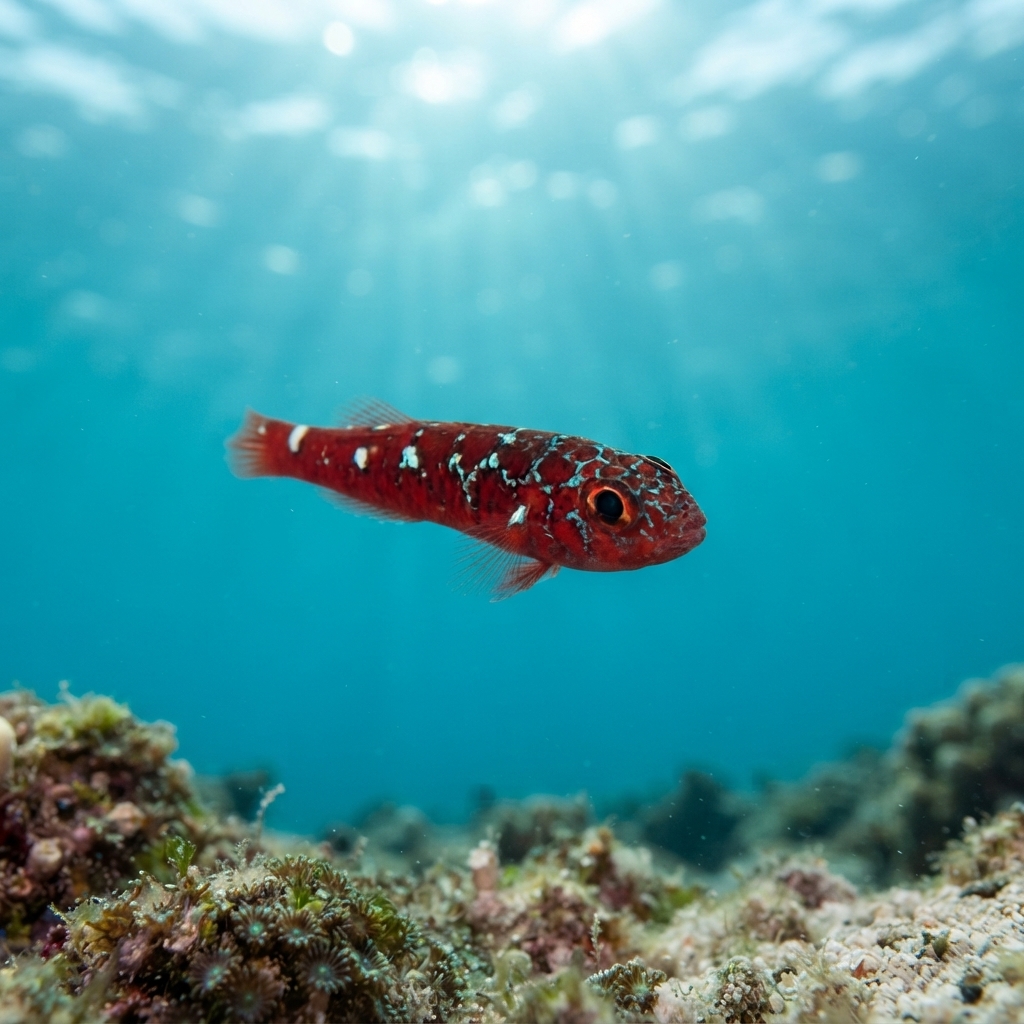
A slender goby barely 3 cm long, easy to overlook unless you slow down and scan bare rock or rubble patches. Body is translucent to pale with fine reddish or orange markings typical of Trimma gobies, and it perches propped on its pelvic fins rather than swimming freely. Look for the characteristic goby posture: still, low to the substrate, head slightly raised, darting only a few centimetres when startled.
Spends most of its time perched motionless on rubble, dead coral, or rocky substrate rather than swimming in open water, which is exactly why divers rate it uncommon: you have to be looking down and close to spot one. It tolerates a slow, careful approach reasonably well but will dart into a crevice if you get too close or move too fast. Most sightings come from divers doing a deliberate macro search rather than a general reef swim.
Like other Trimma gobies, this species is believed to be a simultaneous or sequential hermaphrodite capable of changing sex, a trait common across the genus that helps small, patchily distributed gobies find mates on the reef.
No clear seasonal pattern shows up in the sighting data, and it turns up year-round on Marianas reefs sitting in a comfortable 25.6 to 31.6C range. Plan around good visibility and calm conditions rather than a particular month.
Most reliably found around Apra Harbor in Guam, which accounts for the bulk of logged sightings, with Saipan in the Northern Mariana Islands as the other consistent spot. Guam's Southern Coast has produced a smaller number of sightings too, making the Marianas the reliable region for this goby.
Mapping where Caesiura Pygmy Goby is logged…
Apra Harbor in Guam has produced the most sightings, followed by Saipan in the Northern Mariana Islands. Guam's Southern Coast has also logged a handful of sightings, making the Marianas the go-to region.
There's no detected season in the sighting data, so it's a year-round find on Marianas reefs, which sit in a warm 25.6 to 31.6C range throughout the year.
Look for a translucent, pale fish under 3 cm perched on rubble or rock rather than swimming in the open. It holds a still, propped posture on its pelvic fins and only moves in short darts, so slow, close-range searching is the key to spotting one.
They max out around 3 cm, putting them firmly in pygmy goby territory. You need to get close and look carefully at rubble and rocky patches to pick one out.
No, they pose no danger to divers. They're small, reef-dwelling fish that simply retreat into cover if approached too quickly.
Like other members of the Trimma genus, it's thought to be capable of changing sex, a strategy that helps small, scattered reef gobies pair up to breed.
Site and sighting data is aggregated from diver logs, iNaturalist and GBIF. For taxonomy and conservation status:
Slender Goby
806 sites