Pholis gunnellus
Look for a slippery, eel-shaped fish tucked under rocks in Zeeland or Northern Ireland, active year-round in water as cold as 4C.
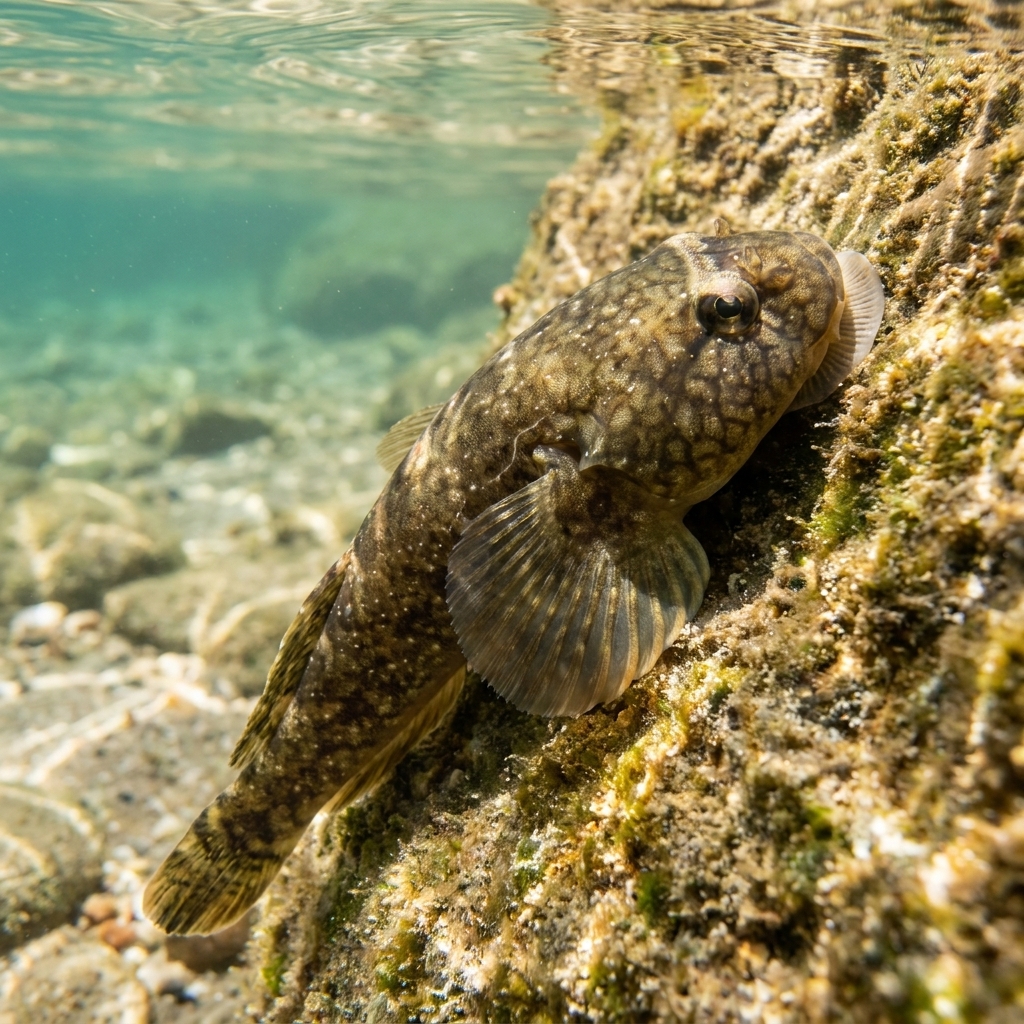
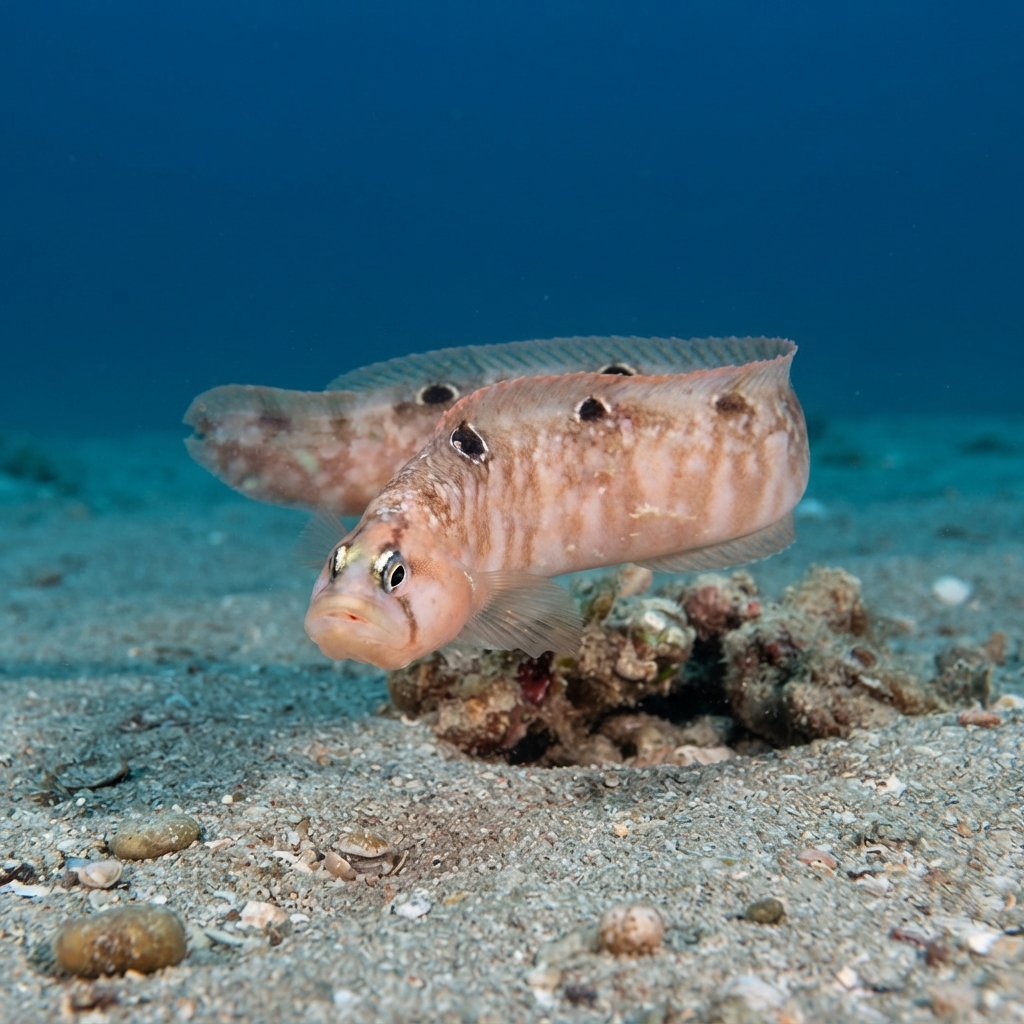
Slender, eel-like body reaching about 17cm, usually seen tucked into a crevice or lying flat against gravel or rock rather than swimming in open water. The giveaway is the row of dark, ringed eyespots running along the base of the long dorsal fin, which can look like a chain of false eyes down its back. Skin is smooth and slippery-looking, in mottled shades of brown, olive or reddish, which helps it blend into weed and cobble.
Divers usually find butterfish wedged into a rock crevice, under a shell or flattened against gravel rather than out swimming, which fits its bottom-dwelling (demersal) lifestyle. It tends to sit still or make short, wriggling dashes for cover when disturbed rather than fleeing far, so a slow approach and a careful eye on ledges and under stones is the way to actually spot one. Most logs describe it as an uncommon find even at sites where it is known to occur, so treat any sighting as a bit of a result.
Its eyespots are thought to confuse predators about which end is the head, and the fish is famously slippery, its slick, scaleless-feeling skin and coiling movements making it hard for both predators and hands to hold onto.
No strong seasonal pattern shows up in the sightings, so treat it as a year-round find. Its comfort range of roughly 4 to 12C matches cold, temperate water conditions that persist through most of the year in these regions rather than a single warm-season window.
Most reliably found in Zeeland in the Netherlands, which logs by far the most sightings, followed by Northern Ireland and England in the UK. It also turns up consistently along Nova Scotia in Canada and the Northeast coast of the United States, with smaller but steady numbers in Schleswig-Holstein, Germany, Scotland and Jutland, Denmark.
Mapping where Rock Gunnel is logged…
Zeeland in the Netherlands has the strongest numbers, with Northern Ireland, England, Nova Scotia in Canada and the Northeast United States also reliable spots to check under rocks and ledges.
There is no clear peak season in the sightings, so it is considered a year-round find in cold temperate water, generally between about 4 and 12C.
Look for a slender, eel-shaped body around 17cm long tucked against rock or gravel, with a row of dark ringed eyespots running along the base of its long dorsal fin.
They typically reach around 17cm in length, staying slim and eel-like throughout their life rather than growing bulky.
No, they pose no danger to divers. They are small, shy bottom-dwellers that hide in crevices rather than interact with people.
Their skin is extremely slick and they have a row of false eyespots along the back, both thought to help them slip away from predators that misjudge which end is the head.
Site and sighting data is aggregated from diver logs, iNaturalist and GBIF. For taxonomy and conservation status:
Soldierfish
3,612 sites