Hypoplectrus unicolor
Butter Hamlet turns up in the Bay Islands, Bonaire and the Virgin Islands year-round, staying near 26-28C on the reef.
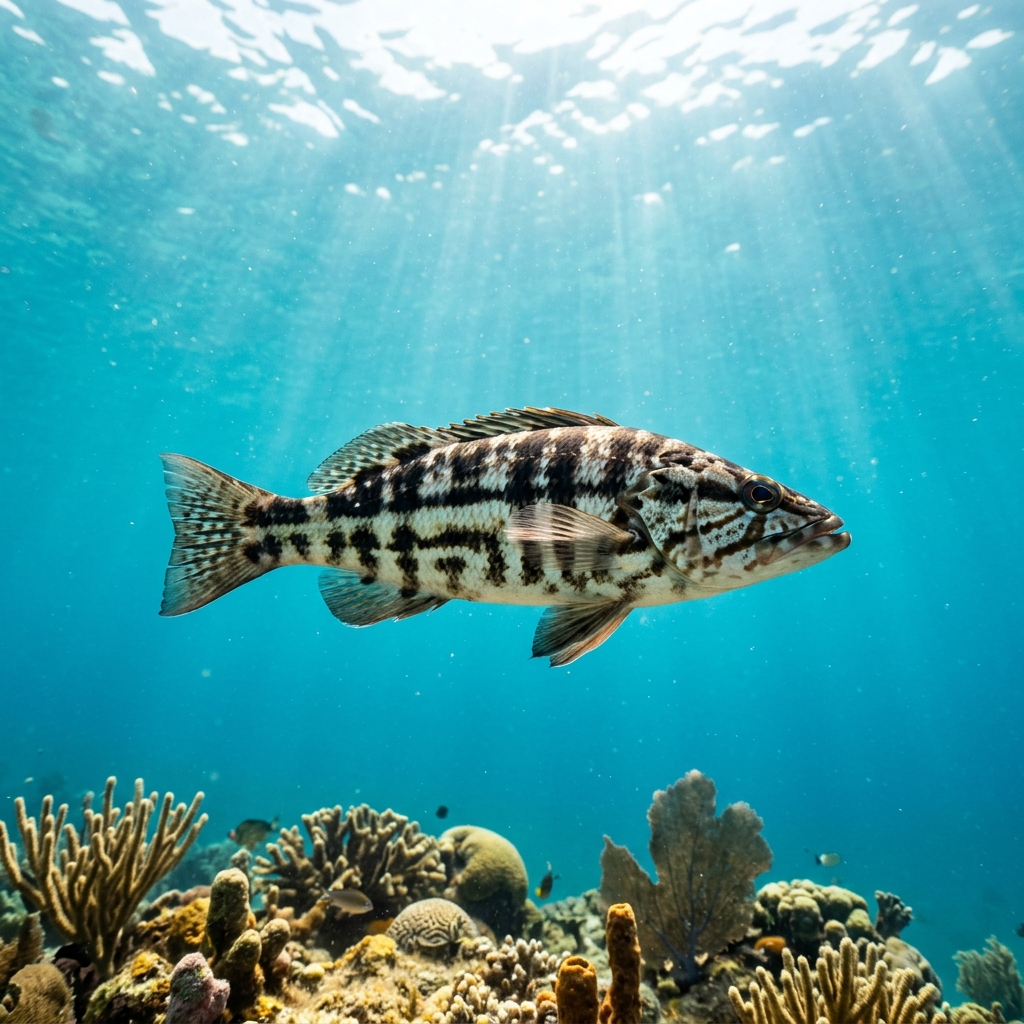
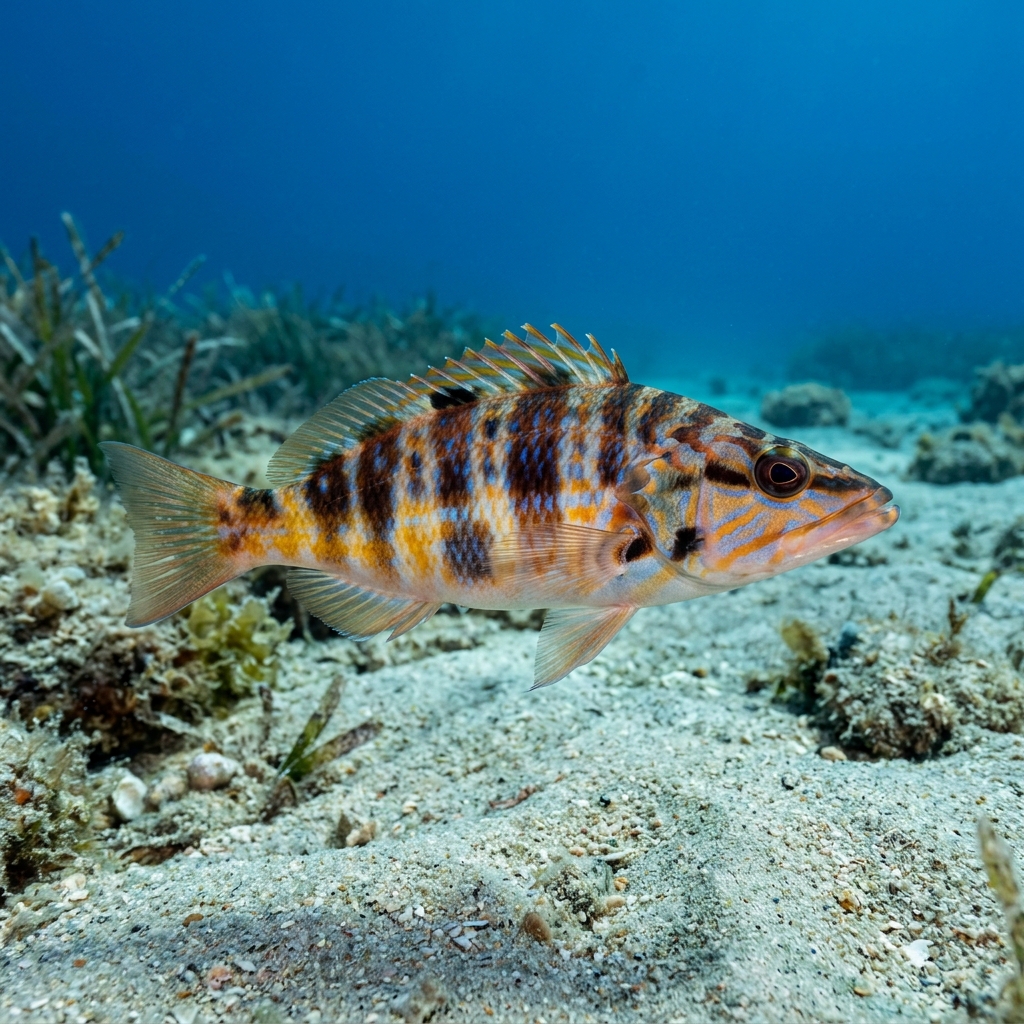
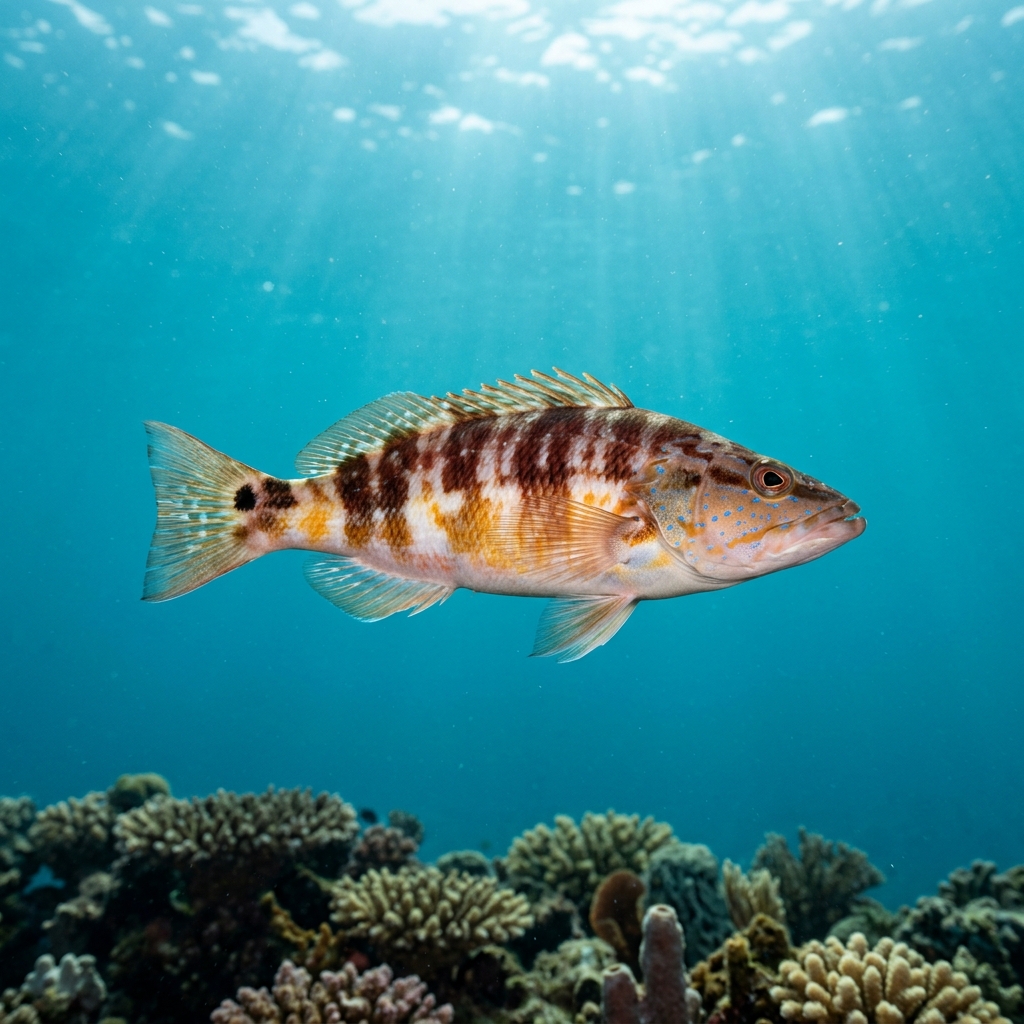
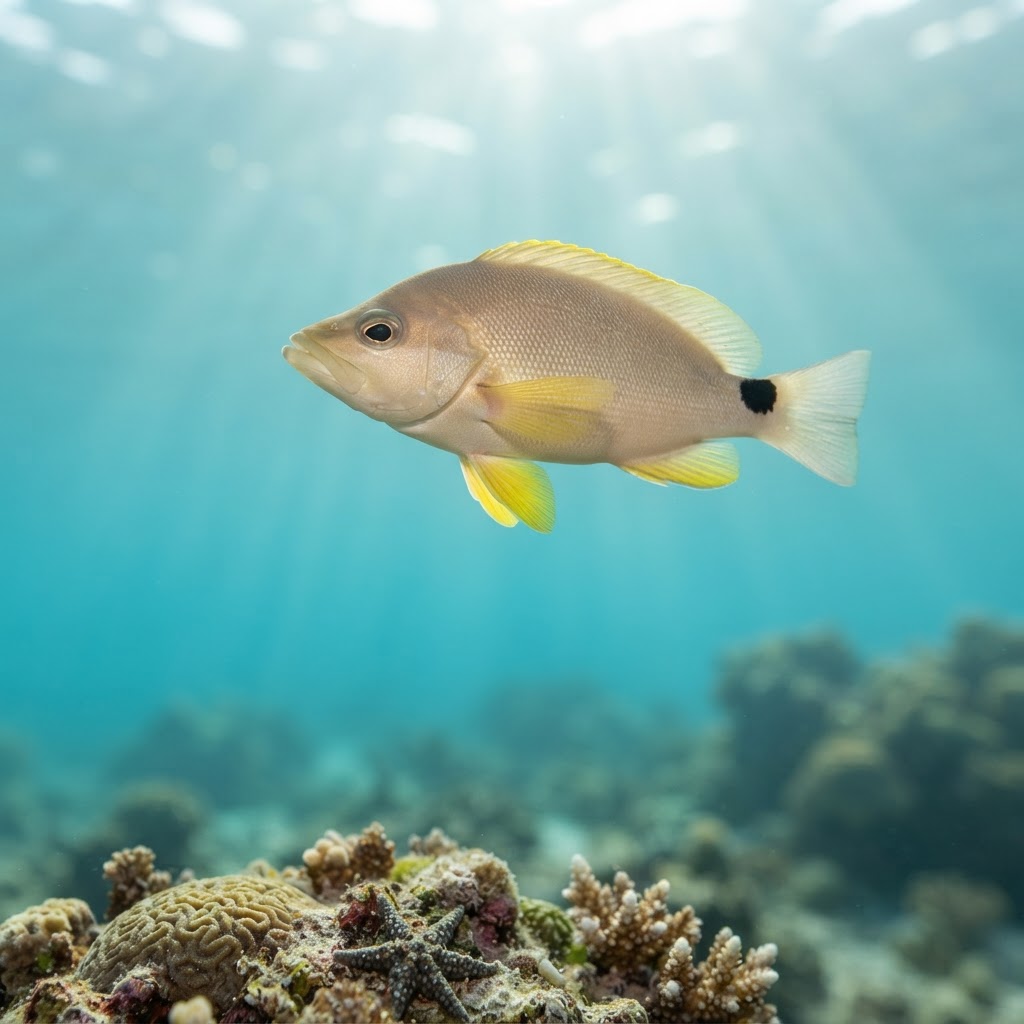
A small, deep-bodied fish barely bigger than your palm, usually a soft tan to yellow-brown with faint darker bars or mottling running down the flanks. Look for the dark saddle-like blotch near the base of the tail and a subtly two-toned face, the trait most divers use to separate it from other hamlets on the same reef. It hovers rather than darts, holding a slightly angled posture just off the substrate.
Expect to find it hovering alone close to the reef structure, often near rubble, sponges or coral heads where it can dip into cover quickly. It is not shy exactly, but it keeps a working distance from divers and will slip behind a coral head rather than bolt across open water. Most sightings are on daytime reef dives rather than night dives, picking through the reef for small prey.
Hamlets are simultaneous hermaphrodites, meaning each fish carries both male and female reproductive organs and pairs will alternate roles, releasing eggs and then sperm, across a single spawning encounter.
Sightings show no detected season, and with a comfortable range of roughly 25.6 to 28.2C this fish is present on Caribbean reefs year-round rather than tied to a particular month.
This one is most reliably logged in Florida, the Bay Islands of Honduras, and across the Dutch Caribbean in Bonaire and Curacao, with solid numbers too in the US Virgin Islands, British Virgin Islands, Cayman Islands and Martinique. It shows up as a scattered, low-density sighting rather than a guaranteed one, so divers in Culebra (Puerto Rico) or western Cuba may need a few dives on the same reef before spotting it.
Mapping where Butter Hamlet is logged…
It is most consistently logged in Florida, the Bay Islands of Honduras, Bonaire, Curacao, and the US and British Virgin Islands. Sightings are scattered across many Caribbean reef sites rather than concentrated in a single hotspot.
There is no strong seasonal pattern in the sighting data, so it can turn up on any dive through the year. It favours reef water around 25.6 to 28.2C, which describes Caribbean conditions for most of the year.
Look for a small, tan to yellow-brown fish with faint body bars and a dark blotch near the tail base, hovering close to the reef rather than swimming in open water. Its posture is slightly angled and its size, under 10cm, rules out most larger grouper relatives.
They stay small, typically around 8cm as adults, making them one of the more petite members of the grouper family found on Caribbean reefs.
Like other hamlets, it is a simultaneous hermaphrodite, holding both male and female reproductive tissue at once and trading roles with a partner during spawning rather than settling into one sex.
Site and sighting data is aggregated from diver logs, iNaturalist and GBIF. For taxonomy and conservation status:
Blacktip Grouper
2,734 sites