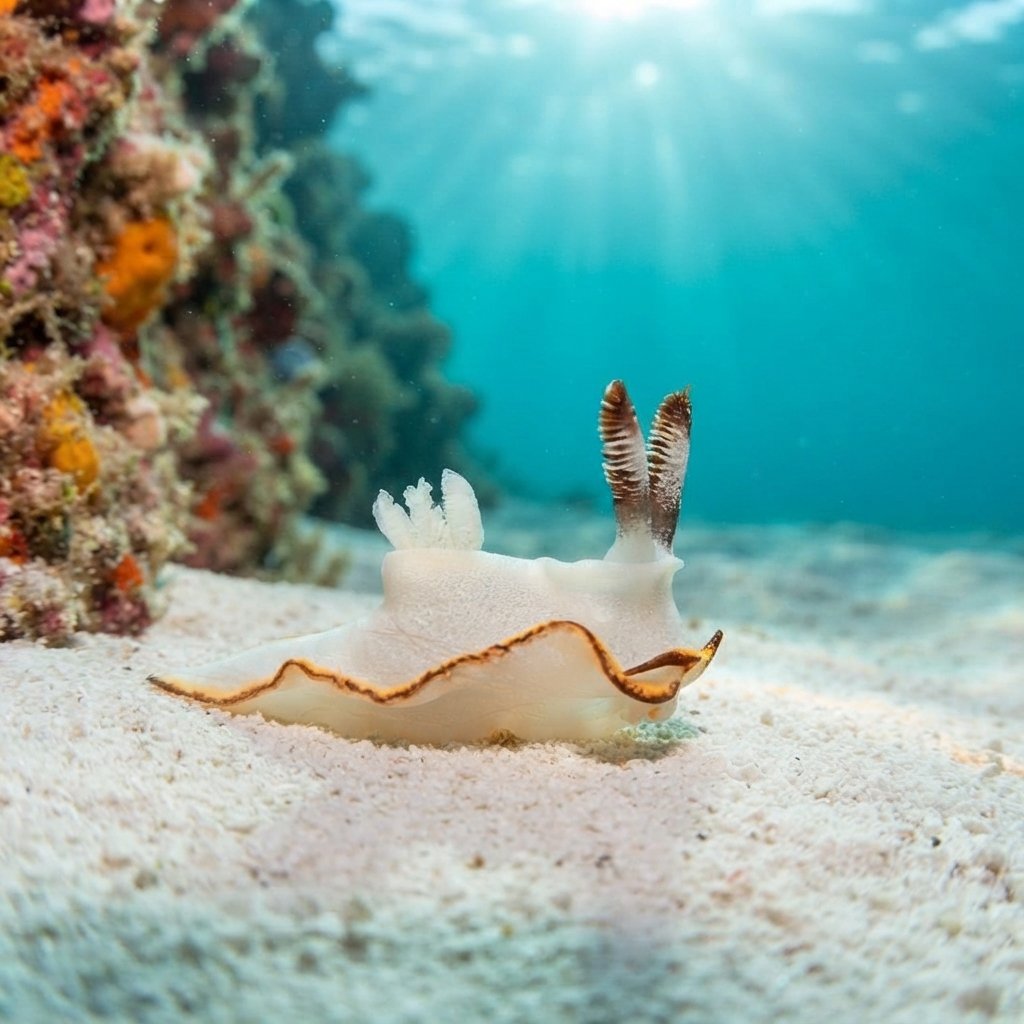
Pelagella longicornis
A rarely-logged nudibranch found off Luzon, Philippines and Victoria, Australia, in reef water from 19 to 29 C. Here's what to look for.
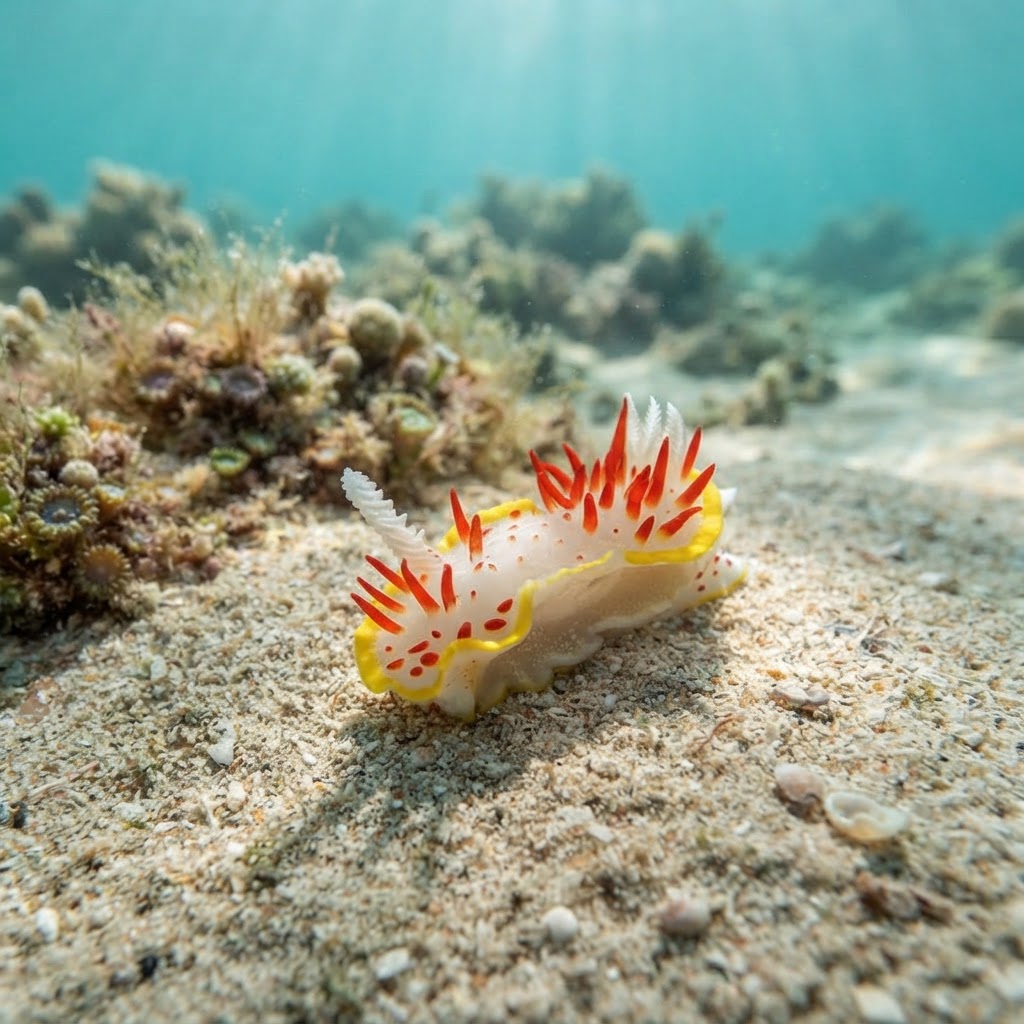
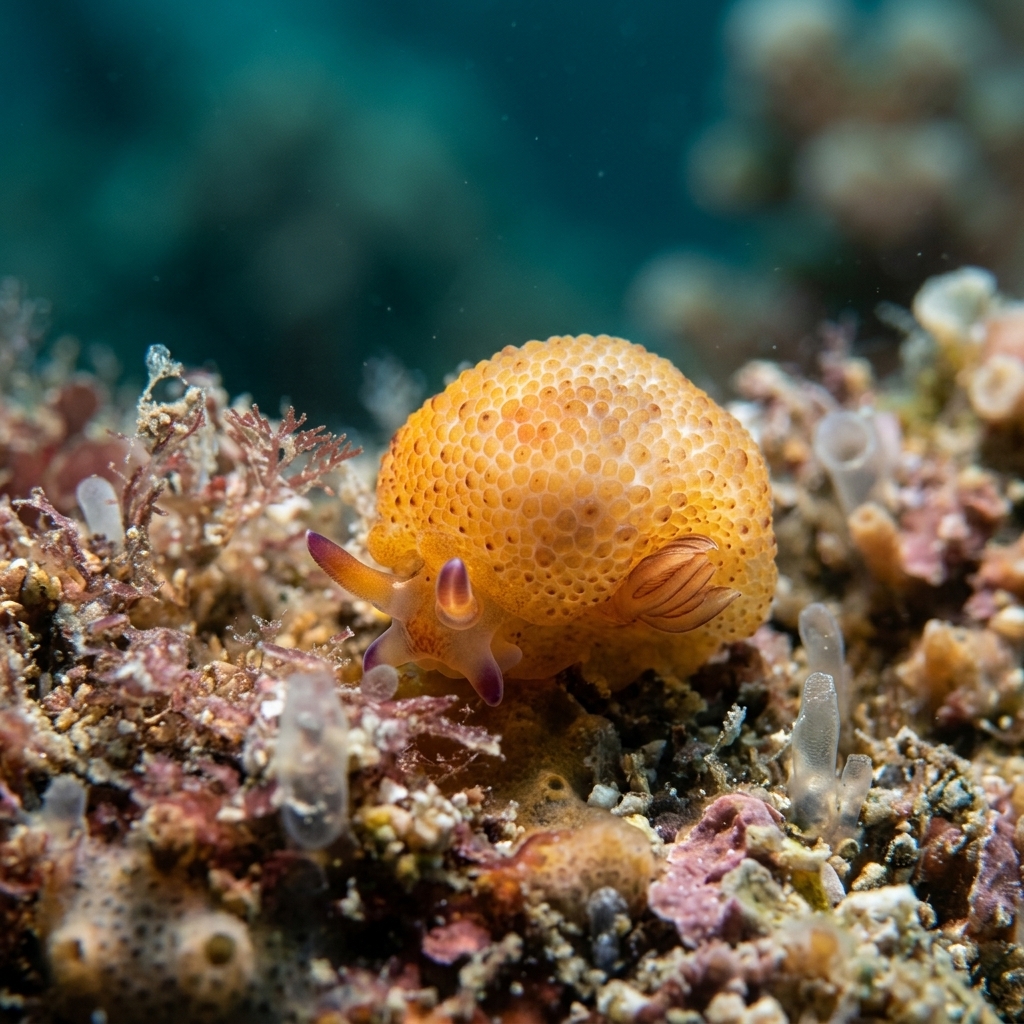
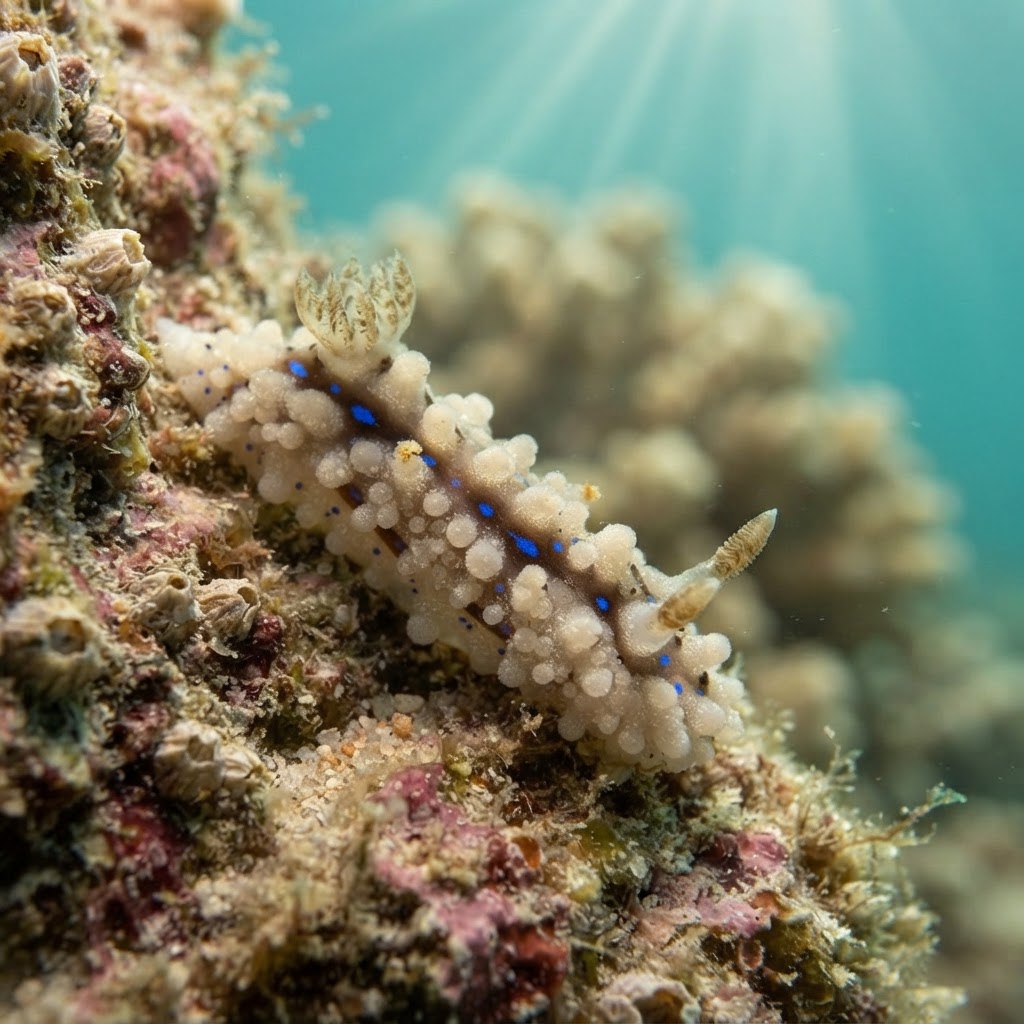
Small, soft-bodied nudibranch with a pale to translucent mantle bordered by a distinct darker, burnt-looking edge, which is the easiest feature to key on underwater. Like other goniodorid nudibranchs it has a low, oval profile with feathery gills (rhinophores and a gill tuft) near the rear of the body, best spotted with a slow, close look rather than a swim-by. No confirmed size range is documented, so treat it as a small, easily-overlooked find similar in scale to other pump dorids.
Divers find it slow-moving and stationary on reef substrate, doing what nudibranchs do best: grazing quietly and paying no attention to passing divers. It's the kind of animal you find by scanning close to the bottom rather than mid-water, often on a muck or reef-rubble dive rather than a big wall or pinnacle. Given how uncommon to rare it is at the sites where it has been logged, most sightings come from divers actively searching rather than incidental spotting.
Like other dorid nudibranchs, it almost certainly feeds on sponges or similar encrusting invertebrates, extracting compounds from its diet that can end up stored in its own tissue as a chemical defence against predators.
Sightings don't show a detectable season, and the observed temperature range of 19.4 to 29.2 C spans both warm tropical reef conditions and cooler temperate water, so it appears to be a year-round find wherever it turns up.
Reef neighbours a diver could mistake it for. Use the identification notes above to tell them apart.
Logged sightings cluster in the Philippines, particularly around Luzon, with a further site in Victoria, Australia. It is not a widespread species in the data, so treat any sighting as a bonus rather than something to plan a whole trip around.
Mapping where Burnt-edged Pump Dorid is logged…
It has been logged off Luzon in the Philippines and in Victoria, Australia. Sightings are sparse, so it's a species you might stumble on rather than target directly.
There's no clear season in the sighting data. It has been recorded across a wide temperature range from 19.4 to 29.2 C, suggesting it can turn up year-round in both temperate and tropical water.
Look for a small, pale-bodied nudibranch with a mantle edge that looks scorched or darkened along its border. It sits low on the reef and moves slowly, so a careful, close look at rubble or reef substrate is the way to spot one.
No confirmed size range has been documented for this species. Like most goniodorid nudibranchs, it's likely a small animal best spotted with careful, close-up scanning rather than from a distance.
No, it poses no danger to divers. It's a small, slow-moving nudibranch that simply grazes on the reef and has no interest in interacting with divers.
Site and sighting data is aggregated from diver logs, iNaturalist and GBIF. For taxonomy and conservation status:
Blue Dragon
3,163 sites