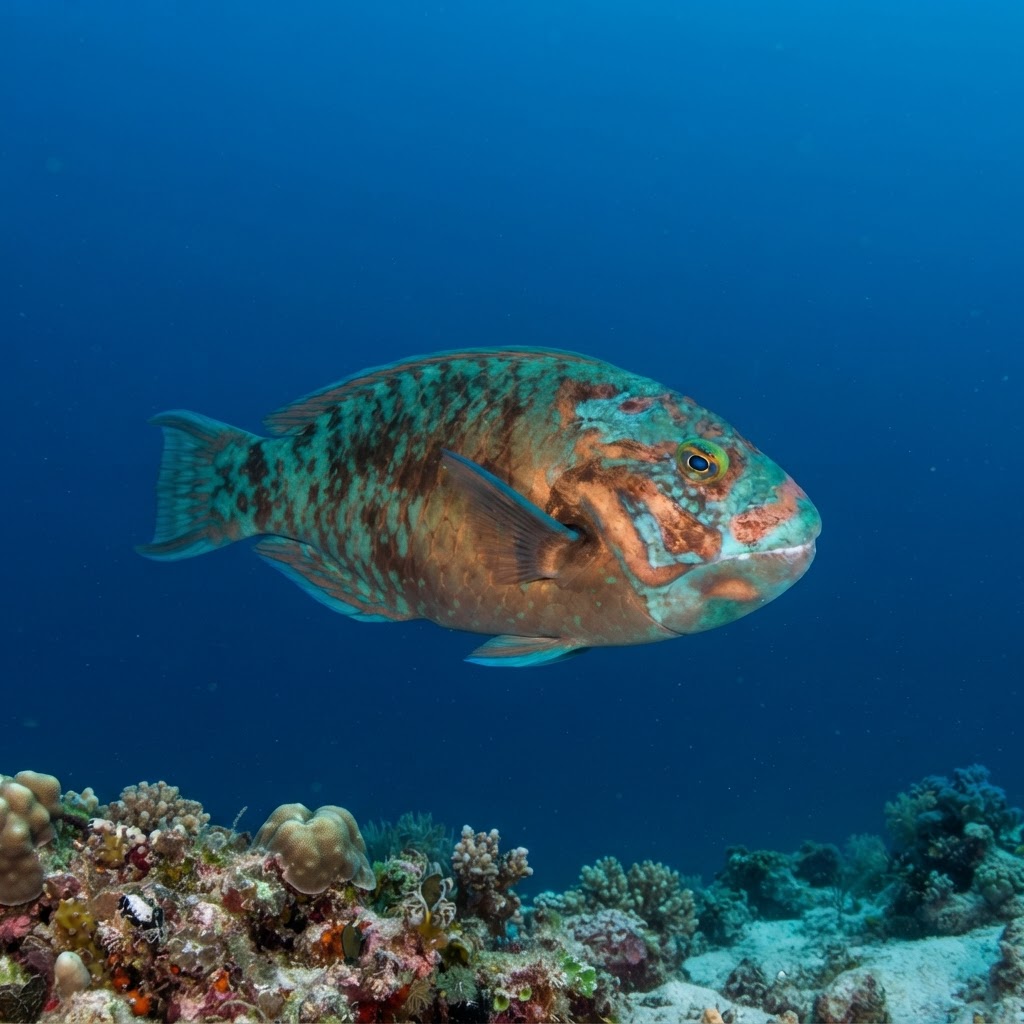
Calotomus carolinus
Mottled brown-green parrotfish grazing Hawaii's reefs and Seychelles' Inner Islands, seen year-round in 25-29C water.
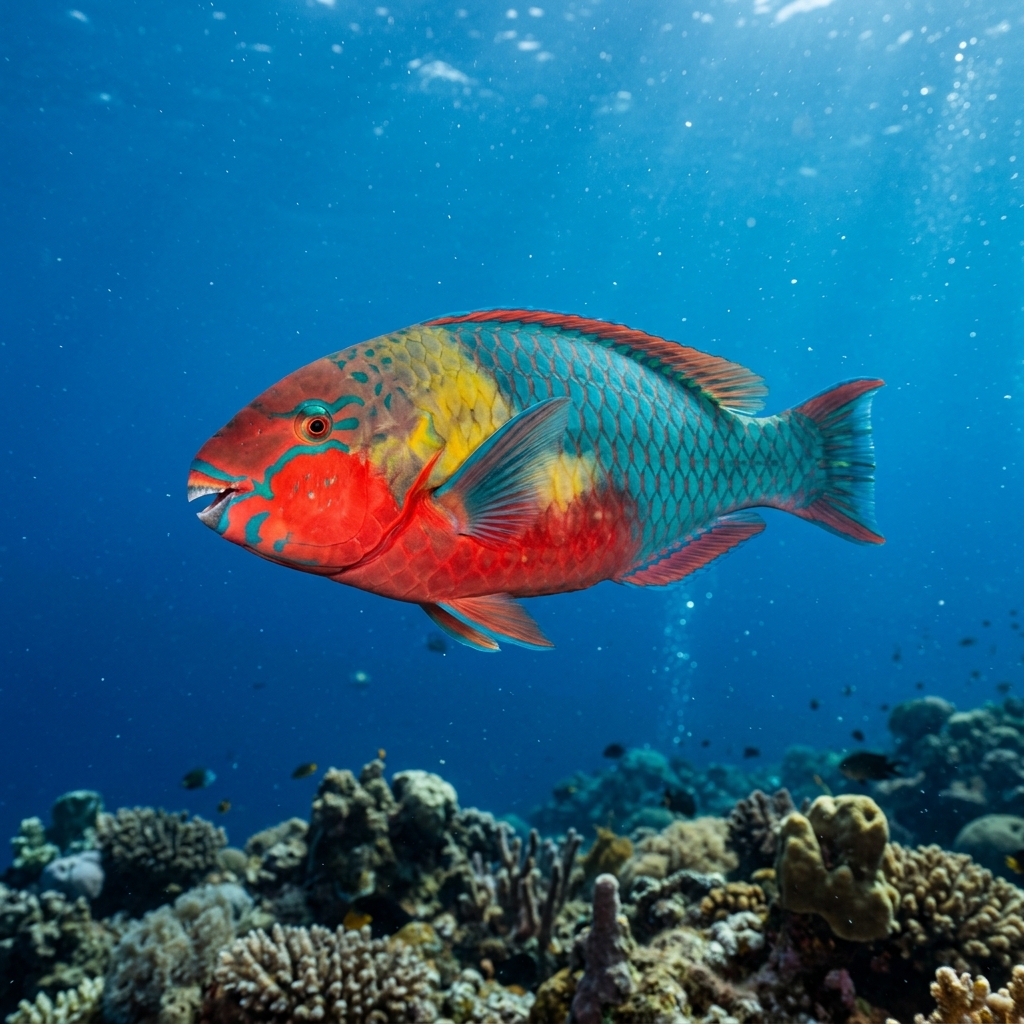
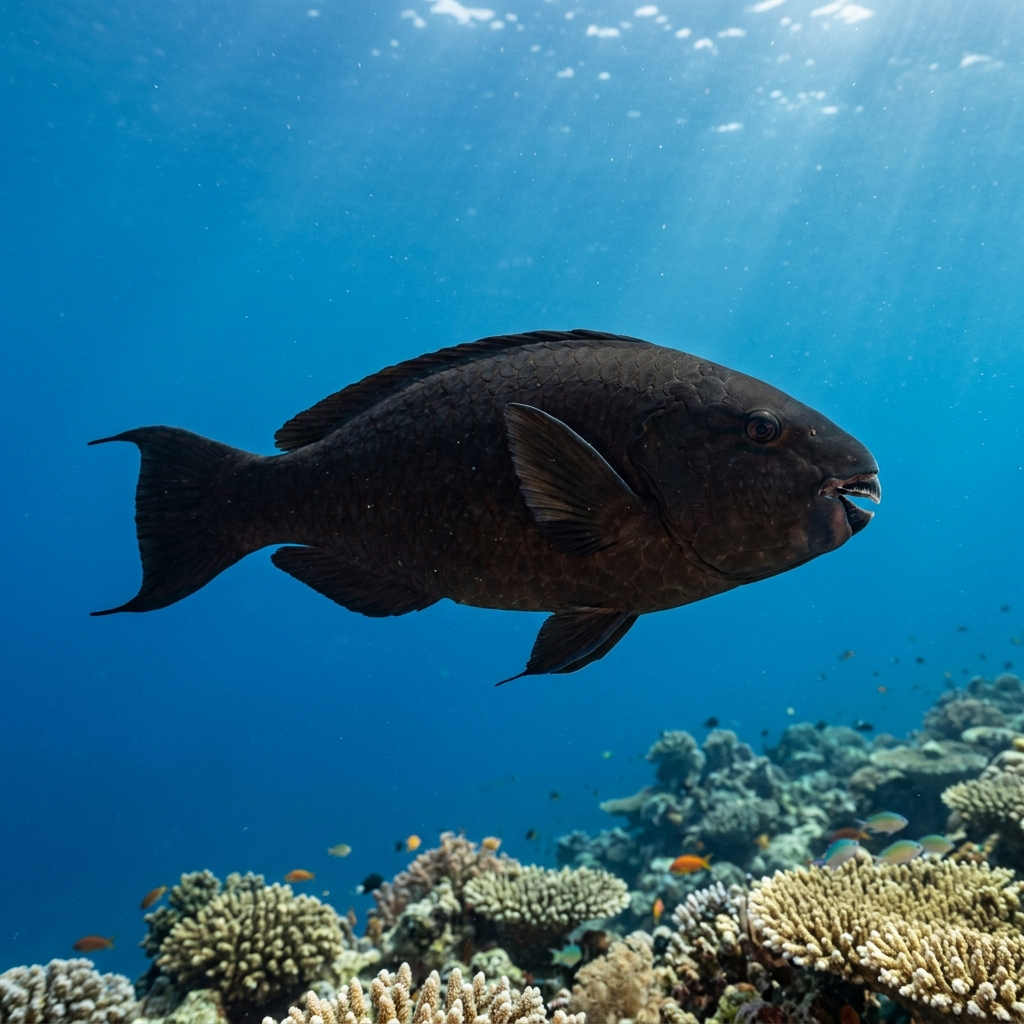
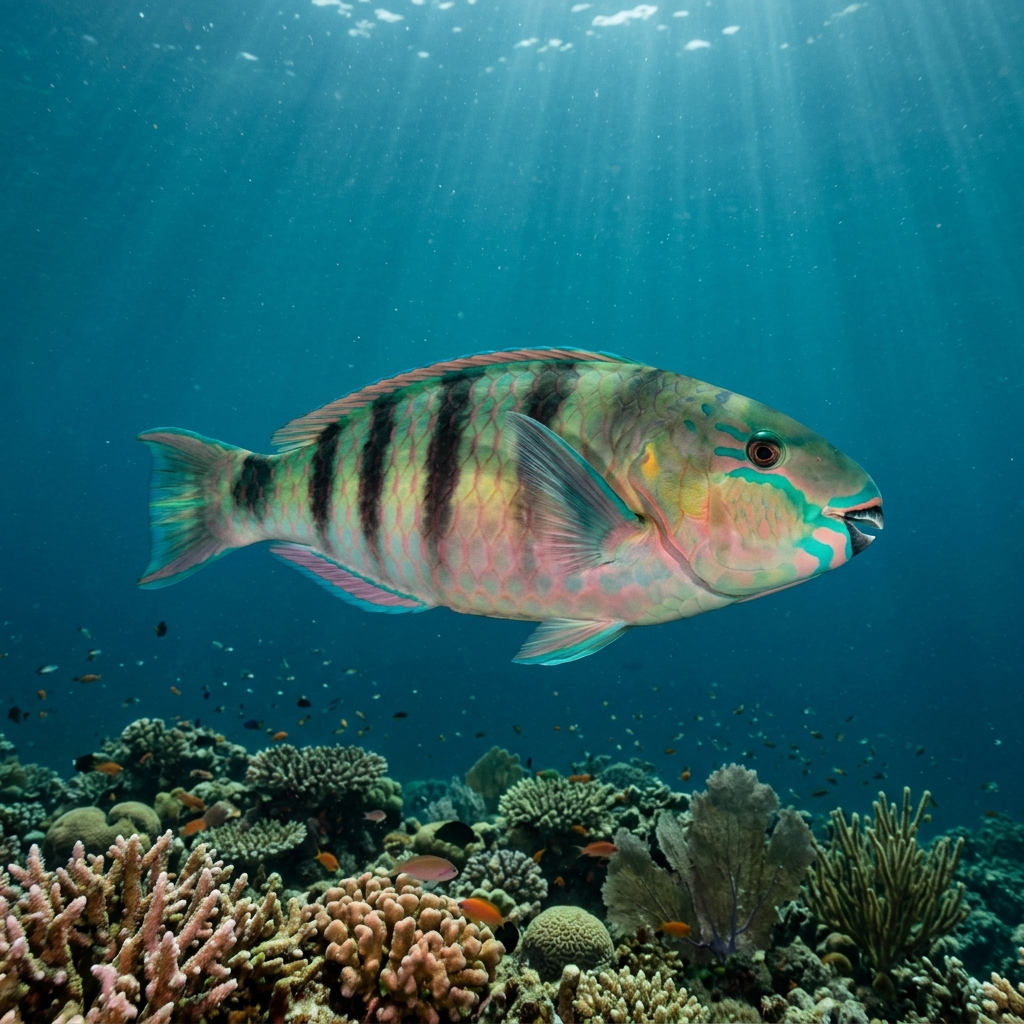
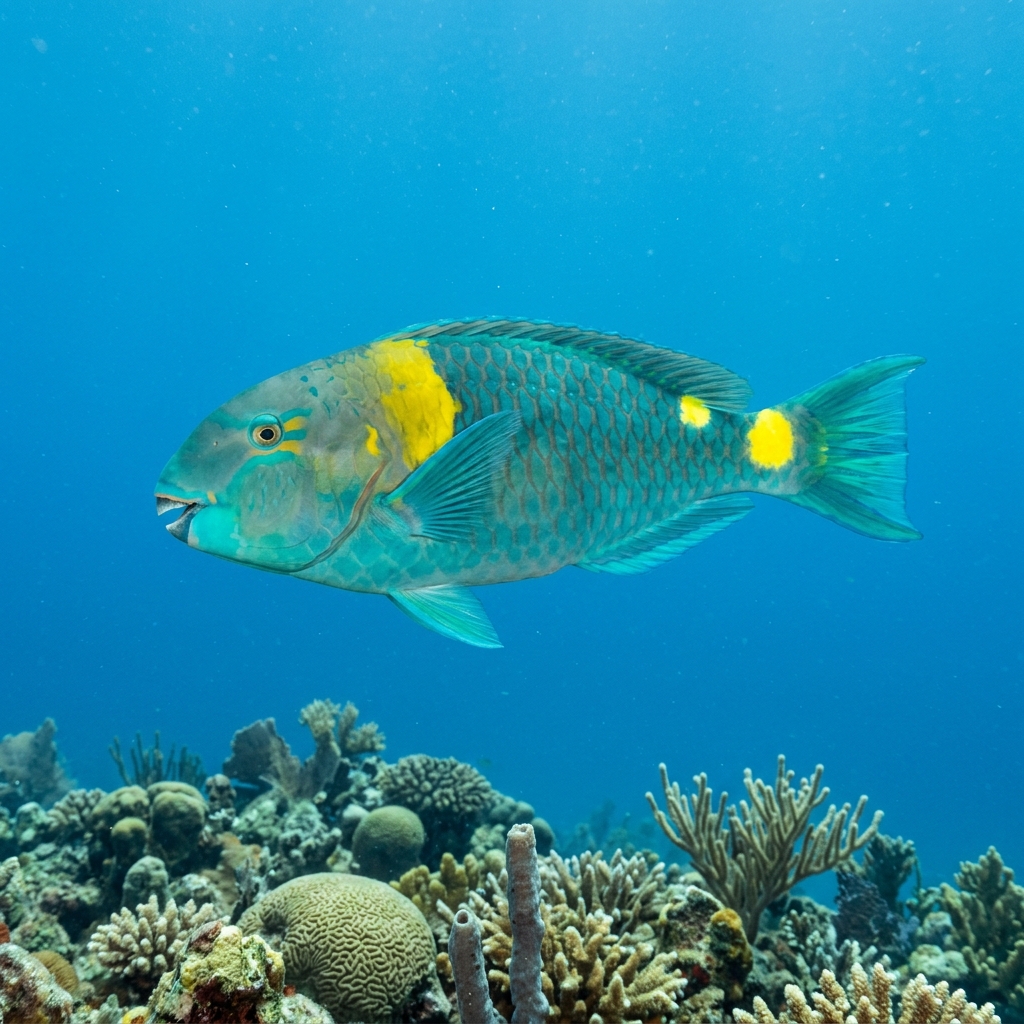
Grows to around 37 cm, with a chunky, slightly elongated body covered in a mottled patchwork of brown, green and rust speckling rather than bold blocks of colour. Look for the fused, beak-like teeth typical of parrotfish, though less obviously beak-shaped than in Scarus species, plus a blunt head profile and rounded tail. Colour is variable and can shift with mood and habitat, so the overall speckled, camouflage-like pattern is the more reliable cue than any single mark.
Usually seen grazing steadily over algae-covered reef and rubble, picking at turf algae rather than hard coral, and it tends to keep going about its business rather than bolting when divers approach. Most sightings are logged as uncommon rather than common, so expect to spot one or two working a patch of reef rather than groups. Shallow reef flats and slopes down to moderate depth are the typical setting, with no strong day/night pattern reported.
Unlike the more familiar beaked parrotfishes, this species has less fused teeth that still show individual tooth plates, an in-between dental setup that lets it graze softer algae and seagrass as well as harder turf.
No clear seasonal pattern in the sightings data, and with a comfortable range of roughly 25 to 29C, reefs across its range stay within that window year-round, so it is a fair bet on any dive rather than a seasonal target.
Most reliably logged in Hawaii, which dominates the sightings, with a strong second population around the Inner Islands of Seychelles. Smaller but consistent numbers turn up in the Visayas in the Philippines, the Society Islands of French Polynesia, and Xiaoliuqiu in Taiwan, with occasional sightings in Watamu, Kenya and around Bali and Sulawesi in Indonesia.
Mapping where Bucktooth Parrotfish is logged…
Hawaii is the most consistent place to find them, with another strong population in the Inner Islands of Seychelles. They also show up in the Philippines' Visayas, French Polynesia's Society Islands, and Taiwan's Xiaoliuqiu.
There is no strong season in the sightings data. They favour water between about 25 and 29C, which holds year-round on the reefs they inhabit, so any month is workable.
Look for a stocky, 30 to 40 cm parrotfish with a mottled brown, green and rust speckled pattern rather than bold stripes or blocks of colour. Its fused teeth are less obviously beak-shaped than in other parrotfish, and it is usually seen grazing slowly over algae-covered rock or rubble.
They typically reach around 37 cm in length, a mid-sized parrotfish that is easy to overlook against a busy reef background.
Their teeth sit between the fully fused beak of typical parrotfish and the separate teeth of wrasses, letting them graze both tough turf algae and softer seagrass.
Site and sighting data is aggregated from diver logs, iNaturalist and GBIF. For taxonomy and conservation status:
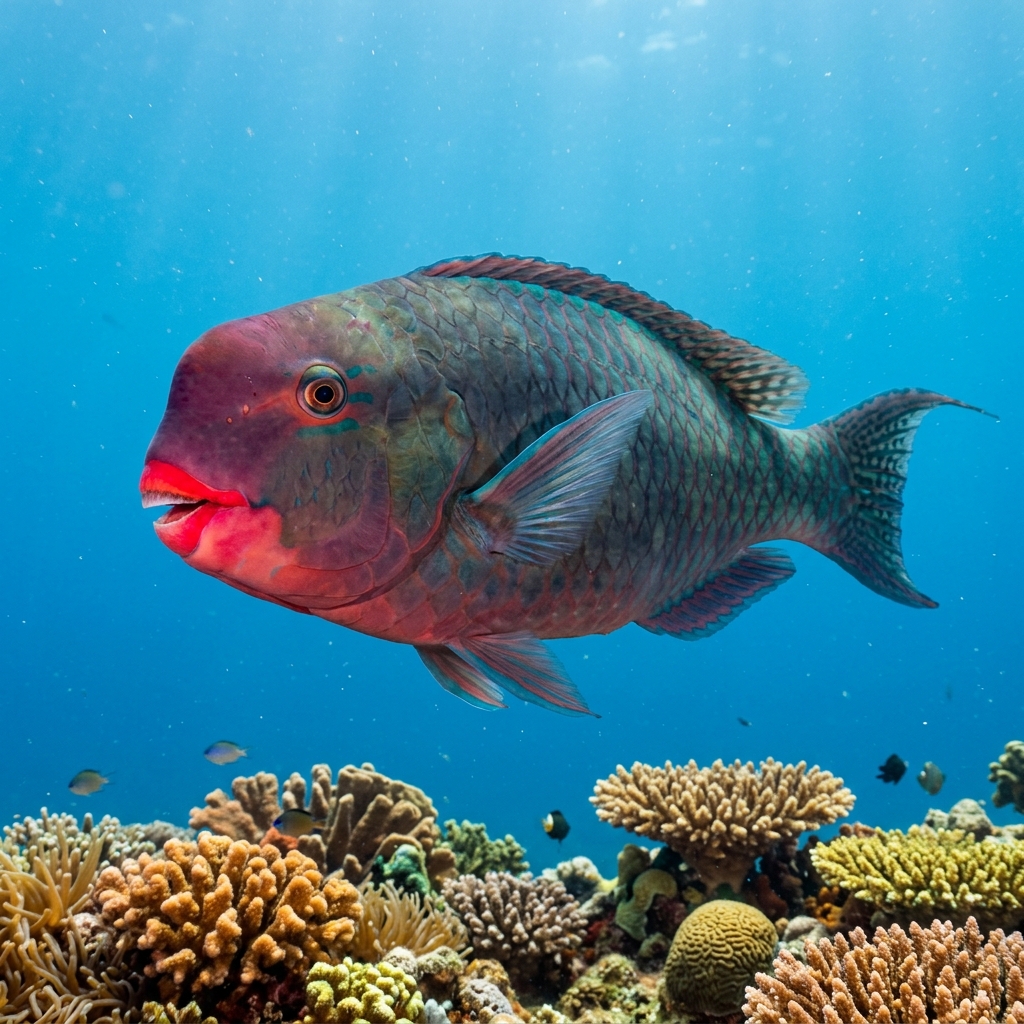
Redlip Parrotfish
2,789 sites