Notolabrus parilus
A mainstay of Western Australia's reefs, most commonly logged around Western Australia and South Australia in 15 to 22°C water year-round.
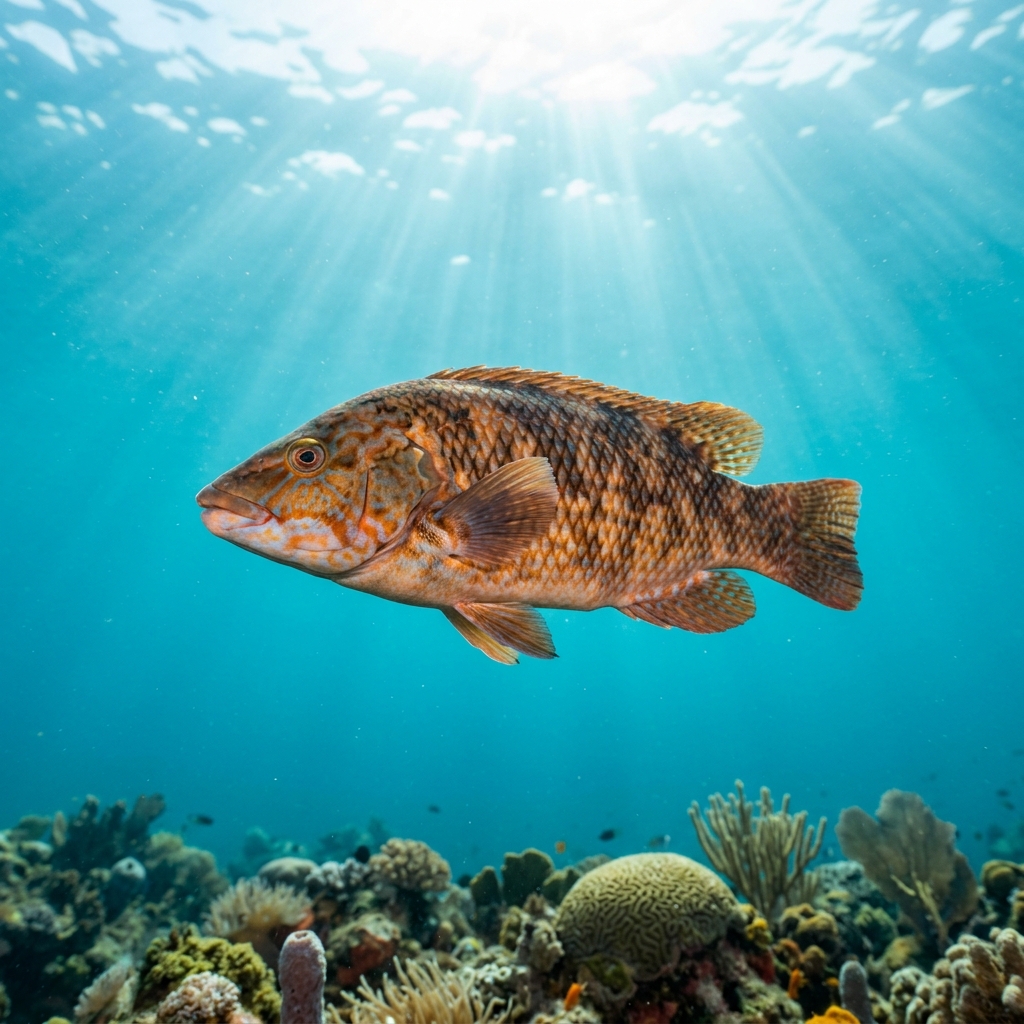
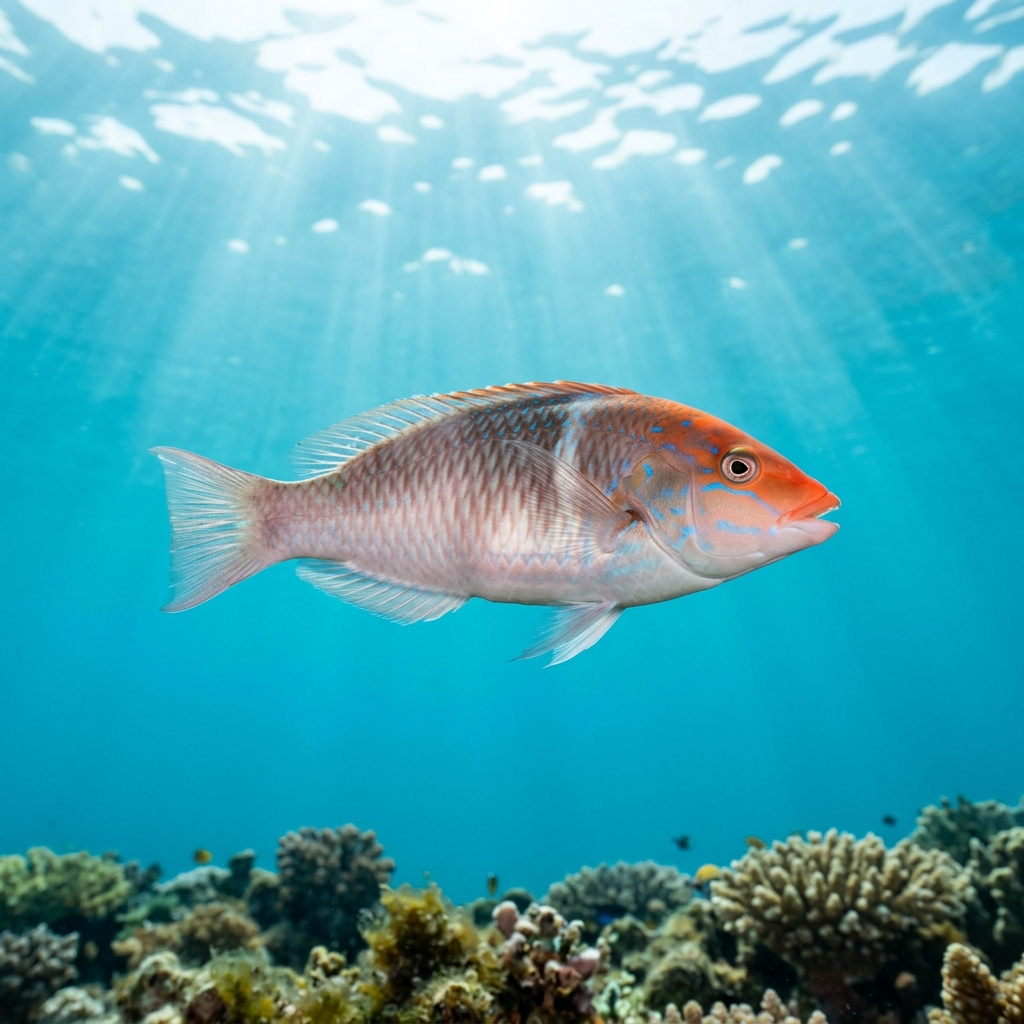
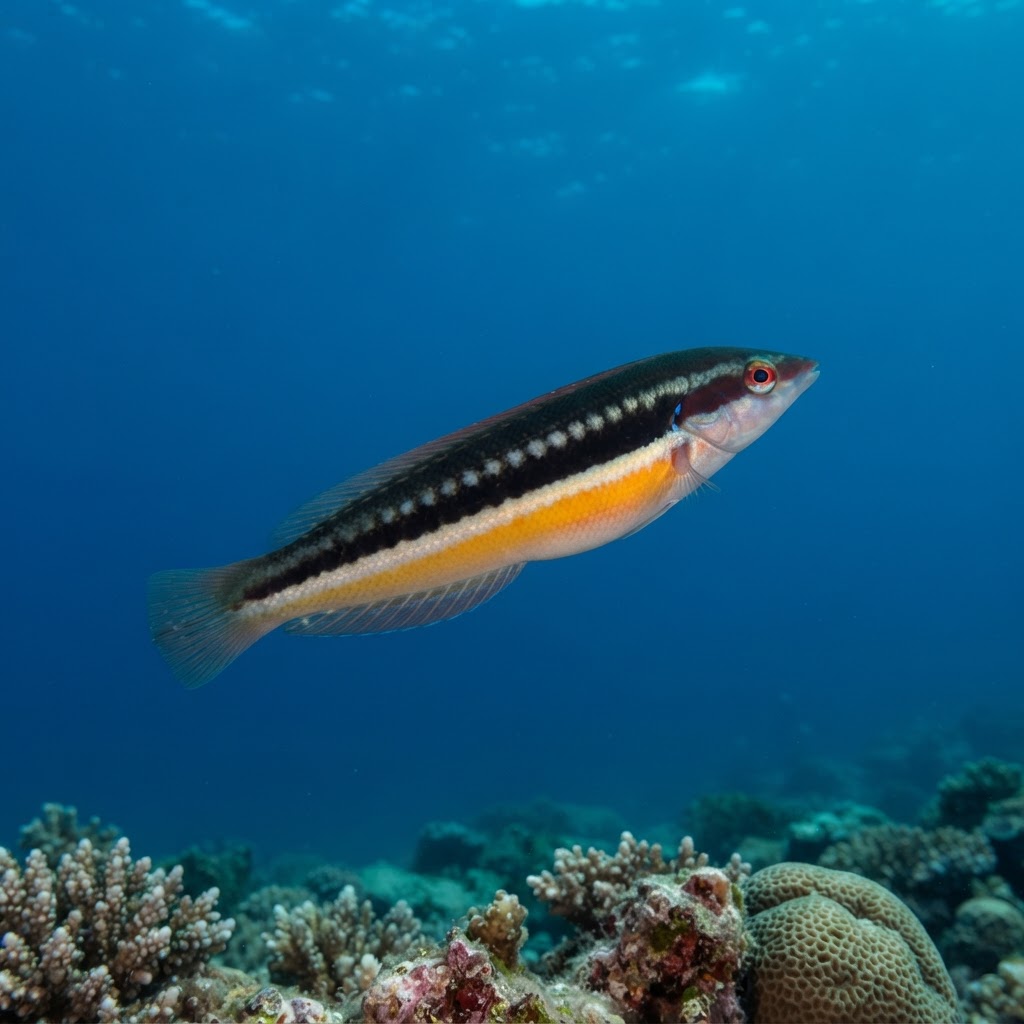
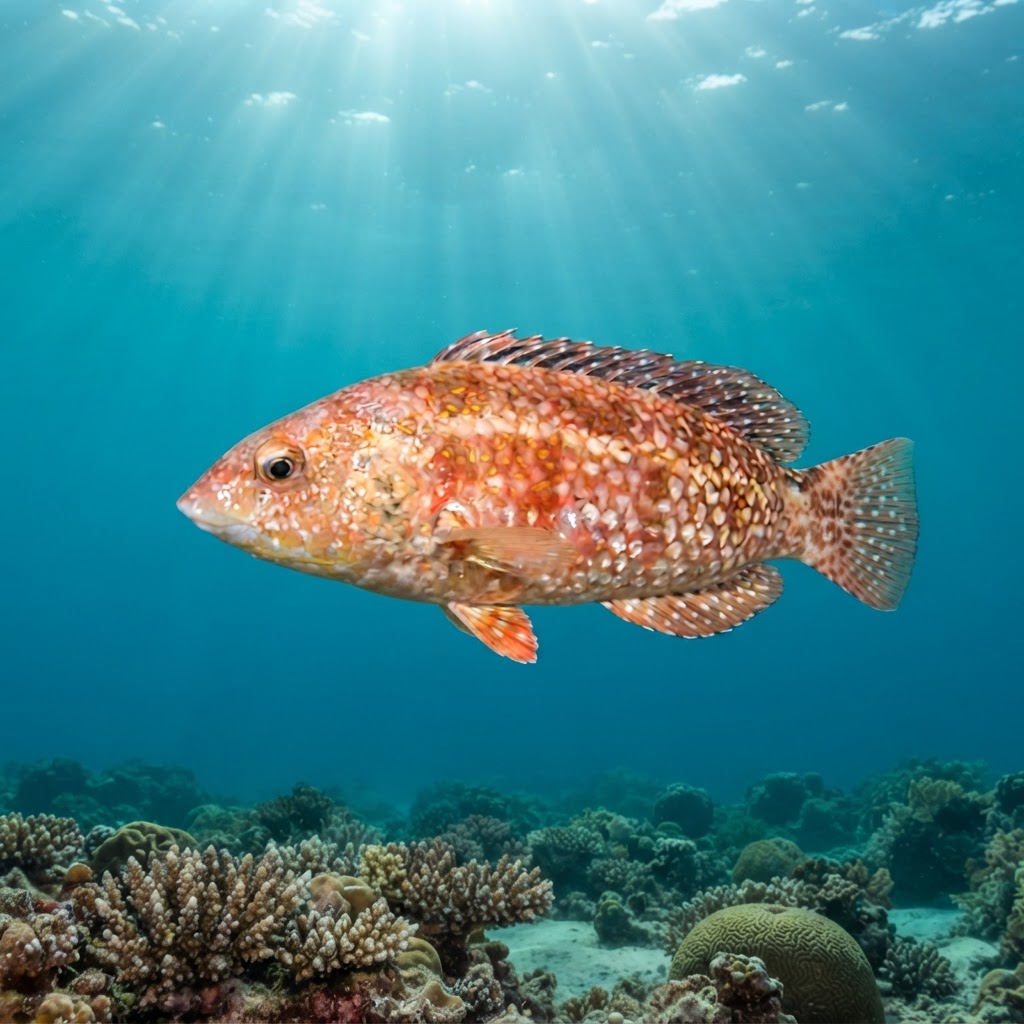
A medium-bodied wrasse reaching around 28 cm, with a mottled brown to olive body covered in fine darker speckling that gives it a somewhat camouflaged look against rocky reef. The elongated, slightly torpedo-shaped body and continuous dorsal fin are typical wrasse traits, but the brownish speckled tone rather than bold colour blocks is the main giveaway. It tends to hover close to reef structure rather than swim in open water, which helps separate it from the bigger, brighter gropers it sometimes shares habitat with.
Divers most often find it working close to reef structure, picking at the rocky substrate and weed beds rather than schooling in open water. It is usually logged as uncommon rather than abundant at any given site, so sightings tend to be one or two fish rather than groups, and it does not appear to show strong avoidance or attraction to divers, simply going about its business along the reef.
Like many labrids, brownspotted wrasse likely change colour and pattern through their life stages, a trait common across the wrasse family even where the specifics for this species are not well documented.
Sightings show no detected seasonal pattern, and with a water-temperature niche spanning 15.3 to 22.4°C it appears to be encountered across the cooler and milder months alike. Treat it as a year-round resident of the reefs it occupies rather than something tied to a particular season.
This is essentially a Western Australian and South Australian fish underwater, with sightings concentrated heavily around Western Australia and, to a lesser extent, South Australia. It has not turned up in diver logs outside Australia, making it a species you go looking for specifically on southern and western Australian temperate reefs.
Mapping where Brownspotted Wrasse is logged…
It is most reliably found on reefs in Western Australia, with a smaller number of sightings from South Australia. Outside Australia it has not been logged by divers.
There is no clear season for this species, and it has been observed across a wide temperature range of roughly 15 to 22°C. It is best treated as a year-round sighting on the reefs where it occurs.
Look for a brownish, speckled body around 28 cm long, hovering near rocky reef rather than swimming in open water. The mottled camouflage pattern rather than bold colour is the main clue, distinguishing it from more brightly marked wrasses and gropers on the same reefs.
They typically reach around 28 cm in length, putting them in the mid-size range for temperate wrasses rather than among the larger reef-associated species.
No, they pose no danger to divers and are not known for any aggressive or defensive behaviour towards people underwater.
Most divers who encounter it describe it as uncommon rather than a guaranteed sighting, though it does turn up regularly enough at sites across Western Australia to be considered a reliable, if not frequent, find.
Site and sighting data is aggregated from diver logs, iNaturalist and GBIF. For taxonomy and conservation status:
Bird Wrasses
3,632 sites