Siganus stellatus
Yellow-spotted rabbitfish grazing reef flats in the Maldives' Central Atolls and Egypt's Marsa Alam, in warm 25-29C water year-round.
Safety warning
The dorsal, anal and pelvic spines carry venom that causes sharp, lingering pain if you brush against or grab one, so keep hands off and give it space rather than herding it for a photo. It's not aggressive and won't chase a diver, so the risk is almost entirely accidental contact.
If you're stung
Venomous fin spinesGeneral first-aid guidance, not a substitute for professional medical care. In an emergency, call your local emergency number.
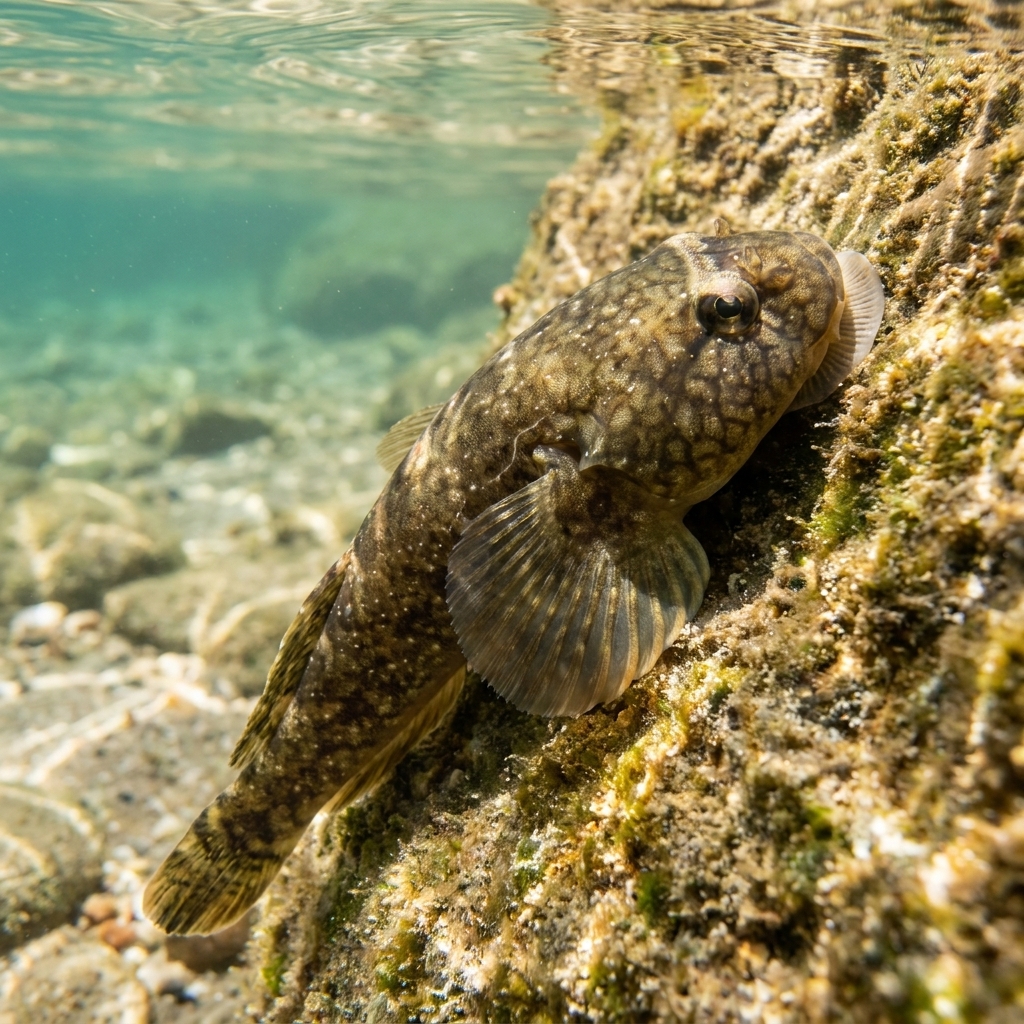
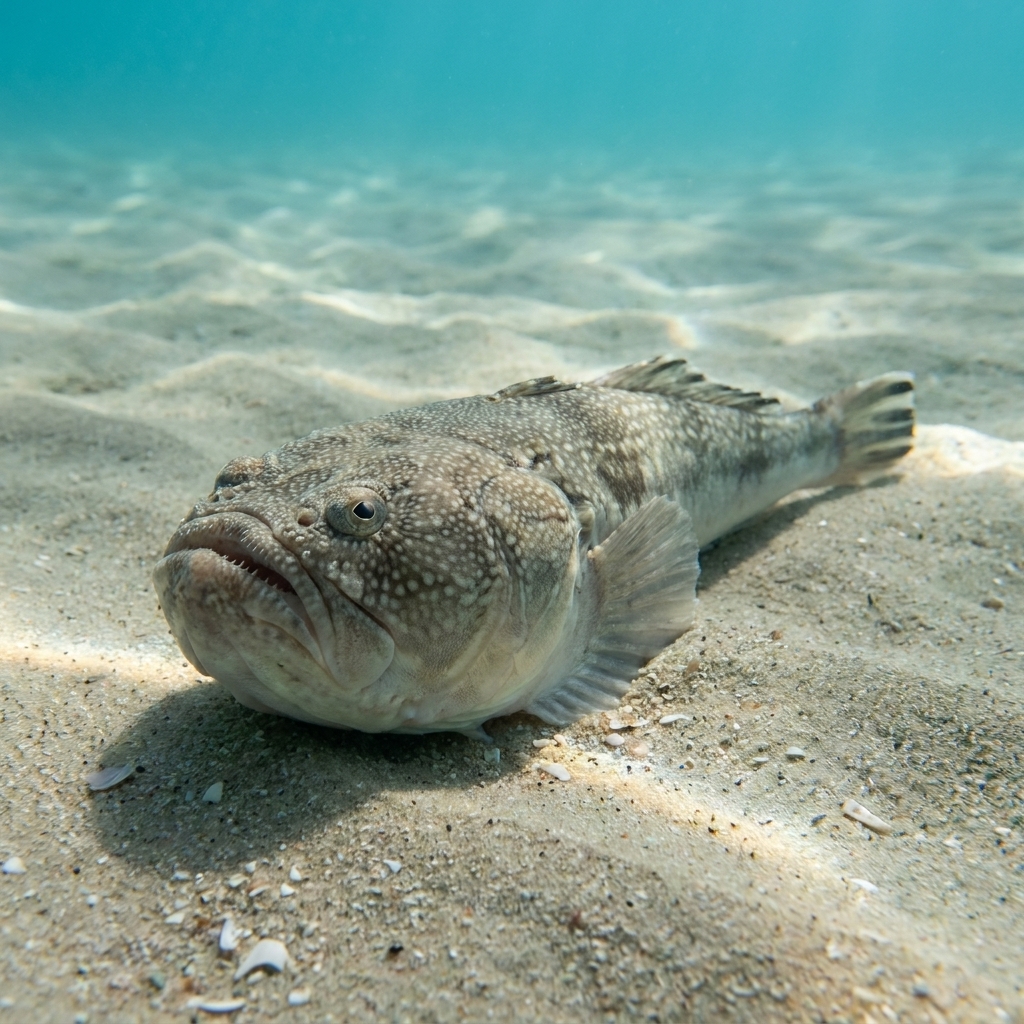
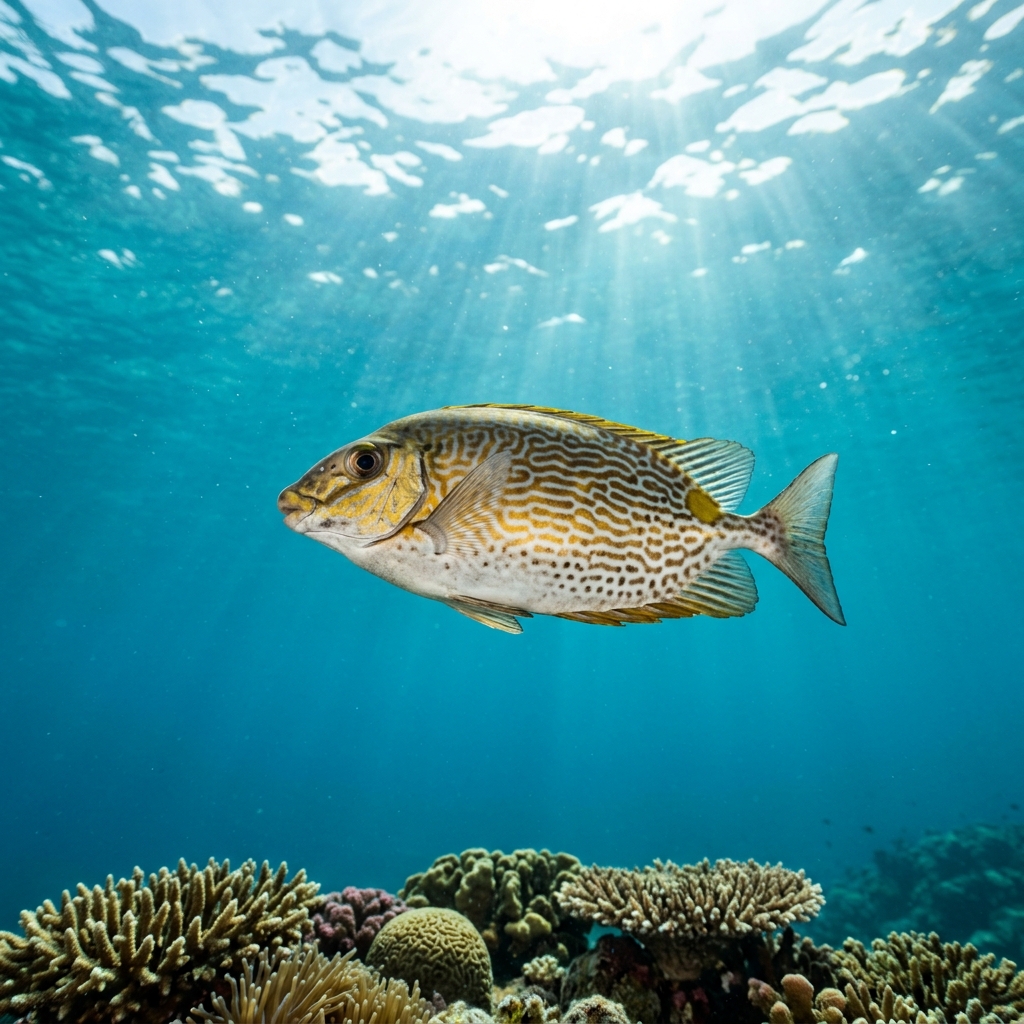
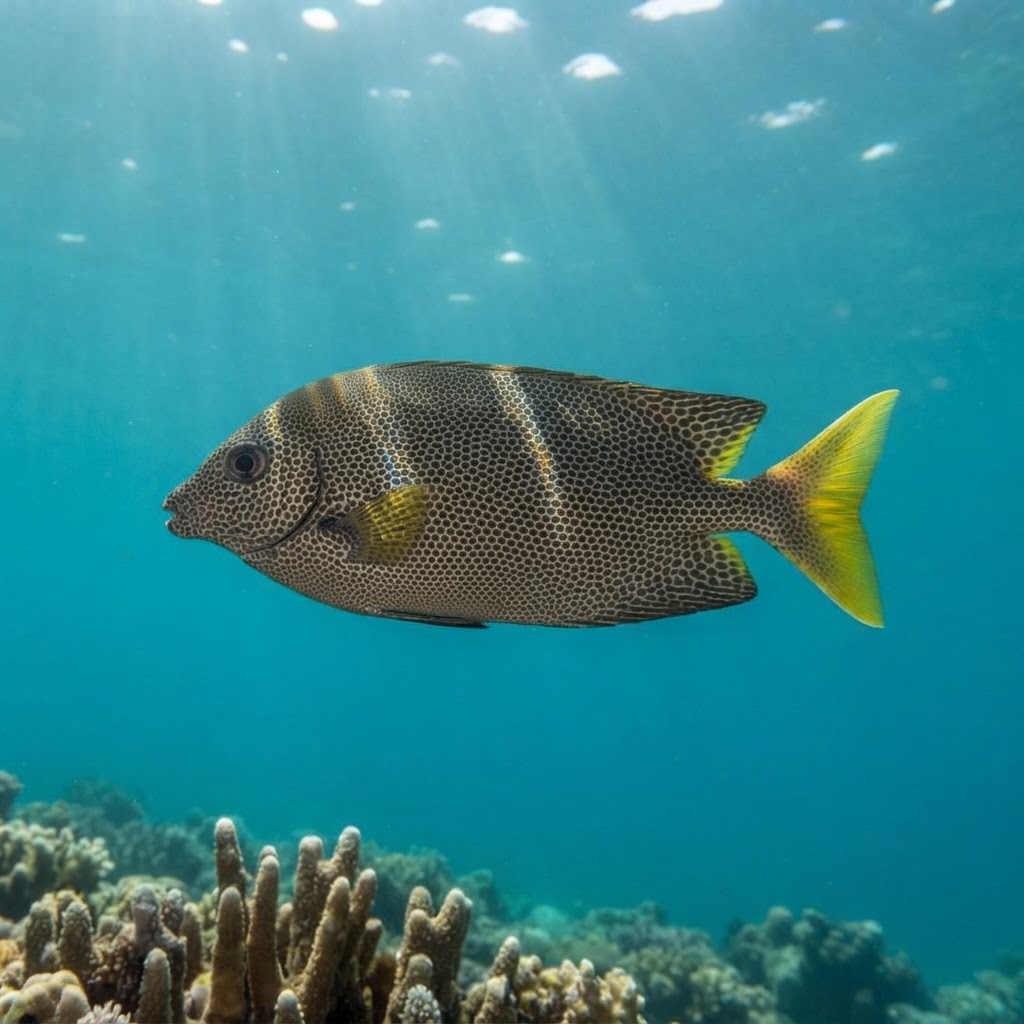
Grows to around 28 cm and has an oval, laterally flattened body covered in a dense pattern of small brown spots on a pale yellowish-grey background, giving it a stippled look from a few metres away. Look for the sharp venomous spine at the front of the dorsal fin, a spinefoot family trait, and the way it tapers to a narrow, slightly forked tail. It often swims in loose pairs or small groups, nose-down over the reef, rather than schooling tightly.
Usually seen picking over algae-covered rock and reef flats, moving slowly and deliberately with its snout close to the substrate. It's generally unfussed by divers and will let you approach to a reasonable distance before drifting off rather than bolting, though it can flick that dorsal spine up if cornered or grabbed.
Spinefoots like this one can lock their dorsal and anal spines rigidly upright when threatened, turning a soft-bodied grazer into an awkward mouthful for a predator, and the same spines carry the venom divers need to respect.
Sightings show no strong seasonal pattern, and with a comfortable range of 25.3 to 29.1C it's present on these reefs all year, so there's no need to time a trip around it.
Most reliably logged in the Maldives, especially the Central Atolls, and across the Egyptian Red Sea in Marsa Alam and the Deep South, the Red Sea Riviera and South Sinai. Smaller but consistent numbers turn up in Thailand's Khao Lak, Israel's Eilat, Madagascar's Nosy Be, Saudi Arabia and the Seychelles.
Mapping where Brown-spotted Spinefoot is logged…
The Maldives' Central Atolls and the Egyptian Red Sea, particularly Marsa Alam, the Deep South, the Red Sea Riviera and South Sinai, are the most consistent regions. It also shows up regularly at Khao Lak in Thailand and Eilat in Israel.
There's no clear season in the sighting data, and it tolerates a broad warm-water range of roughly 25 to 29C, so it's a year-round sighting on the reefs where it occurs.
They carry venomous spines in the dorsal, anal and pelvic fins that sting painfully on contact, but they aren't aggressive towards divers. Give them space and avoid handling them and there's no real risk.
Look for an oval, flattened body up to about 28 cm long, covered in small brown spots over a pale yellowish base, with a spiny dorsal fin running most of its length. It's usually seen alone or in loose pairs, grazing slowly over rock or reef flats.
They typically reach around 28 cm in length, a modest, reef-flat-sized fish rather than a big open-water species.
Like other spinefoots, it can snap its dorsal, anal and pelvic spines upright and lock them in place when threatened, turning into a spiky, hard-to-swallow shape and delivering a venomous sting to anything that tries.
Site and sighting data is aggregated from diver logs, iNaturalist and GBIF. For taxonomy and conservation status:
Soldierfish
3,612 sites