Sebastes auriculatus
Mottled brown bottom-dweller found on cool-water reefs from British Columbia to California, usually spotted resting near rock and kelp cover.
Safety warning
Carries venomous spines in its dorsal, anal and pelvic fins that can deliver a painful sting if handled or accidentally brushed against. Give it space, look rather than touch, and be mindful when running your hands along rock ledges or crevices where one might be resting out of sight.
If you're stung
Venomous spinesGeneral first-aid guidance, not a substitute for professional medical care. In an emergency, call your local emergency number.
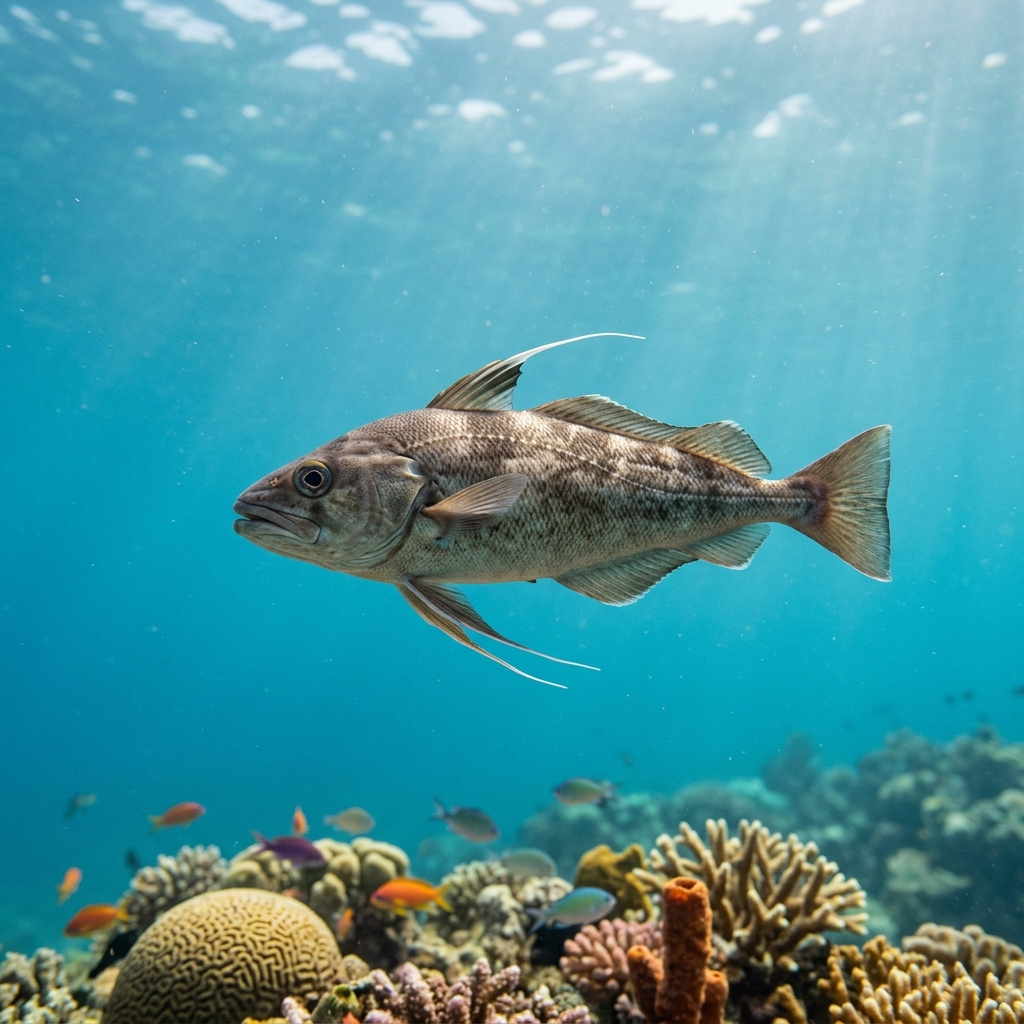
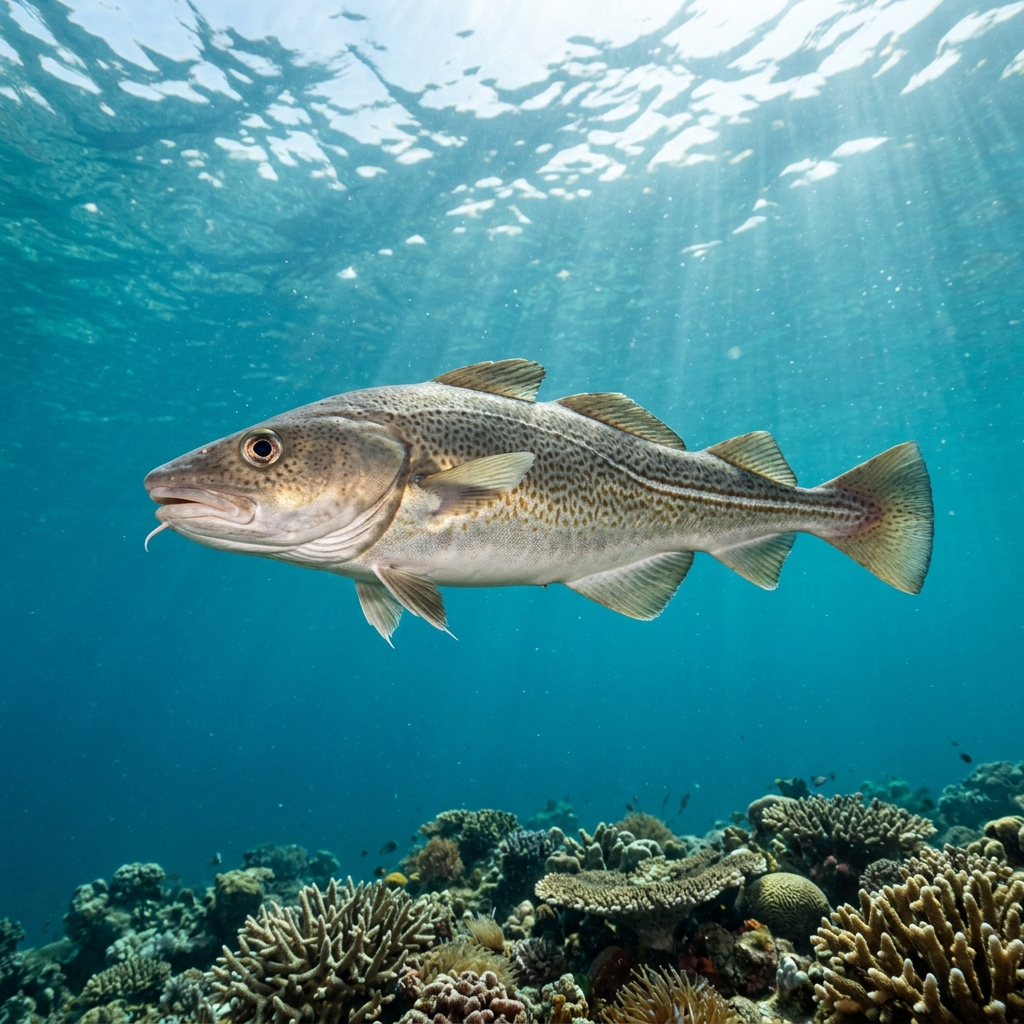
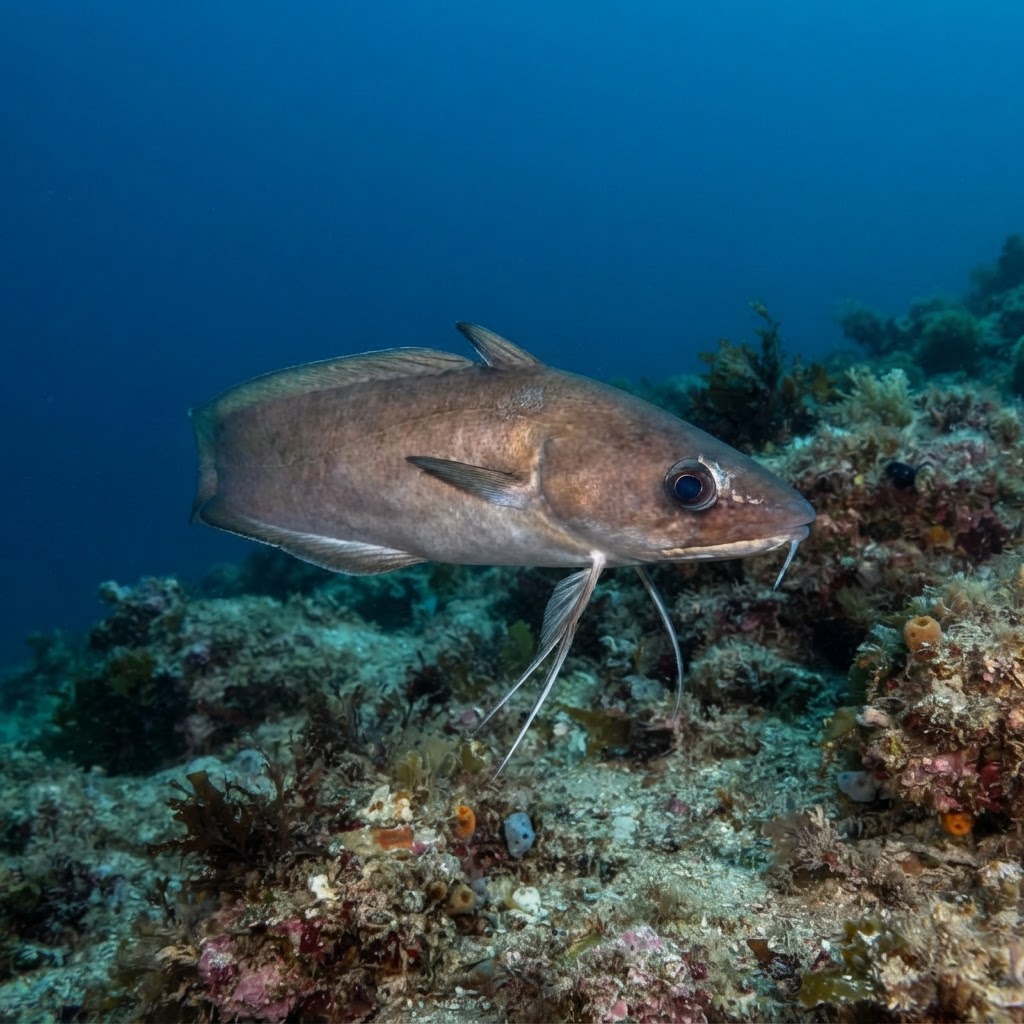
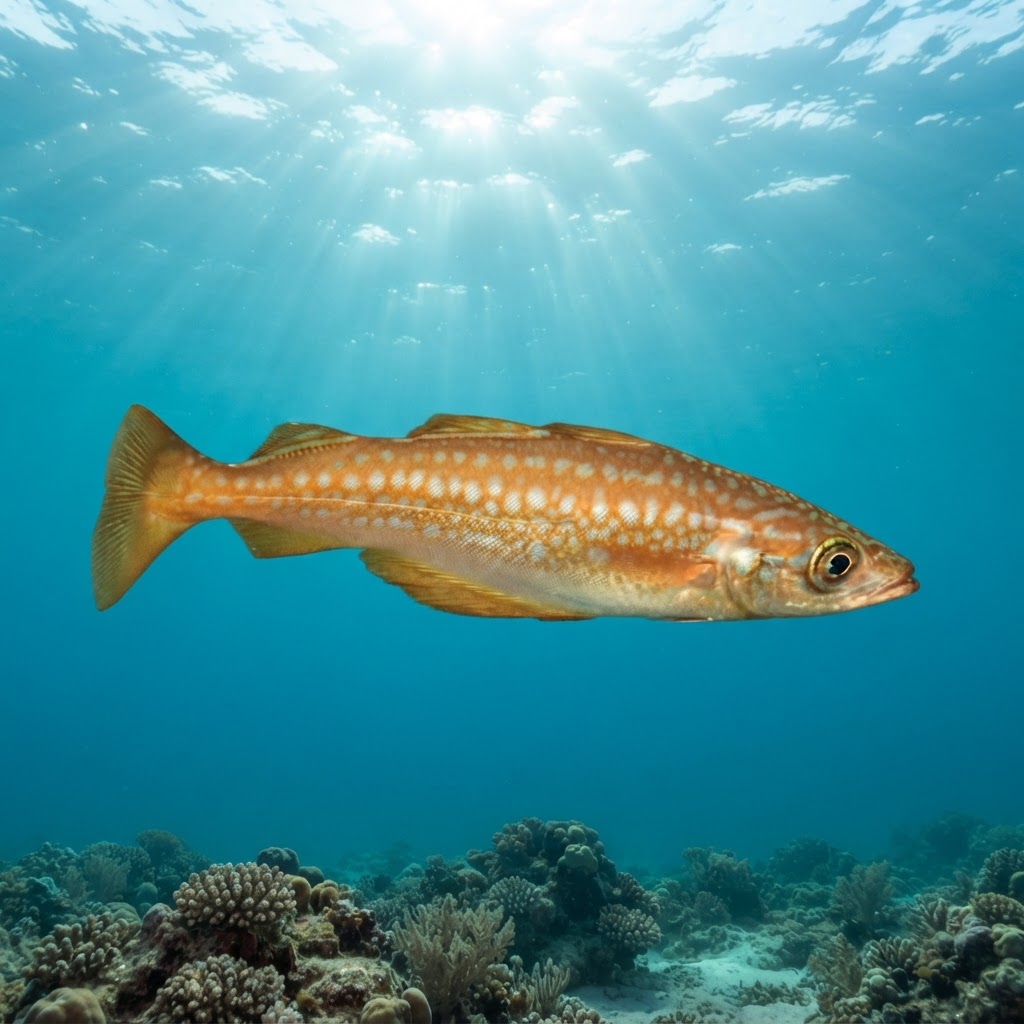
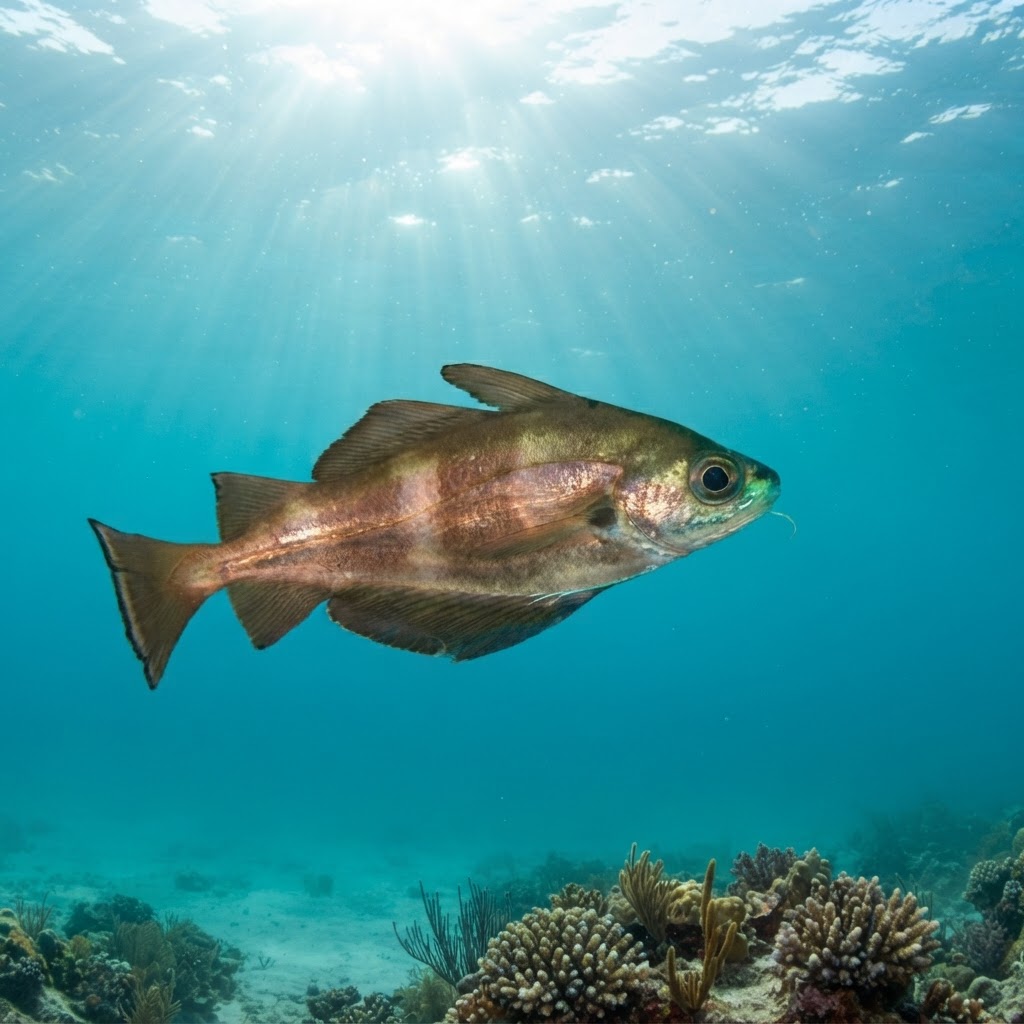
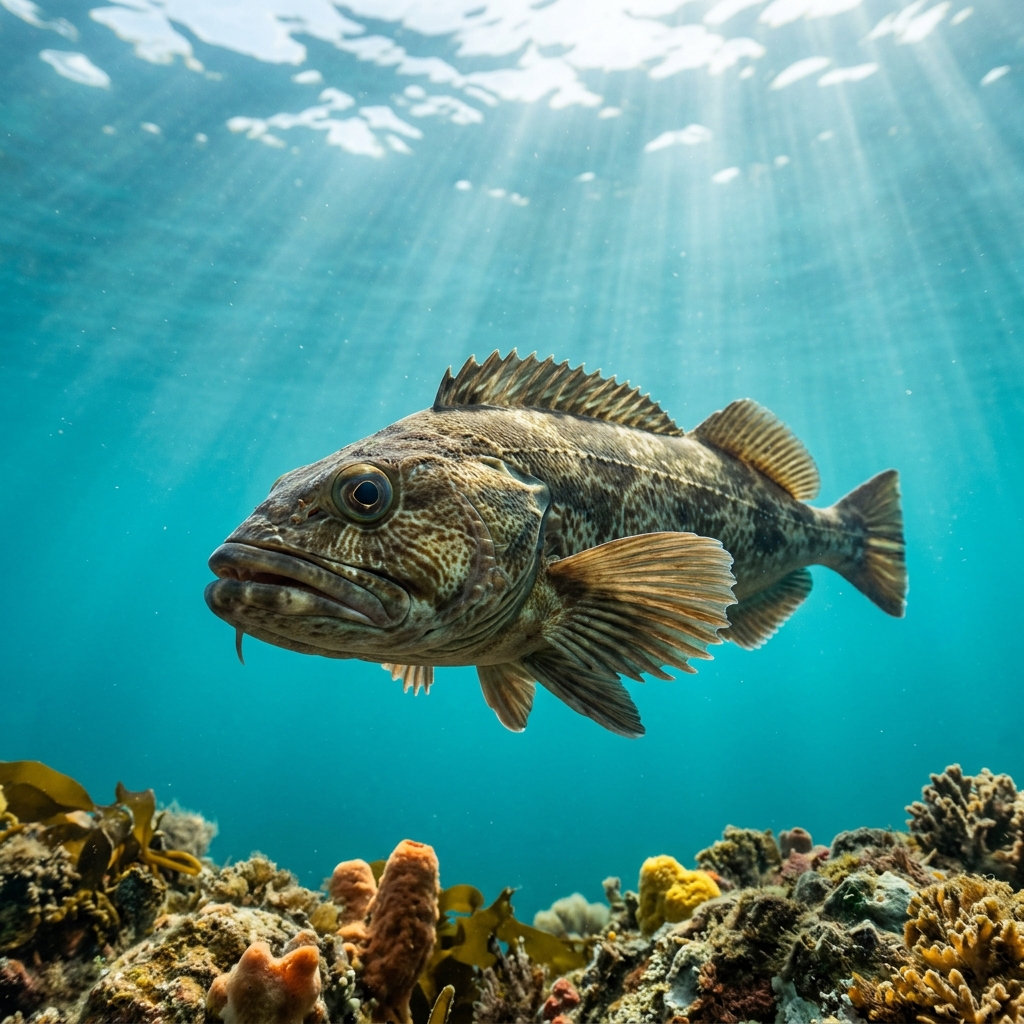
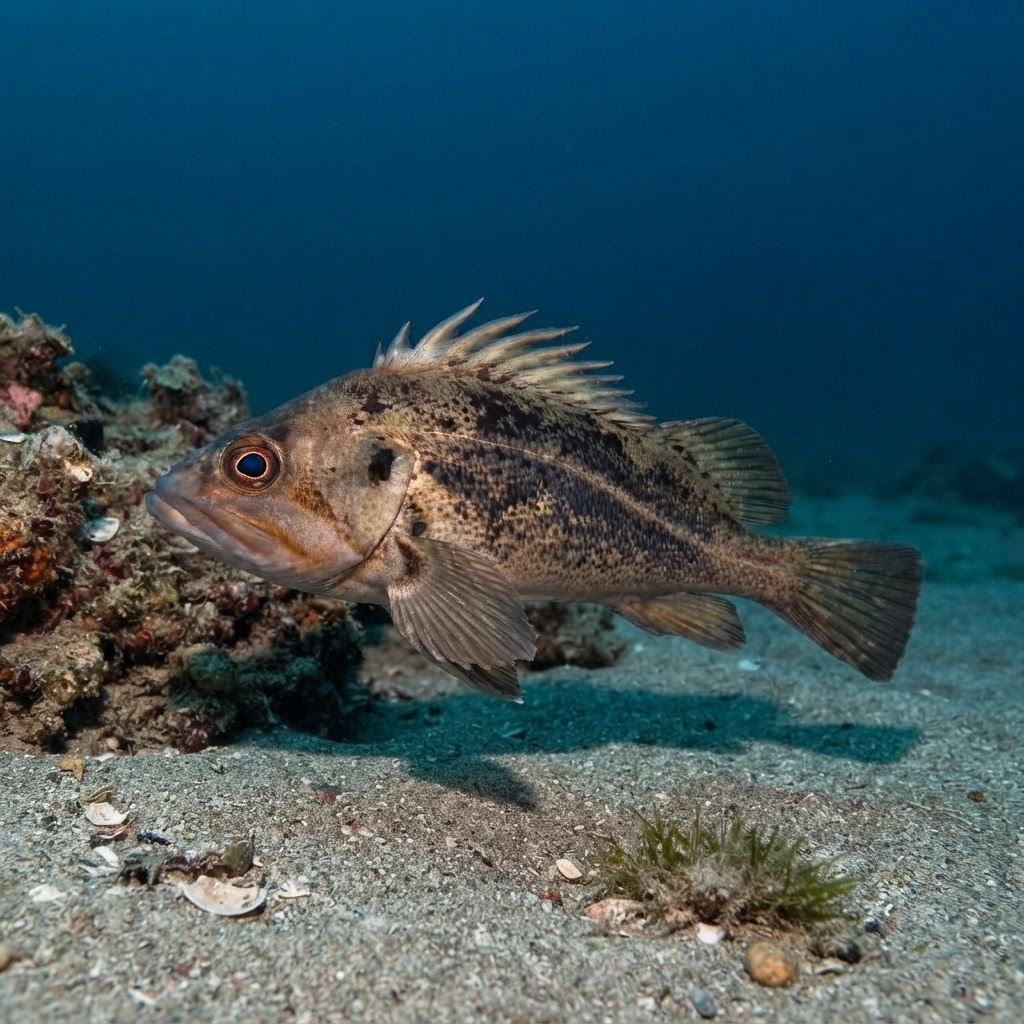
Chunky, spiny-finned bottom fish with a mottled brown-and-tan blotched pattern that breaks up its outline against rock and kelp. Look for a dark blotch below and behind the eye and pale patches on the gill cover, a big spiny head, and a size around 39 cm in the water. It sits still on ledges and in crevices rather than swimming in the open, which is often the biggest giveaway.
Spends most of its time parked motionless on rocky ledges, in crevices, or tucked against kelp holdfasts, relying on its blotched camouflage rather than fleeing. Divers usually find it during slow bottom scans rather than mid-water, and it tends to hold its position even as you approach, only easing back into cover if you get close. Most sightings are single fish rather than groups, consistent with its solitary, ambush-feeding habits.
Like other rockfish, it gives birth to live larvae rather than laying eggs, with females able to produce broods numbering in the tens of thousands after internal fertilisation.
There's no clear seasonal pattern in the sightings, and it sits comfortably in 8 to 12.8C water, so it is a year-round find on the sites where it turns up. Expect the same uncommon-to-rare odds whenever you dive British Columbia or the Pacific Northwest.
Most reliably logged in British Columbia, Canada, which accounts for the bulk of dive site records, followed by the Pacific Northwest and California in the United States. A handful of sightings also come from Baja California, Mexico, so it is very much a cool-water Pacific coast fish rather than a tropical one.
Mapping where Brown Rockfish is logged…
British Columbia in Canada is the strongest area, with further sightings across the Pacific Northwest and California in the United States and a few records from Baja California, Mexico. It favours cool, rocky, kelp-fringed sites over tropical reefs.
There isn't a strong seasonal pattern in the data, and it lives happily in 8 to 12.8C water, so it can be found year-round on the cool-water sites where it occurs.
Yes, they have venomous spines in their fins that can cause a painful sting. They're not aggressive, so the risk is mostly to divers who handle them or put a hand into a crevice without checking first.
Look for a stocky, spiny-finned fish with a mottled brown blotched pattern, a dark mark below the eye, and pale patches on the gill cover. It typically sits still on rock ledges or in kelp rather than swimming in open water.
They typically reach around 39 cm, making them a solid, chunky presence on the reef rather than a tiny fish easily missed.
Rather than laying eggs, females carry fertilised eggs internally and release live larvae, sometimes tens of thousands at once, which then drift into the water column before settling on the bottom.
Site and sighting data is aggregated from diver logs, iNaturalist and GBIF. For taxonomy and conservation status:
Pollack
282 sites