Gymnothorax unicolor
Muddy brown and hard to spot in Canary Islands crevices, this moray sits at 16.5-21.8C year-round and rewards a slow, close look.
Safety warning
Bites happen almost exclusively when divers put a hand into a crevice to feed it or corner it against rock, not from open-water encounters. Keep hands away from holes you cannot see into and give it space if you find one tucked in tight, and there is no real risk from simply observing it at a normal distance.
If you're bitten
BiteGeneral first-aid guidance, not a substitute for professional medical care. In an emergency, call your local emergency number.
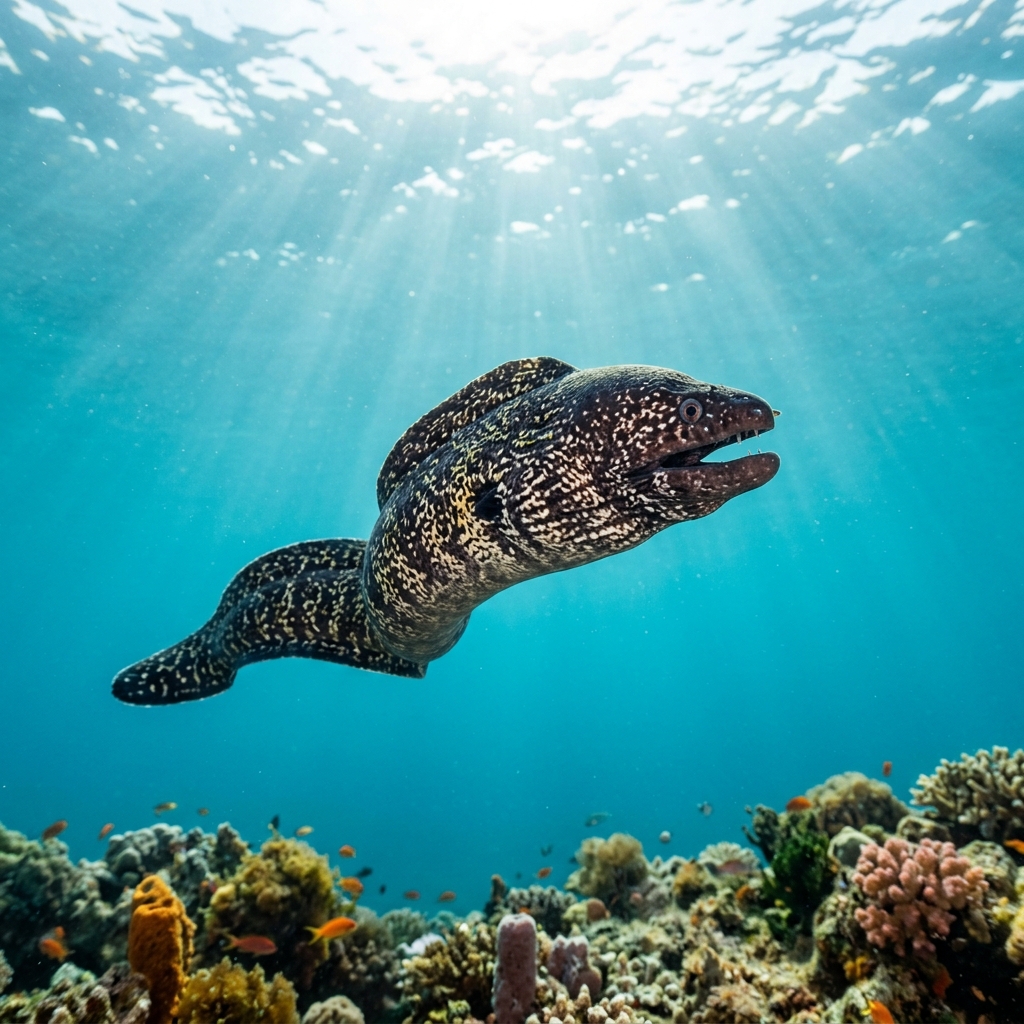
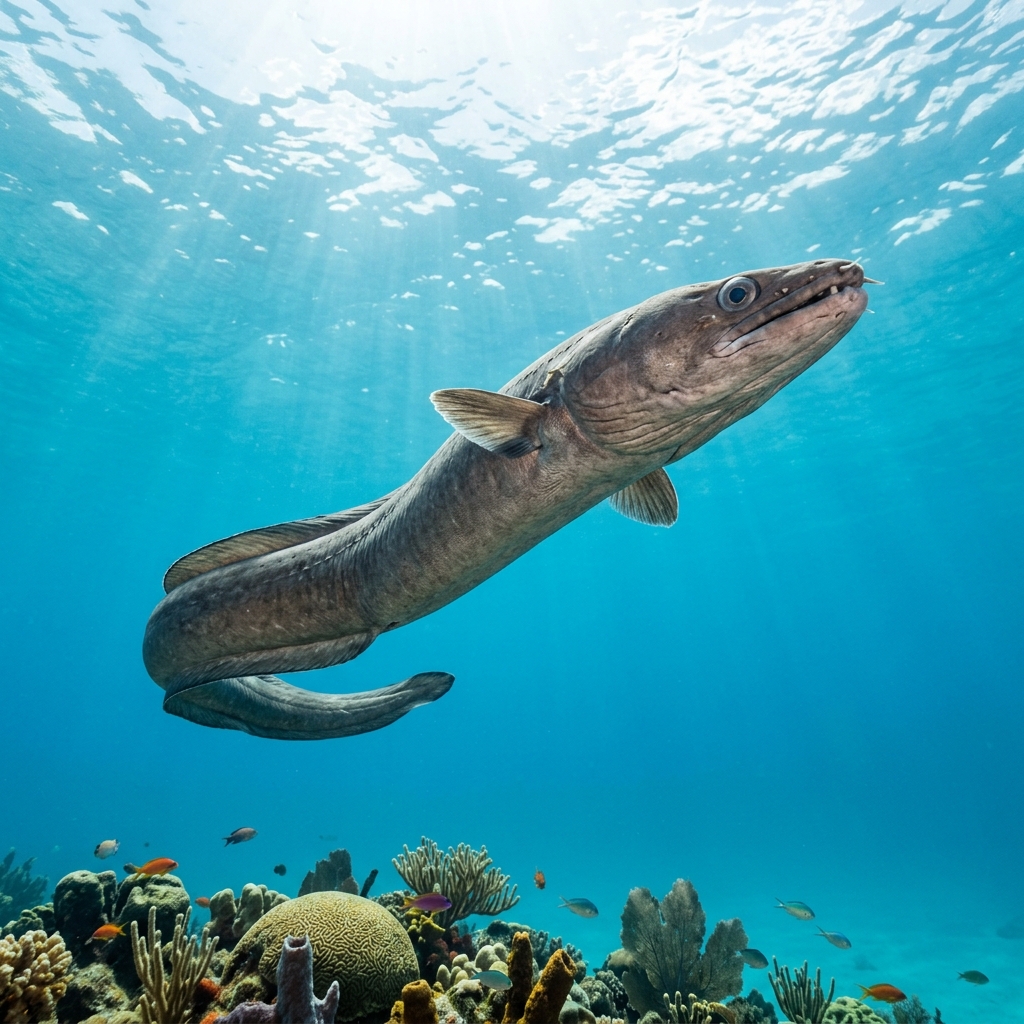
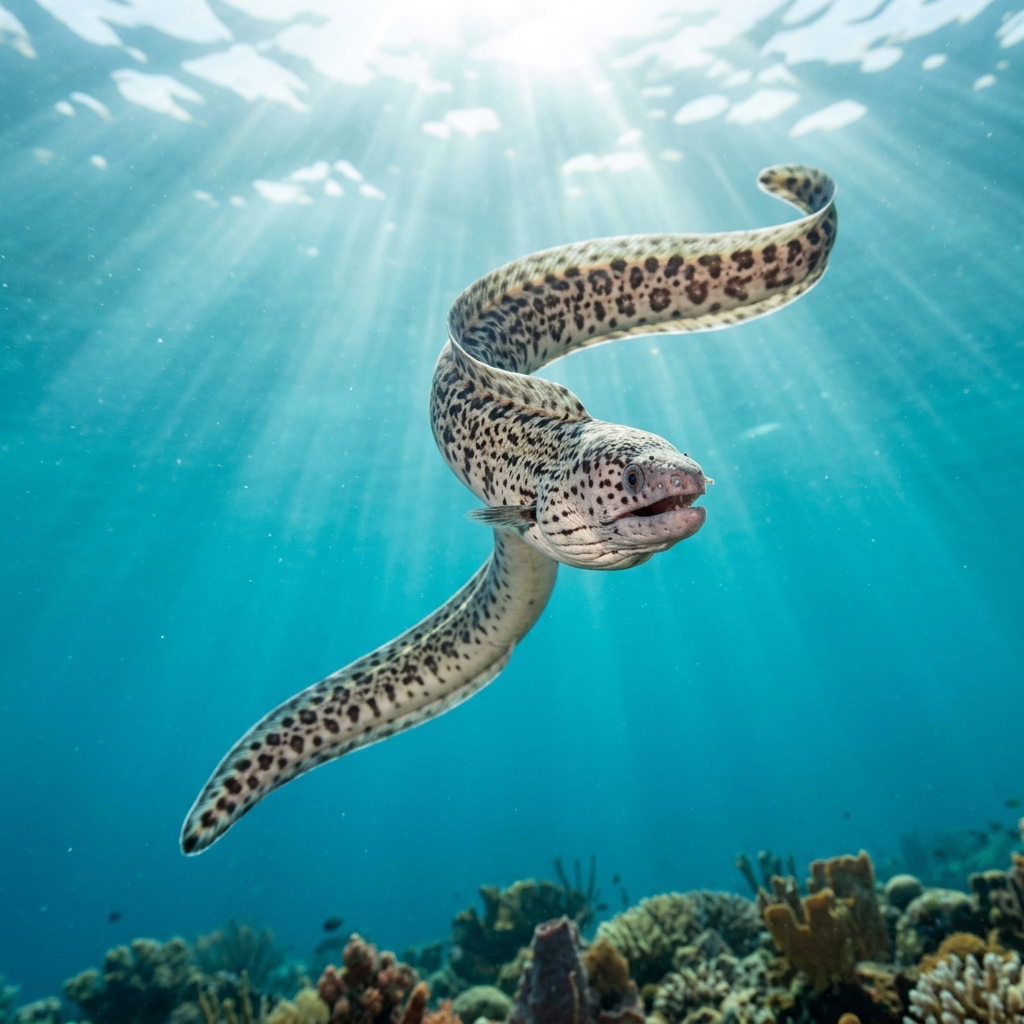
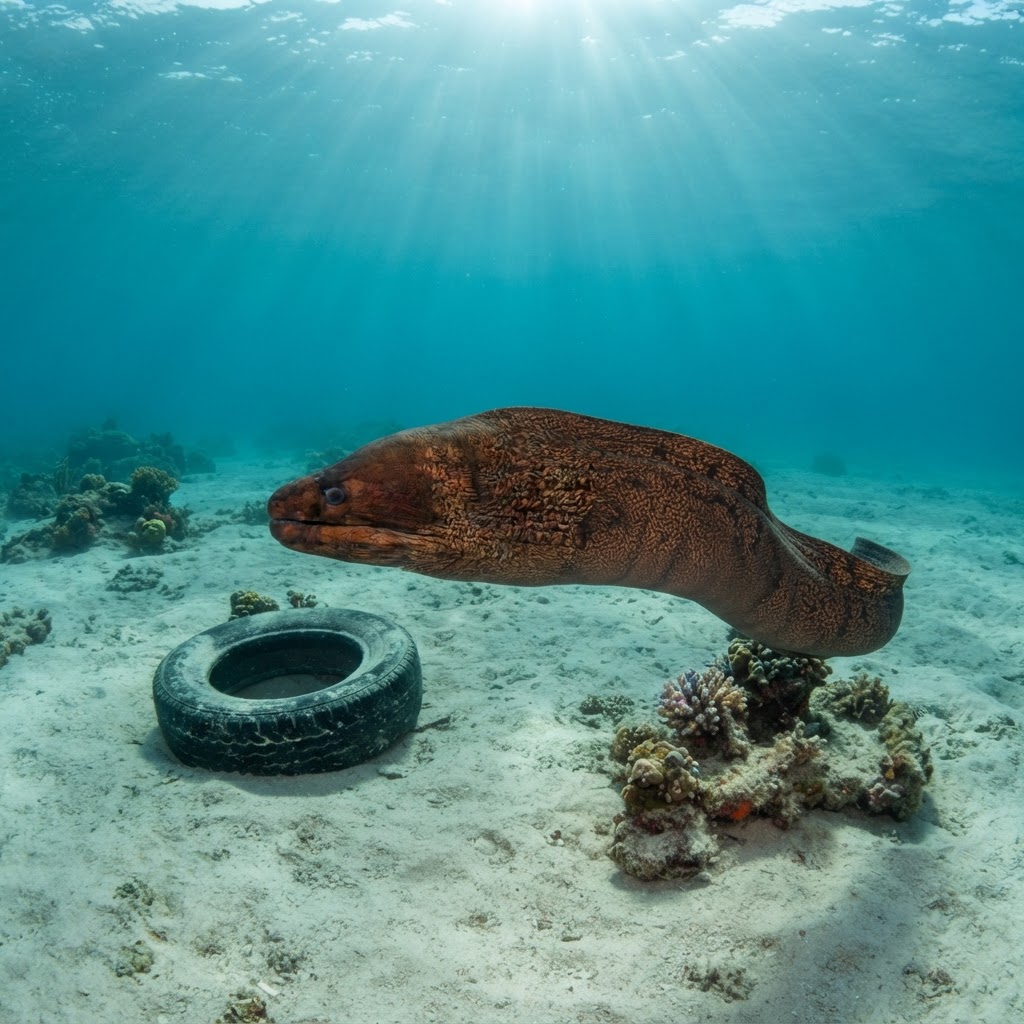
Uniform muddy to olive brown from head to tail, with no spots, bars or reticulated pattern, which is the single easiest thing to key on against other Mediterranean and Atlantic morays. Grows to around 70cm, noticeably smaller and slimmer than the bulkier Mediterranean Moray it shares reefs with. Look for the small rounded head and the way it wedges into narrow rock crevices with just the head and a bit of neck showing.
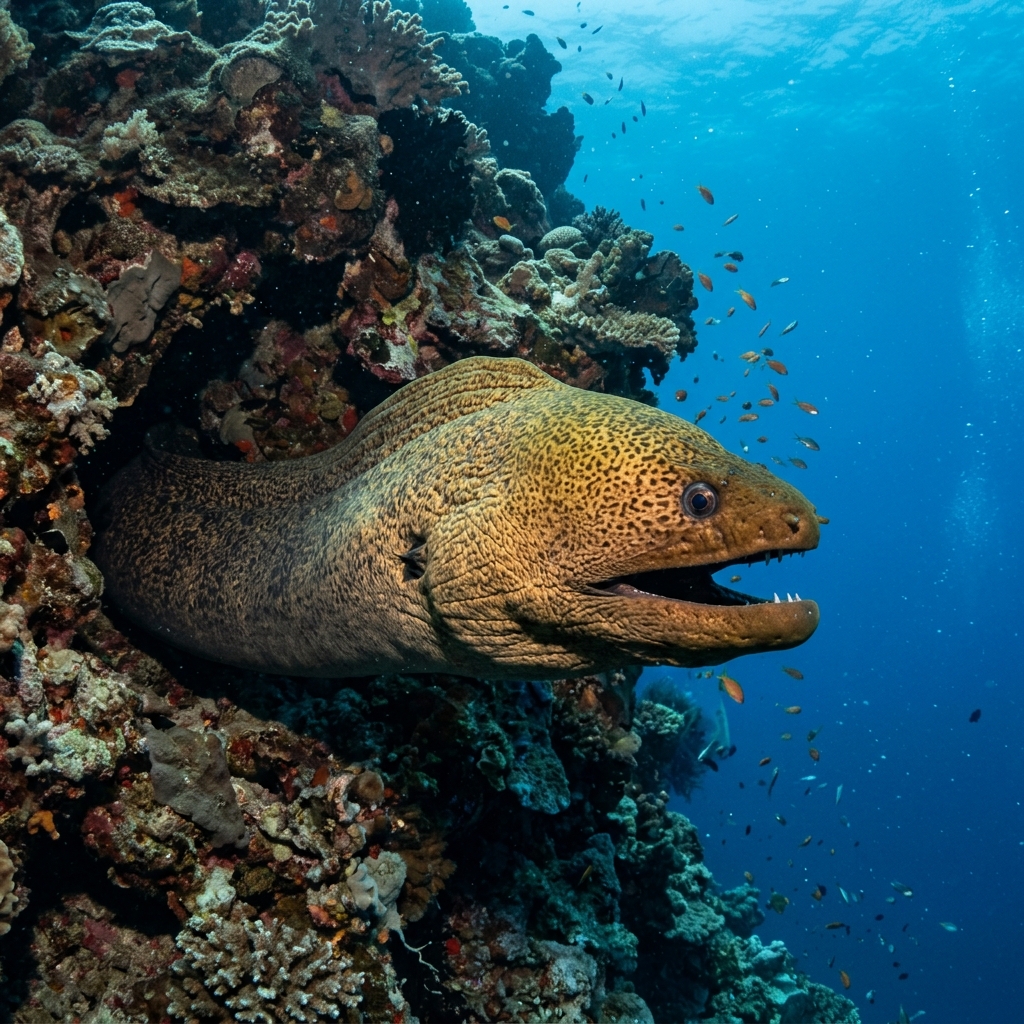
Expect to find it wedged head-out in a rocky crevice or under a ledge, often only the head and a stretch of neck visible while the rest of the body stays hidden. It is generally a still, unhurried animal by day and more likely to be out hunting after dark, so torch-lit dusk or night dives around the same rocky ground tend to produce better views. Most divers report it holding its ground rather than bolting when approached slowly.
Like other morays it relies on a second set of jaws in its throat, pharyngeal jaws, to drag prey back once it is caught, which is why the strike looks so abrupt for such a slow-looking animal.
No clear seasonal pattern shows up in the sightings, so treat it as a year-round species. It sits comfortably in 16.5 to 21.8C water, which covers most of the diving season across the Canary Islands, Madeira and the Valencia coast without a sharp winter drop-off.
Reef neighbours a diver could mistake it for. Use the identification notes above to tell them apart.
This is a Canary Islands and Macaronesia specialist: it turns up most reliably around El Hierro, Fuerteventura, La Palma, Gran Canaria, Lanzarote and Tenerife in the Canary Islands, plus Madeira Island and, in mainland Spain, along the Valencia coast. Azores sites add a smaller northern outpost for the species. Most divers log it as an uncommon find tucked into rocky crevices rather than out swimming on open reef.
Mapping where Brown Moray is logged…
The strongest sightings come from the Canary Islands, especially El Hierro, Fuerteventura and La Palma, with further populations around Madeira Island and along the Valencia coast of mainland Spain. The Azores also has a smaller number of sites.
There is no strong seasonal pattern in the sightings, so it is considered a year-round species. Water temperatures where it is found run 16.5 to 21.8C, which spans most of the diving calendar in the Canary Islands and Madeira.
They can bite if provoked, cornered or hand-fed, but pose little risk to divers who keep their hands out of crevices and observe from a normal distance. Most incidents involving morays generally trace back to feeding attempts rather than unprovoked encounters.
Look for a plain, uniform brown to olive body with no spots or pattern, reaching around 70cm, usually seen with just the head poking from a rocky crevice. The lack of markings is the key giveaway against similarly sized morays in the same range.
They typically reach about 70cm in length, making them one of the smaller morays a diver is likely to encounter in the eastern Atlantic and Canary Islands region.
Site and sighting data is aggregated from diver logs, iNaturalist and GBIF. For taxonomy and conservation status:
Garden Eel
2,448 sites