Serranus hepatus
Spot Brown Comber in the Kvarner Gulf, Attica, or the Aegean, most sightings fall Aug, Nov in waters between 14 and 21 °C.
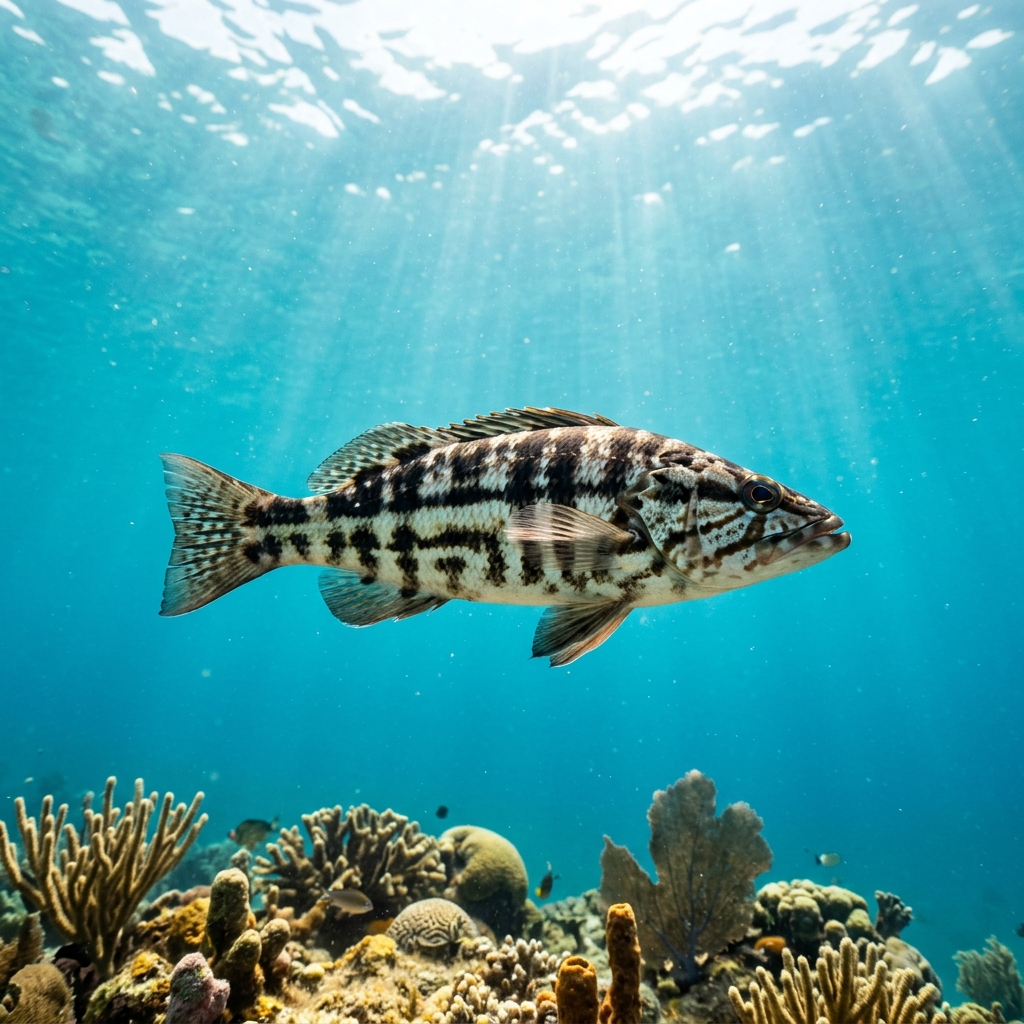
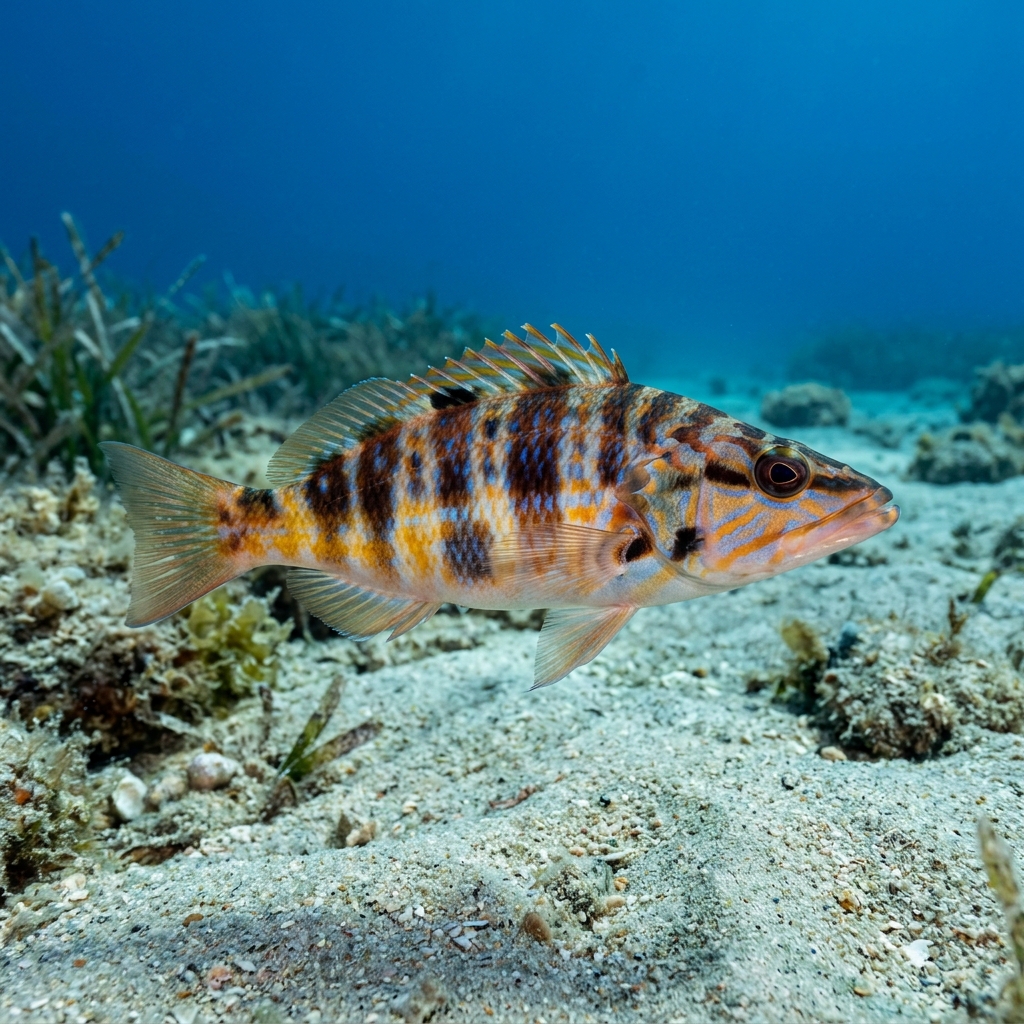
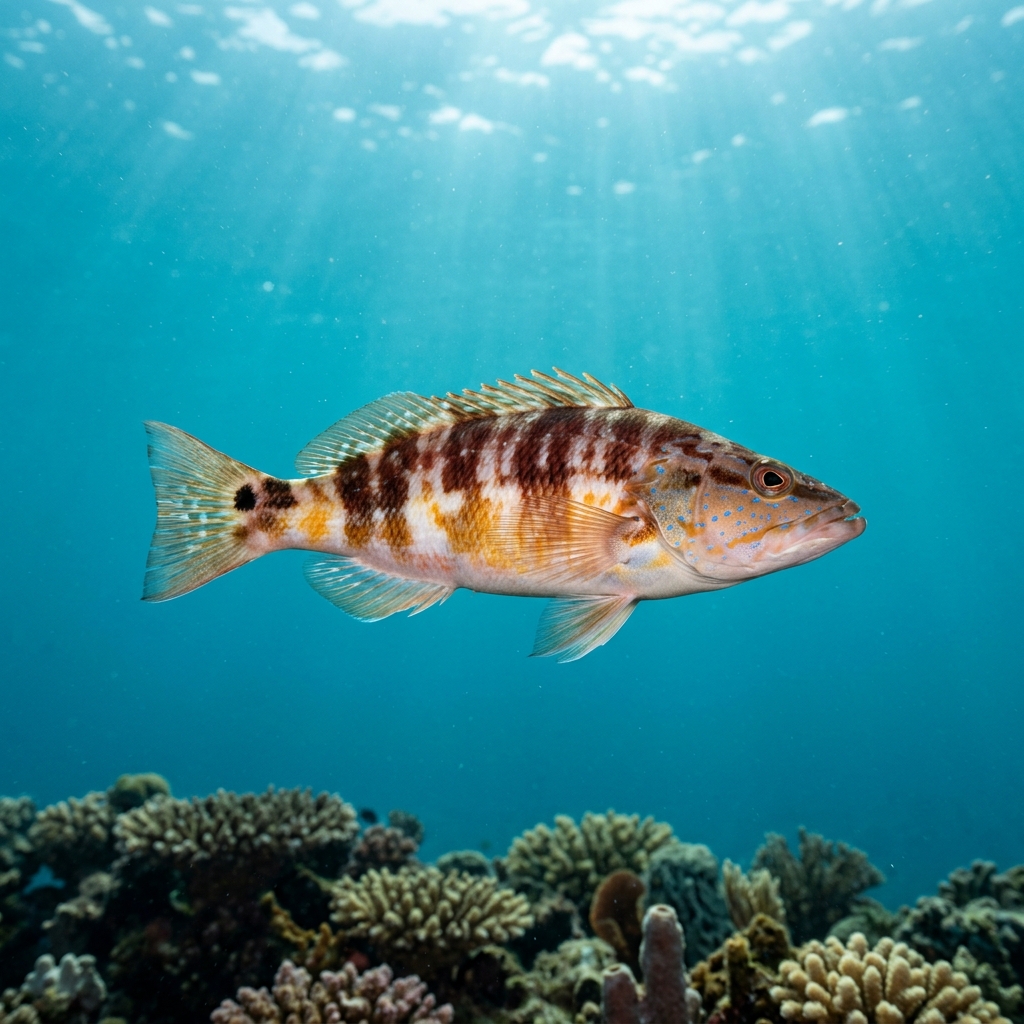
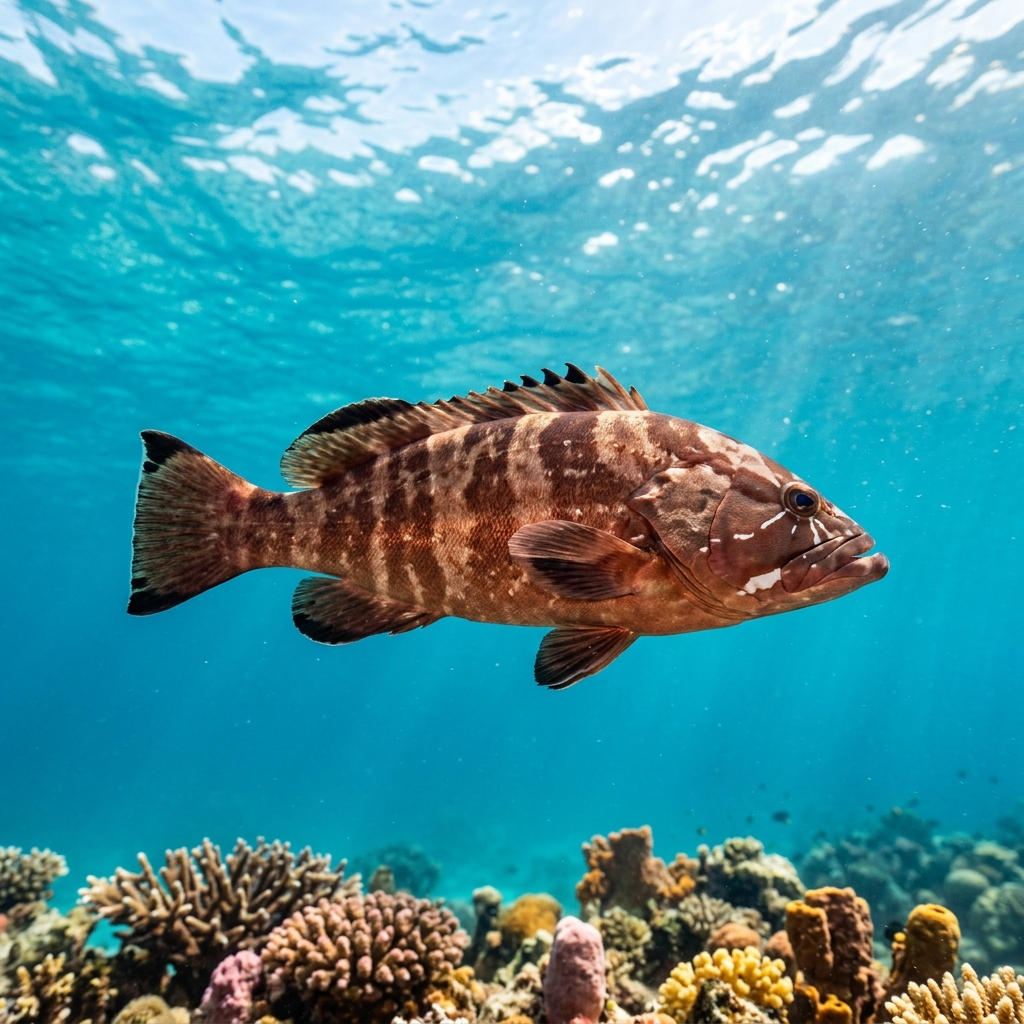
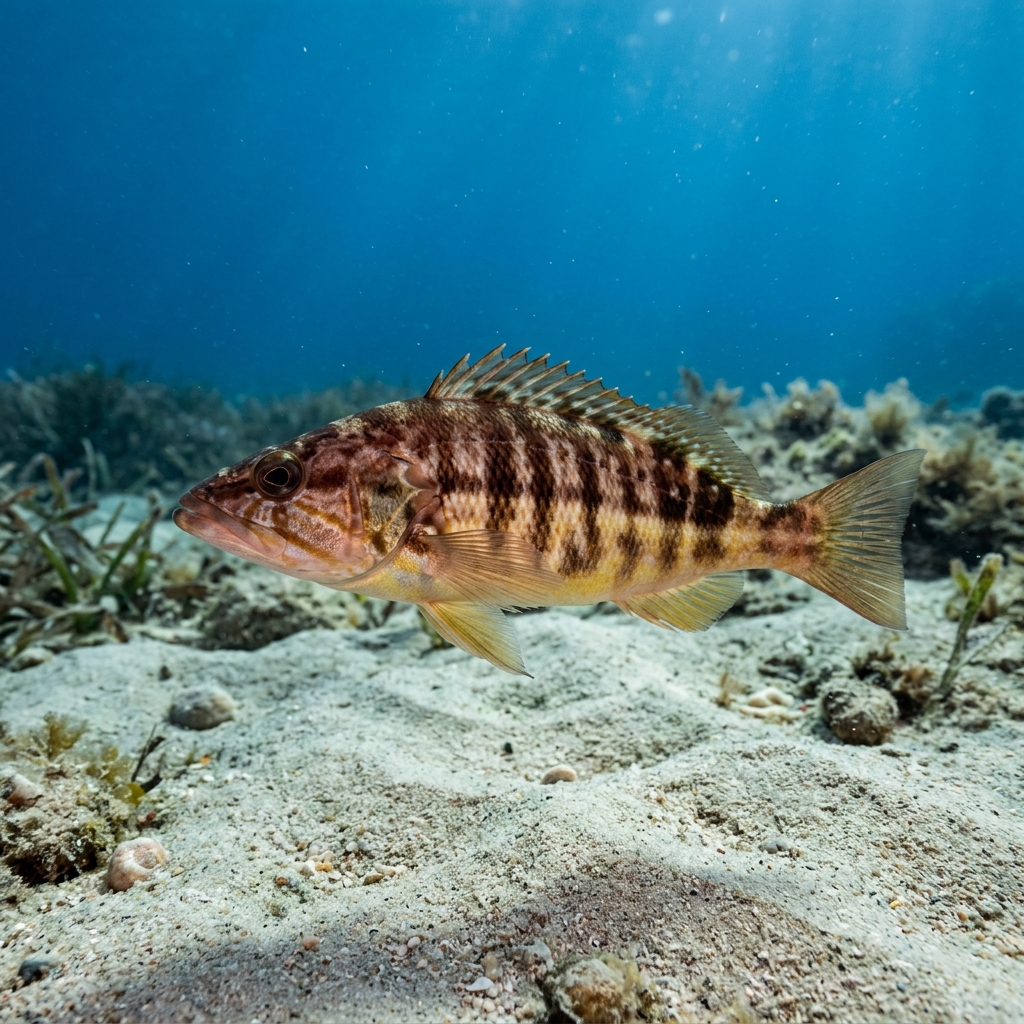
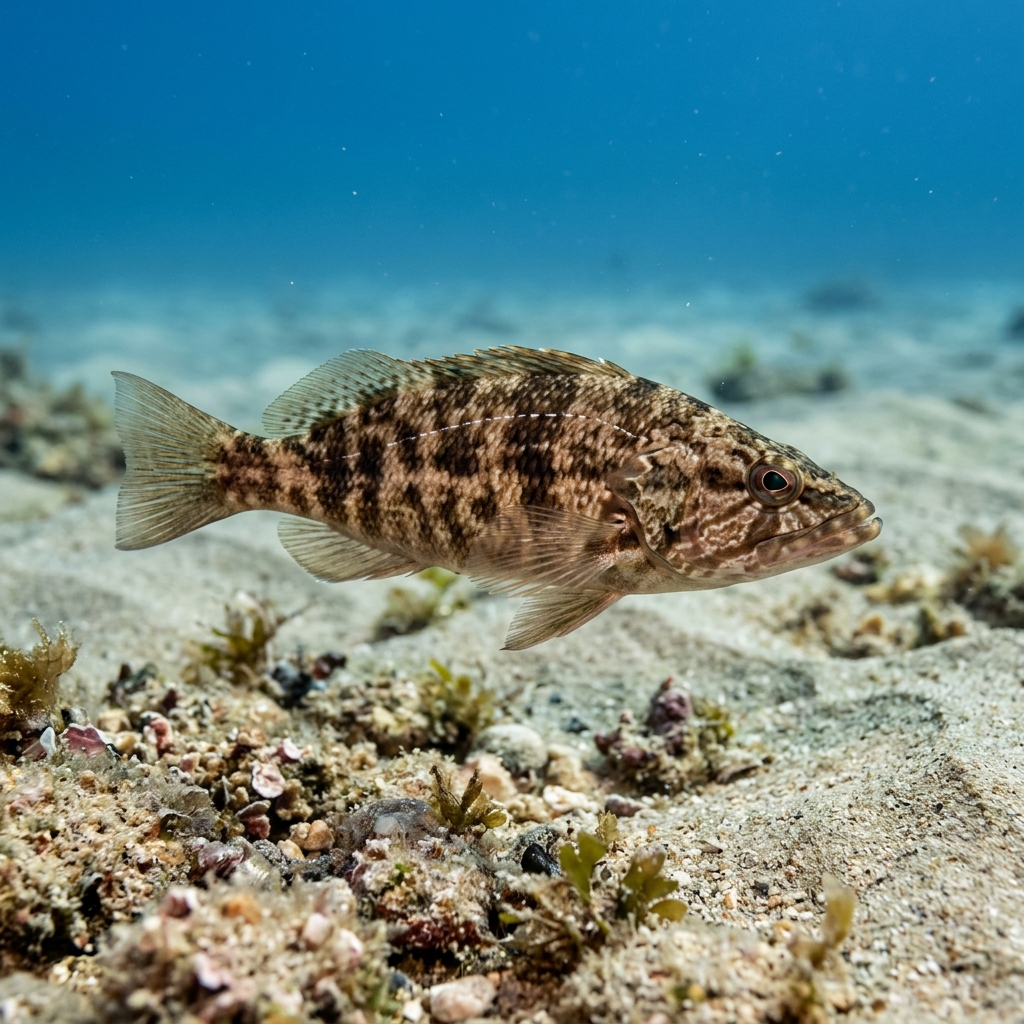
A small, compact fish reaching around 17 cm, with a warm brown body broken by several darker vertical bars or blotches along the flanks and a paler underside. Underwater it looks rather chunky for its size, with a large mouth and a rounded tail that becomes obvious when it darts for cover. Key marks are those darker saddle-like patches on the back, which stand out against the lighter belly even in low-contrast, shallow rocky reef light.
Most encounters happen close to the seabed, where brown combers hover just above rocky substrate or sand, scanning for small invertebrates and fish to ambush. When a diver approaches too quickly they duck straight into a crevice or under a ledge, so slow movement and keeping low pays off. Stay patient near a promising overhang and there is a reasonable chance one will reappear and resume hunting.
Brown comber is a simultaneous hermaphrodite, meaning each individual carries both functional male and female reproductive tissue at the same time and can self-fertilise, one of very few vertebrates capable of doing so.
In the Northern Hemisphere, sightings concentrate between August and November, which aligns with the warmer tail-end of the Mediterranean season when water temperatures sit closer to the upper end of its preferred 14 to 21 °C range.
Brown Comber is most commonly logged across the Mediterranean and eastern Atlantic, with Croatia, Italy, Greece, and Spain holding the strongest spread of sites. The Kvarner Gulf in Croatia leads all regions, followed by Attica in Greece and Costa Blanca in Spain. The Azores and Portugal round out the Atlantic end of the range.
Mapping where Brown Comber is logged…
Brown combers are found across the Mediterranean and into the eastern Atlantic. The strongest concentrations of logged sightings come from Croatia (especially the Kvarner Gulf), Greece (Attica and the Cyclades), Italy (Sicily and Sardinia), and Spain (Costa Blanca). They also turn up in the Azores and mainland Portugal.
Northern Hemisphere sightings peak from August through November. This late-summer and autumn window corresponds to when Mediterranean water temperatures are at their warmest within the species' preferred range of 14 to 21 °C, and when diver activity in the region is still high.
Look for a small, chunky reef fish around 17 cm long with a brown body, darker saddle-like bars across the back, and a noticeably paler belly. It tends to hover just above the seabed near rocks or crevices. The combination of its compact shape, banded back, and habit of sitting close to structure is usually enough to distinguish it from other small Mediterranean serranids.
Brown combers are small fish, typically reaching about 17 cm in length. Their compact build can make them look even smaller underwater, especially when they tuck into crevices.
Yes. Brown combers are simultaneous hermaphrodites, meaning each fish has fully functional male and female reproductive organs at the same time. This makes them one of the rare vertebrates capable of self-fertilisation, though they also mate with other individuals.
Site and sighting data is aggregated from diver logs, iNaturalist and GBIF. For taxonomy and conservation status:
Blacktip Grouper
2,726 sites