Acreichthys tomentosus
Small, shaggy-looking filefish common on Bali and Visayas reefs year-round in warm 25-29 C water; here's how to spot one.
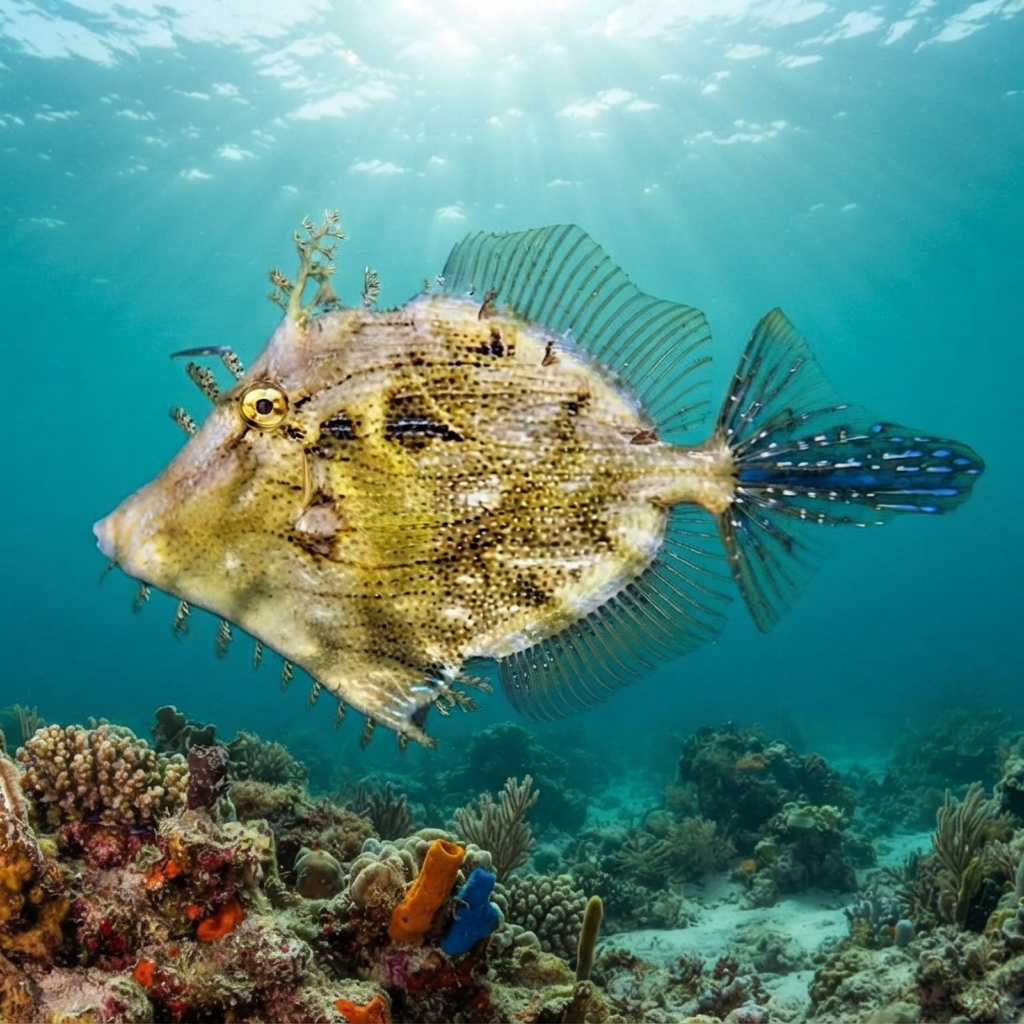
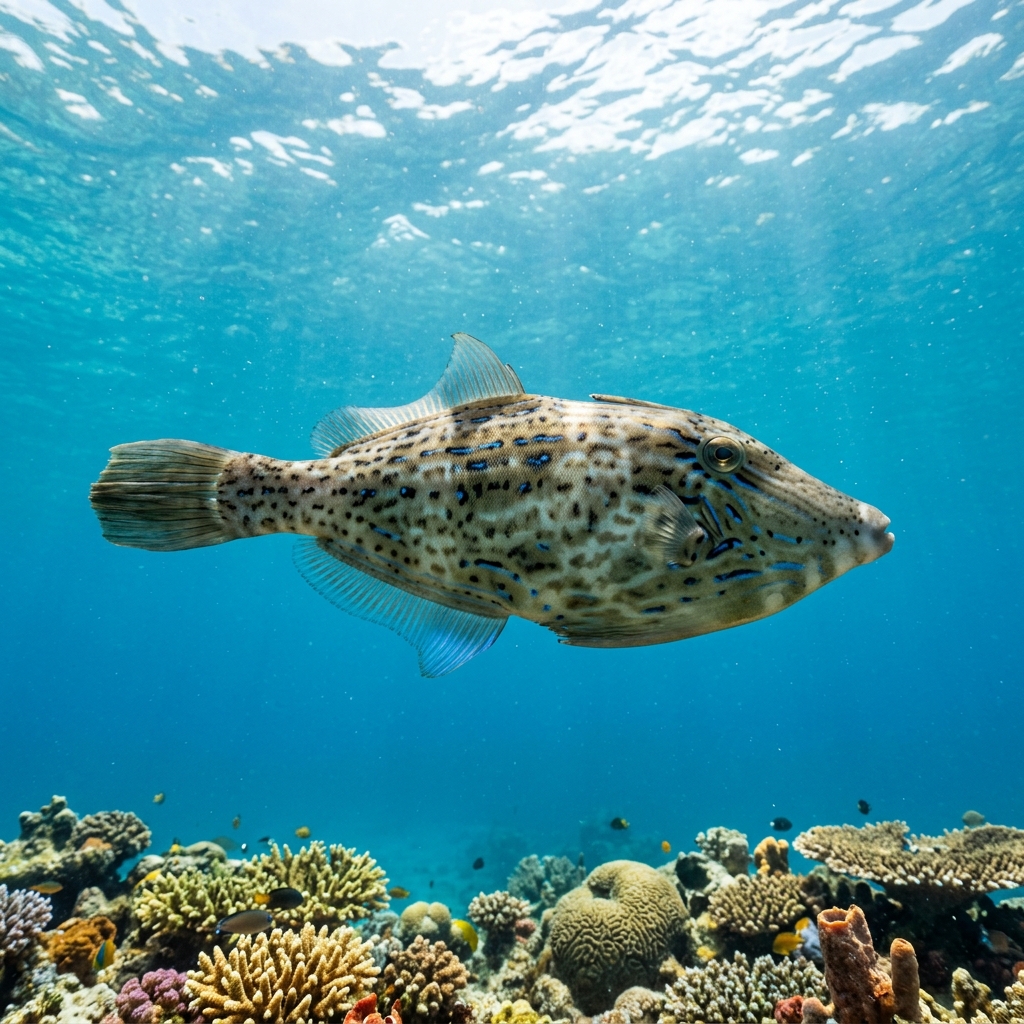
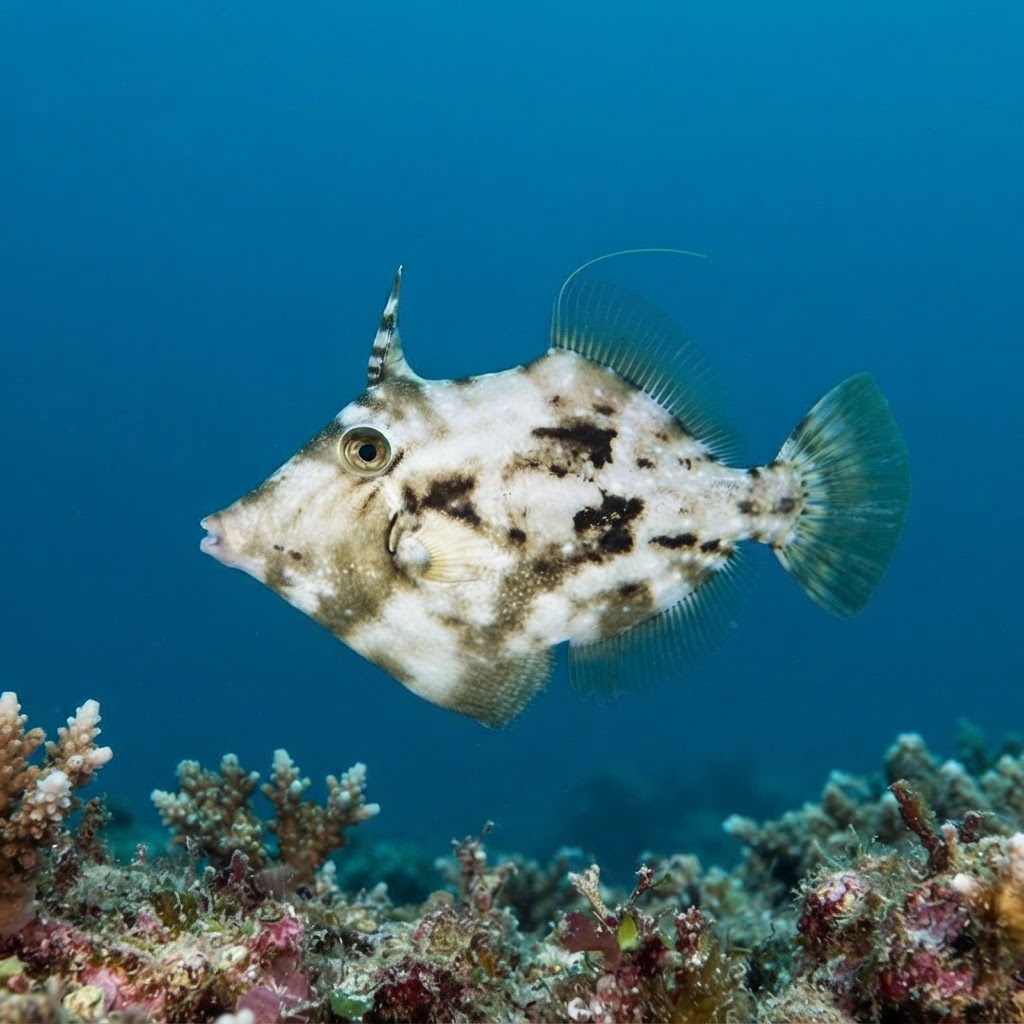
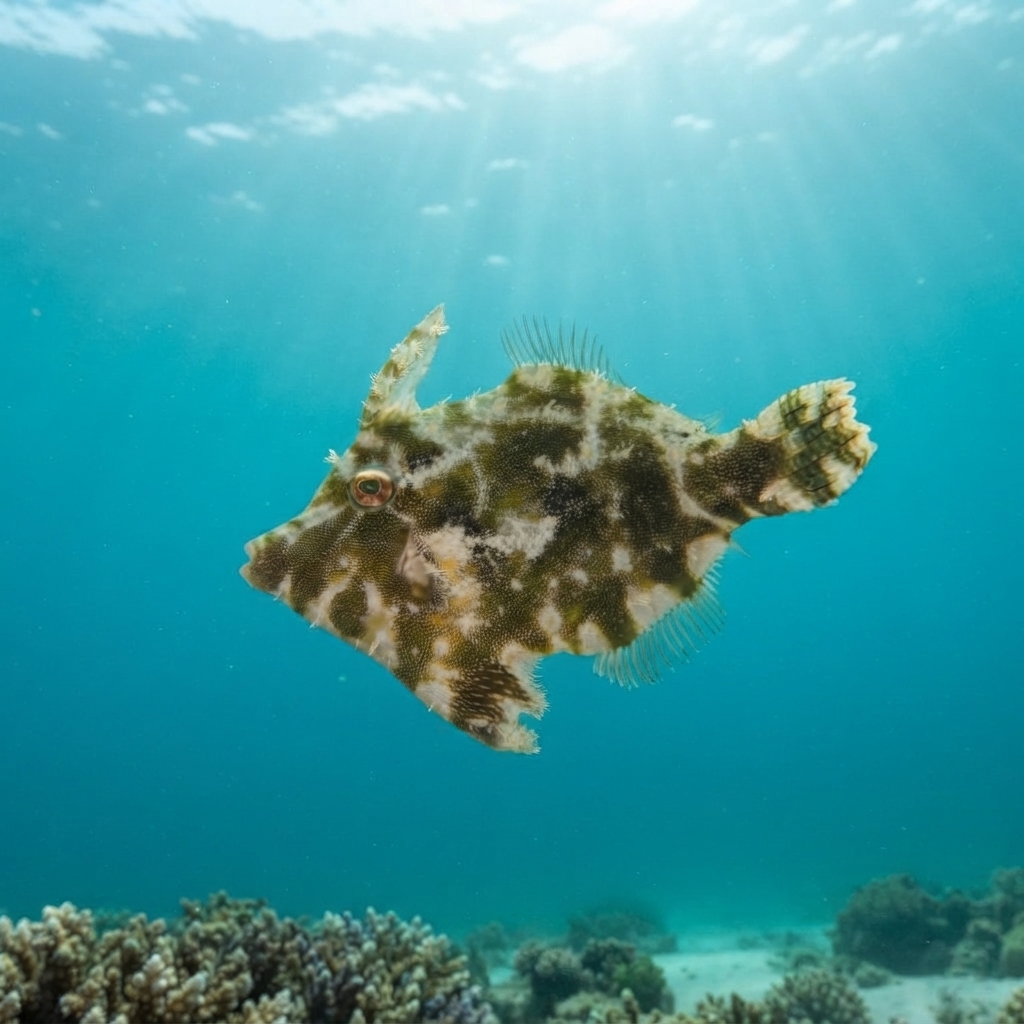
Small, deep-bodied fish, rarely more than 10 cm, with a blunt snout and a single retractable spine above the eye that gives the family its 'filefish' name. Skin is covered in fine hair-like bristles and mottled brown, green or grey, letting it blend into weedy or algae-covered reef and seagrass. Colour can shift patchily depending on the background it's sitting against, which is often the first clue divers notice rather than any fixed pattern.
Usually seen hovering low and almost motionless over soft corals, algae or seagrass, tilting its body to mimic the swaying vegetation around it rather than swimming off. It tends to ignore divers unless approached closely, at which point it may simply drift deeper into cover instead of bolting. Best spotted on slow, close-focus dives where you're already scanning muck or reef-flat habitats for camouflaged life.
Its body colour and pattern can change to match the immediate background, particularly among soft coral or weed, making it one of the better camouflage artists among small reef filefish.
No clear seasonal pattern shows up in sightings, and it sits comfortably in water from about 25.4 to 29.1 C, so it's a year-round find on tropical reefs across its range.
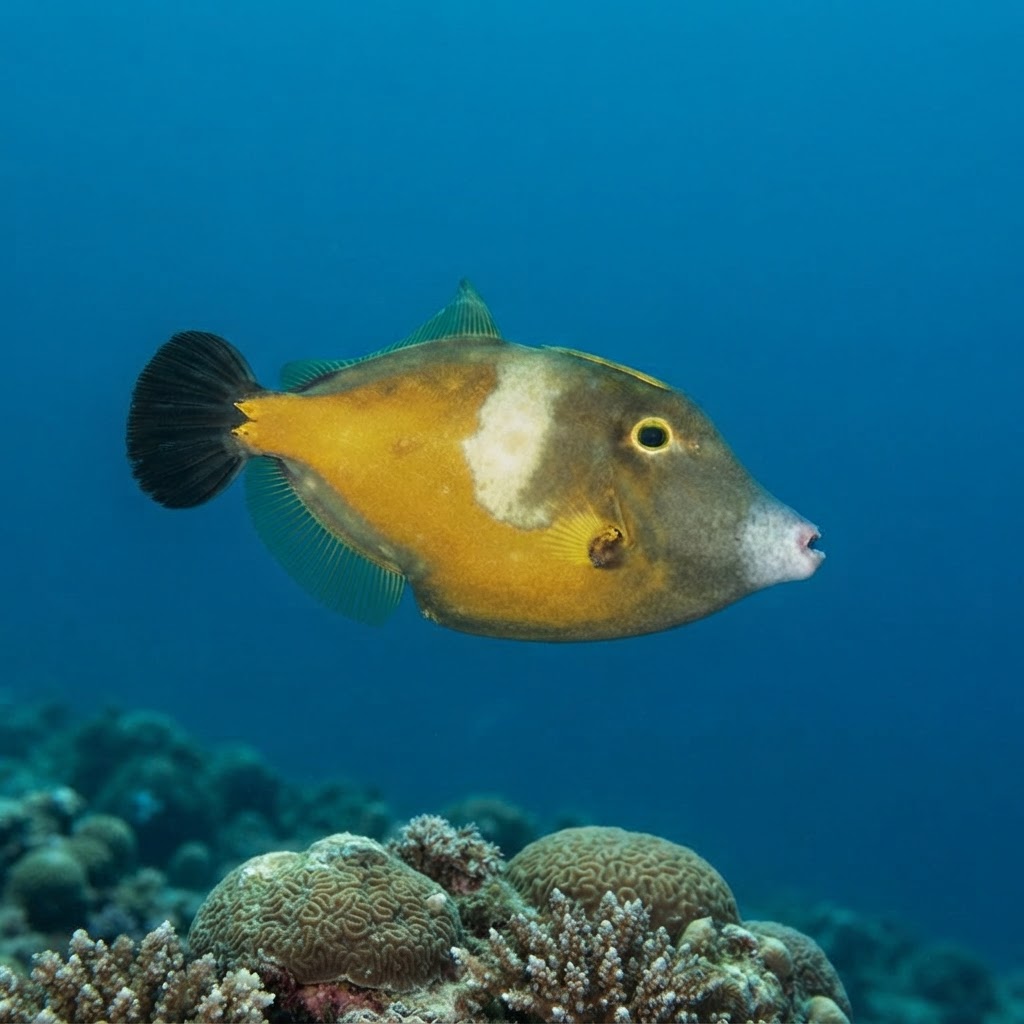
Reef neighbours a diver could mistake it for. Use the identification notes above to tell them apart.
Most reliably logged in the Philippines, especially across the Visayas, and in Indonesia's Bali region, with smaller but steady numbers from Palau's Koror & Malakal area, Sabah in Malaysia, and Singapore's Southern Islands. Across all of these it's an uncommon rather than guaranteed find, so it rewards divers who slow down and check weedy or soft-coral patches rather than open sand or blue water.
Mapping where Bristle-tail Filefish is logged…
Best chances are in the Philippines, particularly the Visayas, and in Bali, Indonesia. Palau, Sabah in Malaysia, and Singapore's Southern Islands also produce sightings, though it stays an uncommon find at most sites.
There's no strong season in the sighting data, and it's found in water from roughly 25 to 29 C year-round, so any time you're diving warm tropical reefs is fair game.
Look for a small, flattened fish under 10 cm with rough, bristly skin and a mottled brown-green colour that blends into weed or soft coral. A single spine over the eye and a habit of staying nearly still are good giveaways.
They stay small, typically around 10 cm in length, making them one of the more overlooked residents of weedy or soft-coral reef patches.
They can shift their colour and pattern to match nearby soft coral or algae, using camouflage rather than speed to avoid attention from predators and divers alike.
No, they're harmless and generally ignore divers, often just drifting further into cover if approached too closely.
Site and sighting data is aggregated from diver logs, iNaturalist and GBIF. For taxonomy and conservation status:
Orangespotted Filefish
836 sites