Scophthalmus rhombus
Rare but real: brill turn up camouflaged on sandy bottoms along the French Riviera, in water as cool as 8 to 20 C, any month of the year.
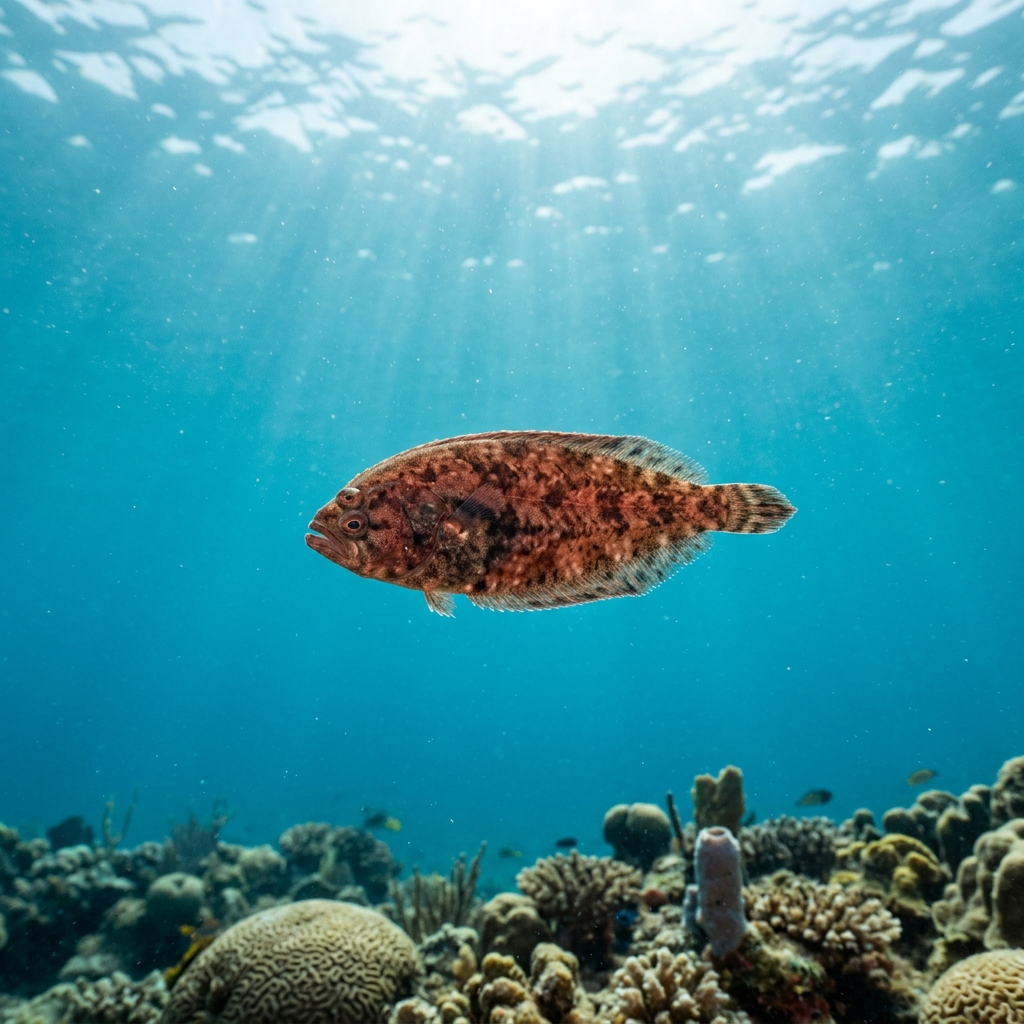
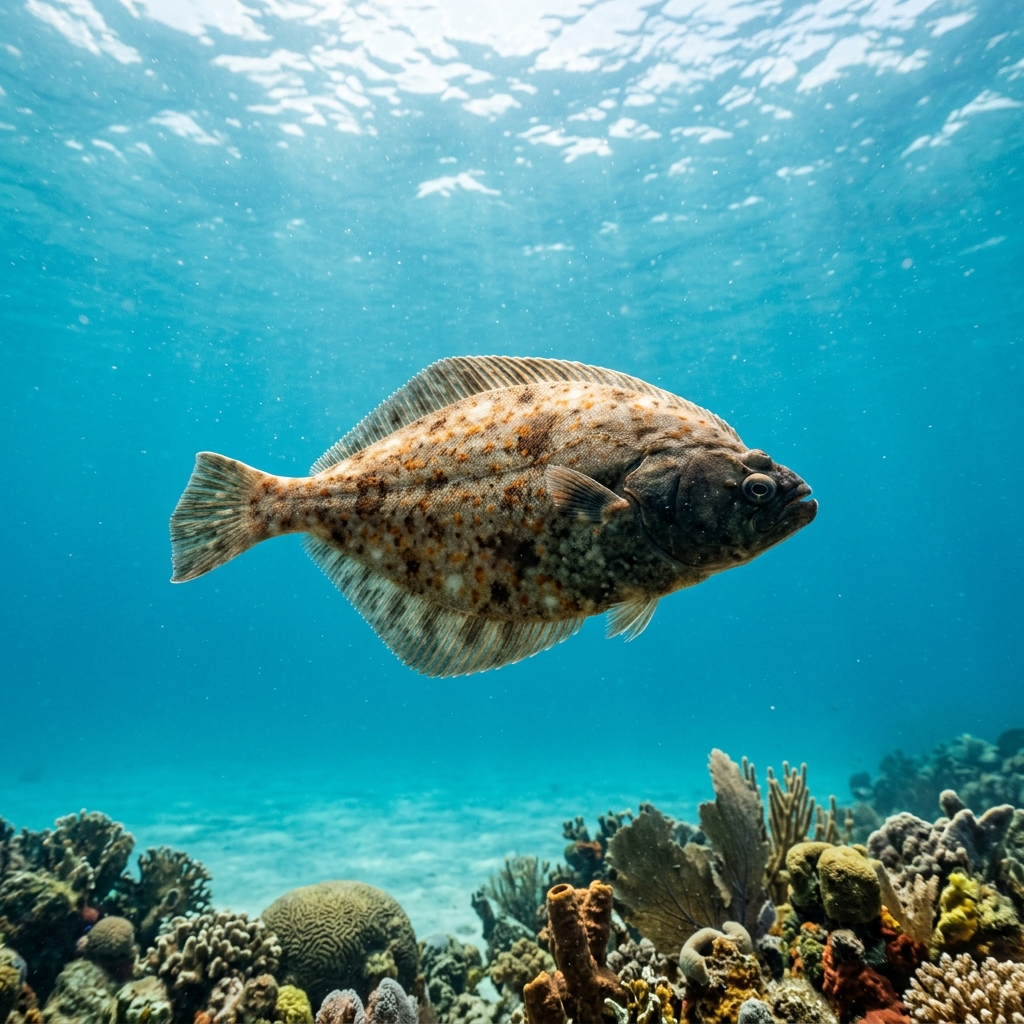
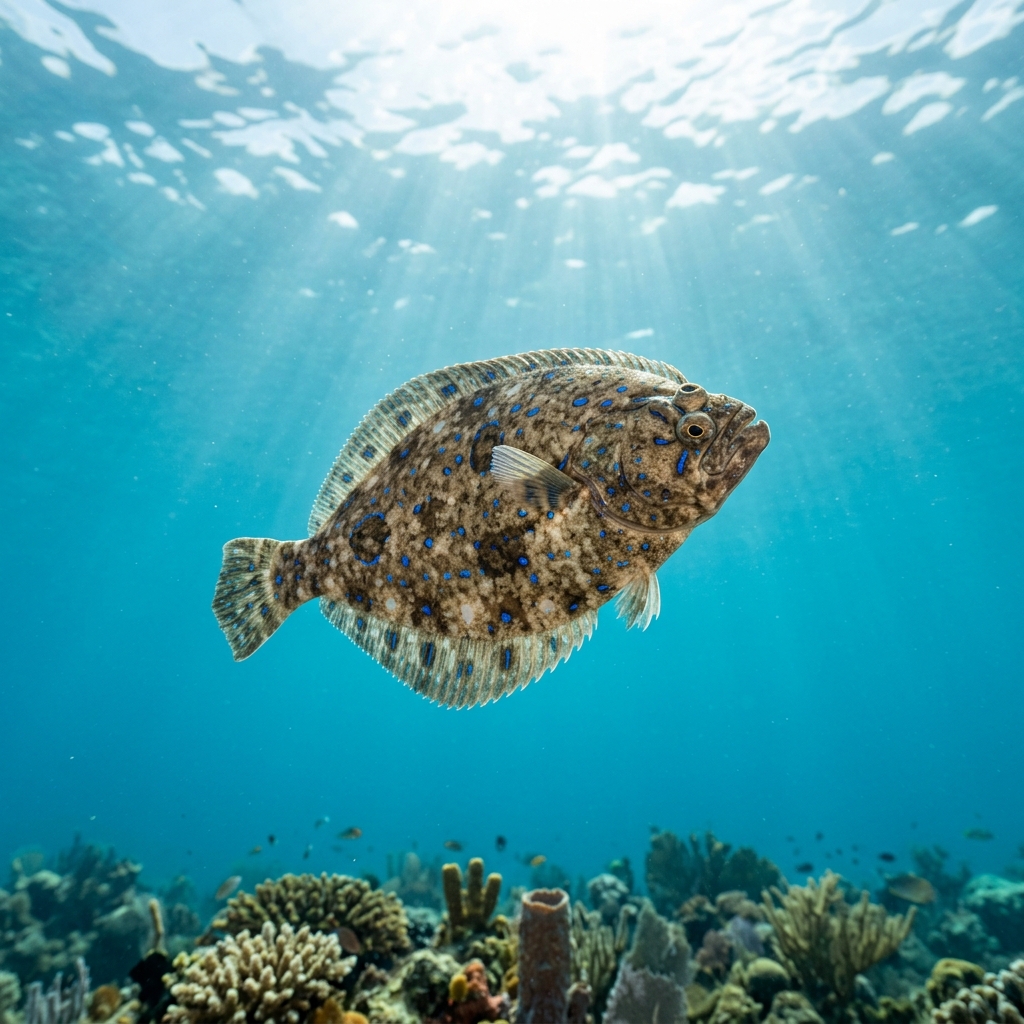
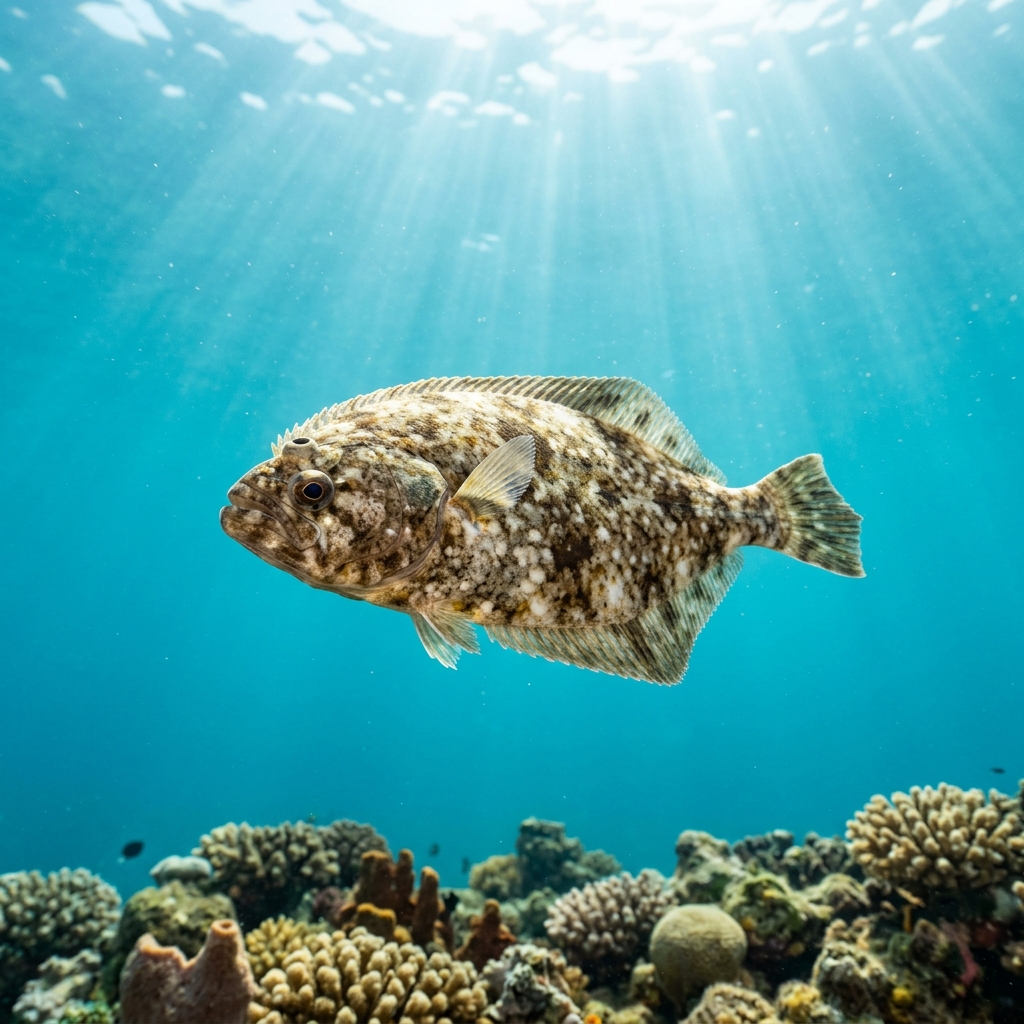
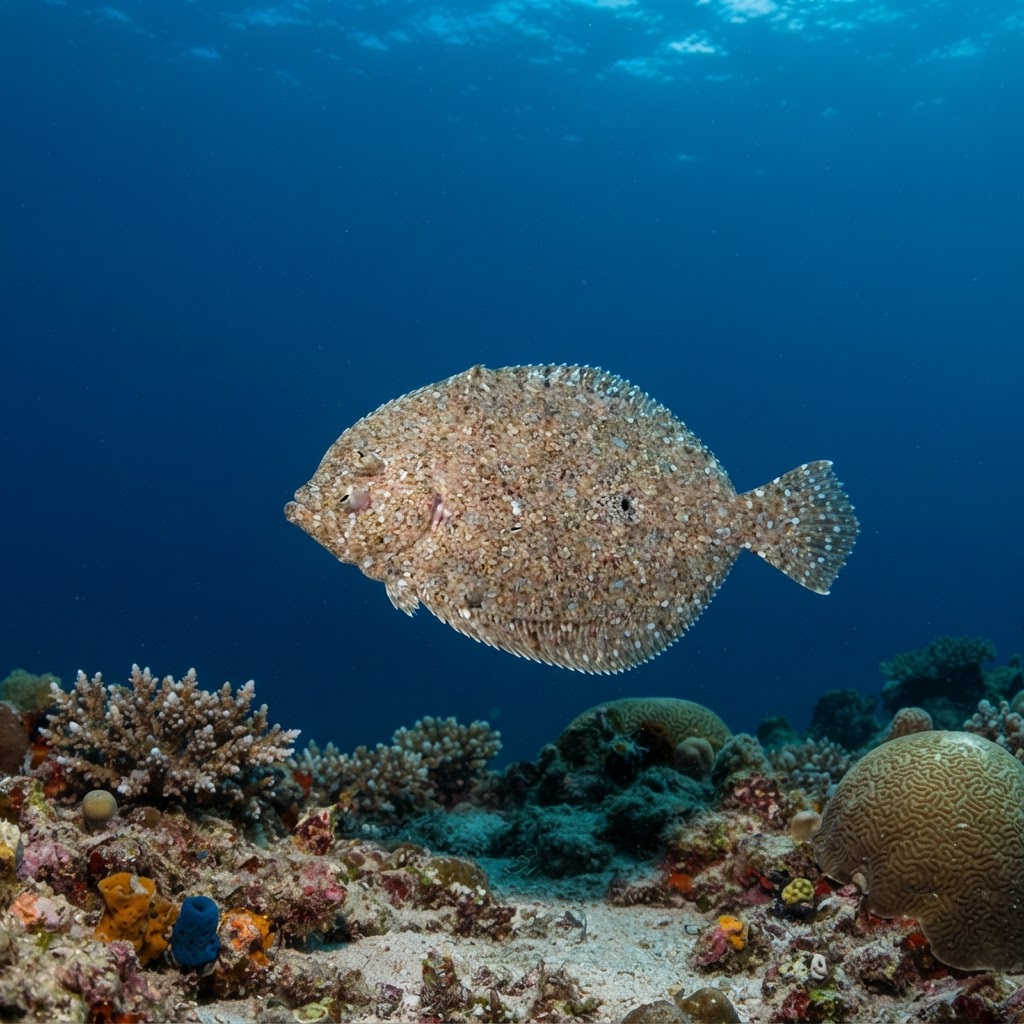
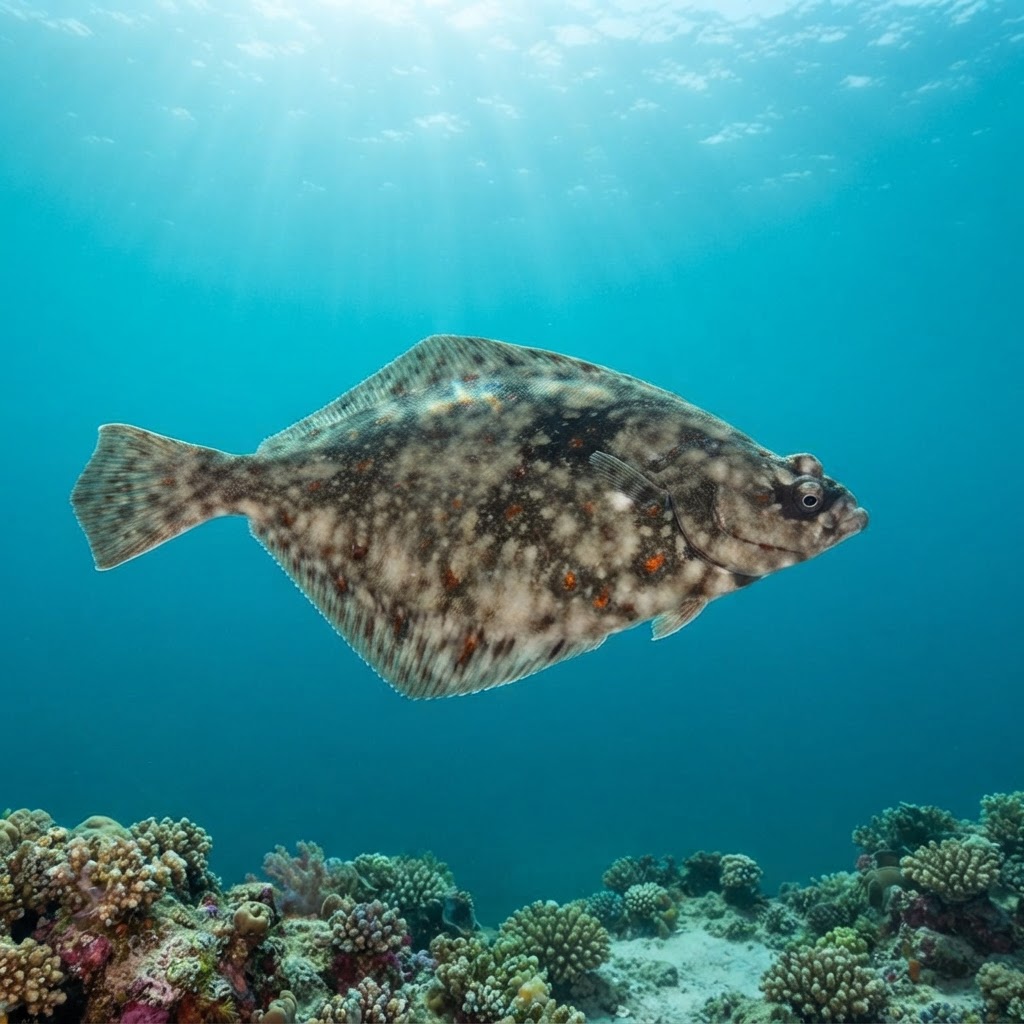
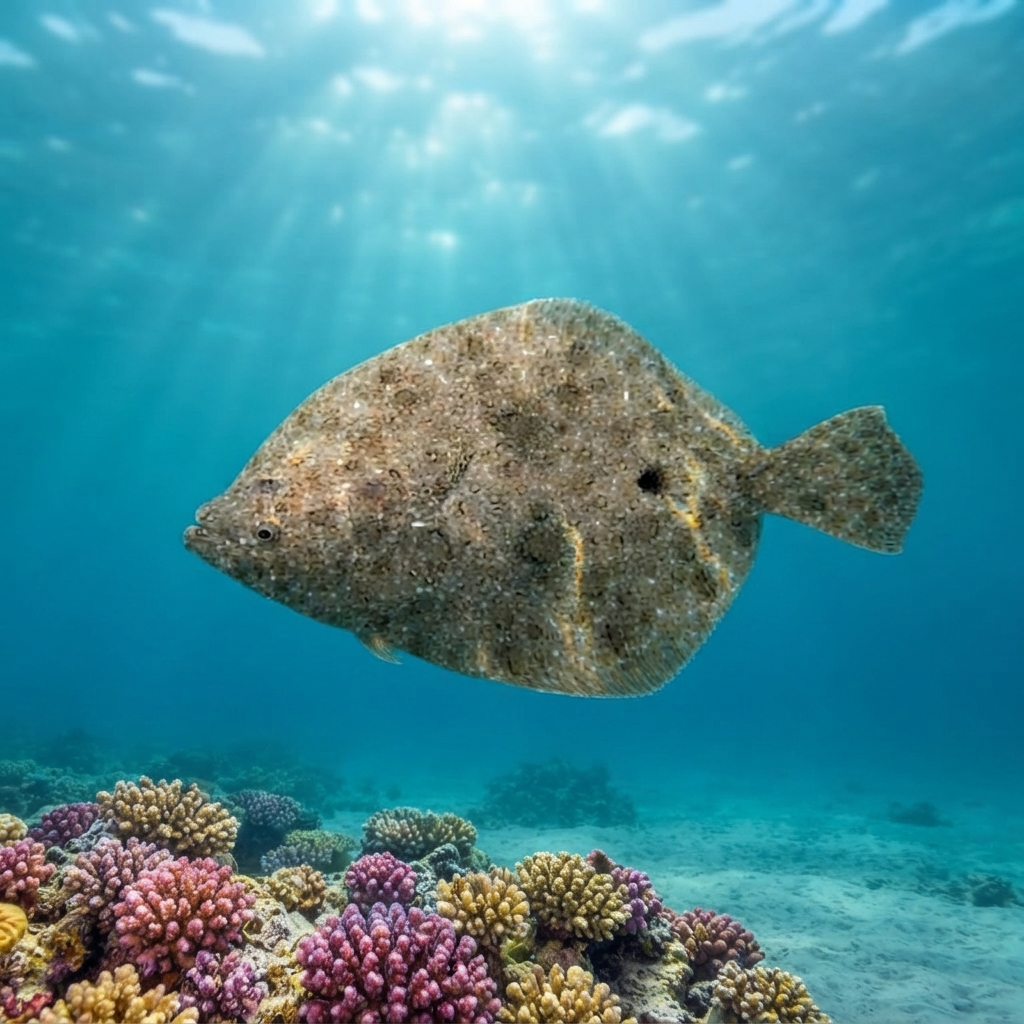
Flattened, roughly oval body lying on the sand, growing to around 52 cm, with mottled brown and sandy blotches that break up its outline against the seabed. Both eyes sit on the left side of the head, a giveaway of its flatfish body plan, and the skin is smooth rather than scaly-rough to the eye. Look for the faint scattering of small dark spots across the body, and the way it lies almost invisible until it flicks away in a burst of sand.
Divers mostly find brill lying still on sand or mixed sediment bottoms, relying on their mottled camouflage rather than movement to avoid notice. They tend to stay put unless approached closely, then dart off low over the substrate for a short distance before settling again. Sightings are logged as rare at nearly all sites, so spotting one usually comes down to a slow, close look at open sandy patches rather than chance encounters mid-water.
Like other flatfish, a brill starts life swimming upright and symmetrical, then one eye migrates across the head as it matures so both eyes end up on the same upward-facing side once it settles onto the seabed for good.
There is no detected seasonal pattern, and with observed water temperatures ranging from 8.4 to 19.5 C, brill appear to be logged across the colder and milder parts of the year alike on French sites.
Every logged sighting in the data comes from France, making it the country to look for brill. Within France, the French Riviera and Provence region carries the most reports, with Occitanie a secondary spot worth checking on sandy-bottomed dive sites.
Mapping where Brill is logged…
France is the only country with confirmed sightings, concentrated in the French Riviera and Provence region, with further records from Occitanie. Look on sandy or mixed-sediment seabeds rather than reef structure.
Sightings show no clear seasonal pattern, and the species has been logged in water from 8.4 to 19.5 C, so it appears to be a year-round possibility on French dive sites rather than a seasonal target.
Look for a flat, oval-bodied fish lying on sand, mottled brown and sandy in colour with small dark spots, both eyes on the same side of its head. It usually stays still against the substrate until disturbed.
Brill typically reach around 52 cm in length, making them a modest-sized flatfish rather than a large bottom-dweller.
No, brill pose no danger to divers. They are a shy, camouflaged flatfish that moves away from divers rather than towards them.
Brill hatch as symmetrical, upright-swimming larvae, then one eye migrates across the head as they develop, ending up flat-bodied with both eyes on one side once they take up life on the seabed.
Site and sighting data is aggregated from diver logs, iNaturalist and GBIF. For taxonomy and conservation status:
Wide Eyed Flounder
1,624 sites