Heteropriacanthus fulgens
Big red eyes, deep-red body, night dives in Tenerife and São Vicente around 19 to 25 C. A reliable but easy-to-miss find.
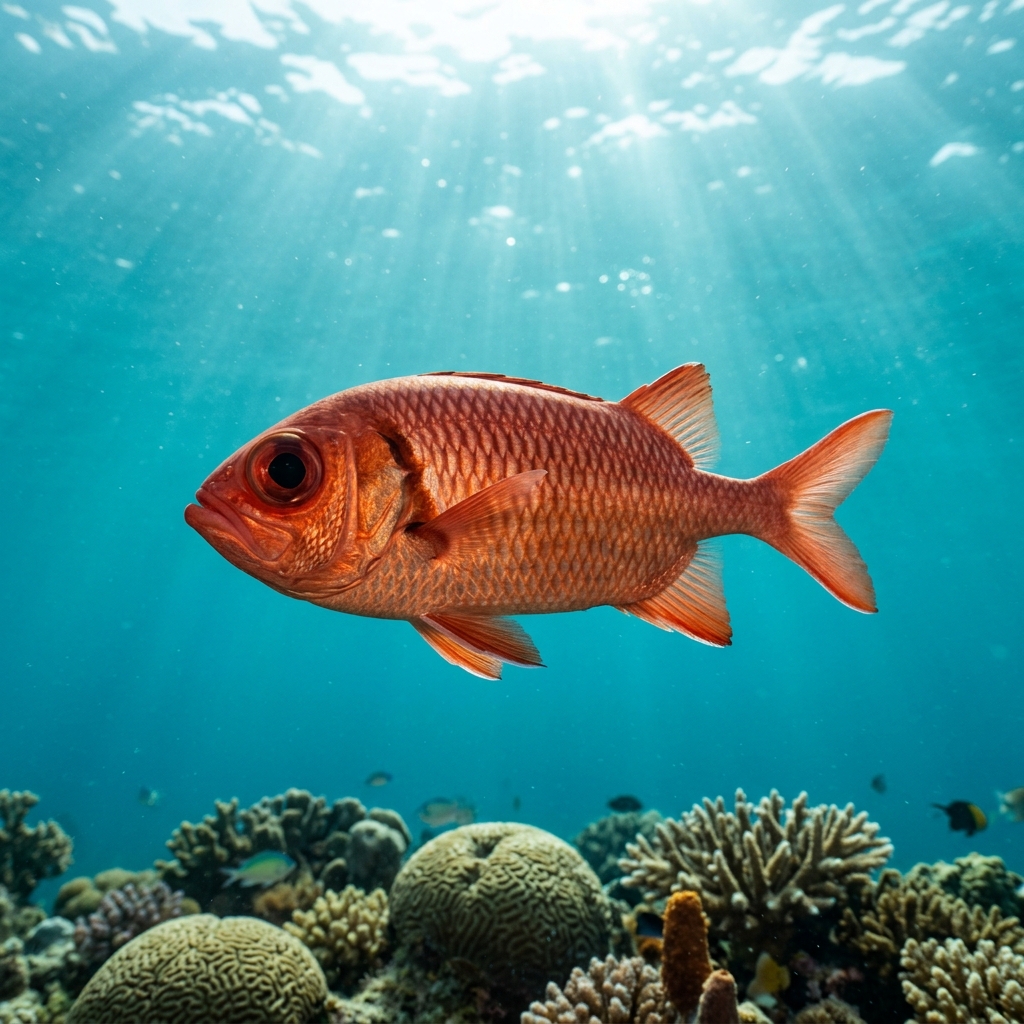
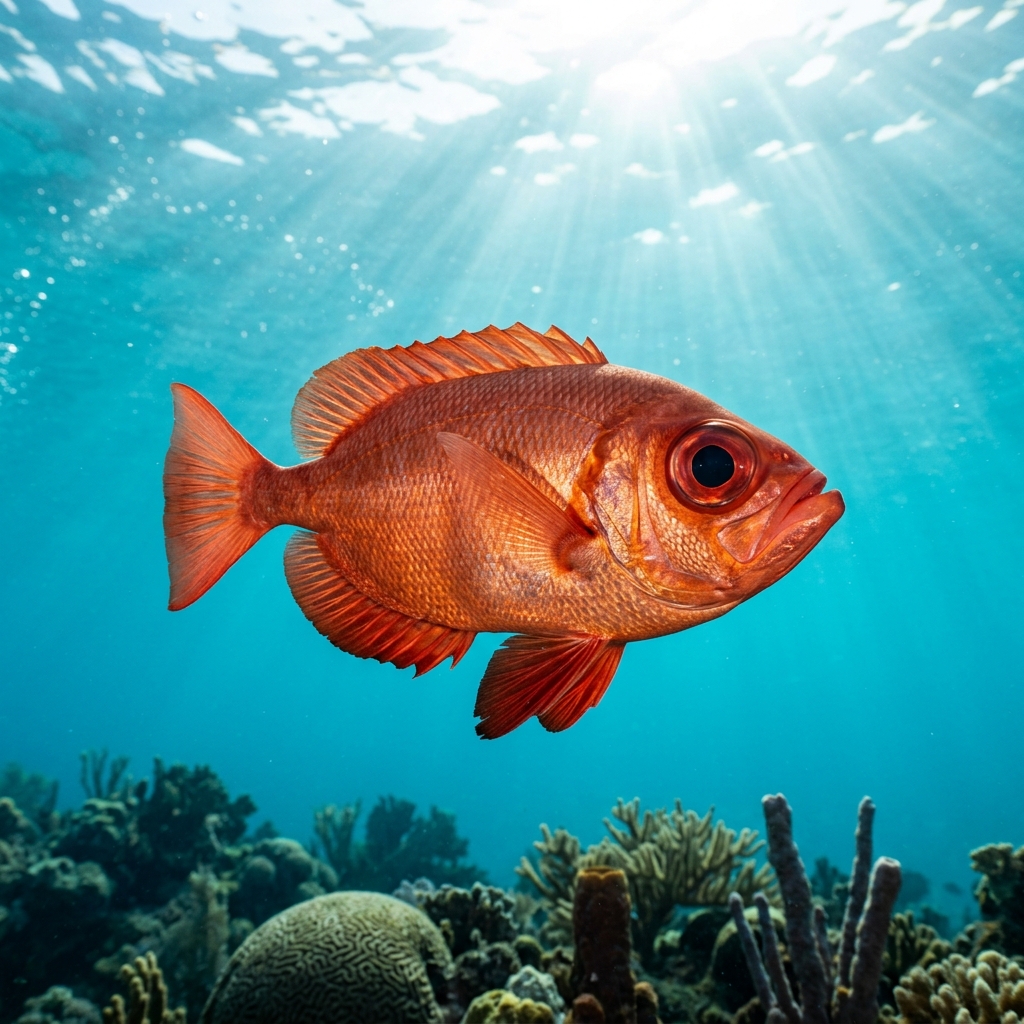
Deep red to orange-red body with a compressed, almost oval shape and a spiny dorsal fin that runs the length of the back. The name gives away the best clue: oversized, glassy dark eyes built for spotting prey in low light. It tends to hang at an angle near ledges and crevices rather than swimming openly over the reef, staying around 14 cm as an adult.
Divers usually find it tucked under ledges, in crevices or hovering close to rocky overhangs rather than out in open water, which fits its nocturnal habits and those large light-gathering eyes. It tends to hold still or drift slowly when approached rather than bolting, making it an easy subject once you spot the red glow in a torch beam. Most sightings come from reef and rocky-reef dives rather than sand or open water.
Those oversized eyes are a giveaway that this is a nocturnal hunter, most active after dark when it moves out from its daytime hiding spots to feed.
No strong seasonal pattern shows up in the sightings, so treat it as a year-round find on these Atlantic island reefs. It sits comfortably in the 19.2 to 25.2 C range these sites see through most of the year, which matches that lack of a clear season.
Most reliably logged around the Canary Islands, with strong numbers at sites in Tenerife, Gran Canaria, El Hierro and Lanzarote. It also turns up consistently on volcanic reefs off Madeira Island and around São Vicente and Sal in Cape Verde, making the eastern Atlantic islands the place to look for it.
Mapping where Bright Glasseye is logged…
The Canary Islands are the strongest bet, especially Tenerife, Gran Canaria, El Hierro and Lanzarote. Madeira Island and Cape Verde sites around São Vicente and Sal also produce regular sightings.
There's no clear seasonal pattern in the data, so it's considered a year-round sighting on these Atlantic island reefs. Water temperatures at these sites typically run 19.2 to 25.2 C across the year.
Look for a deep red, compressed body around 14 cm long with a spiny dorsal fin and unusually large dark eyes. It's usually found tucked near ledges or crevices rather than swimming in open water.
They typically reach around 14 cm, a small reef fish easily overlooked unless you're checking crevices and ledges with a torch.
Its oversized eyes are adapted for low-light hunting, which is why it's most active at night and spends daylight hours hidden in crevices and under ledges.
Site and sighting data is aggregated from diver logs, iNaturalist and GBIF. For taxonomy and conservation status:
Soldierfish
3,612 sites