Sufflamen fraenatum
Uncommon but reliable in KwaZulu-Natal and Oman's Daymaniyat Islands, this deep-ranging triggerfish turns up on reefs from 8 to 186 metres year-round.
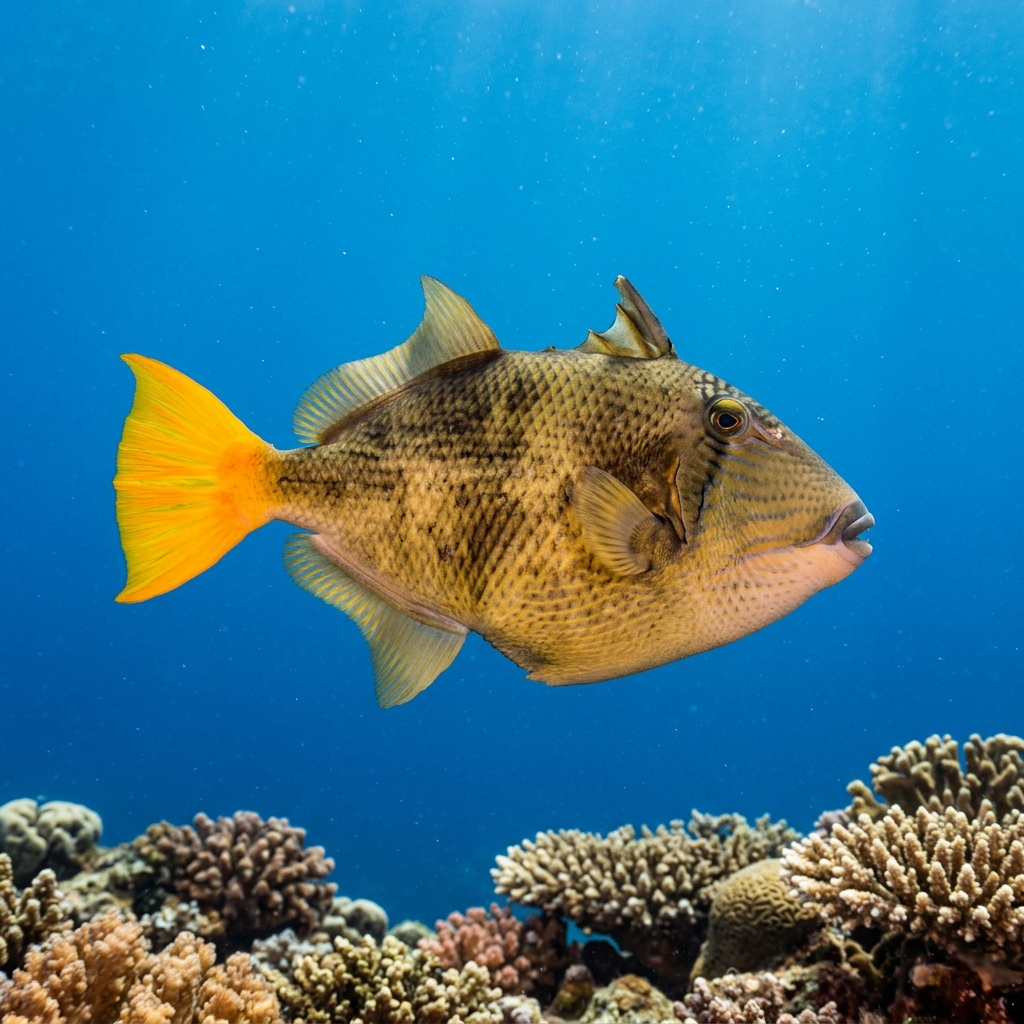
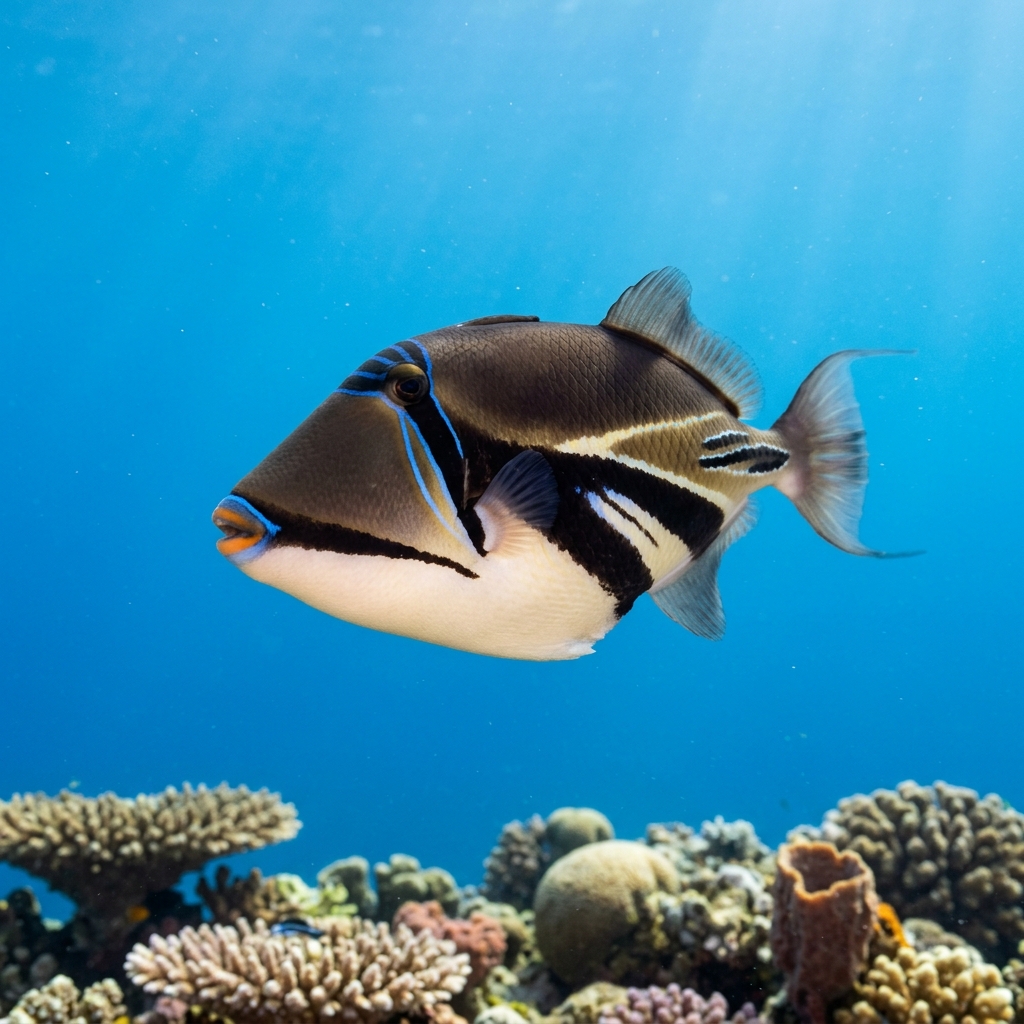
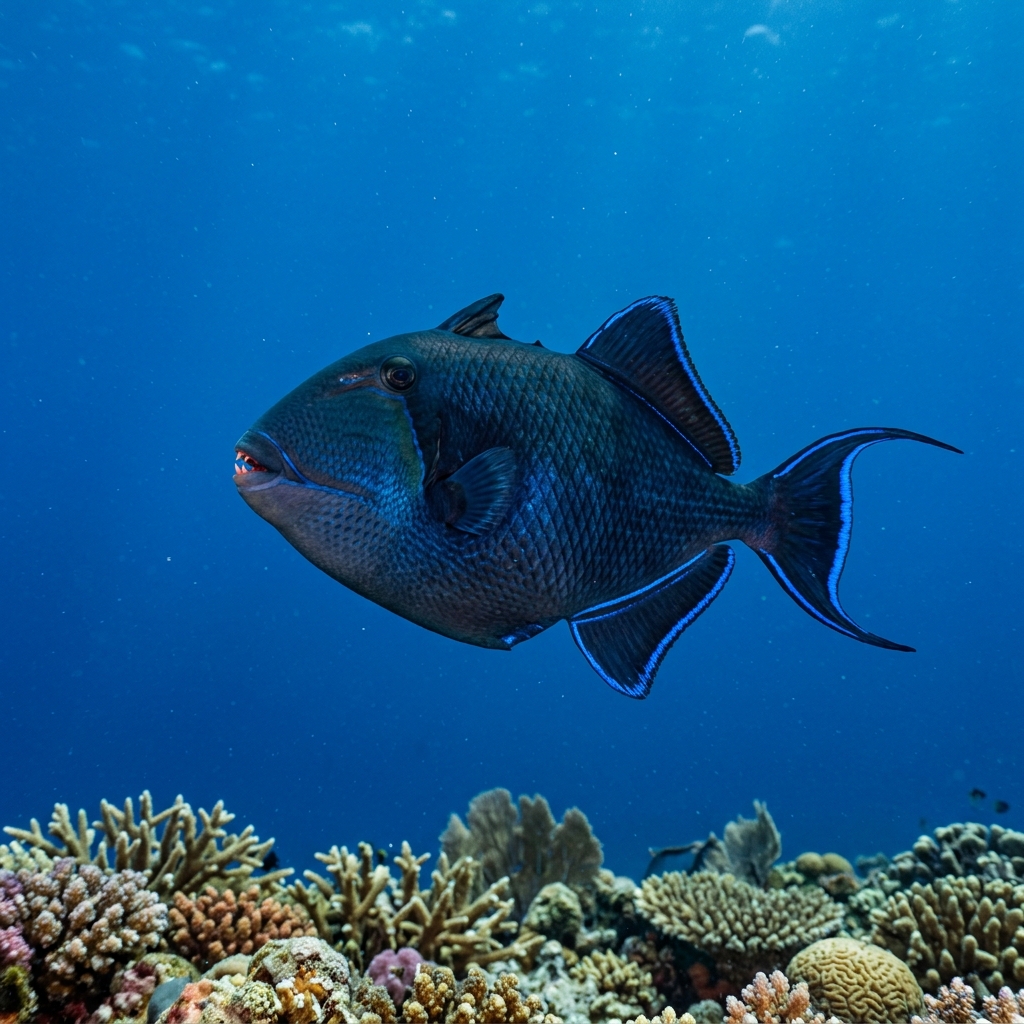
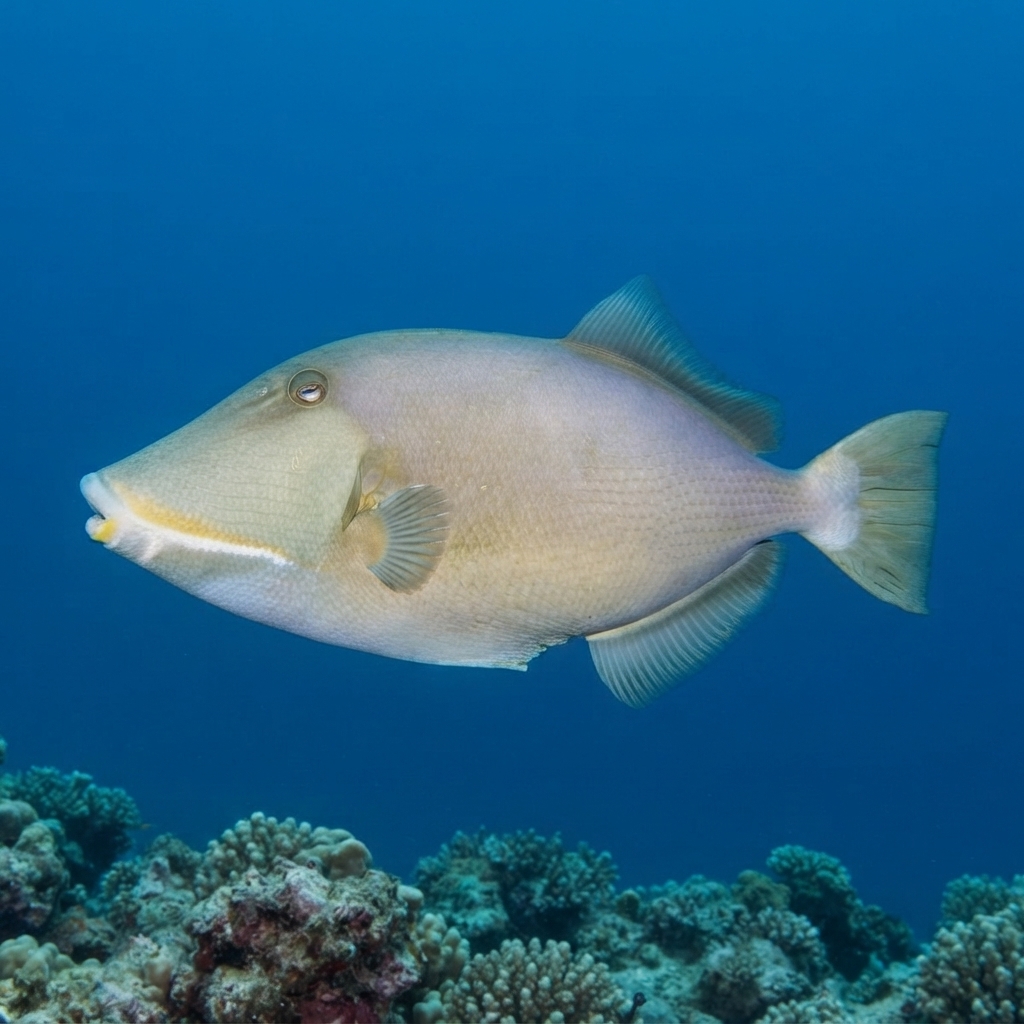
Recognise it by its deep, oval body and dark brown to grey colouring, with a pale crescent band across the base of the tail that gives it the 'bridled' look. It grows to around 26 cm, has the classic triggerfish profile of a small mouth set on a blocky head and a rear-set dorsal spine it can lock upright when threatened. It often sits close to rock or reef structure rather than swimming in open water, and lacks the bold stripes or spots of its more flamboyant relatives.
Divers typically find it hovering low over reef or rocky bottom rather than out in the water column, often near ledges, overhangs or rubble where it can duck for cover. It tends to be wary and will move off or wedge itself into a crevice if approached too fast, a classic triggerfish defence that makes it hard to pull out. Given its depth range runs well past recreational limits, sightings on typical dives are usually of solitary fish going about their business rather than large groups.
Like other triggerfish, it can jam itself into a crack and lock its first dorsal spine upright using a second smaller 'trigger' spine, making it almost impossible for a predator, or a diver's hand, to pull it back out.
No clear seasonal pattern shows up in the sightings, and its comfort range of roughly 23 to 29 C spans most tropical and subtropical reef conditions year-round, so any month is worth a look at these sites.
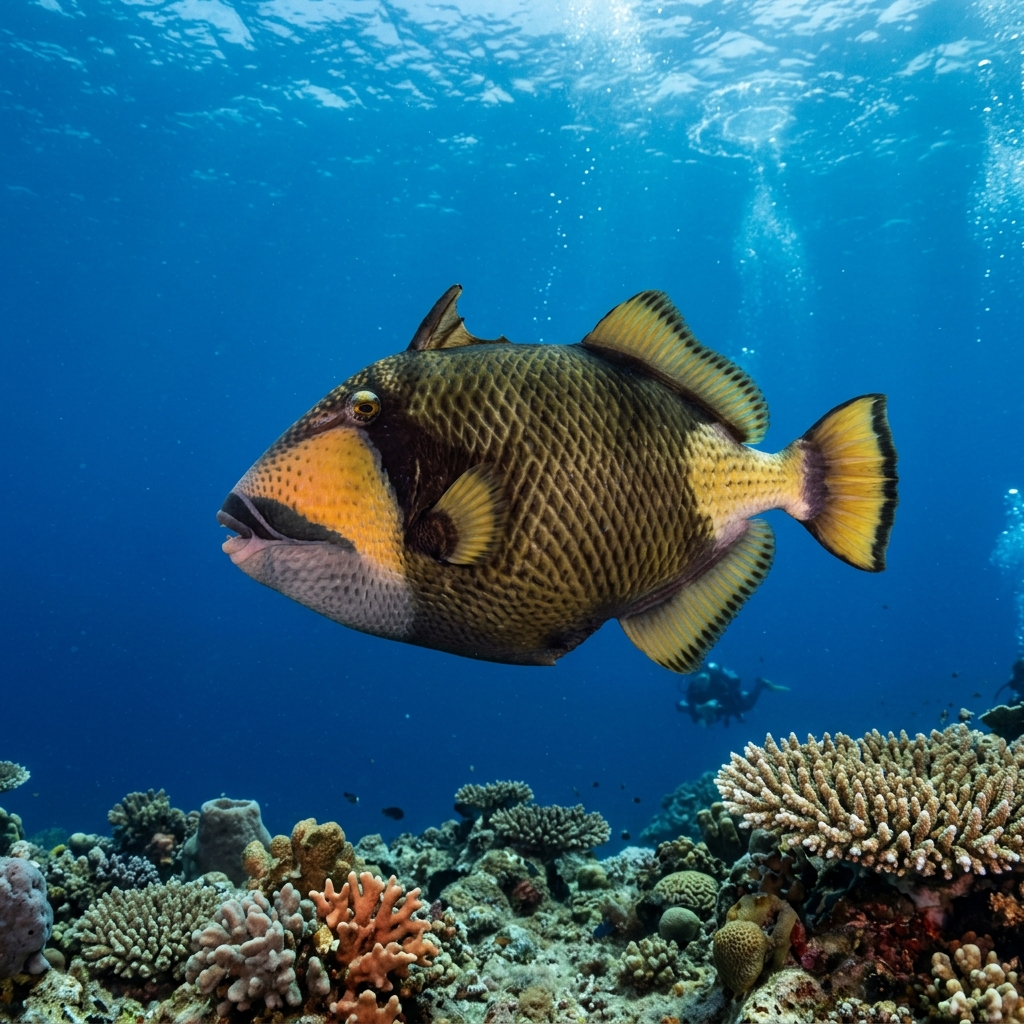
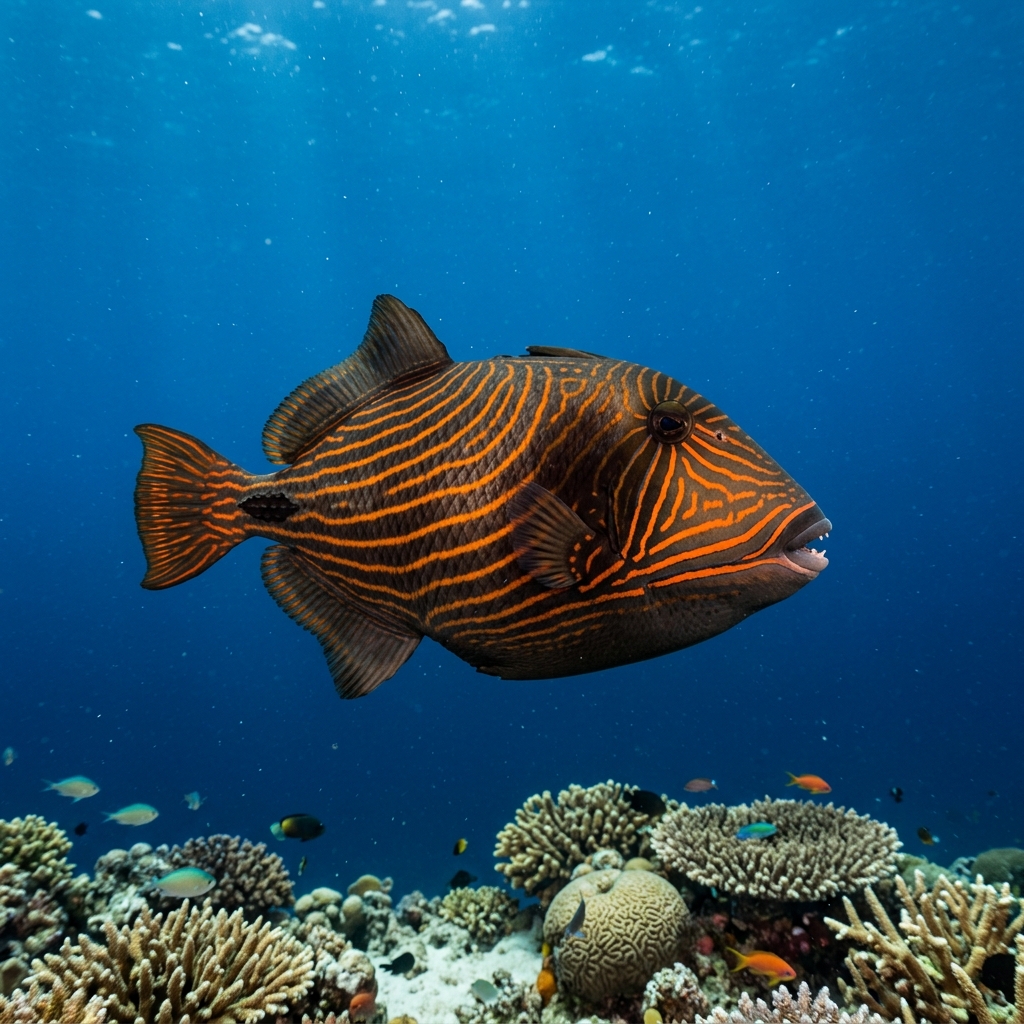
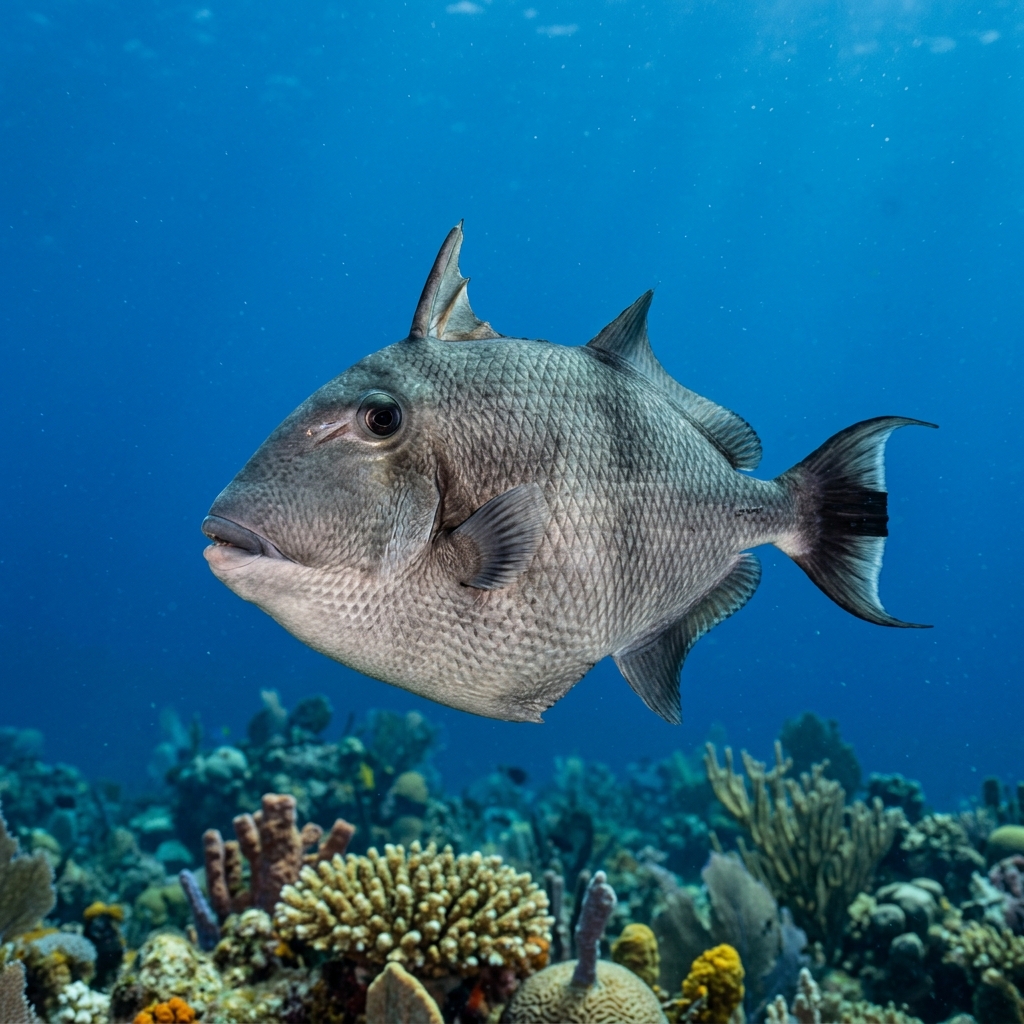
Reef neighbours a diver could mistake it for. Use the identification notes above to tell them apart.
South Africa's KwaZulu-Natal coast and Oman's Daymaniyat Islands and Muscat area are the most consistent places divers log this species, with Hawaii also producing regular sightings. Smaller but reliable pockets turn up in Sabah, Malaysia and Goa, India, usually as an uncommon rather than everyday find.
Mapping where Bridled Triggerfish is logged…
KwaZulu-Natal in South Africa and the Daymaniyat Islands and Muscat region of Oman are the most consistent spots, with Hawaii also a solid bet. Smaller but regular sightings come from Sabah in Malaysia and Goa in India.
There's no strong seasonal pattern in the sightings, and its 23 to 29 C comfort range keeps it on reefs all year, so it's a year-round rather than a seasonal target.
Look for a dark brown to grey oval-bodied fish around 26 cm, sitting low near reef or rock, with a pale band crossing the base of the tail fin. It has the typical blocky triggerfish head and small mouth rather than any bold stripes or spots.
They typically reach around 26 cm in length, making them a mid-sized reef triggerfish rather than one of the larger species in the family.
Like its relatives, it can wedge itself into a reef crevice and lock an erect dorsal spine in place using a second trigger spine, a defence that makes it nearly impossible to dislodge once it's tucked in.
Site and sighting data is aggregated from diver logs, iNaturalist and GBIF. For taxonomy and conservation status:
Lagoon Triggerfish
2,435 sites