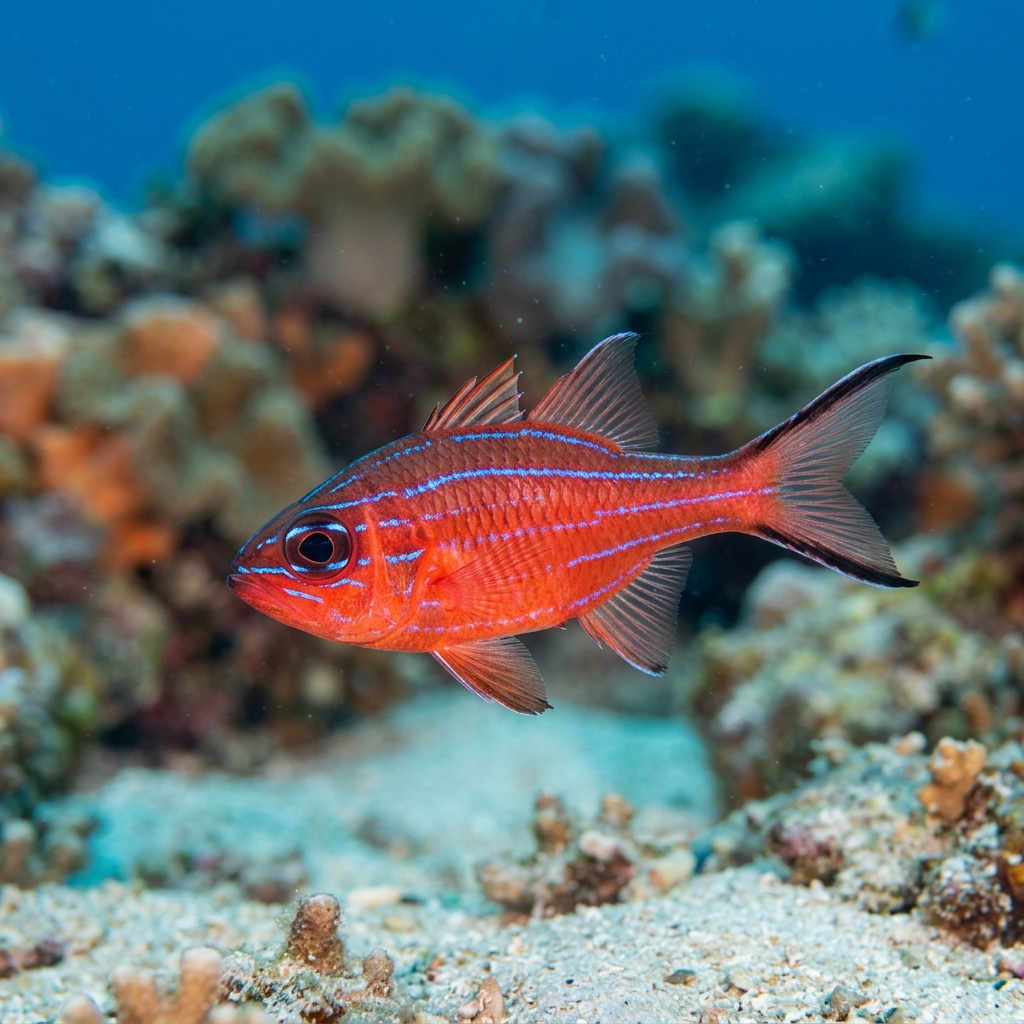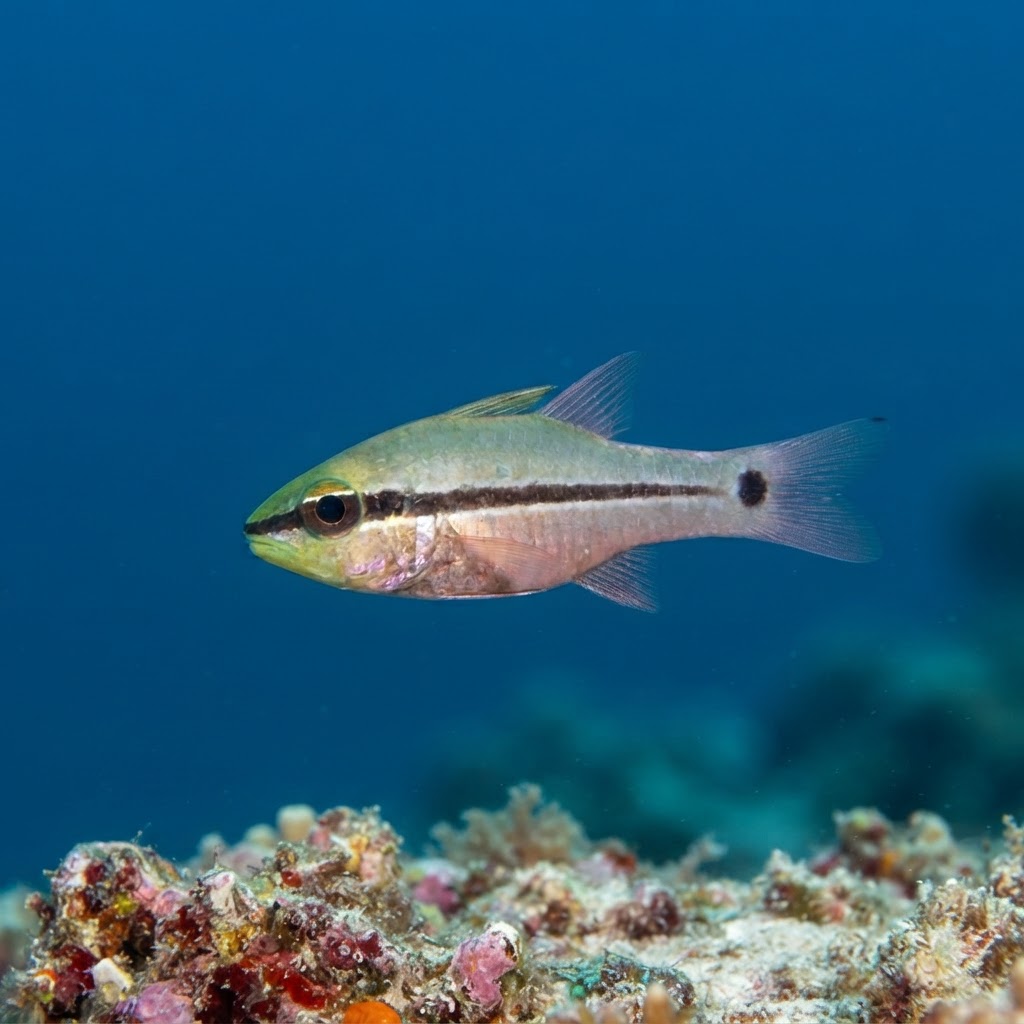
Pristiapogon fraenatus
Spot this small reef fish's black eye-band on night dives in Sulawesi and Dili, where water sits a warm 25-29C year-round.
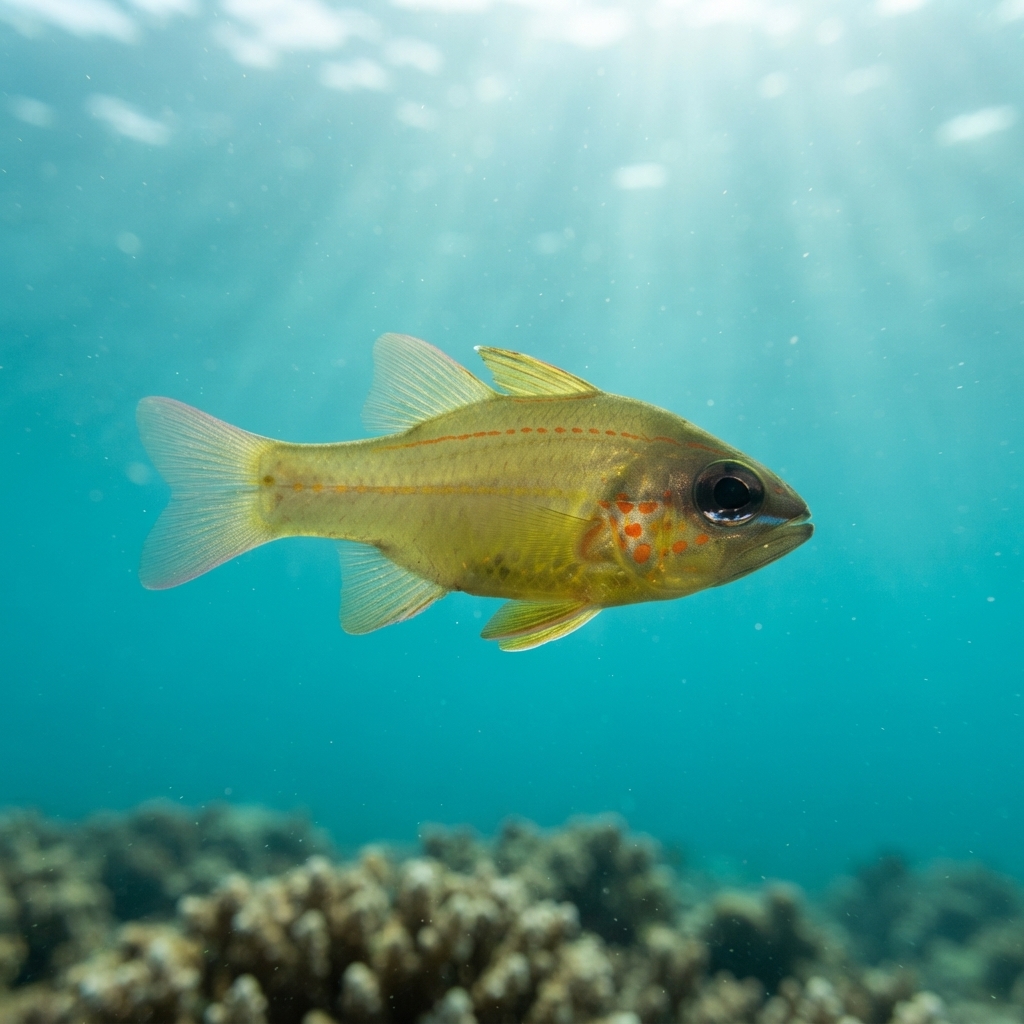
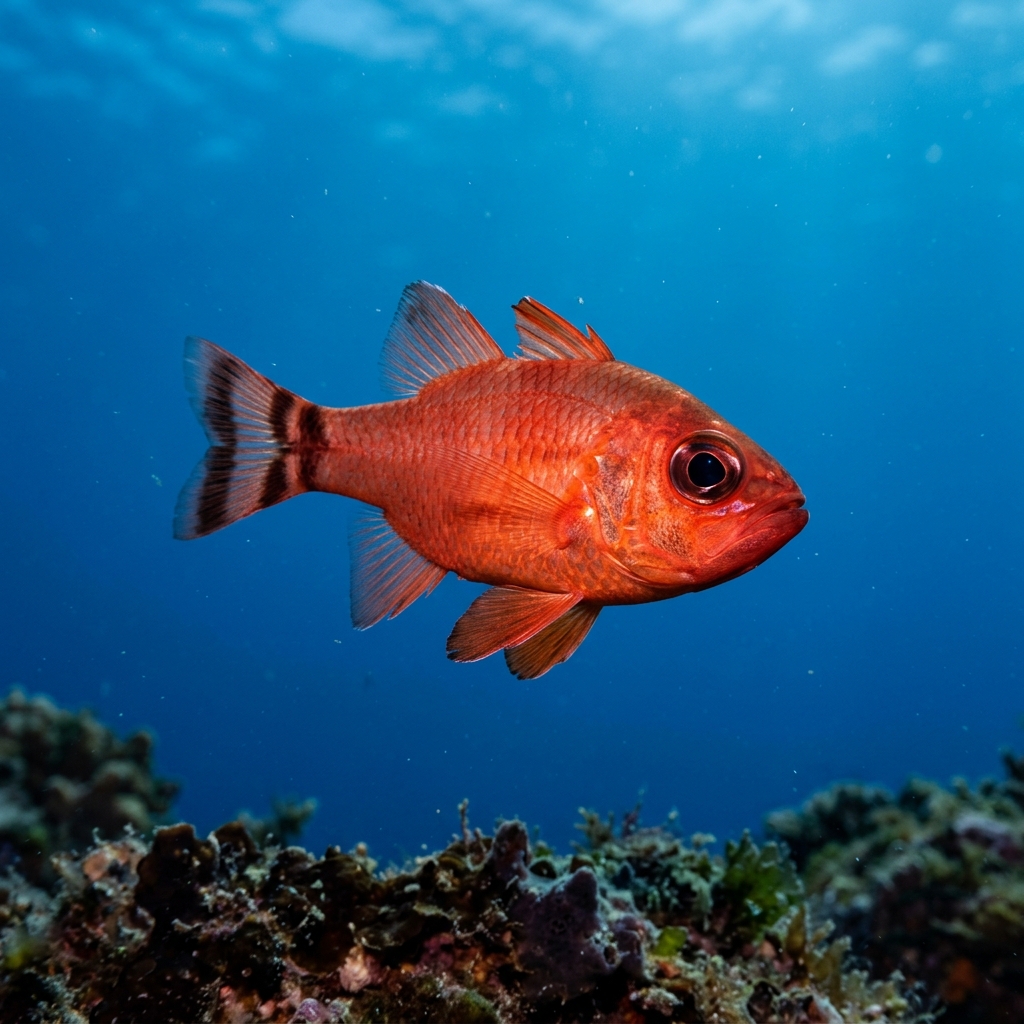
A small, stocky fish around 7cm with a reddish-brown to coppery body and large, dark eyes. The clearest ID mark is the black bridle-like band running through the eye, backed by a second dark bar near the gill edge. It hangs almost motionless in small groups close to reef structure rather than swimming out in the open.
Look for it tucked under ledges, in crevices or beneath table corals during the day, often loosely grouped with other small cardinalfish. It becomes more active after dusk when it moves out to feed, and it tends to hold its position rather than bolt when a diver approaches slowly.
Like other cardinalfish, males are mouthbrooders, carrying the fertilised eggs in their mouth until the young are ready to disperse.
No clear seasonal pattern shows up in the sightings, and with a comfortable range of roughly 25 to 29C it is likely present on these reefs year-round.
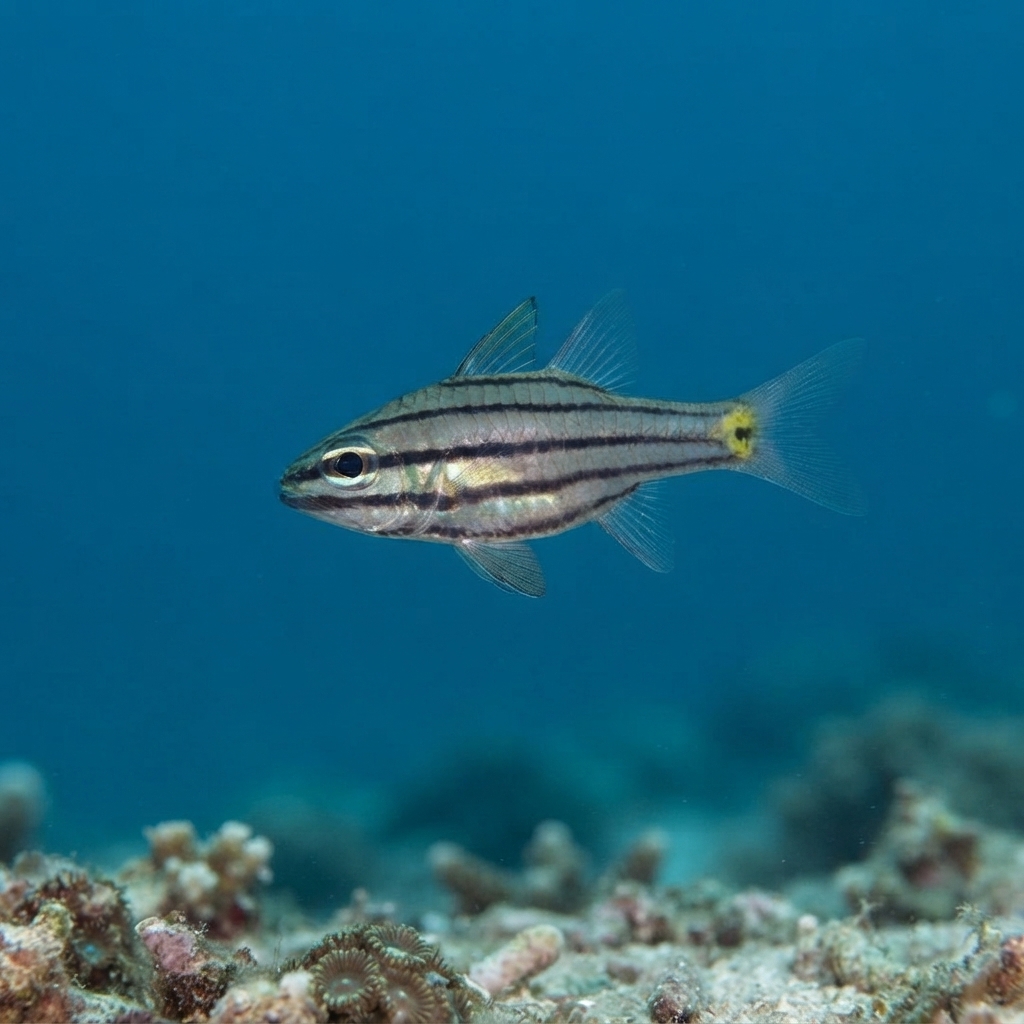
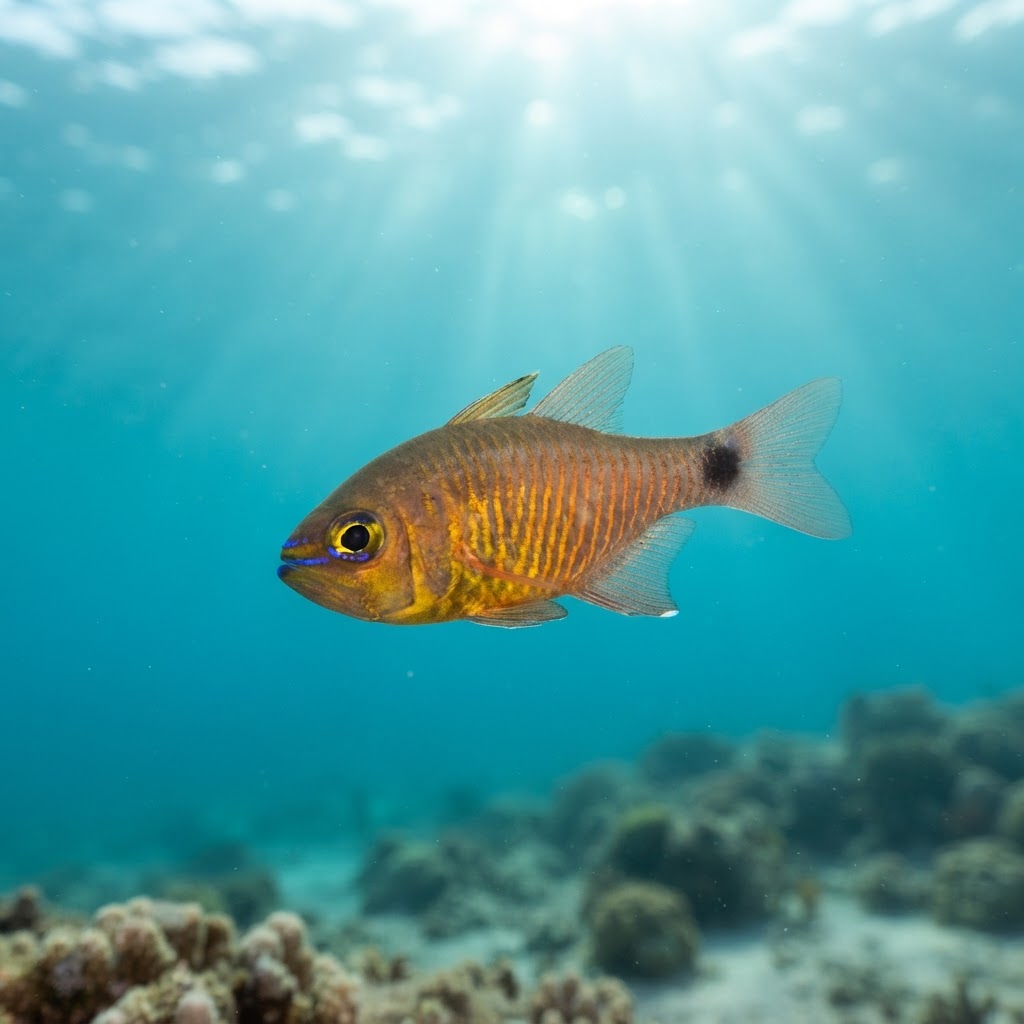
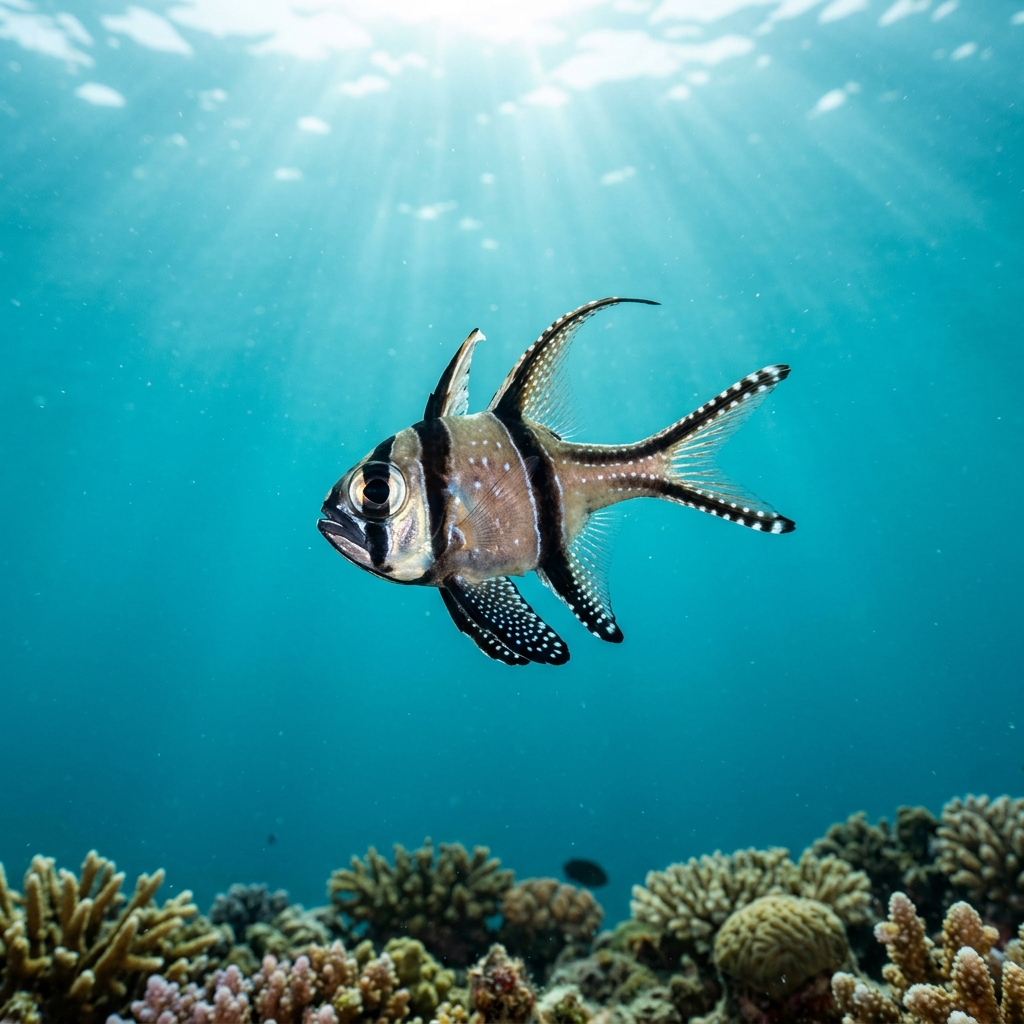
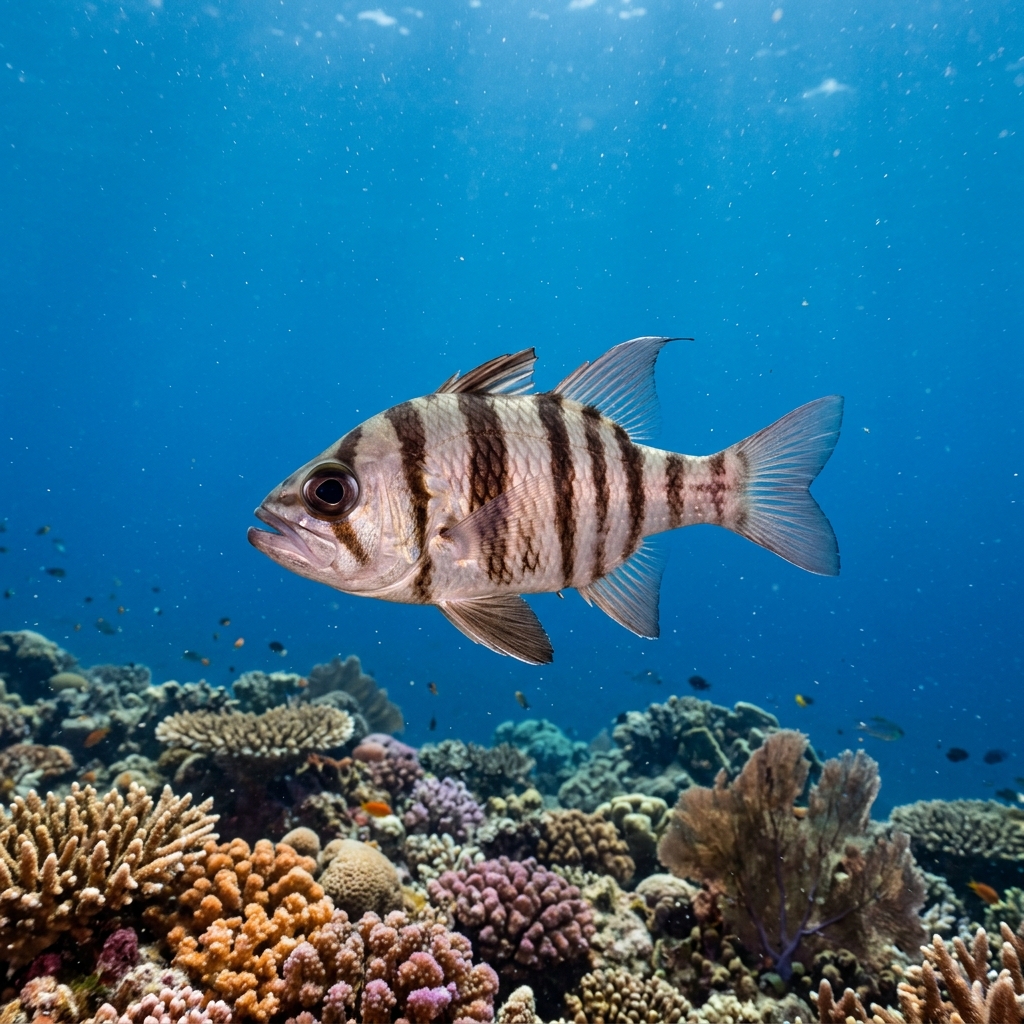
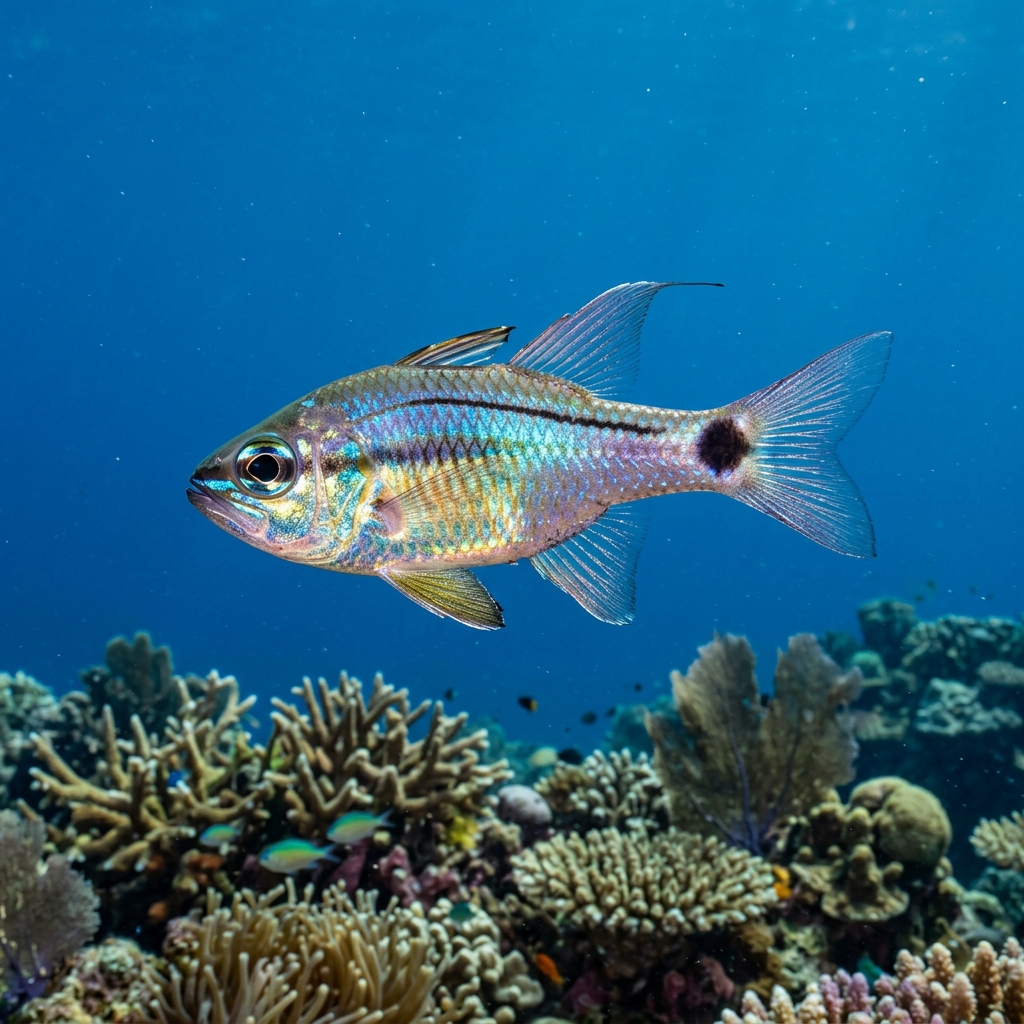
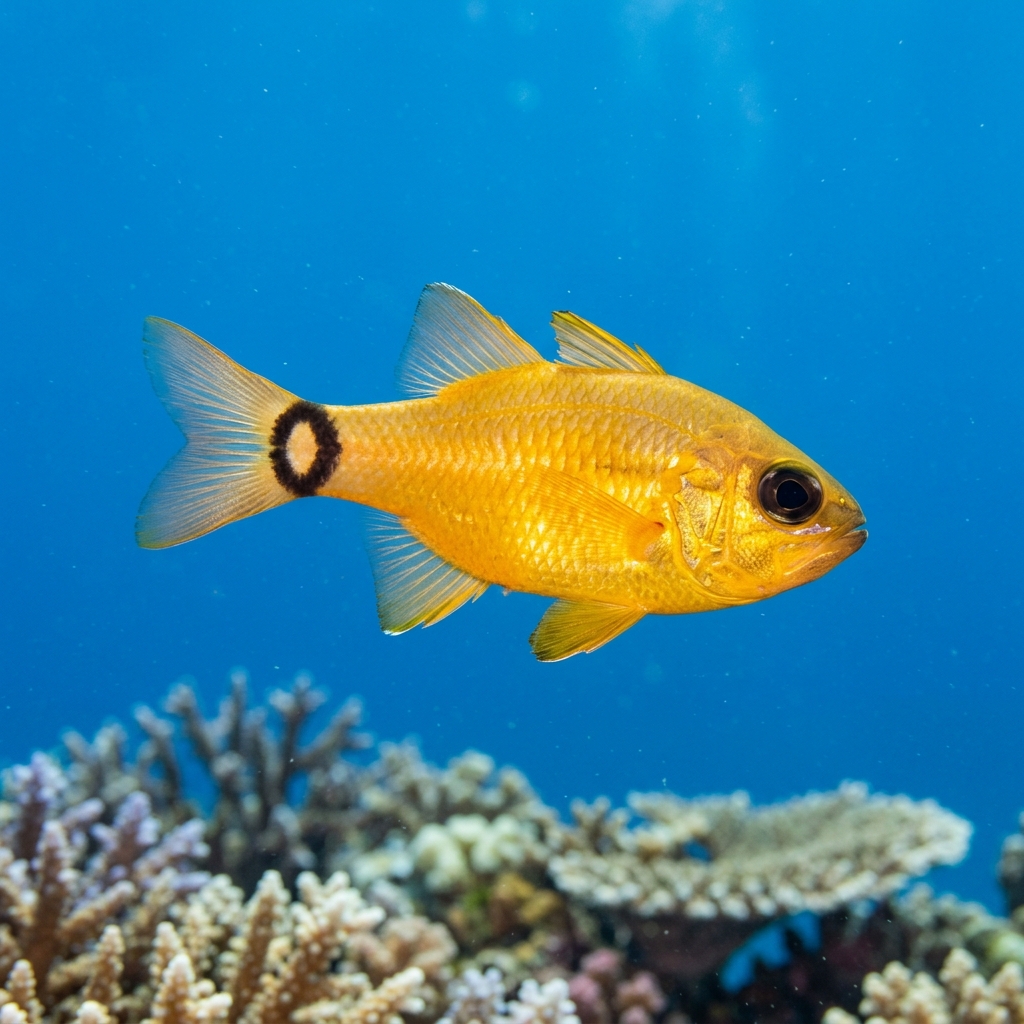
Reef neighbours a diver could mistake it for. Use the identification notes above to tell them apart.
Most consistently logged around Sulawesi in Indonesia, with further sightings near Dili in Timor-Leste and in Fiji's Lomaiviti region. Across all known sites it turns up as an uncommon find, so it rewards a slow look into ledges and overhangs rather than open-water scanning.
Mapping where Bridled Cardinalfish is logged…
Sulawesi in Indonesia is the most reliable region, with additional sightings around Dili in Timor-Leste and in Fiji's Lomaiviti area. Even in these spots it's logged as uncommon, so check under ledges and overhangs.
There's no strong seasonal signal in the sightings, and its comfortable temperature range of about 25 to 29C means it's likely on the reef year-round rather than tied to a particular month.
Look for a small, reddish-brown fish around 7cm long with a dark band through the eye and a second dark mark near the gill. It usually sits still near crevices or under coral ledges rather than swimming in open water.
They stay small, typically reaching around 7cm in length, which is fairly typical for cardinalfish species.
No. They're small, harmless reef fish that pose no threat to divers and will simply hold their position or retreat into cover if approached.
Males are mouthbrooders, holding the fertilised eggs in their mouth until the young are developed enough to swim off on their own.
Site and sighting data is aggregated from diver logs, iNaturalist and GBIF. For taxonomy and conservation status:
Iridescent Cardinalfish
1,781 sites