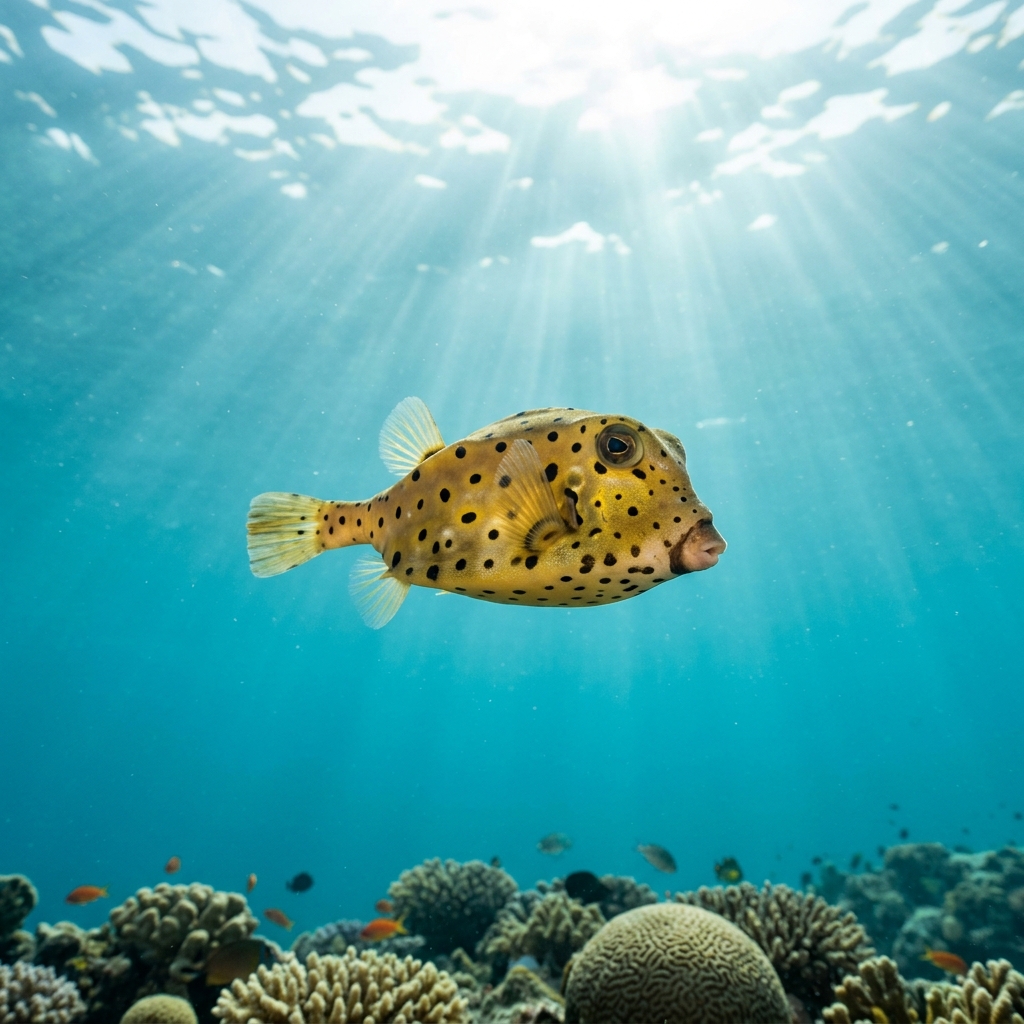
Ostraciidae spp.
Spot boxfish on tropical reefs from the Philippines to Bonaire and Egypt. Recognised by their rigid boxy shape, they're present year-round in warm water.
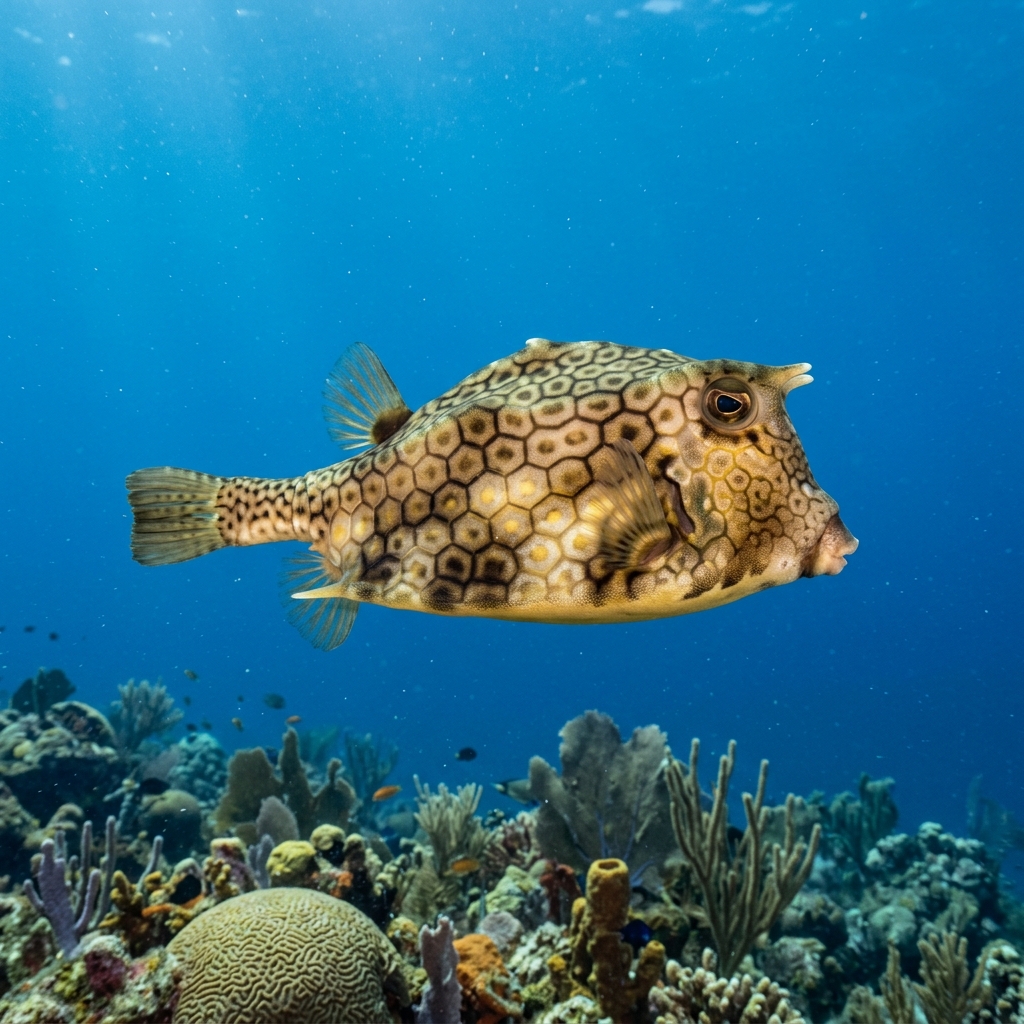
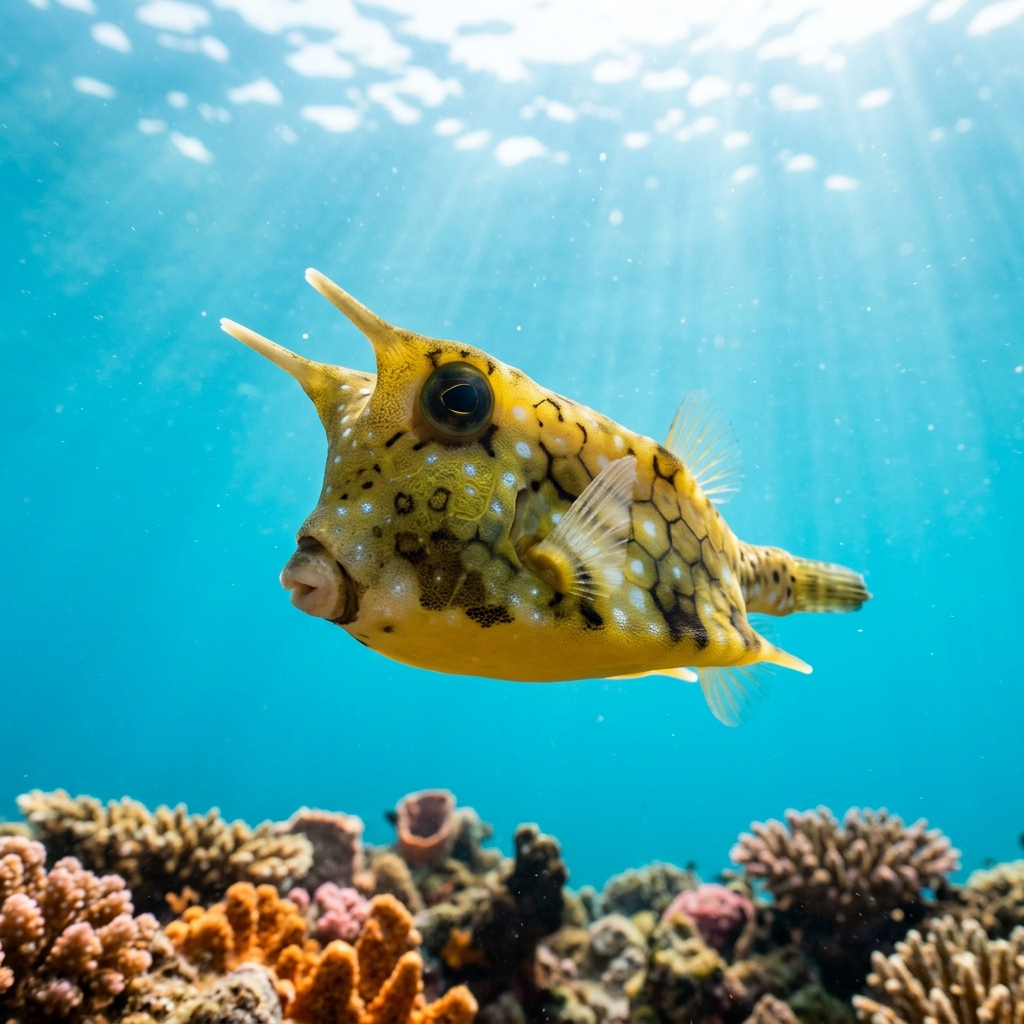
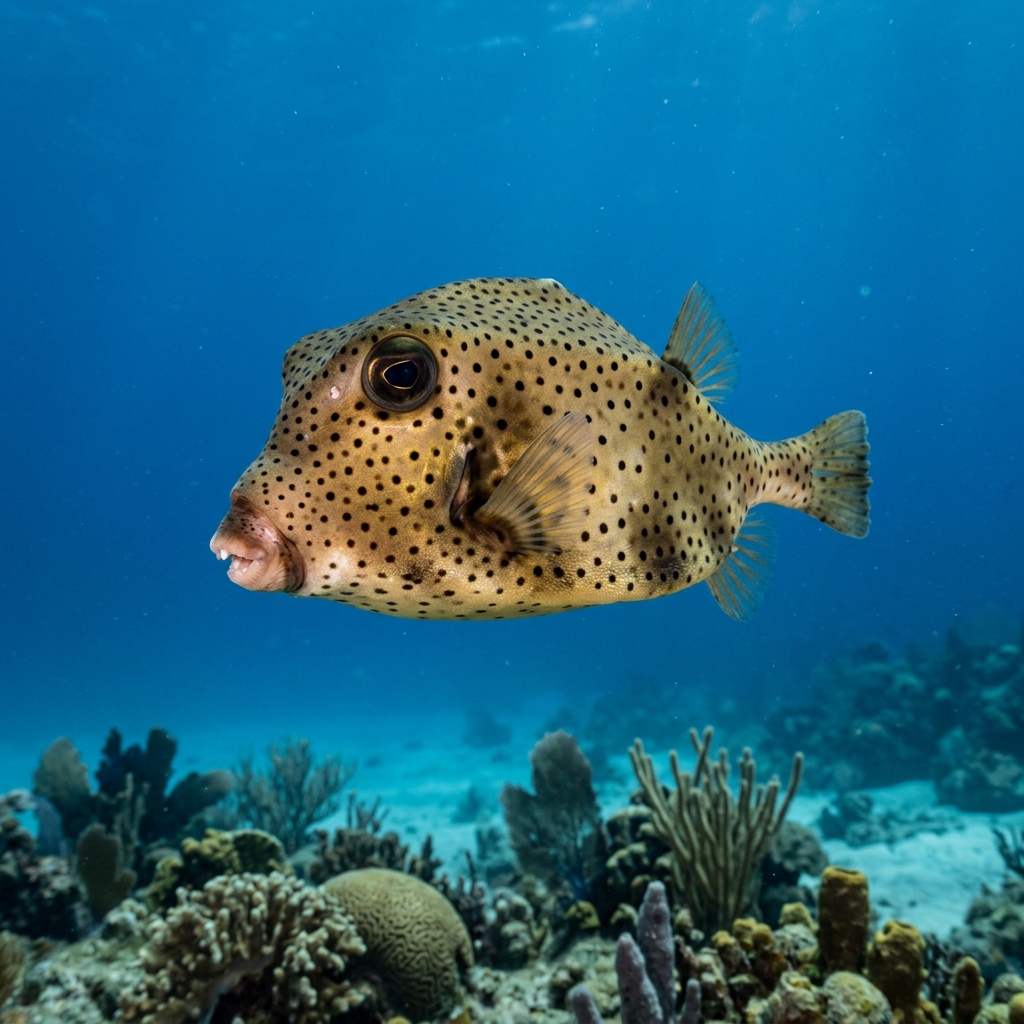
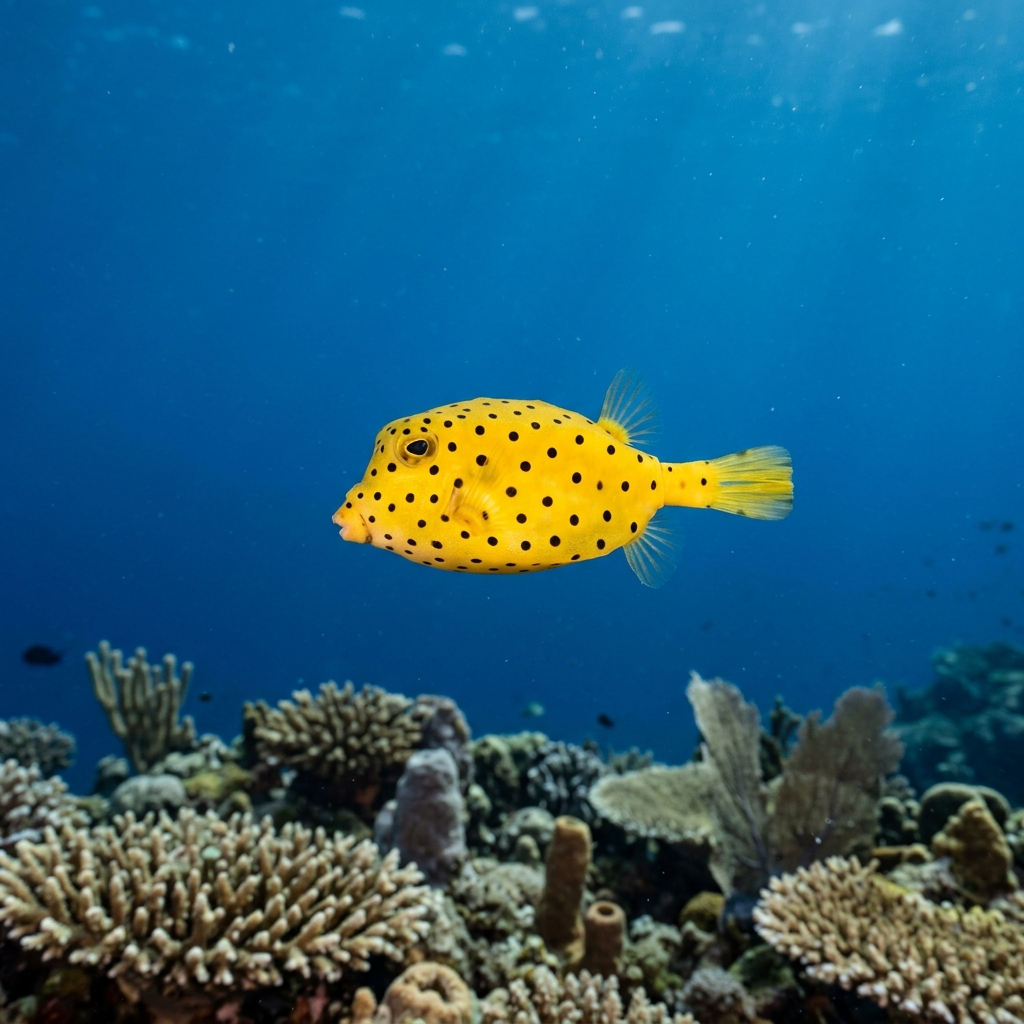
That rigid, armour-plated body is the giveaway: boxfish are encased in a fused bony shell (called a carapace) that gives them a distinctly square or hexagonal cross-section, and they move by sculling with small fins rather than flexing their bodies. Colours vary widely by species but are often yellow, olive, or brown with a pattern of pale-edged dark spots. Juveniles are rounder and typically bright yellow or orange with bold dark spots, while males of many species show stronger blues or more contrasting patterns than the plainer-toned females.
You typically encounter boxfish moving slowly and deliberately just above the substrate, picking at algae, small invertebrates, or coral polyps with their small protruding mouths. They are cautious around divers and will usually drift away or duck into a crevice if approached too quickly, so a slow, low approach gives you the best chance of a close look. Most sightings happen in relatively shallow reef areas where they forage alone rather than in groups.
When threatened, boxfish can release a toxic mucus called ostracitoxin from their skin, which is potent enough to affect other fish in a confined space. It's an unusual defensive strategy for an animal that already wears a suit of armour.
Boxfish are present year-round on tropical reefs, consistent with their preference for water temperatures between roughly 22 and 29 °C. There is no concentrated season, so any time you're diving in their warm-water range you have a reasonable shot.
Reef neighbours a diver could mistake it for. Use the identification notes above to tell them apart.
Boxfish are most commonly logged across the Philippines, Egypt's Red Sea, and Mexico, with the Yucatán Peninsula, Sharm el Sheikh, and the Central Visayas all being reliable areas. Strong sighting records also come from the Caribbean, particularly Bonaire, Roatán in Honduras, Grand Cayman, and Grenada.
Mapping where Boxfish is logged…
Boxfish are logged across a wide spread of tropical destinations. The Philippines, Egypt, and Mexico lead by number of recorded sites, with the Yucatán Peninsula, Sharm el Sheikh, and Central Visayas among the top regions. The Caribbean is also productive, with particularly strong records from Bonaire, Roatán, Grand Cayman, and Grenada.
There is no single best season. Boxfish are recorded year-round across their tropical range, and the water temperatures where they appear most often run from around 22 to 29 °C. If you're diving any warm tropical reef, you can realistically encounter them at any time of year.
Look for the rigid, boxy body shape: the fused carapace gives them a noticeably square or hexagonal cross-section, and they move using small fluttering fins rather than bending their bodies. Colouration varies by species but commonly involves spots on a yellow, olive, or brown background. Juveniles appear rounder and brighter, often vivid yellow with dark spots.
Boxfish pose no direct threat to divers. They are not aggressive and will typically retreat when approached. They can release a toxic skin mucus when severely stressed, but this affects other fish in the water rather than humans, and you are extremely unlikely to trigger it simply by observing them.
Boxfish are opportunistic foragers that pick at algae, sponges, worms, and small crustaceans on the reef. They use their small, protruding mouths to nip carefully at the substrate, and you'll often spot them hovering just above sandy or rubble areas as they search for food.
Site and sighting data is aggregated from diver logs, iNaturalist and GBIF. For taxonomy and conservation status:
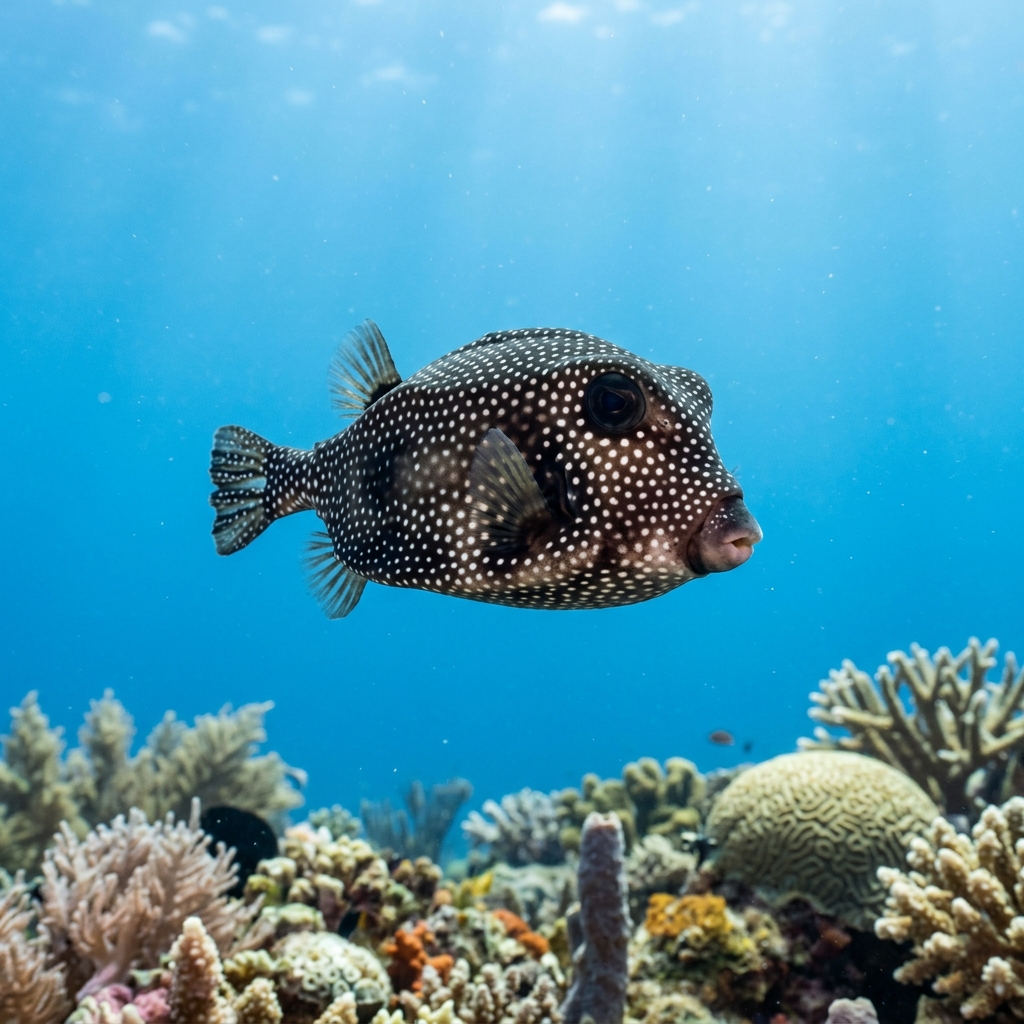
Ostracion meleagris
Honeycomb Cowfish
1,691 sites