Calappa hepatica
Smooth, boulder-shaped and mostly buried, box crabs turn up on sandy patches in the Andaman Islands and Okinawa year-round.
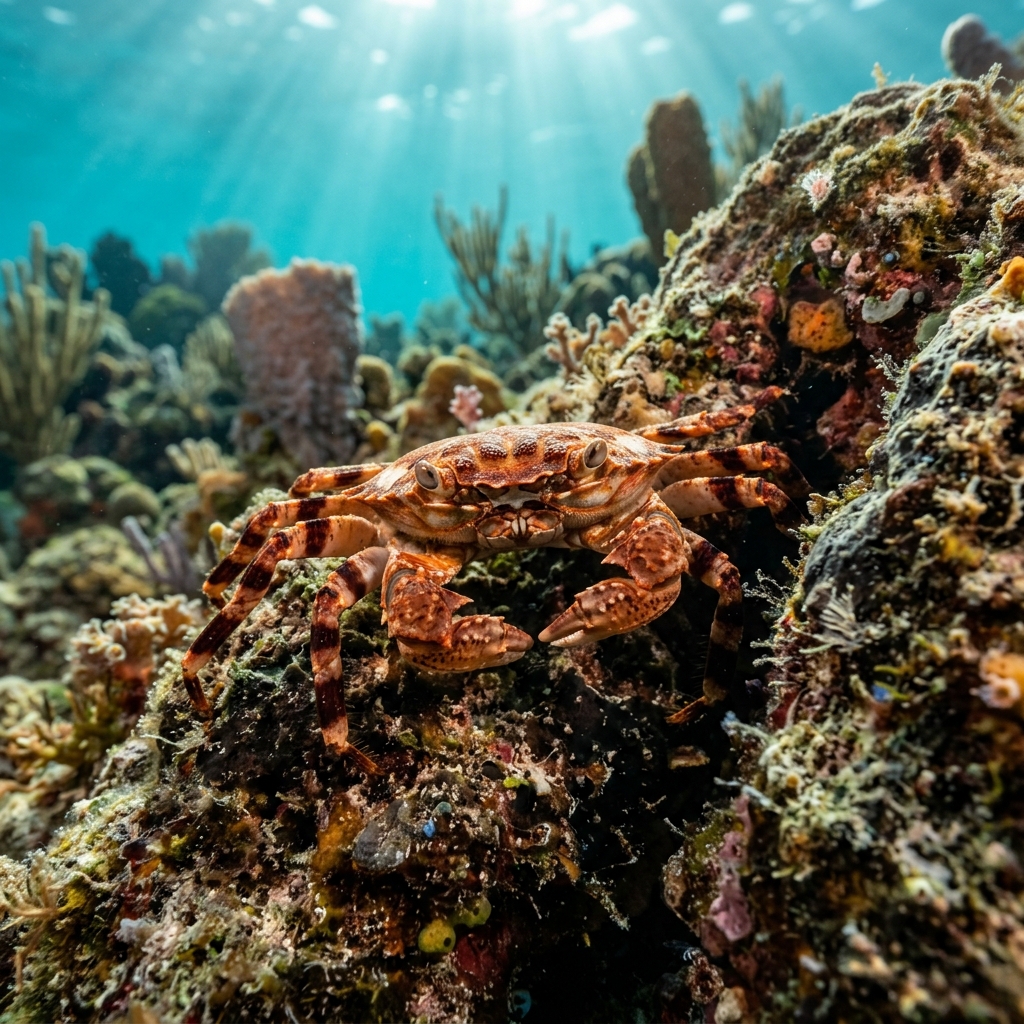
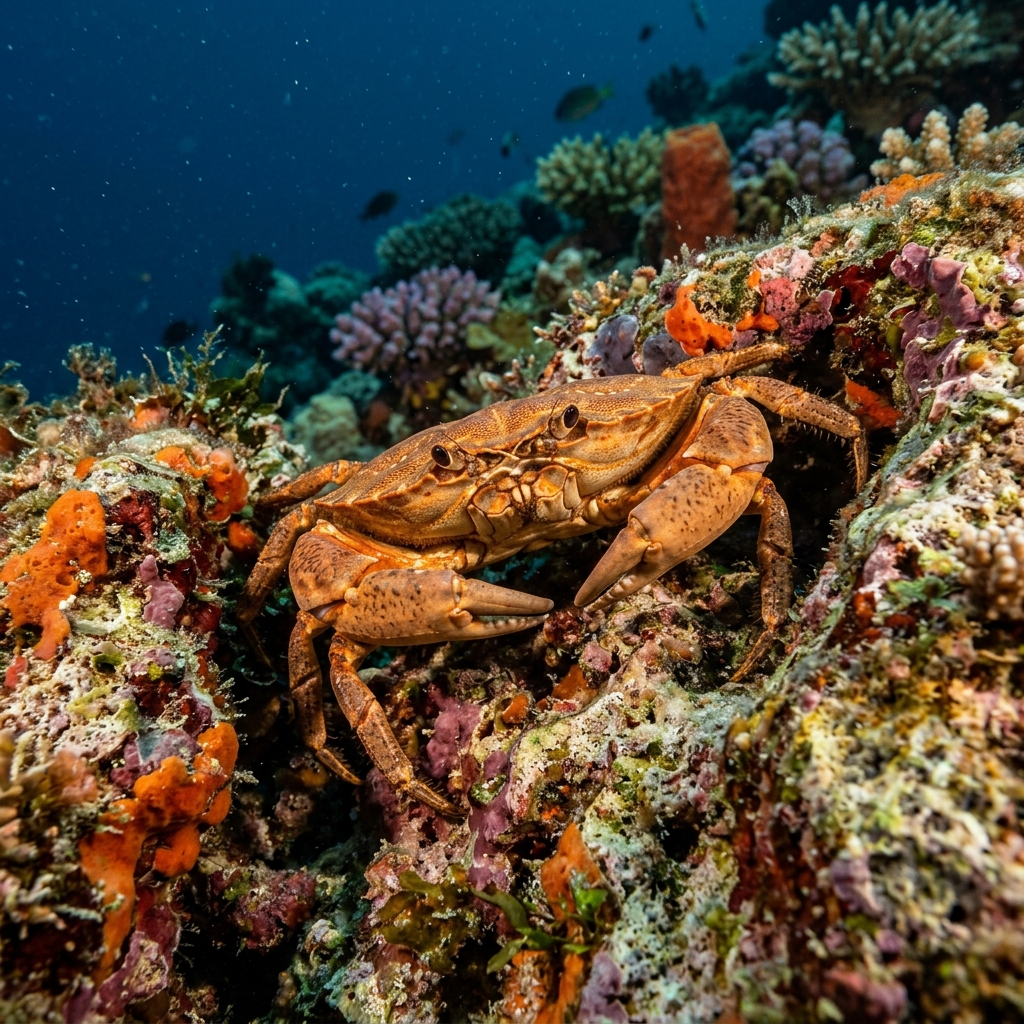
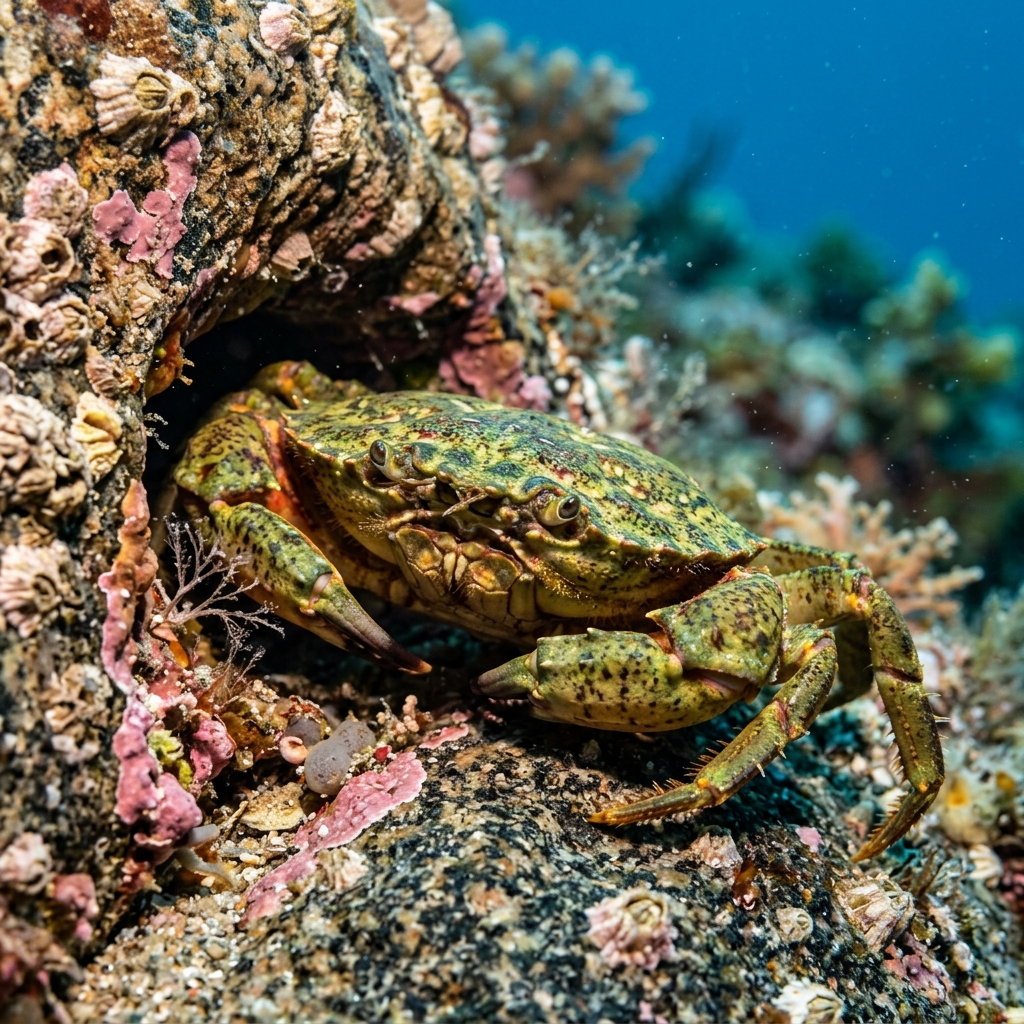
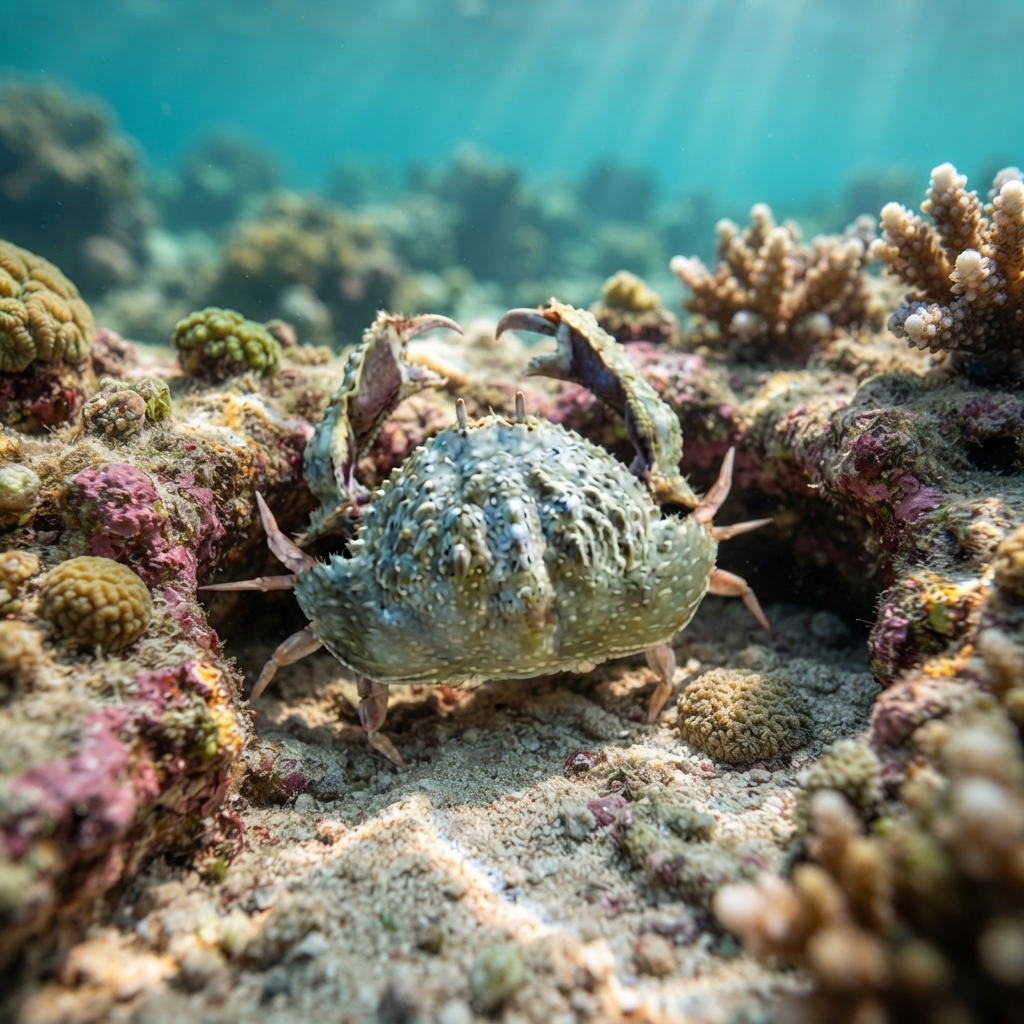
A rounded, smooth-shelled crab about 6 cm across, shaped more like a boulder or a shield than a typical crab, often with mottled cream, tan or reddish patterning that breaks up its outline against sand. Its claws are broad, flattened and held tucked flush against the front of its body like a shield, which is the giveaway feature versus other reef crabs. Most of the animal is buried, so divers usually see only a shell outline, a pair of eyes, or the claws exposed above the sand.
Spend most daylight hours buried in sand with just the eyes and edge of the shell showing, so divers spot them by scanning flat sandy stretches near reef edges rather than the reef structure itself. They are slow-moving and unbothered by divers, usually staying still or shuffling deeper into the sand rather than fleeing. Night dives on sand flats tend to turn up more active individuals out foraging.
Those flattened, shield-like claws are shaped specifically for cracking open snail and hermit crab shells, letting box crabs feed on prey that most reef predators cannot get into.
Sightings are spread through the year with no strong seasonal pattern, which fits its comfort range of roughly 23.5 to 29.5C, a band that holds steady on the tropical and subtropical reefs where it is found. Plan a dive around sandy patches or reef edges any month rather than a particular season.
Reef neighbours a diver could mistake it for. Use the identification notes above to tell them apart.
Most reliably logged on sandy dive sites in the Andaman Islands (India), with strong numbers also in Okinawa and the Ryukyu Islands of Japan and around Luzon in the Philippines. Mauritius, particularly Blue Bay, is another consistent spot, with occasional sightings further afield in New Caledonia, Queensland and Hawaii.
Mapping where Box Crab is logged…
Best logged in the Andaman Islands of India, Okinawa and the Ryukyu Islands in Japan, and around Luzon in the Philippines, with reliable sightings in Mauritius' Blue Bay too.
There is no clear season; sightings occur year-round on tropical reefs within its comfort range of about 23.5 to 29.5C, so any month works for a sandy-patch dive.
Look for a smooth, rounded shell about 6 cm across, mottled tan or cream, with broad flattened claws held tucked against the front like a shield. Most of the body is buried in sand, so often only the eyes and shell edge show.
They grow to around 6 cm across the shell, making them a small, easy-to-miss find on sandy dive sites.
No, box crabs pose no danger to divers. They are slow and defensive rather than aggressive, usually just burrowing deeper into the sand if disturbed.
Their broad, flattened claws work like shell-crushing tools, letting them break open snail and hermit crab shells that other reef predators cannot access.
Site and sighting data is aggregated from diver logs, iNaturalist and GBIF. For taxonomy and conservation status:
European Green Crab
2,469 sites