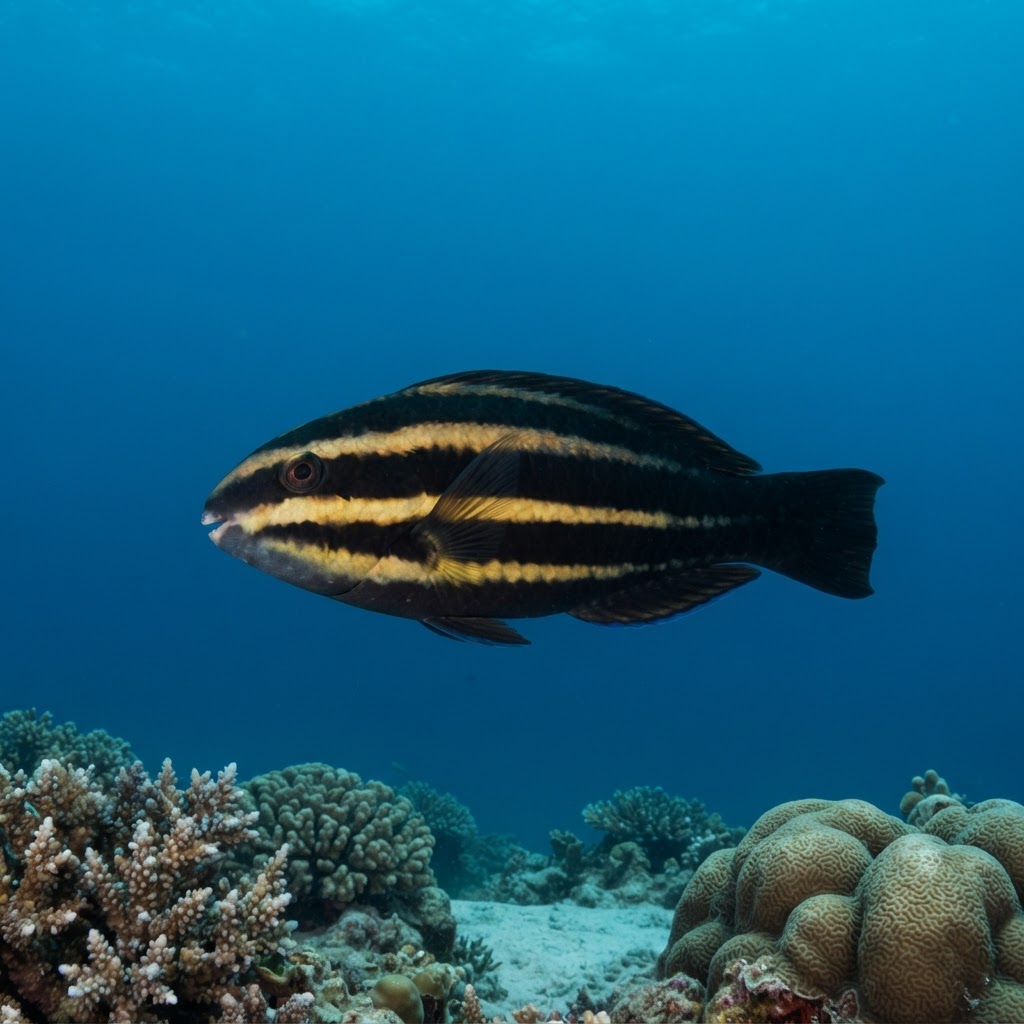
Chlorurus microrhinos
A big grey-green parrotfish with a steep bulging forehead, most reliably logged on reefs in Queensland and Raja Ampat in 25-29C water.
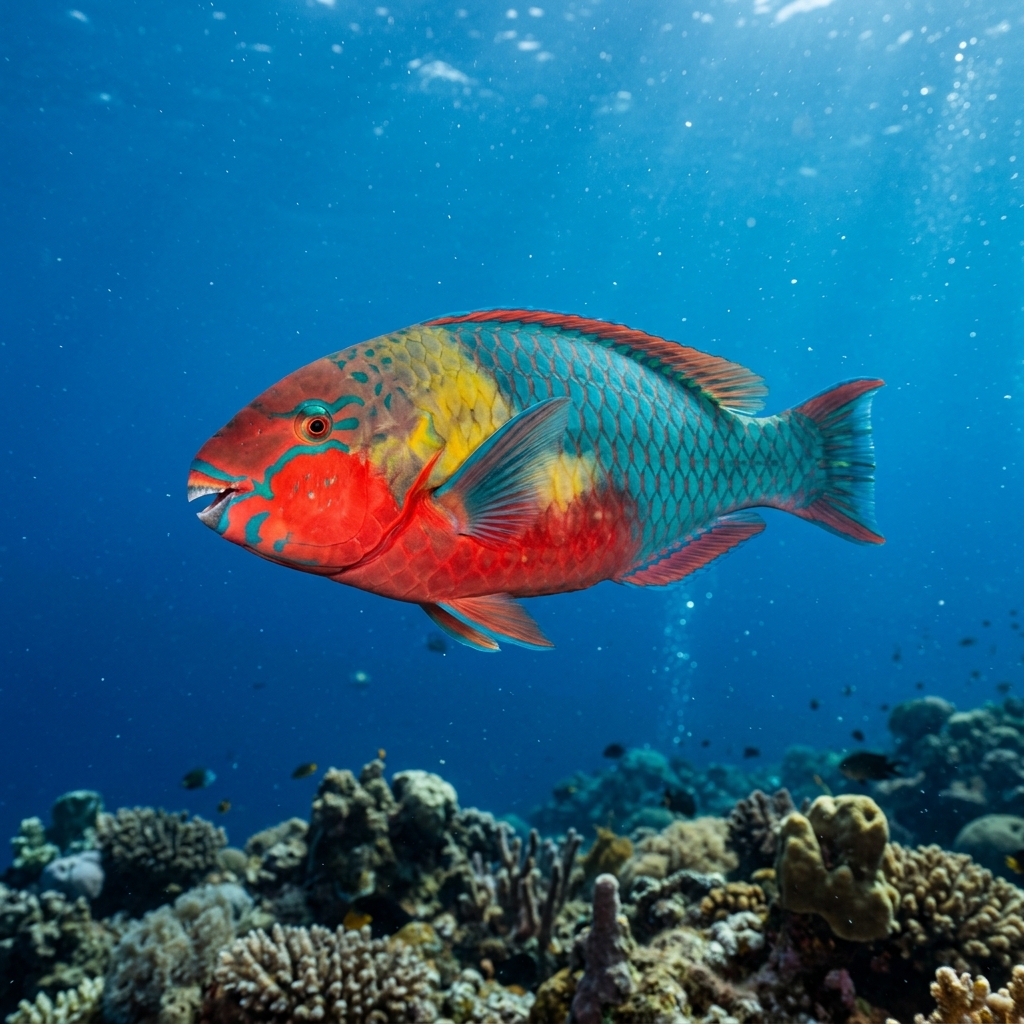
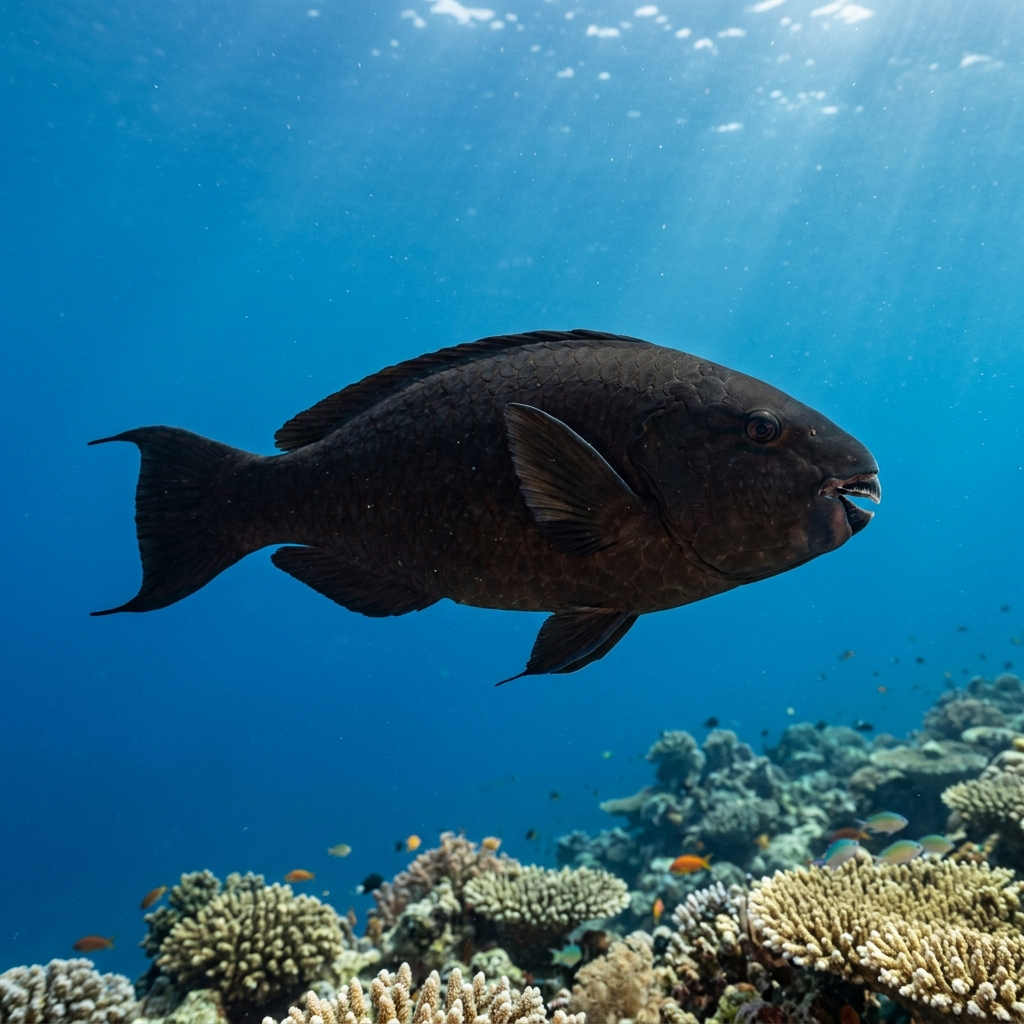
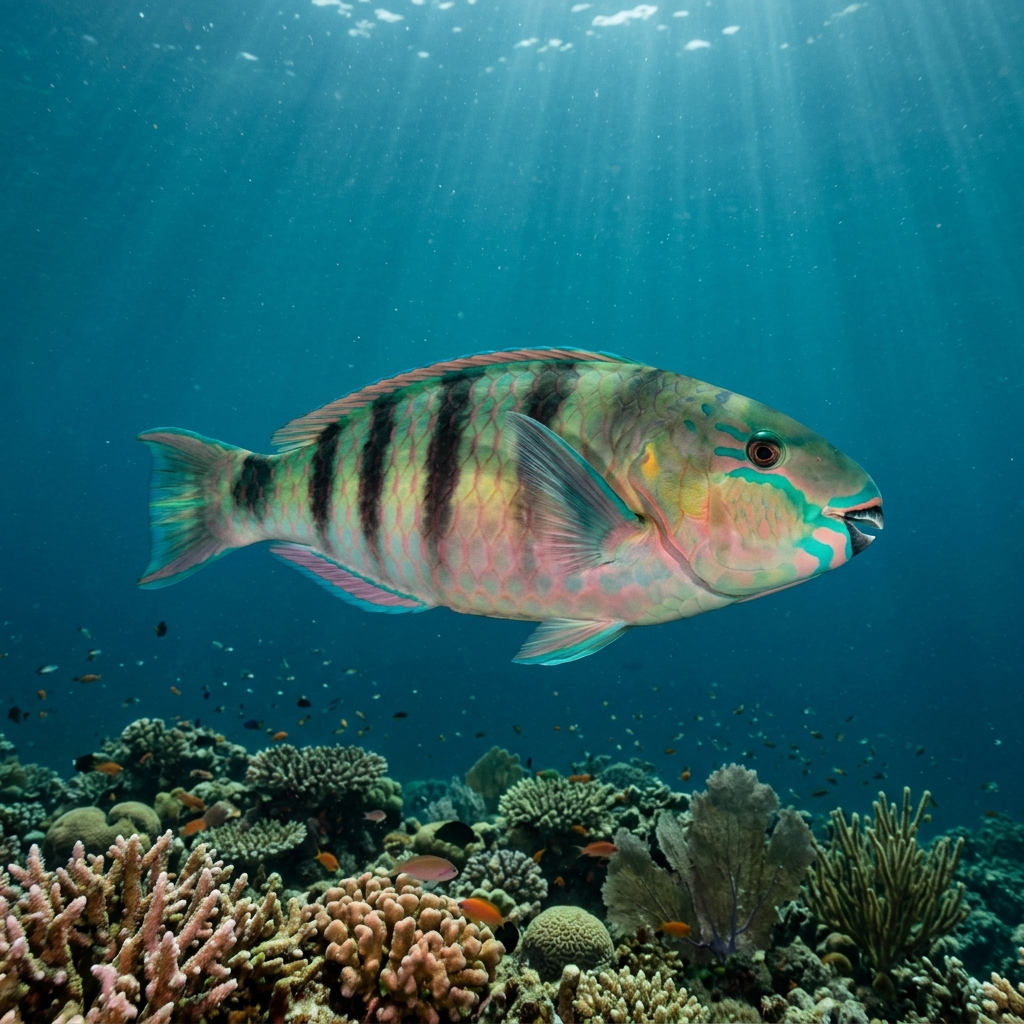
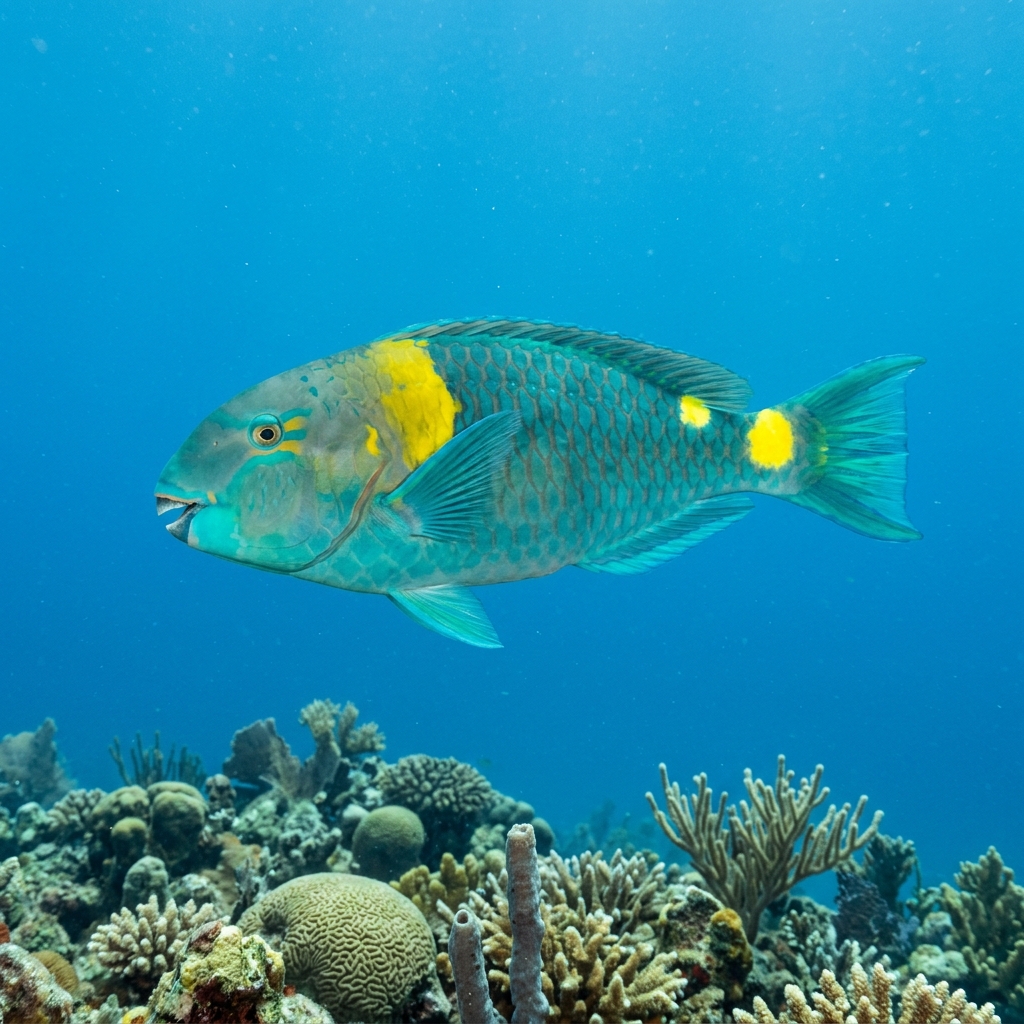
A heavy-bodied parrotfish reaching close to half a metre, with a grey-green to bluish body and a distinctly steep, bulging forehead that gives the species its name. Look for the fused, beak-like teeth typical of parrotfish and a blunt, almost vertical face profile that separates it from the sloped-head parrotfish species sharing the same reefs. Older males often show a slightly brighter blue-green cast and a more pronounced forehead hump than females.
Usually spotted grazing along reef slopes and bommies, rasping algae off dead coral with that fused beak, often in small loose groups rather than alone. Divers generally rate it uncommon to common at most sites, though a handful of locations report it as very common, suggesting patchy but sometimes dense local populations. It tends to keep a working distance from divers but does not bolt, making steady, unhurried grazing passes the norm.
Like other large parrotfish, its grazing wears away dead coral and algae, and the sand it excretes afterwards is a real contributor to reef sediment over time.
No clear seasonal pattern shows up in the data, so this is a year-round sighting on tropical reefs. Water in its comfort range runs from about 25 to 29 C, which covers most of these dive regions all year.
Most consistently logged on the Great Barrier Reef in Queensland, Australia, with strong numbers also across Raja Ampat and Sulawesi in Indonesia. Other reliable spots include the Tuamotu Islands in French Polynesia, the Rock Islands of Palau, Nouméa in New Caledonia, Palawan in the Philippines and Taveuni in Fiji.
Mapping where Blunt-head Parrotfish is logged…
Best known from the Great Barrier Reef in Queensland, Australia, plus Raja Ampat and Sulawesi in Indonesia. Also logged regularly in the Tuamotu Islands of French Polynesia, Palau's Rock Islands, New Caledonia, the Philippines and Fiji.
There is no strong seasonal pattern in sightings, so any time of year works. It sits comfortably in water from about 25 to 29 C, which is the norm on these reefs year-round.
Look for a grey-green to blue-tinted body around half a metre long with a steep, bulging forehead and fused beak-like teeth. It typically grazes reef slopes in small loose groups rather than swimming alone in open water.
They typically reach around 49 cm, making them one of the larger reef parrotfish a diver is likely to run into on a typical dive.
No. They are not considered dangerous to divers and go about grazing on the reef without paying divers much attention.
Their fused beak-like teeth let them rasp dead coral and algae off the reef, and the sand produced from this grazing is a real source of reef sediment over time.
Site and sighting data is aggregated from diver logs, iNaturalist and GBIF. For taxonomy and conservation status:
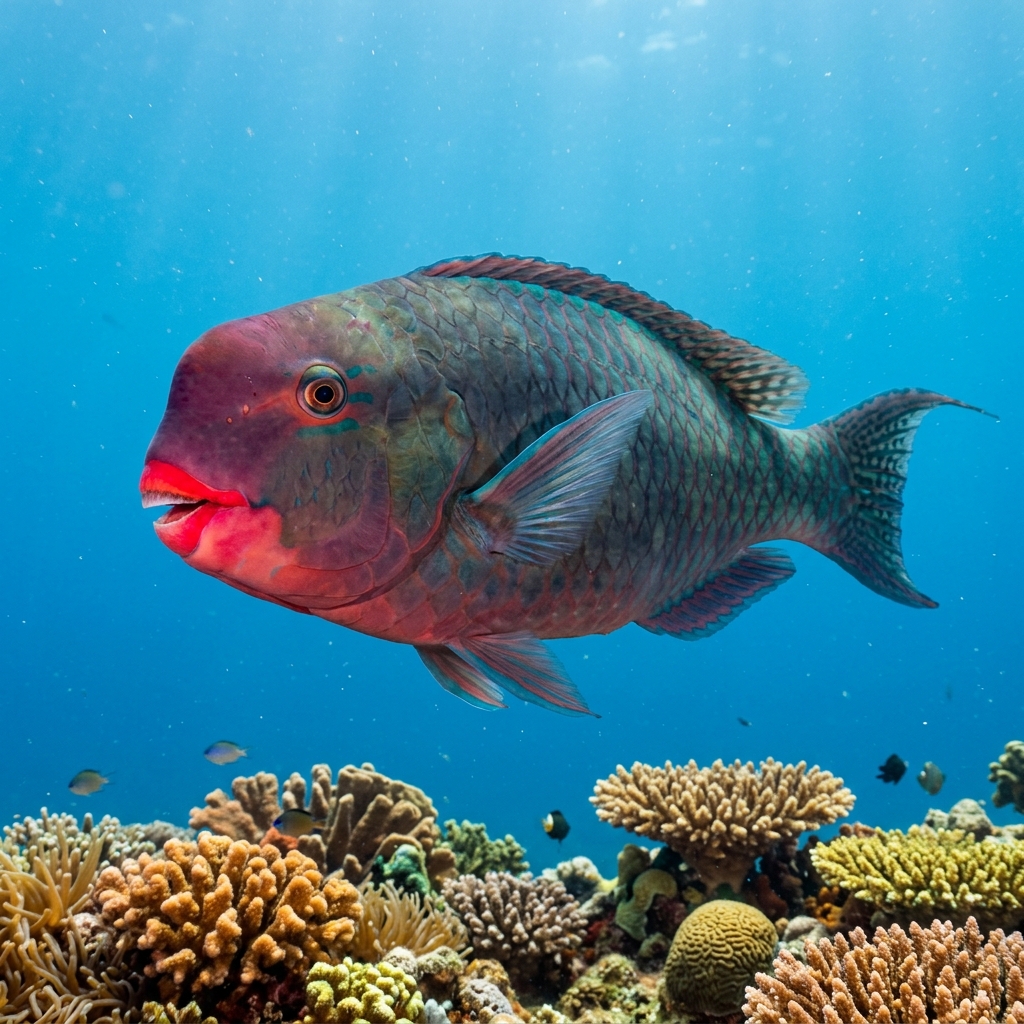
Redlip Parrotfish
2,789 sites