Ostracion cyanurus
A small, boxy reef dweller most reliably found in South Sinai and Marsa Alam, present on Red Sea reefs year-round in warm, stable water.
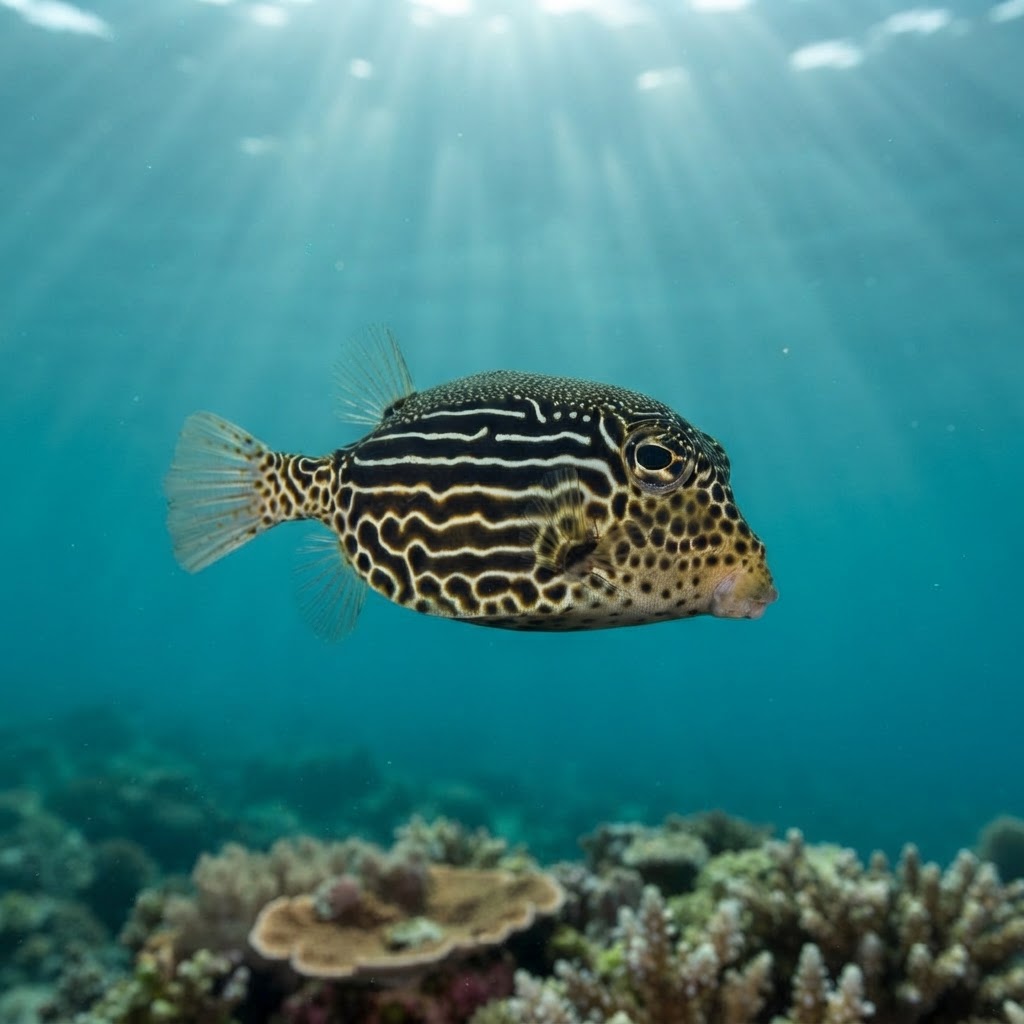
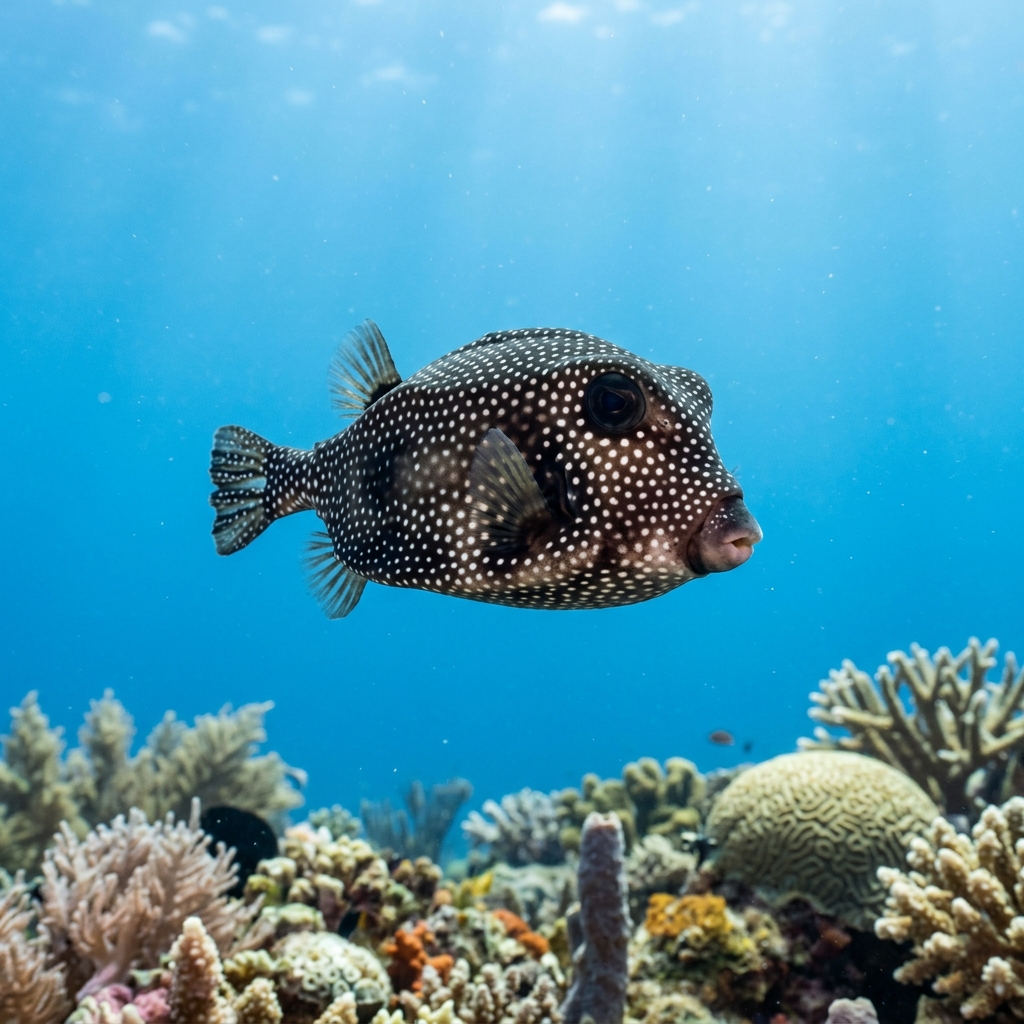
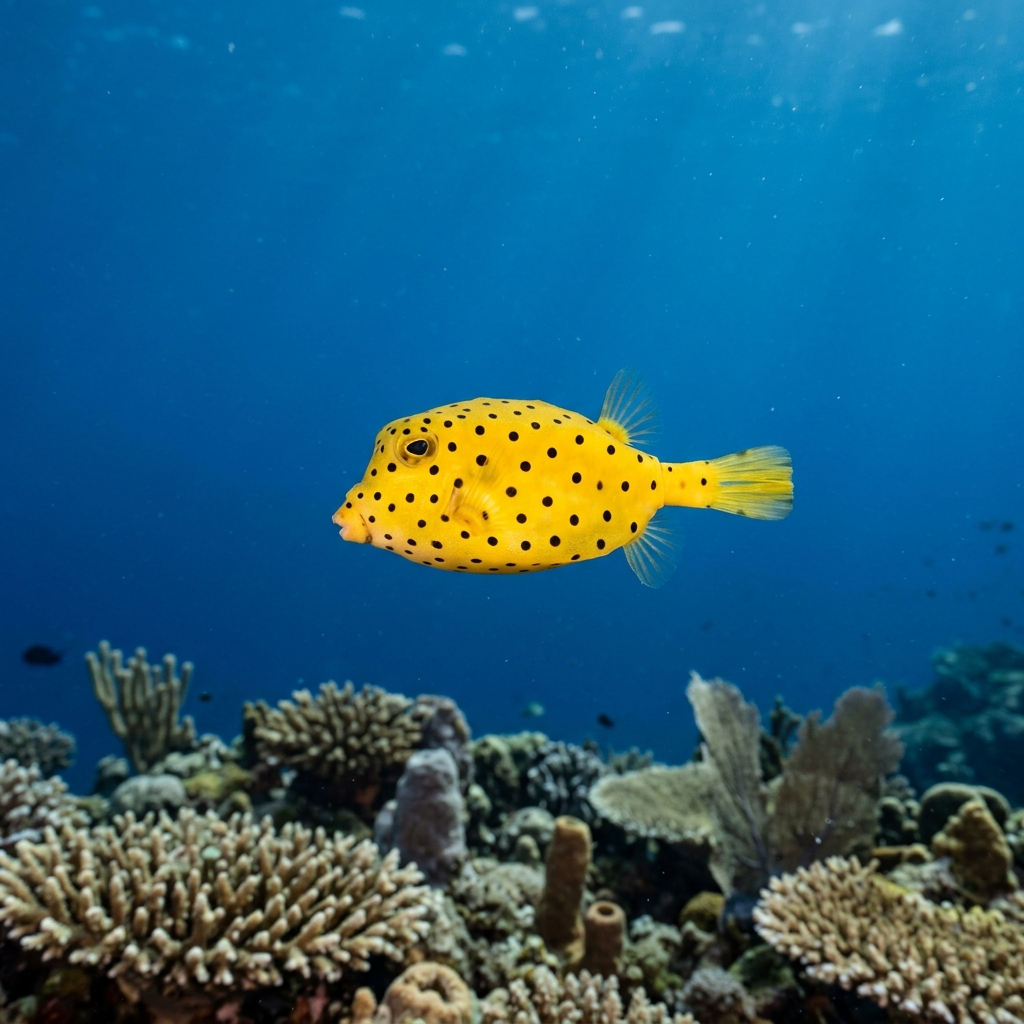
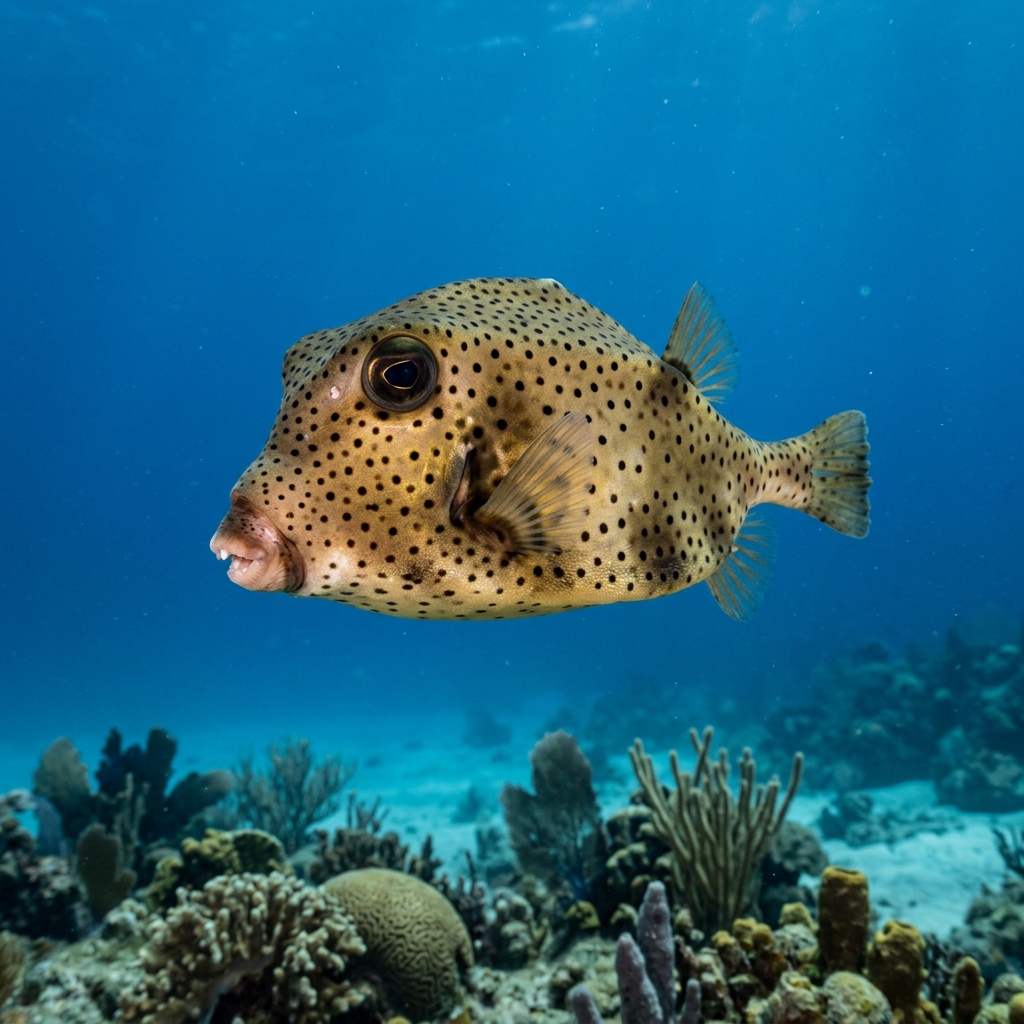
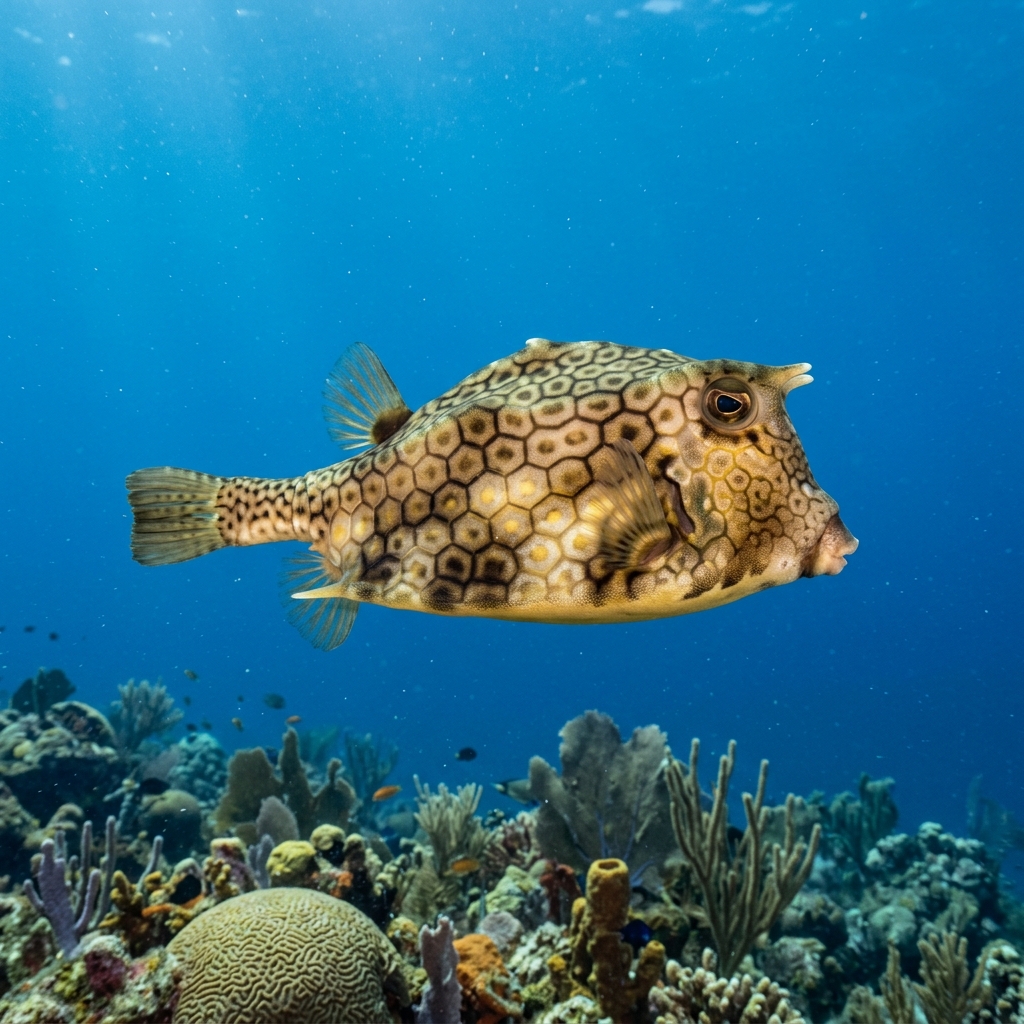
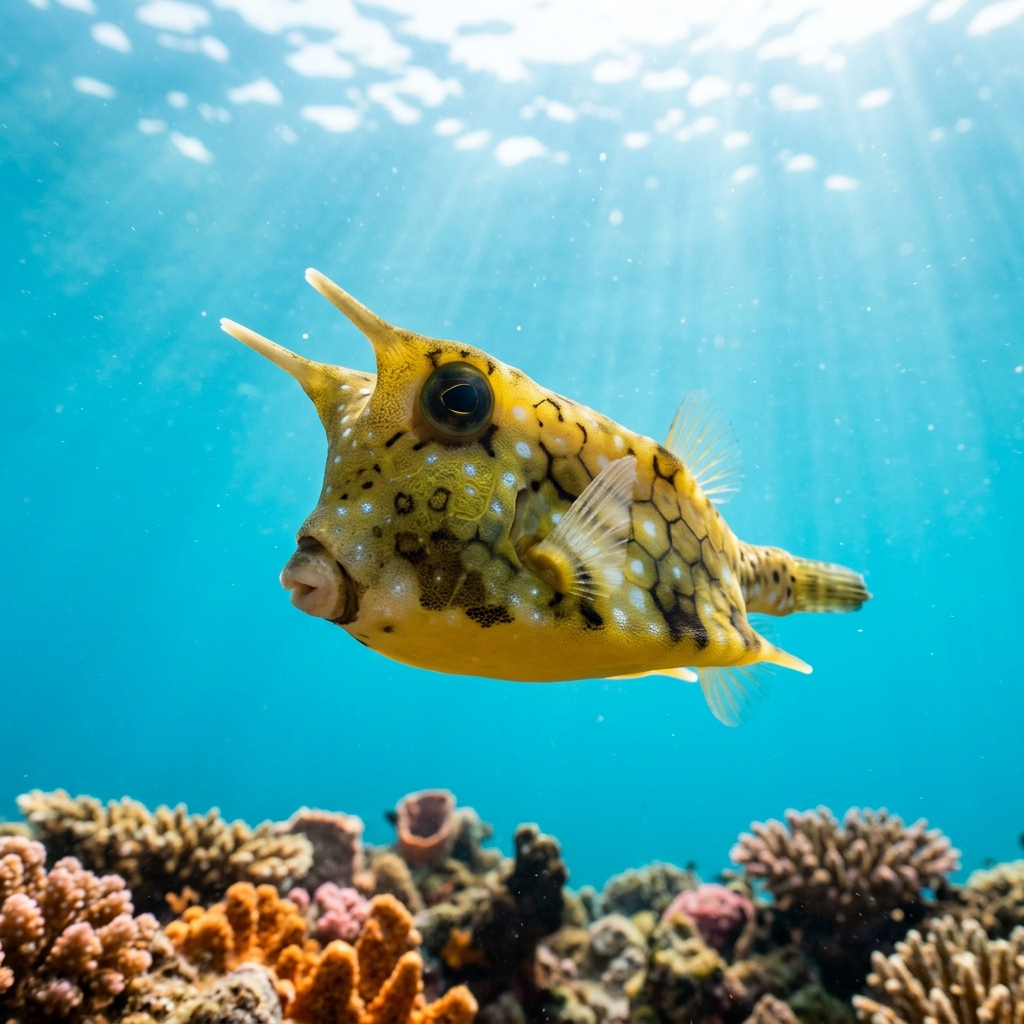
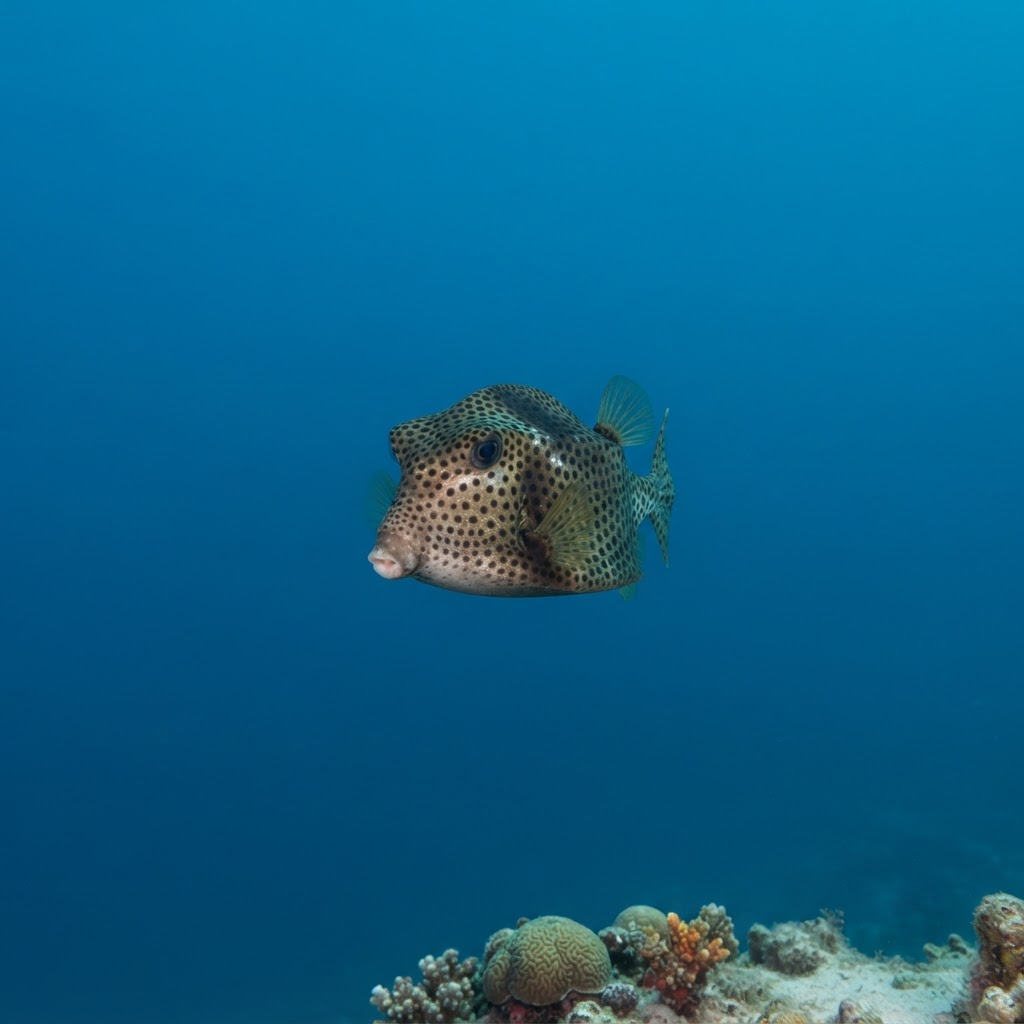
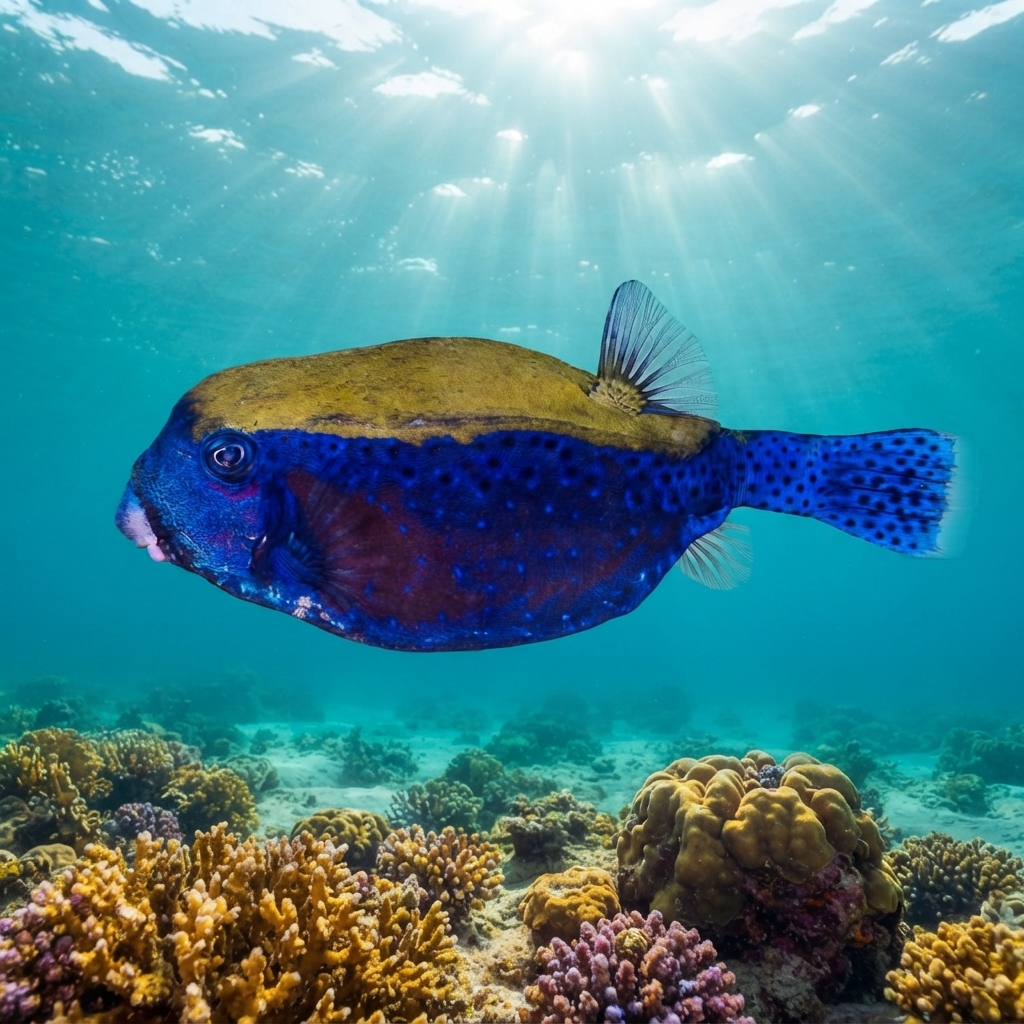
Look for a small, rigid, box-shaped body about 10 cm long, angular rather than streamlined, with a bluish cast to the tail and flanks that gives the species its name. The skin is covered in a honeycomb-like pattern of small pale spots over a darker base colour, and the fish tends to hover with slow, almost mechanical fin movements rather than swimming in a straight line. Its fused, armour-like scales give it a stiff, geometric outline that is hard to mistake once you notice it.
Divers most often find it tucked close to the reef structure, hovering near coral heads, sponges or rubble rather than out in open water. It is not a fast or flighty fish, drifting along with slow pectoral fin beats and often letting a diver get reasonably close before easing away into a crevice. Most logs describe it as an uncommon but steady find rather than something that swarms or schools.
Like other boxfish, it can release a toxin called ostracitoxin from its skin when stressed, a chemical defence that helps compensate for a body too rigid and slow to outswim most predators.
Sightings show no strong seasonal pattern, so it is best treated as a year-round find. Observed water temperatures range from about 24.7 to 29.3 C, comfortable across most of the diving calendar in the Red Sea and Gulf of Oman, so timing your trip around good visibility and conditions matters more than chasing a season.
Reef neighbours a diver could mistake it for. Use the identification notes above to tell them apart.
This is very much a Red Sea and Arabian Sea fish, most commonly logged in Egypt, particularly South Sinai and Marsa Alam & the Deep South, with a strong showing along the Red Sea Riviera further north. It also turns up reliably in Oman around the Daymaniyat Islands and Muscat, and shows up in smaller but consistent numbers in Jordan's Aqaba, the UAE's East Coast, and Eilat in Israel.
Mapping where Bluetail Trunkfish is logged…
The most consistent sightings come from Egypt's Red Sea, especially South Sinai and Marsa Alam & the Deep South, with further reliable finds around Oman's Daymaniyat Islands and Muscat, and smaller populations in Jordan's Aqaba and Eilat, Israel.
There is no strong seasonal pattern in the sighting data, so it can be found on Red Sea and Arabian Sea reefs throughout the year, in water typically between about 25 and 29 C.
Check for a small, boxy body around 10 cm long with fused, rigid scales, a bluish tail and flanks, and a honeycomb pattern of pale spots over a darker background. It moves slowly and stiffly rather than darting, usually staying close to reef structure.
They stay small, typically reaching around 10 cm in length, making them one of the more compact members of the boxfish family found on Red Sea and Arabian Sea reefs.
Rather than relying on speed, they can secrete a toxin called ostracitoxin from their skin when threatened, a chemical deterrent that suits their slow, armoured, box-shaped body.
Site and sighting data is aggregated from diver logs, iNaturalist and GBIF. For taxonomy and conservation status:
Honeycomb Cowfish
2,079 sites