Plagiotremus rhinorhynchos
Electric-blue stripe, sneaky bite: find this mimic blenny on reefs in Raja Ampat, Zanzibar and the Maldives year-round.
Safety warning
Its bite comes from venom-grooved fangs and can cause a sharp, brief sting if it nips a diver, usually on exposed skin like hands or ears. It is not a serious medical risk, but avoid letting one approach too closely, and resist the urge to touch or provoke it if it hovers near your mask.
If you're bitten
Venomous bite (mild)General first-aid guidance, not a substitute for professional medical care. In an emergency, call your local emergency number.
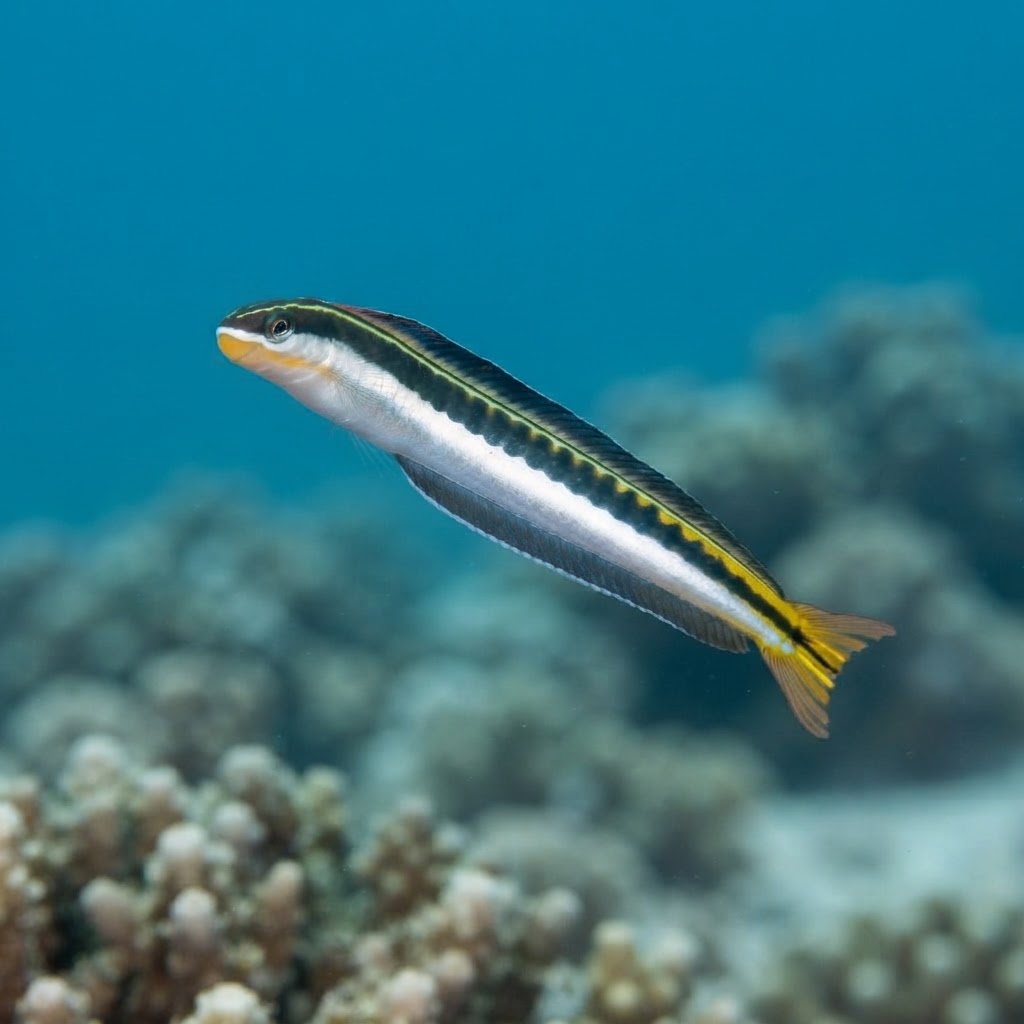
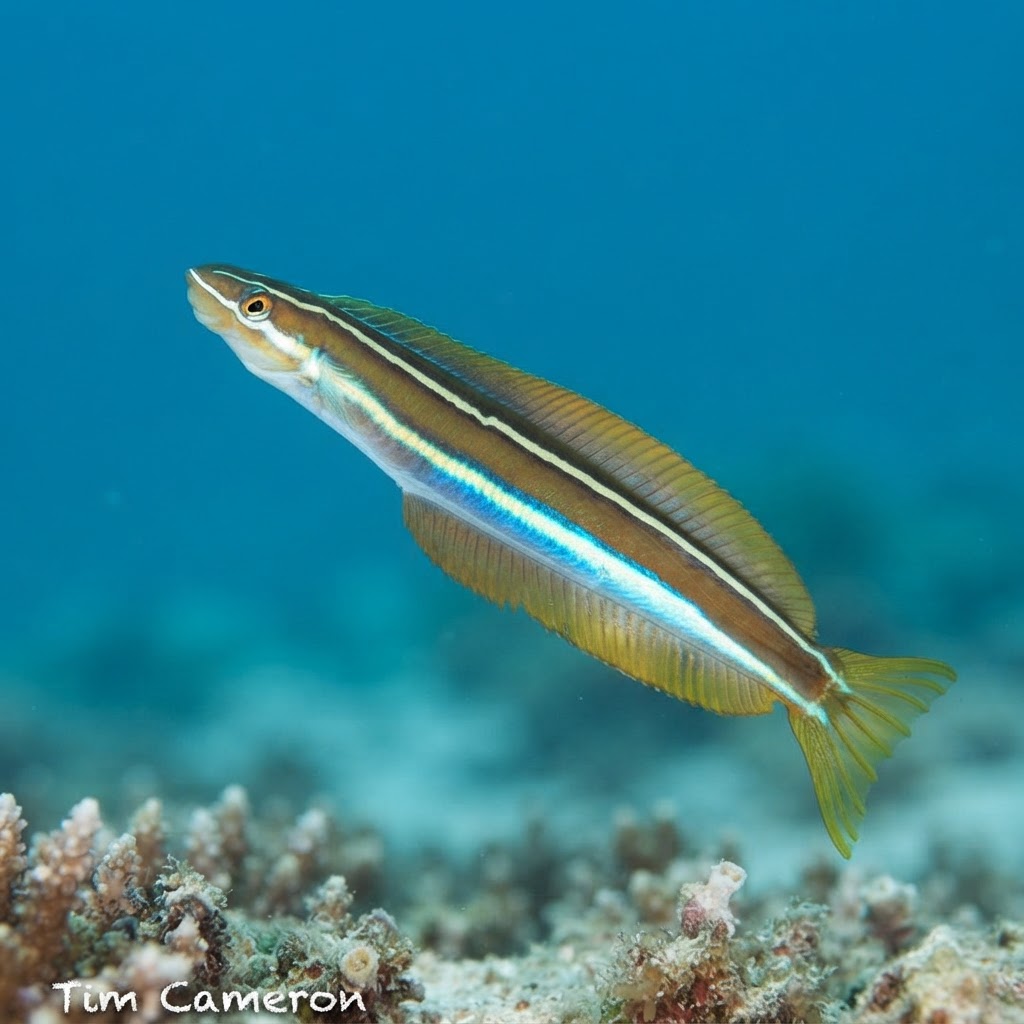
Slim, elongated body about 8 cm long with a pointed snout and a wavy electric-blue stripe running from nose to tail against a black or dark blue body. The tail often shows a bright yellow or orange wash, and its swimming style is a distinctive undulating dart rather than a steady cruise. It can also shift from dark blue to a yellow morph that mimics cleaner wrasse, so colour alone is not always reliable.
Spends most of its time hovering low over coral heads and rubble, darting out to nip at passing fish or investigate divers before retreating into a crevice. It is bold for its size and will sometimes approach divers closely, mistaken at a glance for a harmless cleaner wrasse before it reveals its actual intent with a quick nip. Most active during the day, tucking into a burrow or old worm hole at night and when threatened.
It mimics the appearance and swimming pattern of cleaner wrasse to get close to other fish, then uses that disguise to dart in and bite scales or flesh rather than clean parasites.
Sightings run year-round with no detected seasonal pattern, matching its comfort range of roughly 24.6 to 28.9 C on warm tropical reefs. Any month works at its core sites, though it stays an uncommon find rather than a guaranteed one.
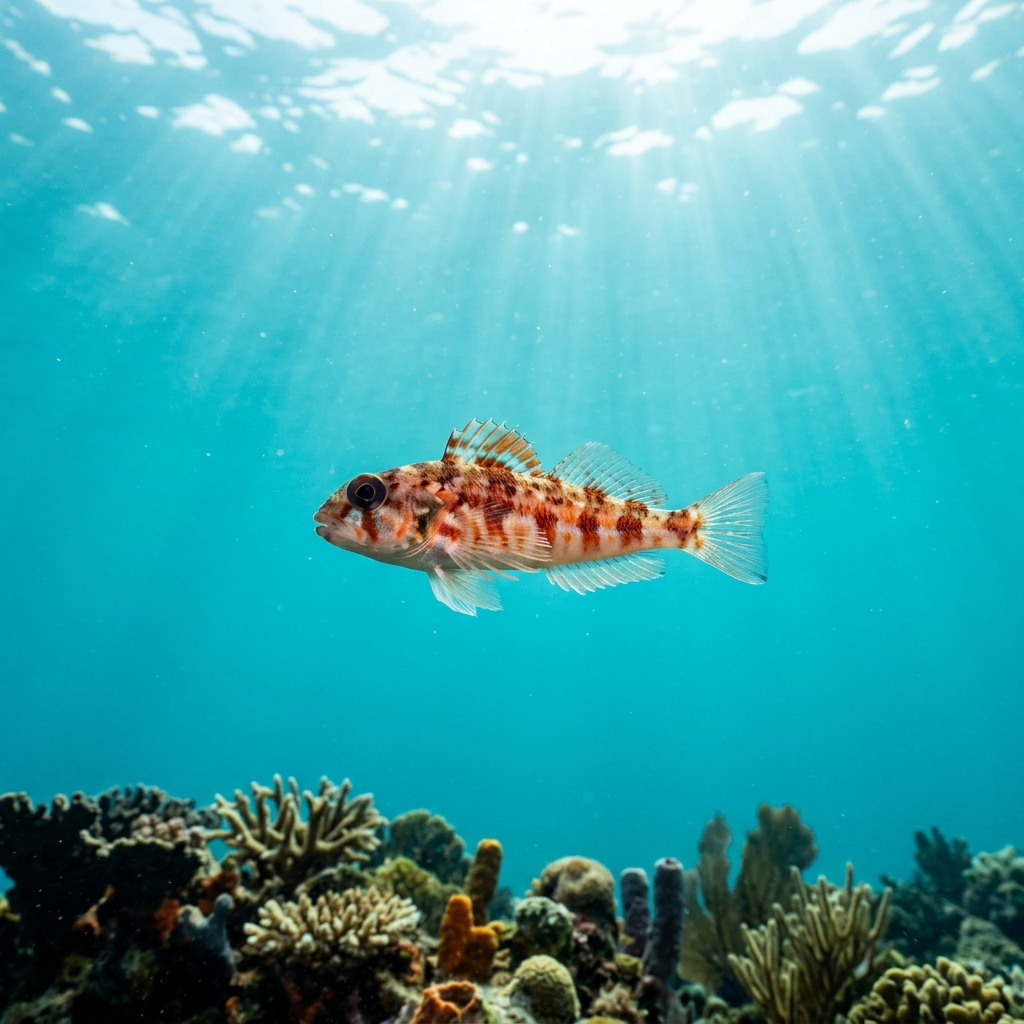
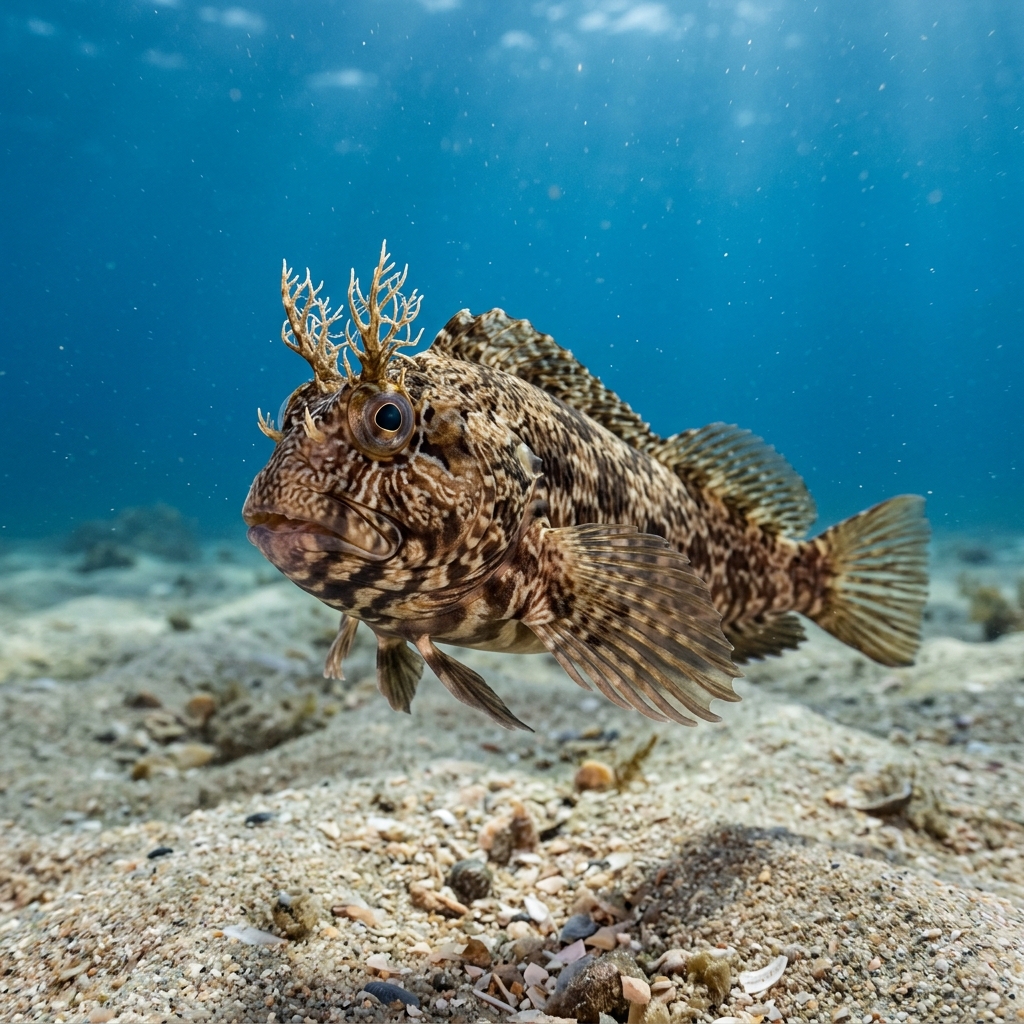
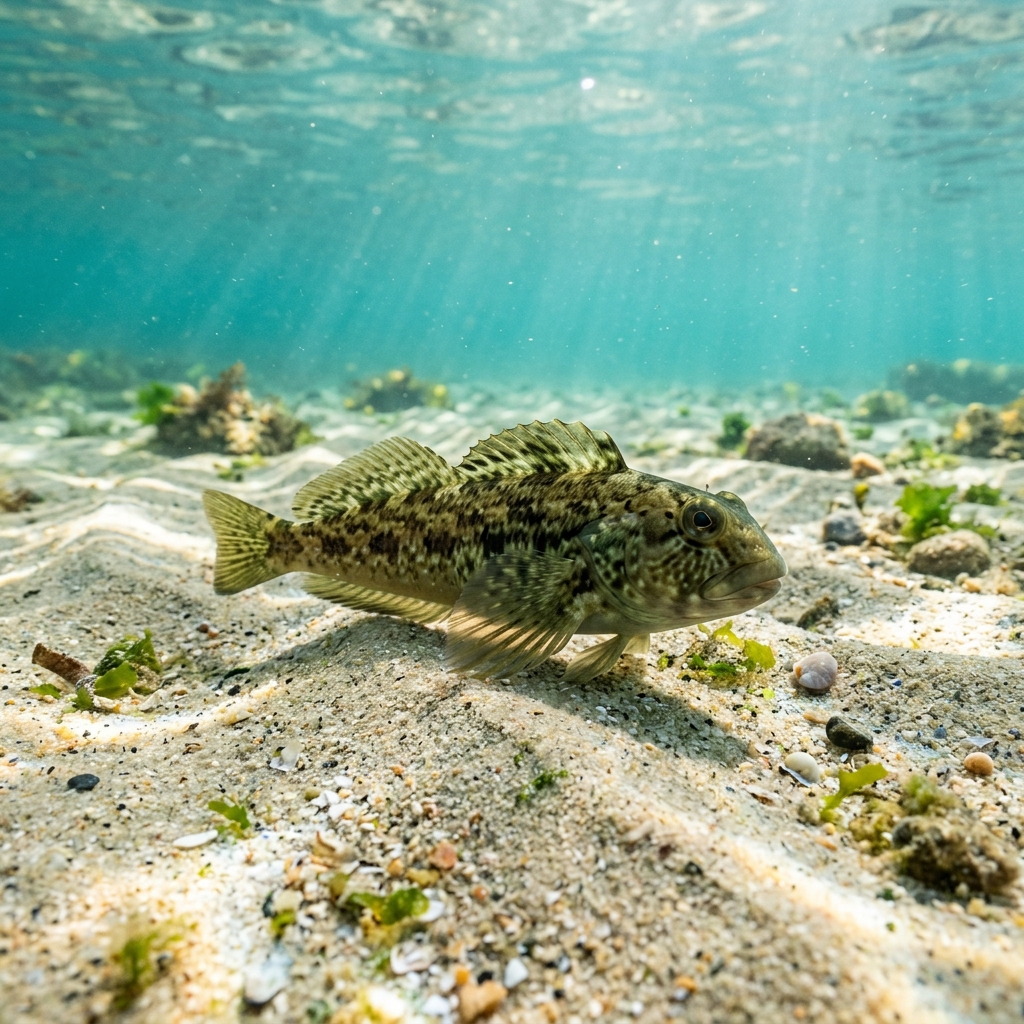
Reef neighbours a diver could mistake it for. Use the identification notes above to tell them apart.
Most reliably logged in Indonesia, especially Raja Ampat, and a strong presence in Tanzania around Zanzibar. Also a regular find in the Maldives' Central Atolls, Western Australia, and across the Philippine Visayas and Luzon, with additional sightings in New Caledonia, Timor-Leste and Mozambique.
Mapping where Bluestriped Fangblenny is logged…
Best chances are in Indonesia's Raja Ampat and Tanzania's Zanzibar region, plus the Maldives' Central Atolls, Western Australia and the Philippine Visayas.
There's no strong season for this one. It's found year-round on warm reefs between about 24.6 and 28.9 C, so any month at a known site works.
They can deliver a quick venomous nip if they get close enough, though it's a minor sting rather than a serious hazard. Keep a respectful distance and don't let one linger near bare skin.
Look for a slender 8 cm fish with a wavy blue stripe along a dark body and a yellow-tinged tail, darting in short bursts near coral rubble rather than cruising steadily.
They max out around 8 cm, making them one of the smaller fish you'll spot on a reef, but their bold behaviour makes them easy to notice despite the size.
It mimics cleaner wrasse in colour and swimming style to slip close to other fish, then bites them instead of cleaning parasites, a clever bit of underwater deception.
Site and sighting data is aggregated from diver logs, iNaturalist and GBIF. For taxonomy and conservation status:
Rusty Blenny
2,605 sites