Doryrhamphus excisus
Tiny reddish pipefish with an electric blue stripe, most reliably found in the reef crevices of Mafia Island, Tanzania.
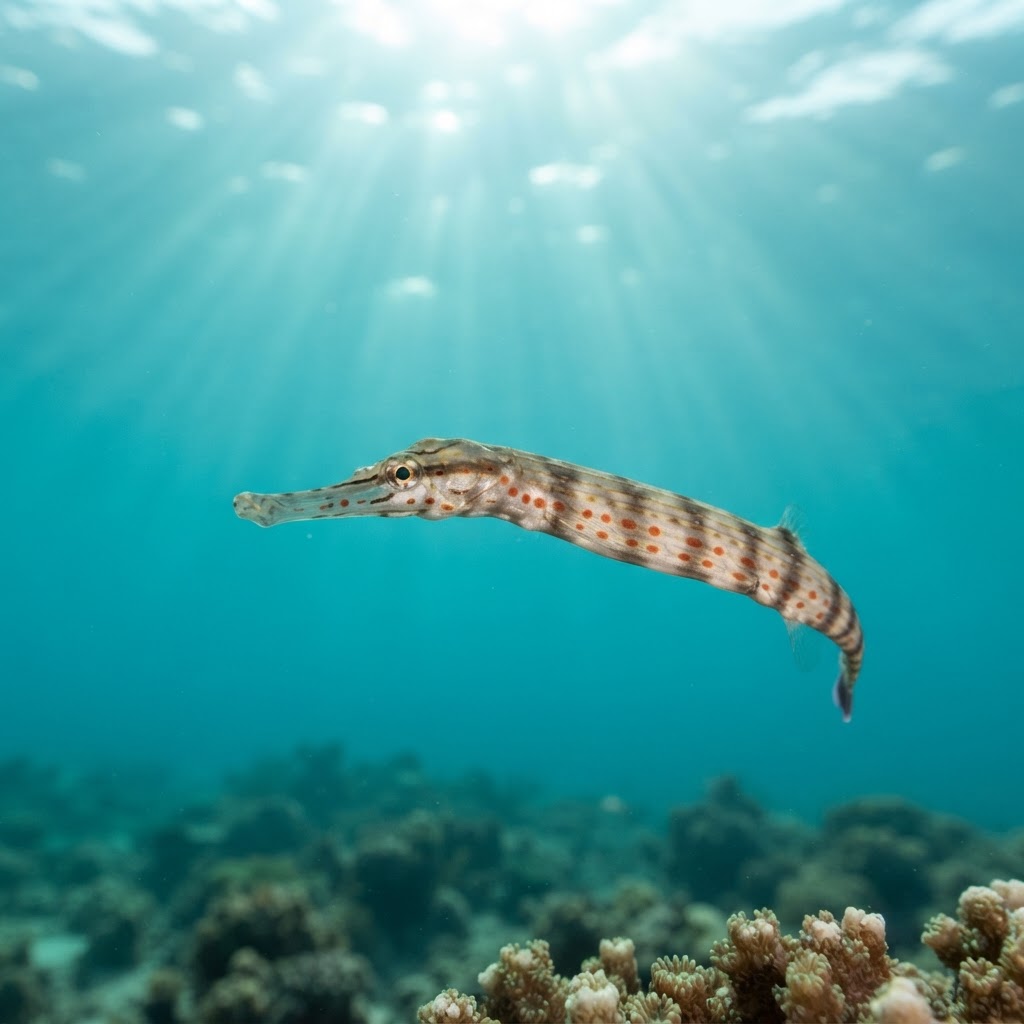
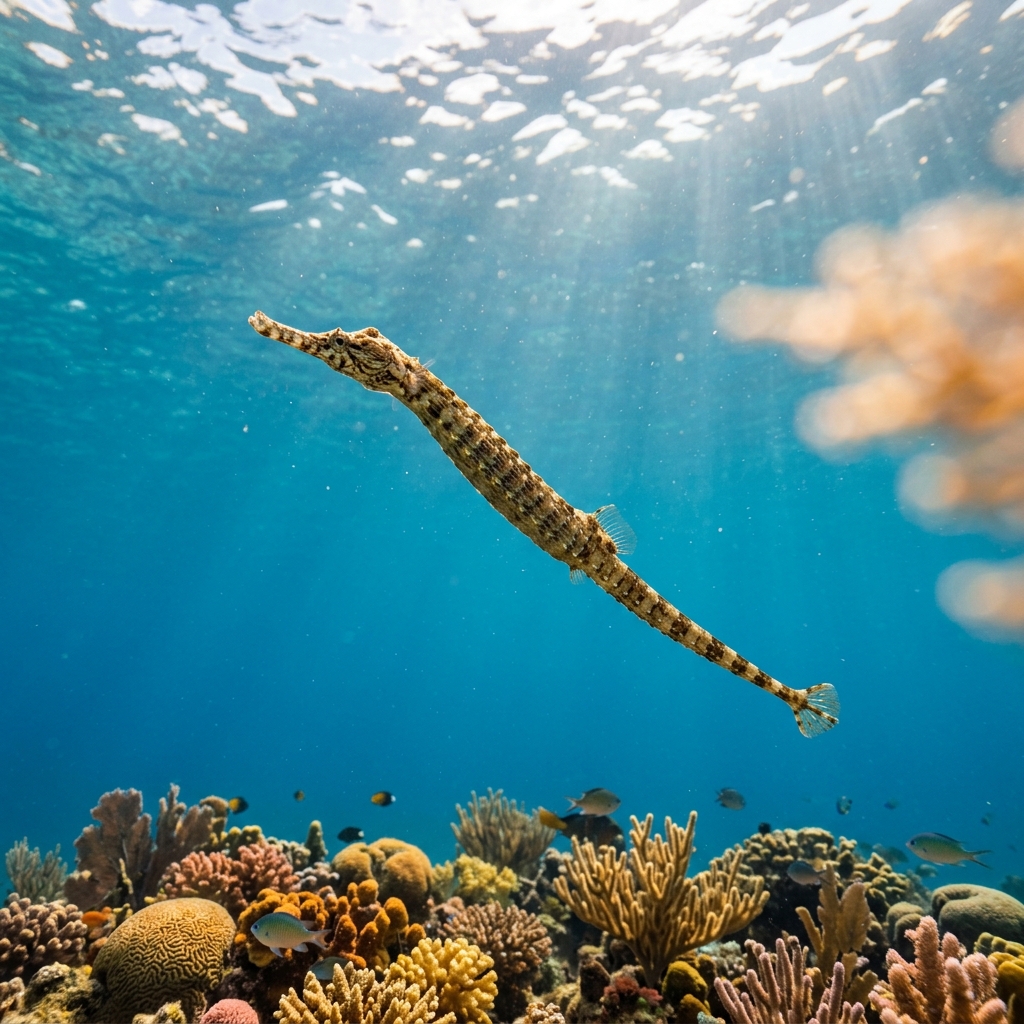
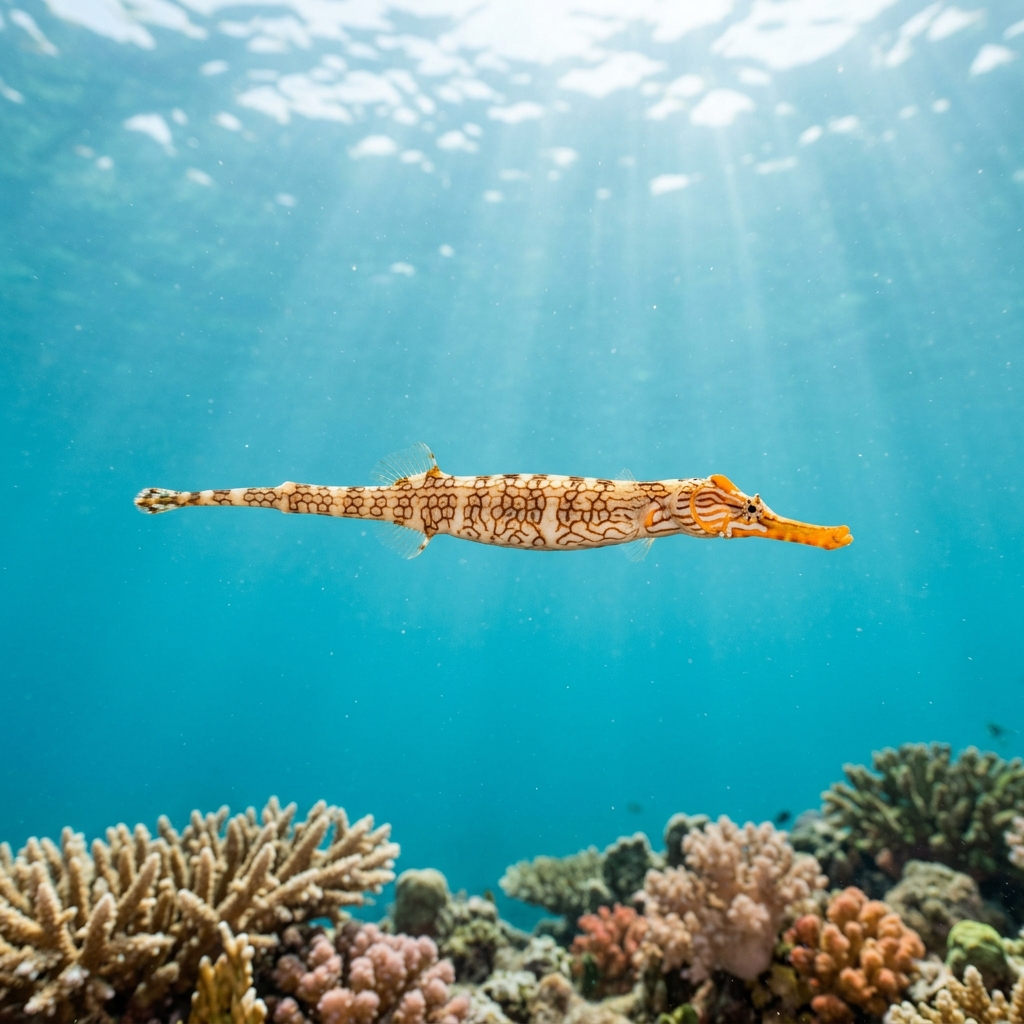
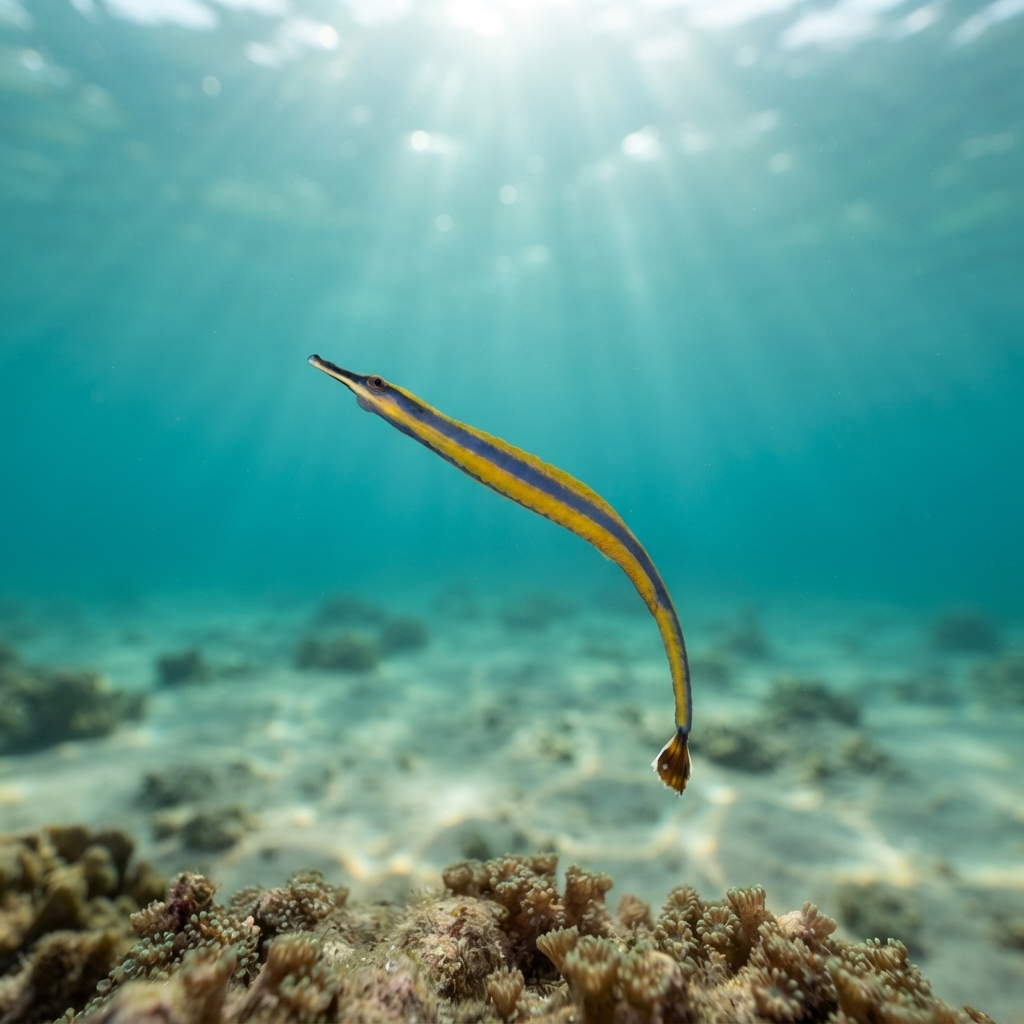
Barely 5 cm long, with a slender rust-orange to reddish body running into a straight, thin snout typical of pipefish. A bright electric-blue stripe runs the length of the body from head to tail, which is the single mark that gives it away against the reef. It hovers rather than swims in a straight line, holding a slightly curved posture near the substrate rather than lying flat.
Look for it tucked into crevices, under ledges, or hovering close to coral rubble rather than out in the open water column. It tends to stay put or dart only a short distance when a diver approaches, so a slow, patient look with a torch into holes and overhangs is the best way to spot one. Divers log it as uncommon even at its known sites, so finding one usually takes a deliberate search rather than a chance encounter.
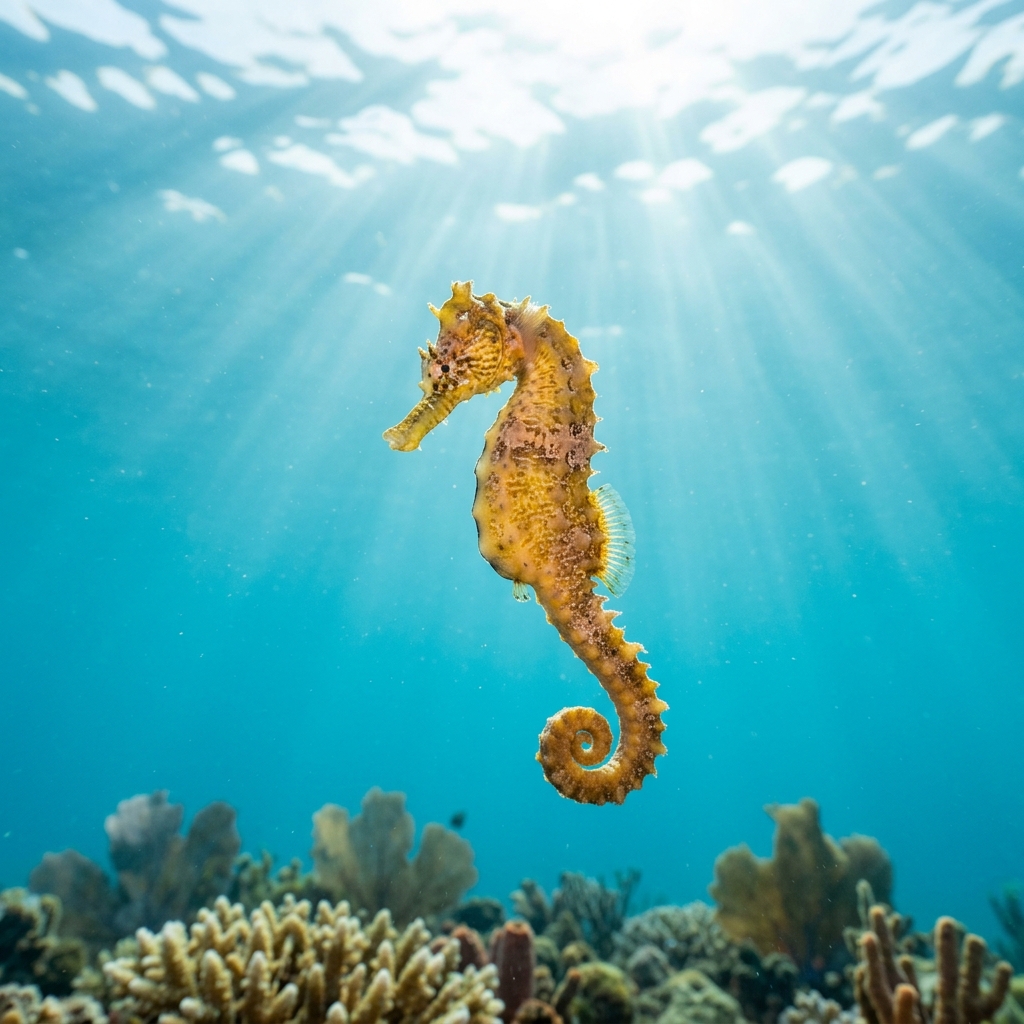
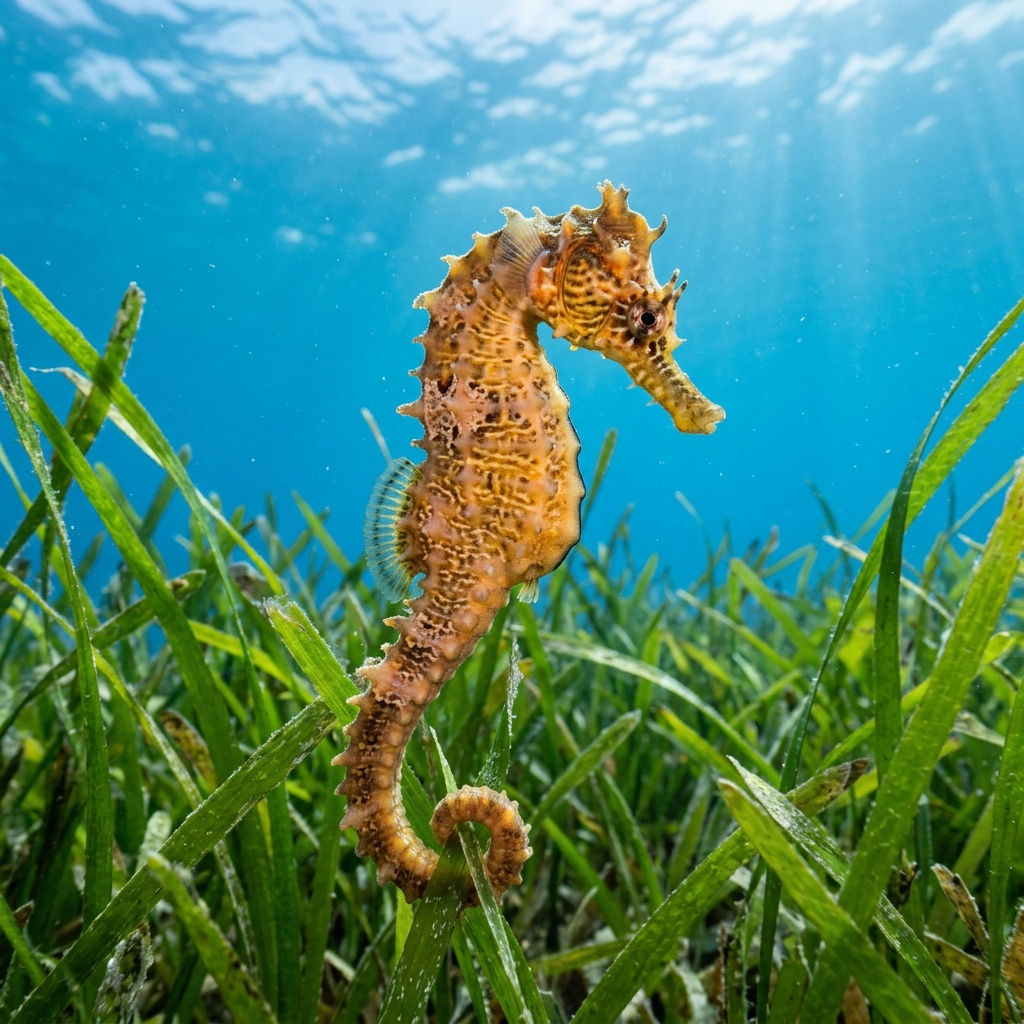
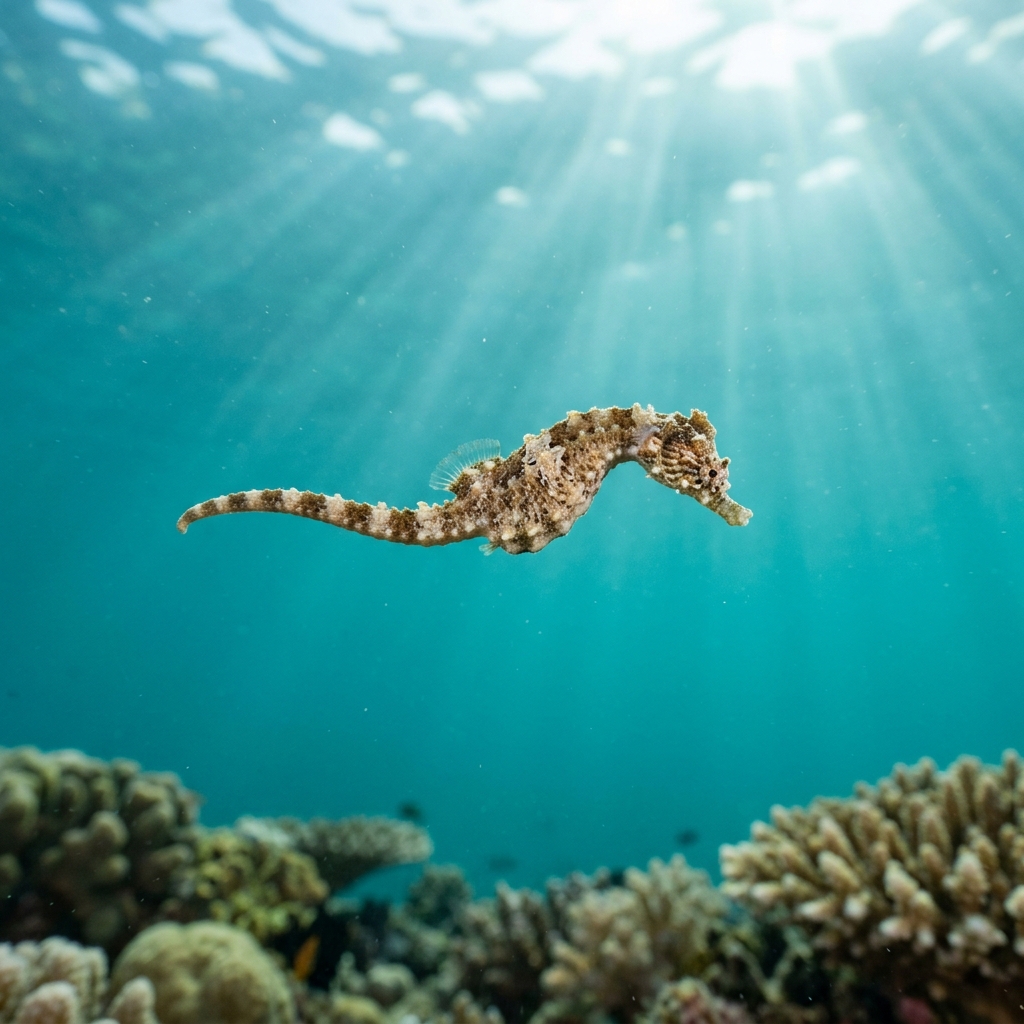
Like other pipefish, it's a close relative of seahorses and shares their odd reproductive twist: males carry the developing eggs, in this case in a pouch under the tail rather than the belly.
Sightings show no clear seasonal pattern, and with a comfortable range of roughly 24.7 to 29 C it stays on these reefs year-round. Plan around good visibility and calm conditions at Mafia Island or Sulawesi rather than a particular month.
Almost all logged sightings come from Mafia Island in Tanzania, which is by far the most reliable place to look for this species. A smaller number of divers have also found it in Sulawesi, Indonesia, so it's worth checking crevices and reef holes on Indo-Pacific reefs generally.
Mapping where Bluestripe Pipefish is logged…
The most consistent sightings are around Mafia Island, Tanzania, with an additional record from Sulawesi, Indonesia. Search reef crevices and rubble patches rather than open water at either location.
There's no detected seasonal pattern, and the species tolerates a wide warm-water range of about 24.7 to 29 C, so it's present on tropical reefs year-round.
Look for a slender reddish body only around 5 cm long with a straight thin snout and a single bright blue stripe running its full length. It hovers near crevices and rubble rather than swimming freely in open water.
They stay small, typically around 5 cm long as adults, which is one reason they're easy to miss on a reef unless you're looking closely into holes and ledges.
No, they pose no threat to divers. They're tiny, non-aggressive, and simply retreat further into cover if disturbed.
They're relatives of seahorses, and males carry the fertilised eggs in a pouch under the tail until they hatch, taking over the incubation role usually associated with females.
Site and sighting data is aggregated from diver logs, iNaturalist and GBIF. For taxonomy and conservation status:
Seahorse
1,346 sites