Anampses caeruleopunctatus
Best logged around Mauritius and Seychelles's Inner Islands, this blue-speckled wrasse turns up on reefs year-round in 25-29 C water.
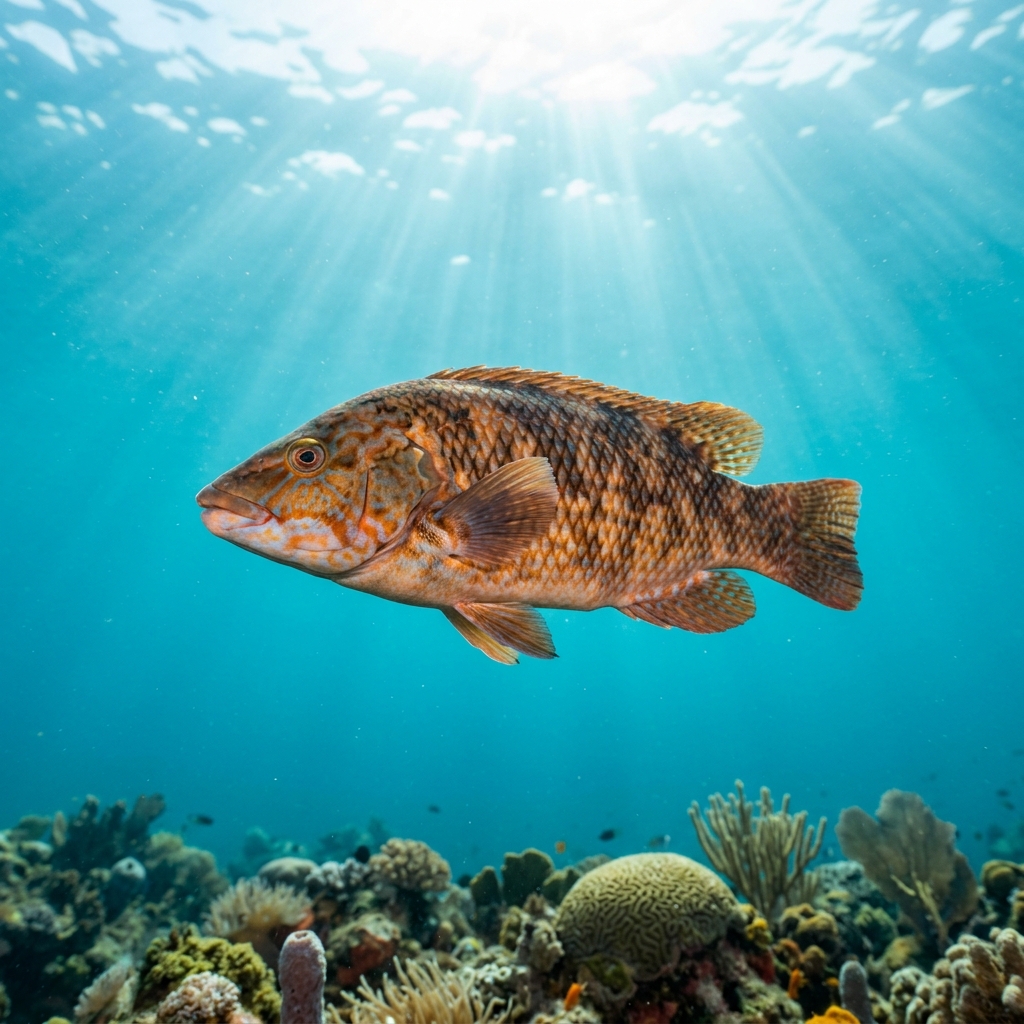
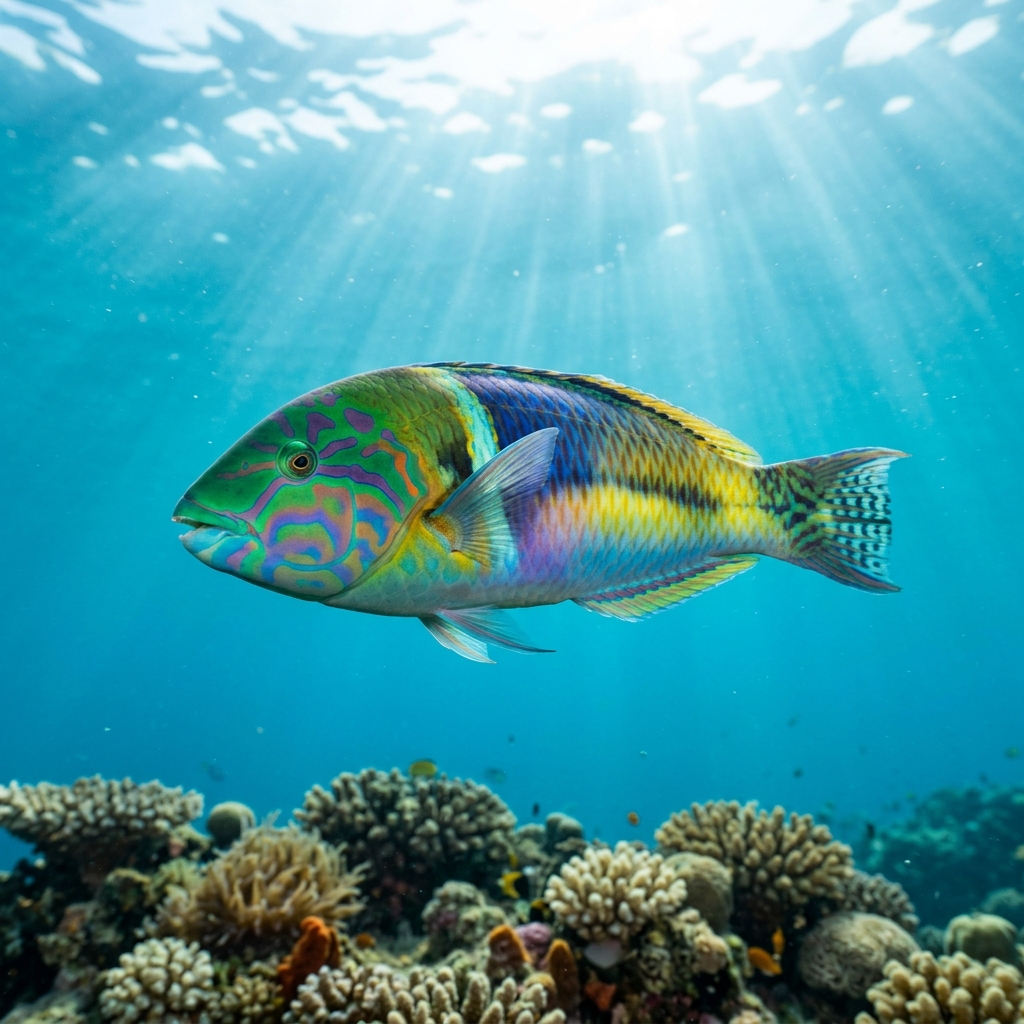
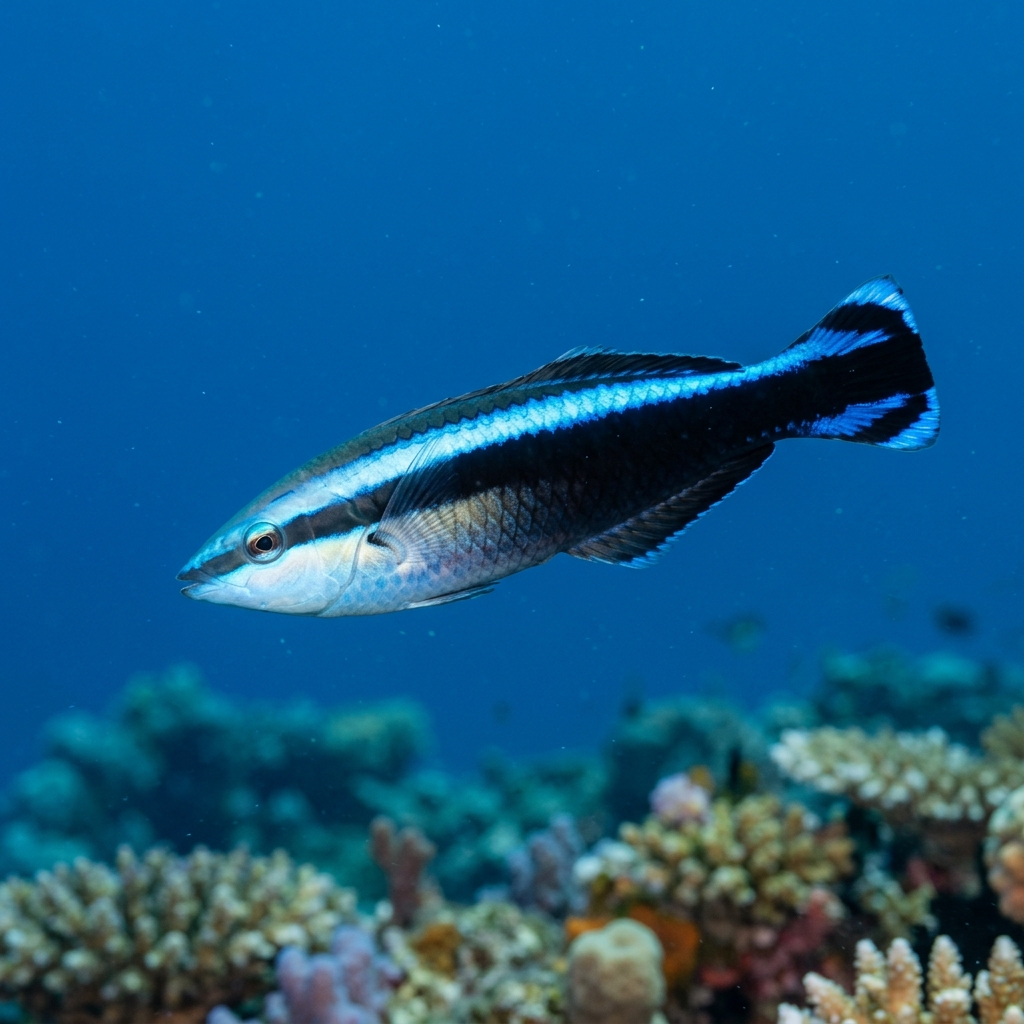
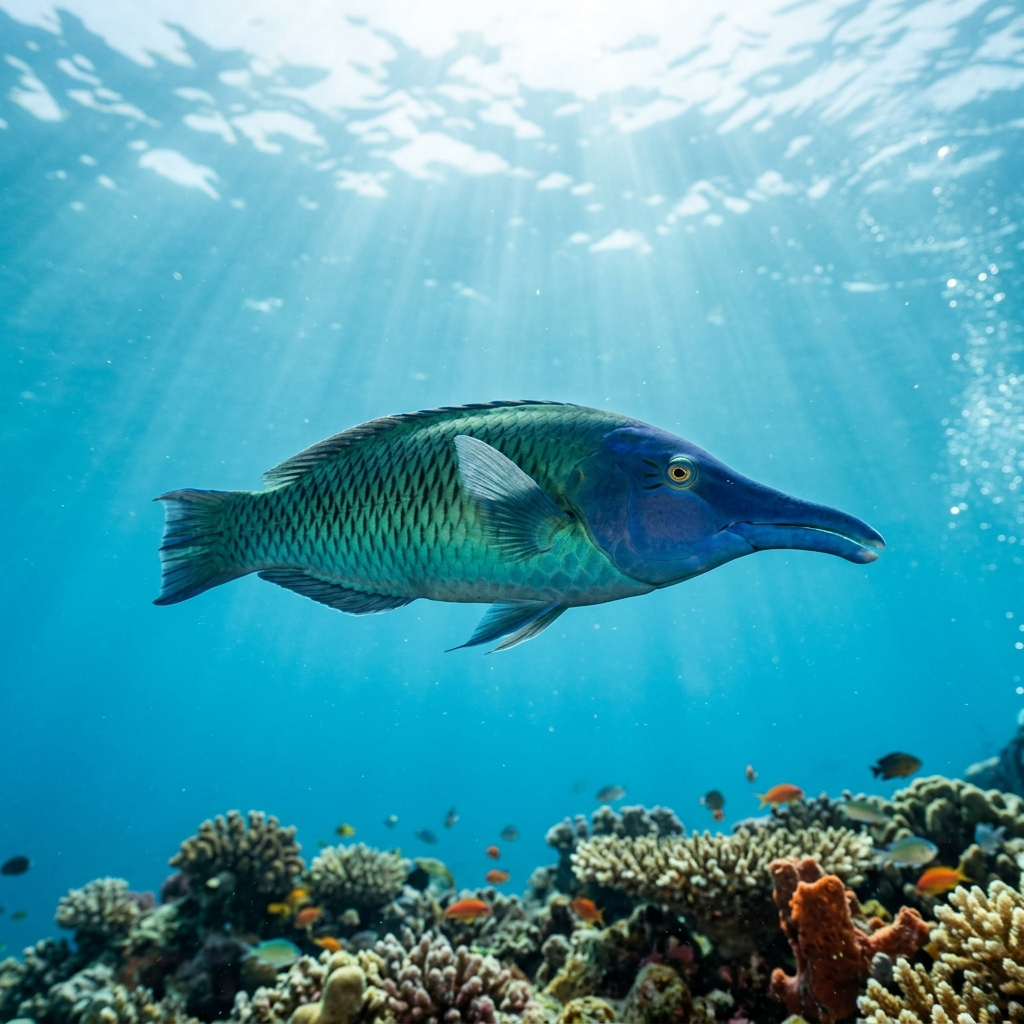
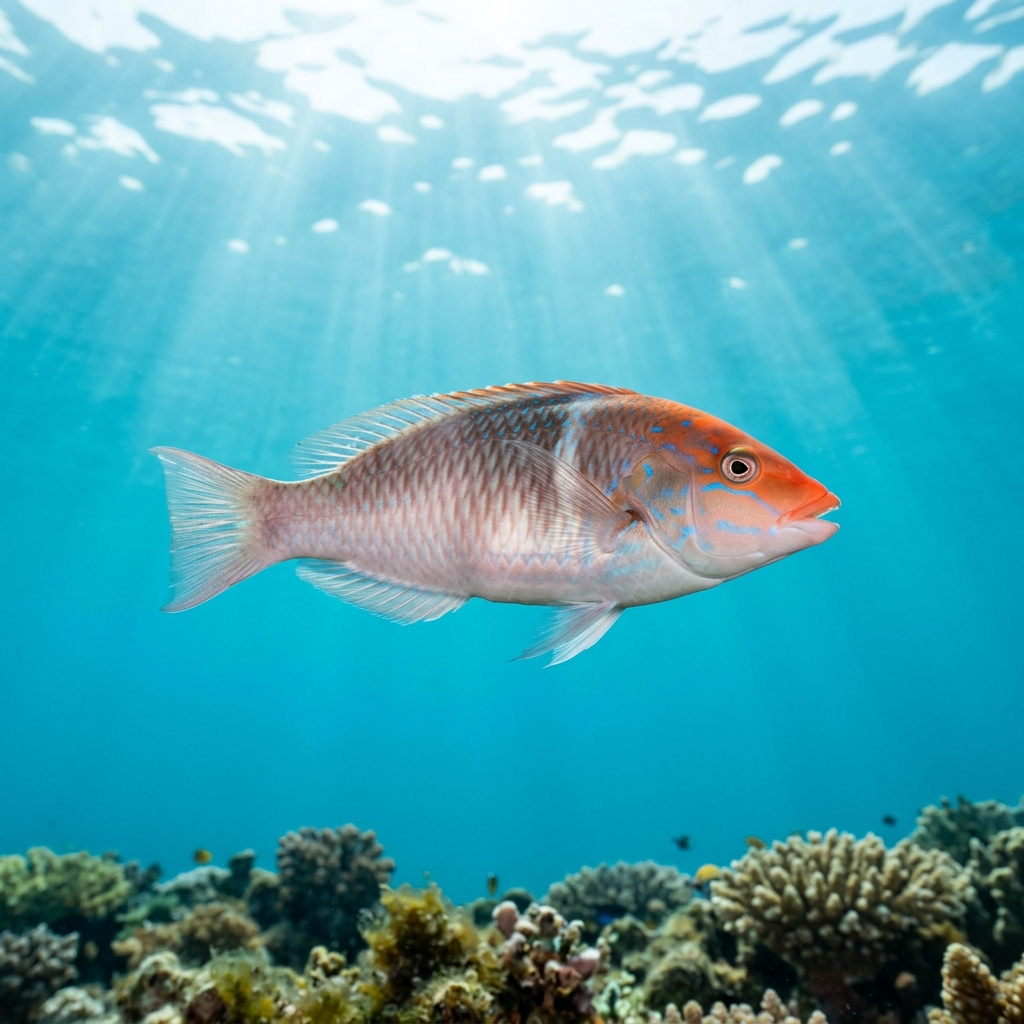
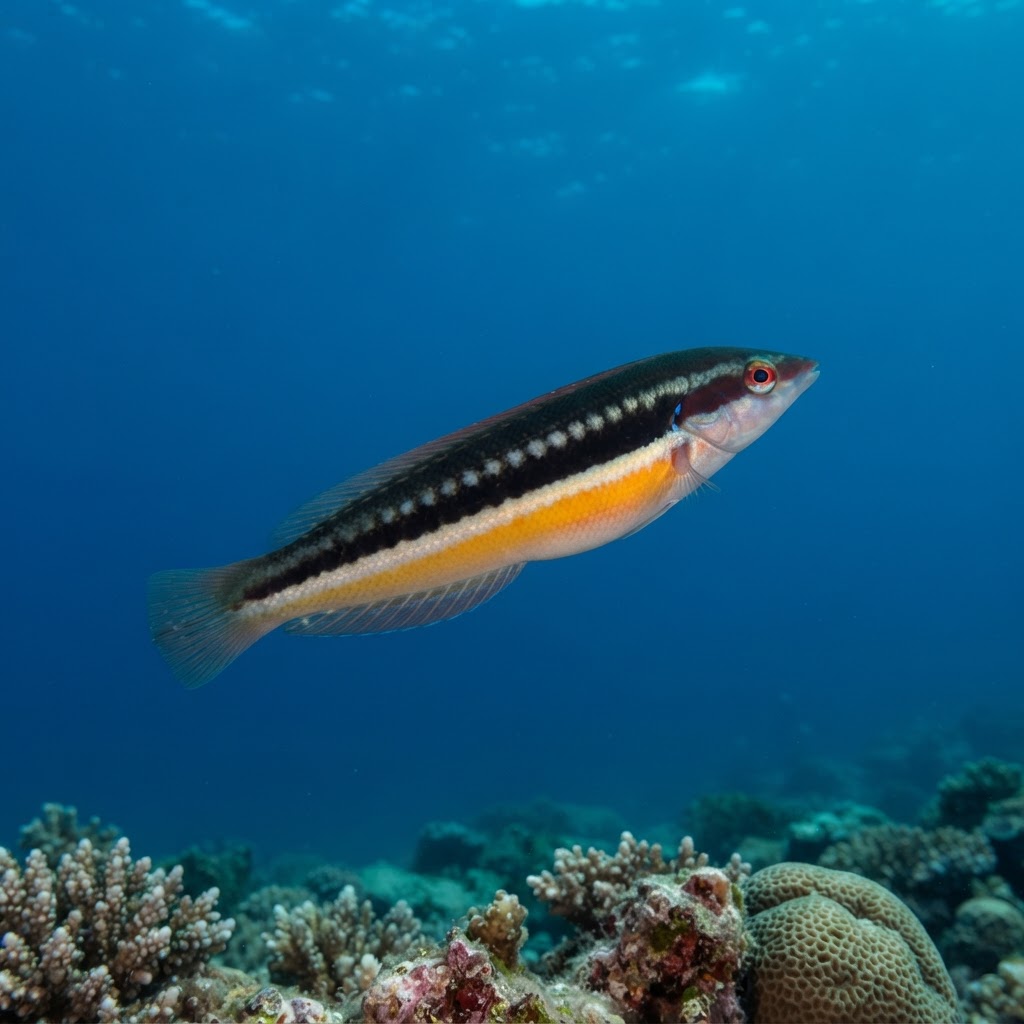
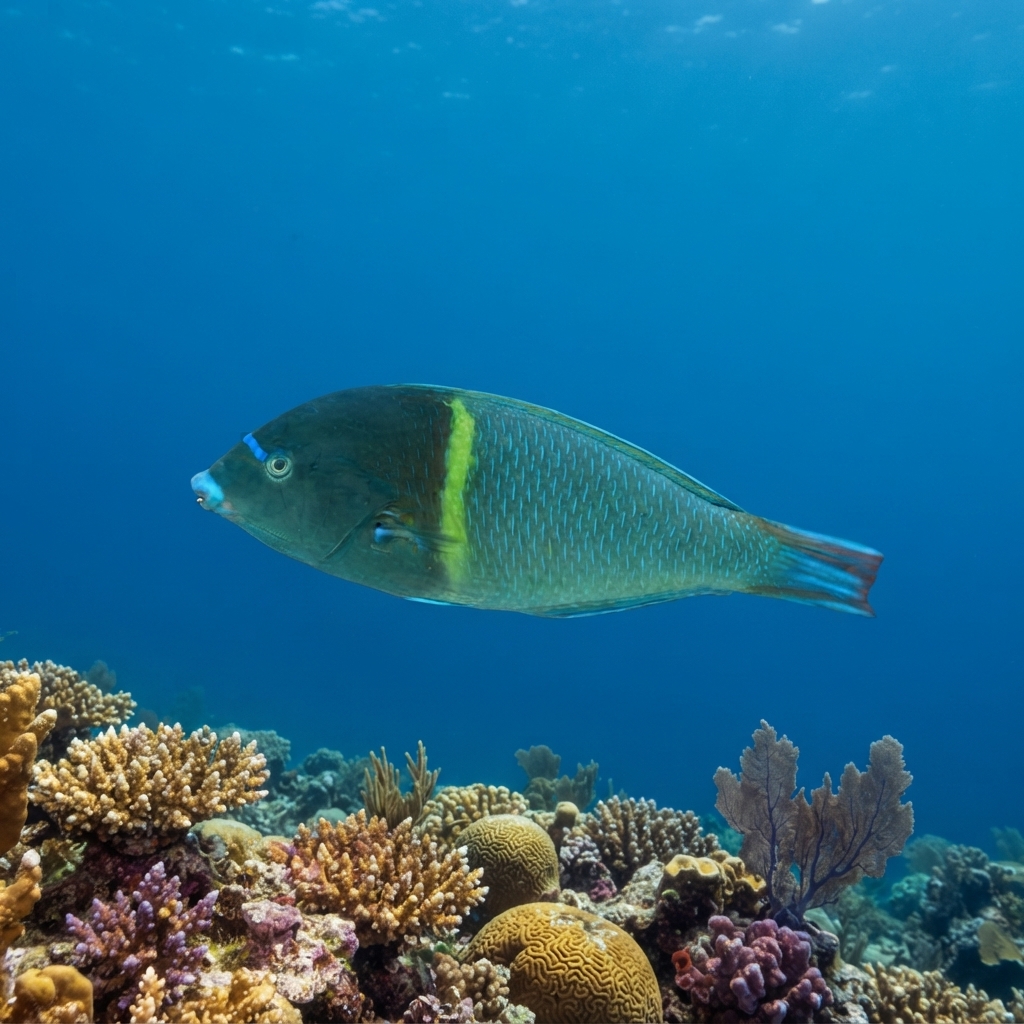
A stocky, elongated wrasse around 29 cm, with a dark brownish-green body scattered with small pale blue spots that catch the light as it swims. The head often shows a slightly different shade than the body, and the tail fin is squared off rather than pointed. Look for it picking over rubble patches or reef edges rather than hovering in open water like a cleaner wrasse.
Usually seen alone or loosely associating with other reef fish, working sand patches and rubble zones for small invertebrates rather than sitting still. It tends to keep a cautious distance from divers, darting off if approached quickly, so a slow, low approach gives the best look. Most sightings come from mid-morning to afternoon dives on reef slopes and flats in the 3 to 30 m range.
Like many wrasses, it buries itself in sand at night or when startled, a defensive habit that also makes it vanish quickly if you get too close during the day.
No clear seasonal pattern shows up in the data, and with a comfortable range of roughly 25 to 29 C, it is present on tropical and subtropical reefs throughout the year. Plan around good visibility and calm conditions at your chosen site rather than a particular month.
Most reliably logged in Mauritius, particularly around Coin de Mire and Grand Baie, and a strong presence through the Inner Islands of Seychelles. Also a solid sighting in New South Wales in Australia, Phuket in Thailand, KwaZulu-Natal in South Africa, and further afield at Alofi in Niue and Saipan in the Northern Mariana Islands.
Mapping where Bluespotted Wrasse is logged…
Mauritius and the Inner Islands of Seychelles are the strongest spots, with reliable sightings also reported in New South Wales, Australia, Phuket in Thailand, and KwaZulu-Natal in South Africa.
There is no strong seasonal pattern in sightings. It stays in water between roughly 25 and 29 C year-round, so reef dives at any time of year give a fair chance of an encounter.
Look for a dark, elongated body dotted with small pale blue spots and a squared-off tail. It is usually seen alone, foraging low over sand or rubble rather than swimming in open water.
They typically reach around 29 cm in length, making them a medium-sized reef wrasse rather than one of the giants in the family.
No. They are not considered dangerous to divers and will typically swim off if approached too quickly rather than react defensively.
They bury themselves in sand at night or when threatened, a common wrasse defence that can make them disappear in an instant if a diver gets too close during a dive.
Site and sighting data is aggregated from diver logs, iNaturalist and GBIF. For taxonomy and conservation status:
Bird Wrasses
3,632 sites