Arothron caeruleopunctatus
Uncommon but reliable in Sulawesi, Bali and Khao Lak reefs, this big-eyed puffer shows up on tropical dives year-round in 24.6-29 C water.
Safety warning
Its skin and internal organs carry tetrodotoxin, a potent nerve toxin, so it should never be touched or handled. The real underwater risk to divers is minimal if left alone; simply admire it from a comfortable distance and let it move on.
Handle with care
Toxic if eatenGeneral first-aid guidance, not a substitute for professional medical care. In an emergency, call your local emergency number.
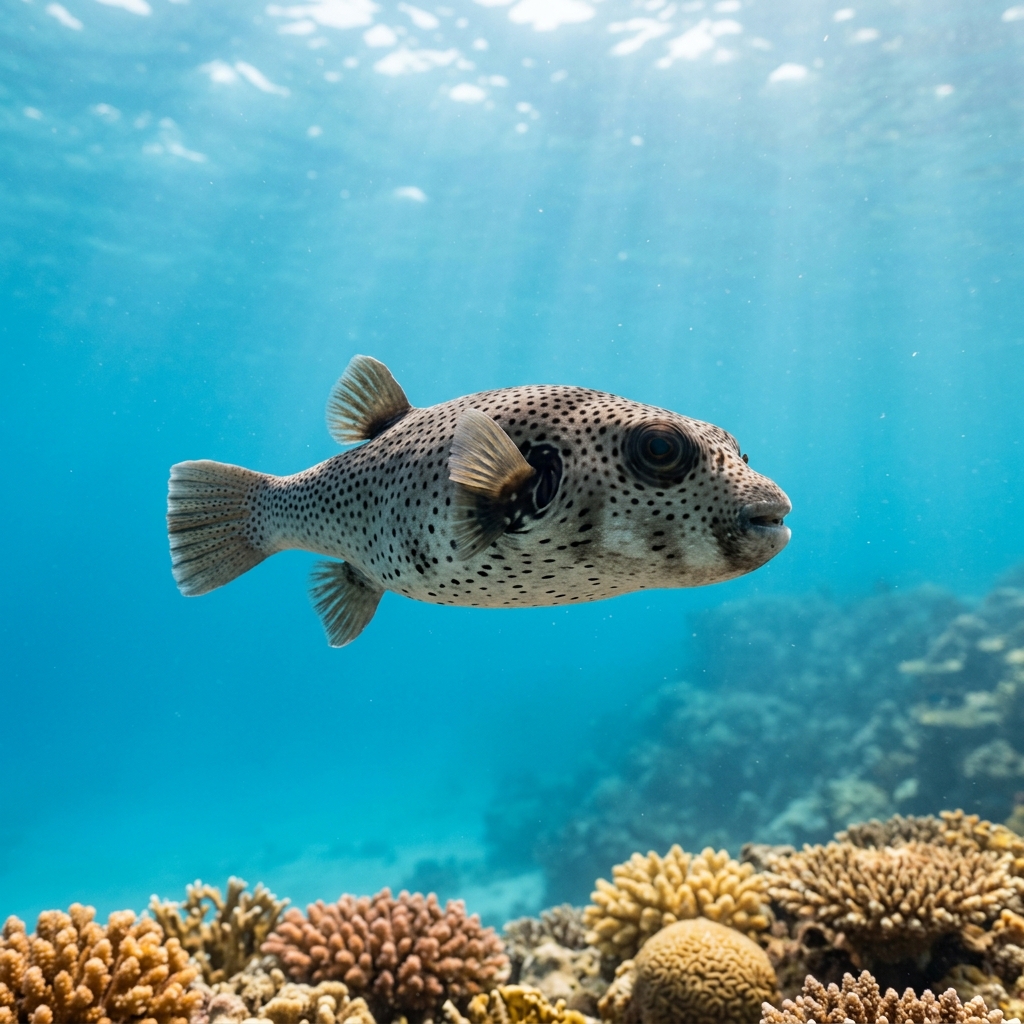
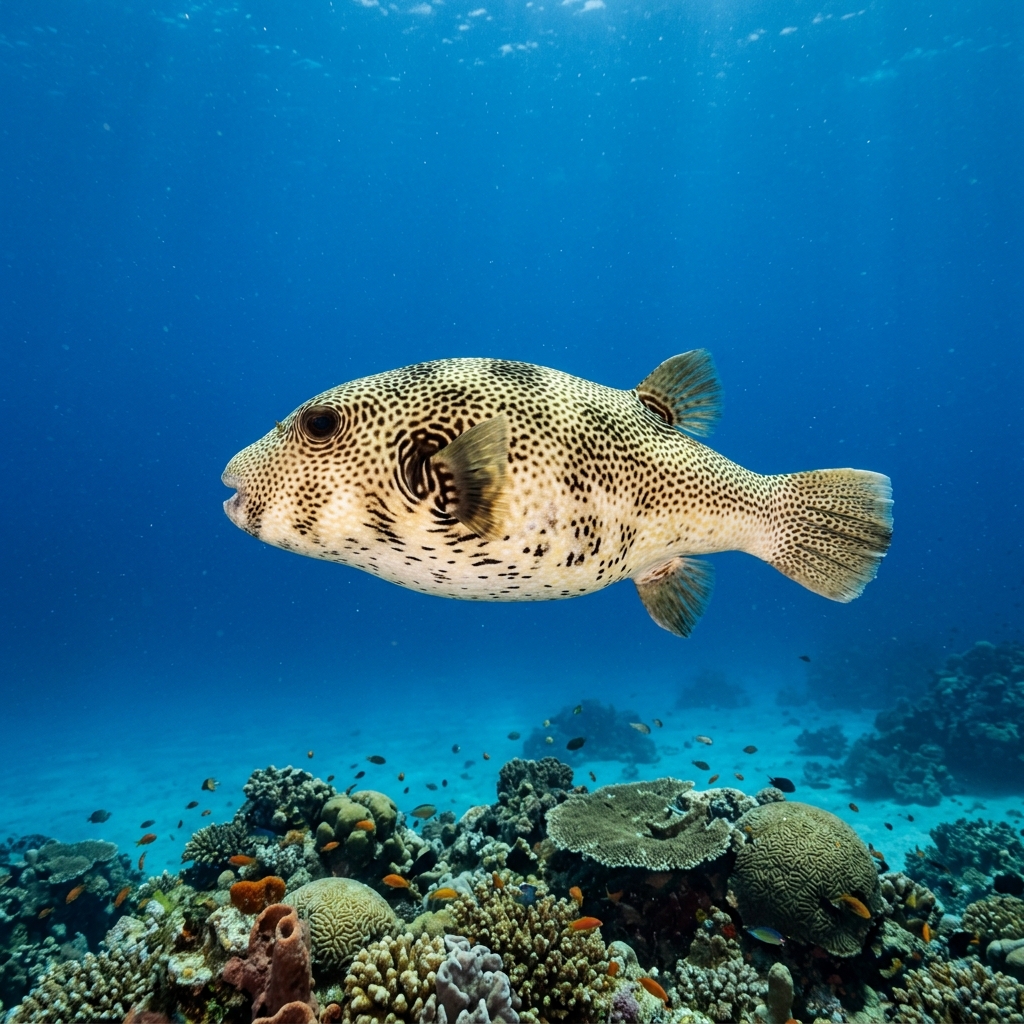
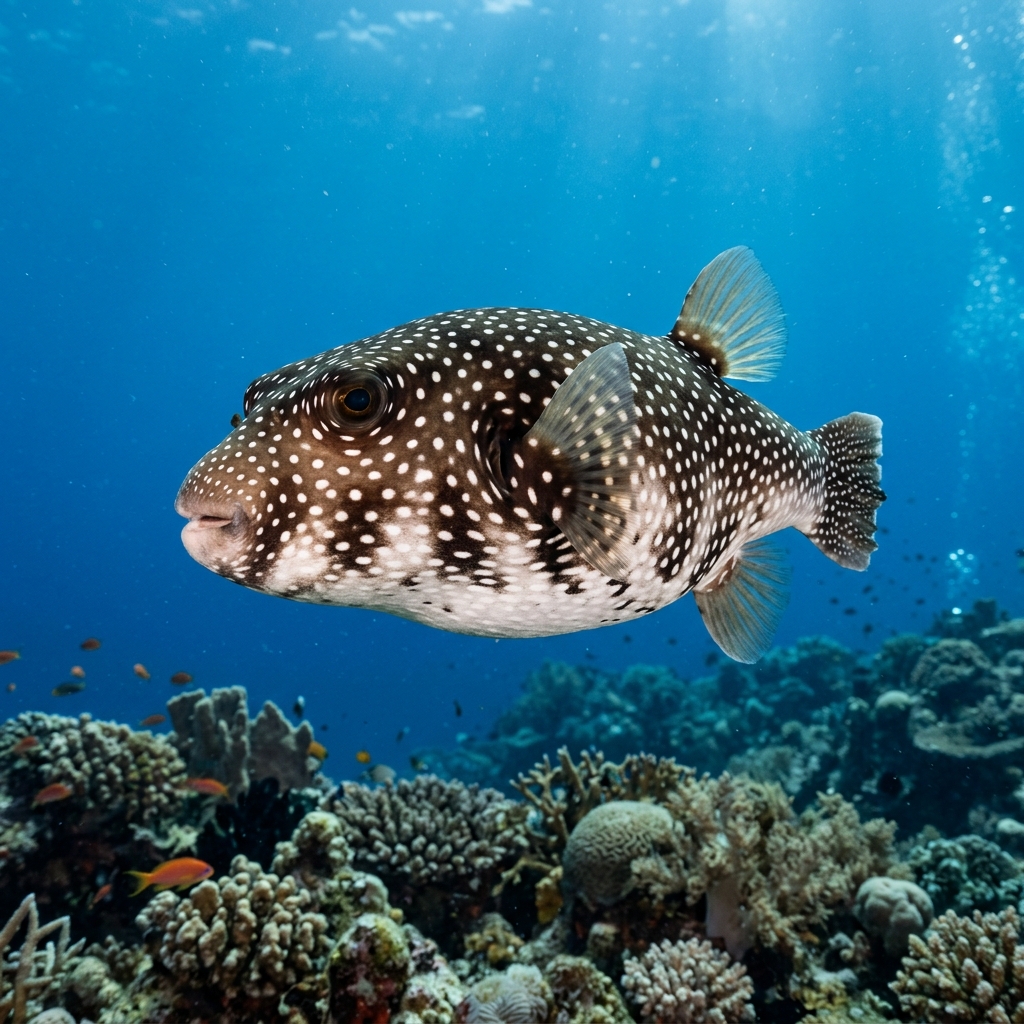
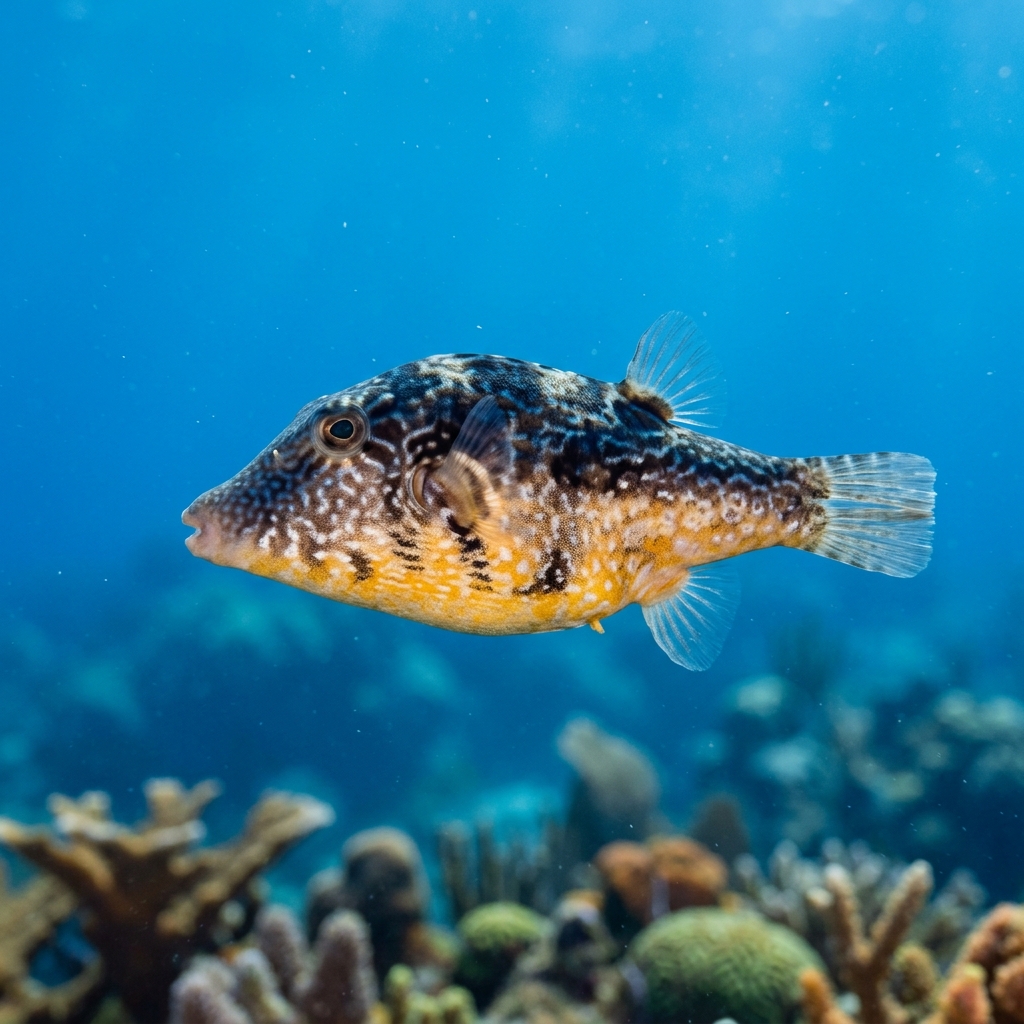
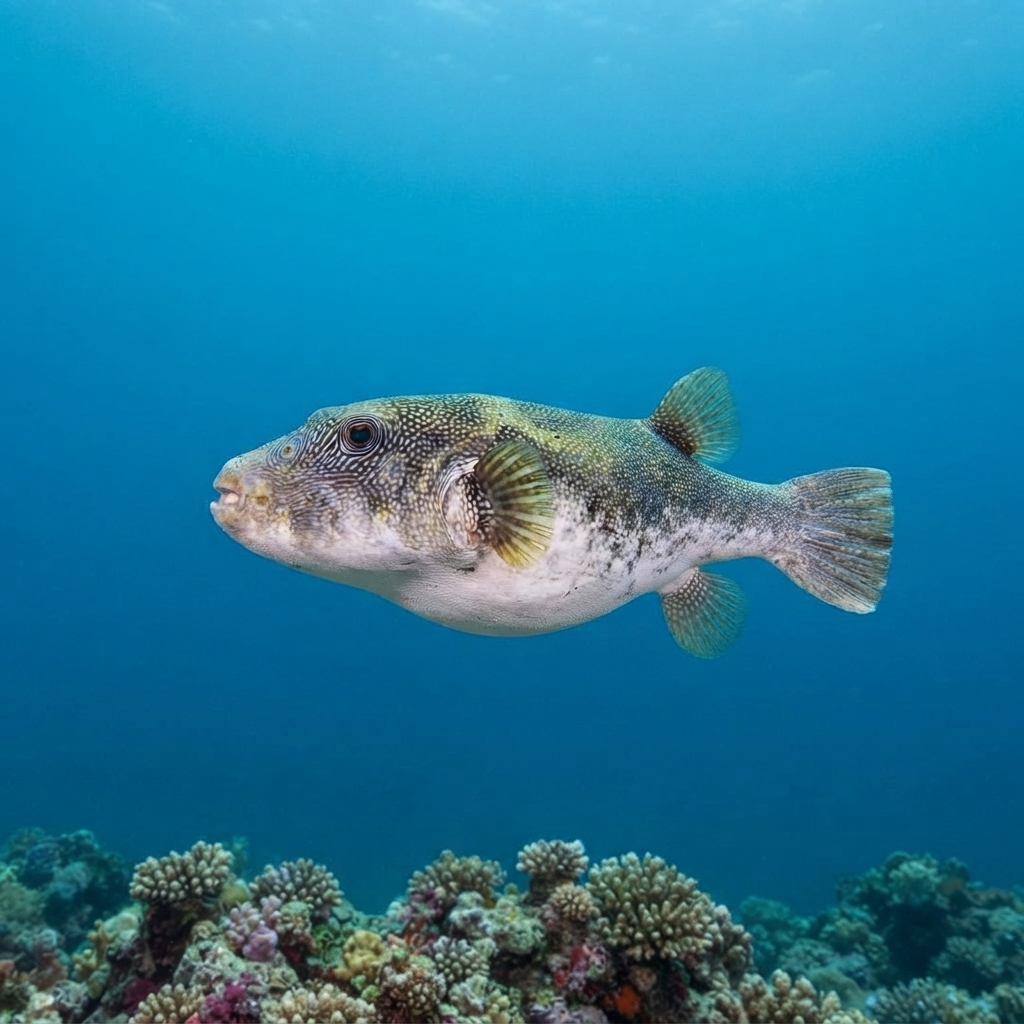
Grows to around 56 cm, with a rounded, inflatable body covered in fine blue-white spots over a grey to olive-brown background. Look for the pale ring around the eye and the dark blotch near the pectoral fin base, two features that separate it from plainer-faced relatives. It swims with slow, deliberate strokes of small fins rather than a tail-driven glide, which makes it easy to approach and study.
Usually spotted hovering solo near reef structure, coral bommies, or under ledges, moving at an unhurried pace that lets divers get a good look before it drifts off. It tends not to bolt at the sight of divers, though it keeps a bit of distance and won't tolerate close chasing. Most encounters are logged as uncommon rather than common, so a sighting feels like a real highlight of the dive rather than a given.
Like other Arothron pufferfish, it can inflate its body by gulping water when threatened, turning itself into a spiny, hard-to-swallow ball for any predator that gets too close.
No clear seasonal pattern shows up in the data, and with a comfortable range of 24.6 to 29 C it's present on tropical reefs through the year, so any month works for a dive trip.
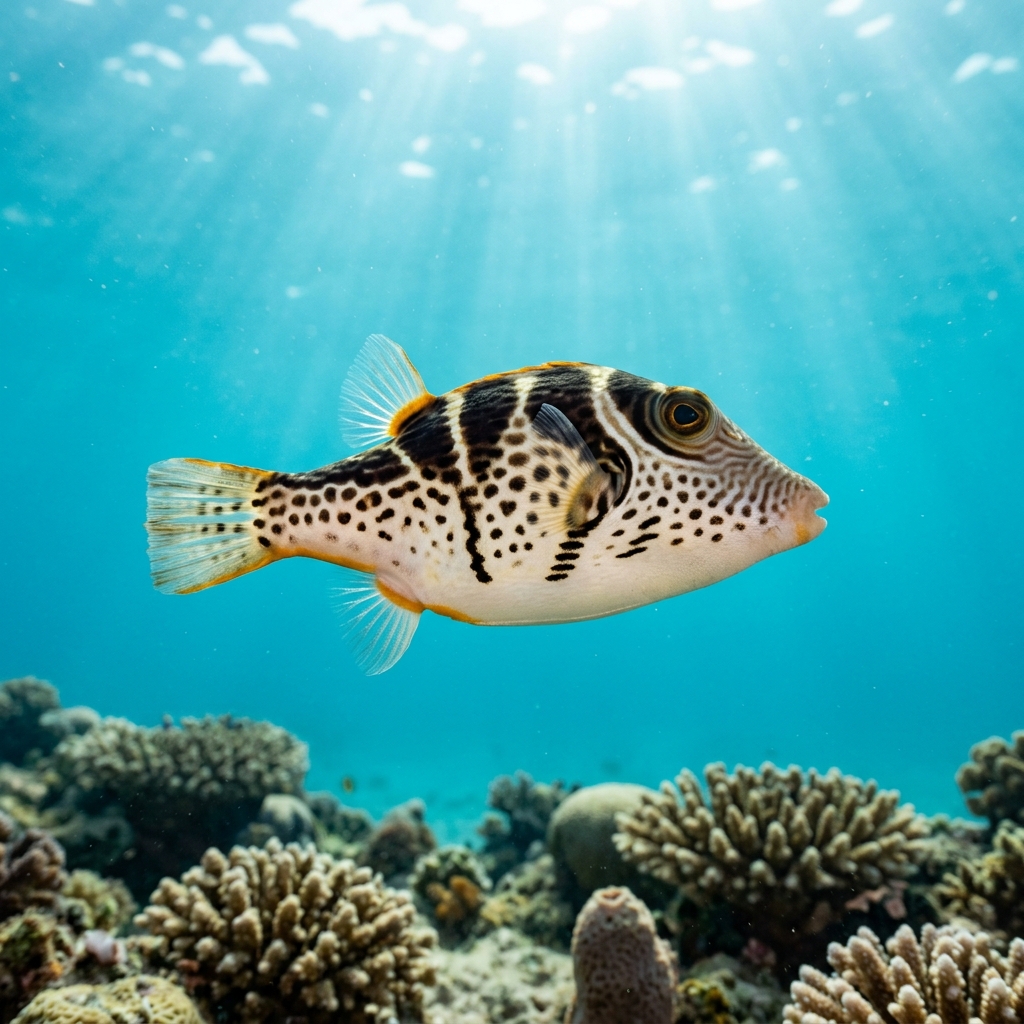
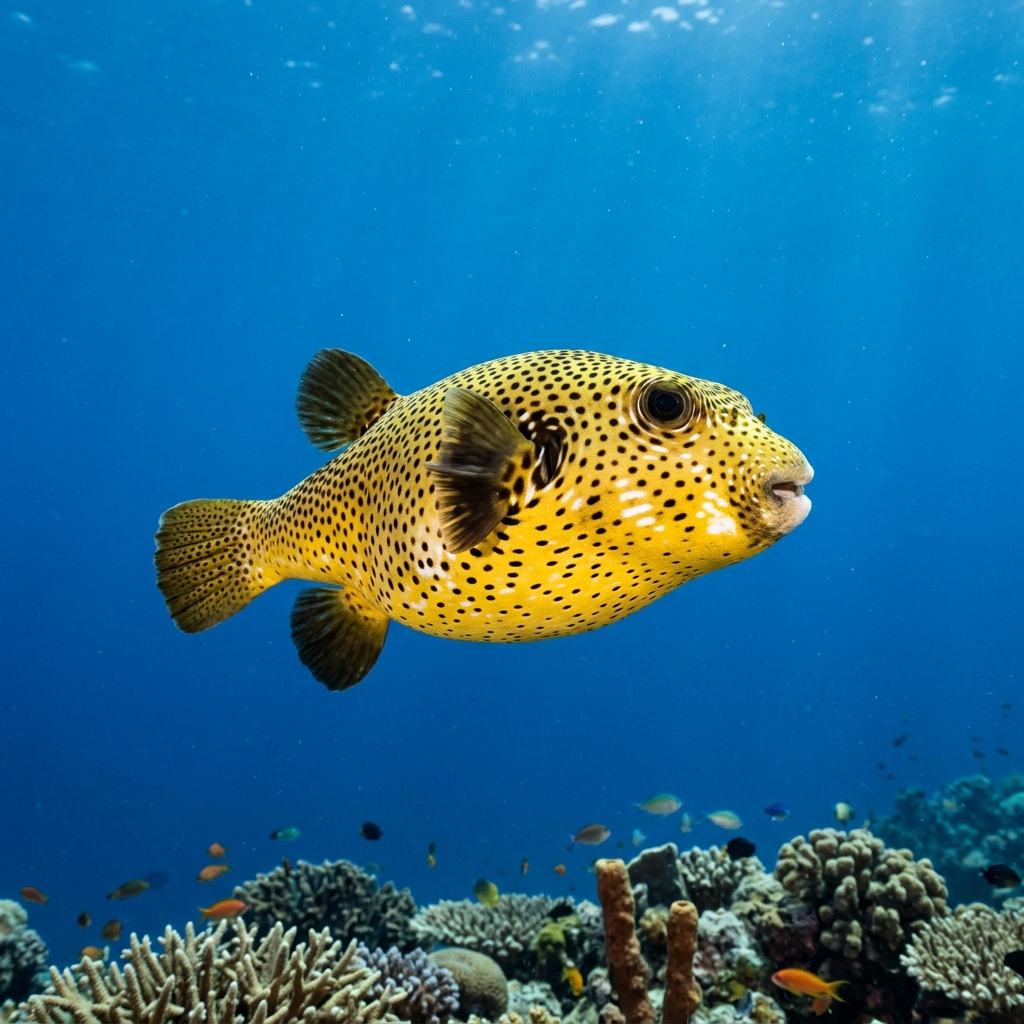
Reef neighbours a diver could mistake it for. Use the identification notes above to tell them apart.
Most reliably logged across Indonesia, particularly Sulawesi, Bali and Nusa Tenggara, with strong numbers also in the Philippines' Visayas region and Thailand's Khao Lak and Phuket coasts. Palau's Rock Islands and Malaysia's East Coast peninsula also produce steady sightings, so it's a realistic find across most Indo-Pacific reef systems.
Mapping where Bluespotted Puffer is logged…
Indonesia is the strongest bet, especially Sulawesi, Bali and Nusa Tenggara, followed by the Visayas in the Philippines and Khao Lak and Phuket in Thailand. Palau's Rock Islands and Malaysia's east coast also produce regular sightings.
There's no strong seasonal pattern in sightings, and it tolerates a wide temperature range of roughly 24.6 to 29 C, so it turns up on tropical reefs throughout the year.
They're not aggressive, but their skin and organs contain tetrodotoxin, a powerful toxin, so they should never be touched or handled. Left alone, they pose no real threat to a passing diver.
Look for a rounded, grey-brown body dotted with fine blue spots, a pale ring around the eye, and a dark blotch near the base of the pectoral fin. It grows up to about 56 cm and swims slowly using small fins rather than its tail.
They reach around 56 cm in length, making them one of the larger reef-associated pufferfish divers regularly encounter.
When threatened, they gulp water to inflate their bodies into a spiny ball, making themselves far harder for predators to bite or swallow.
Site and sighting data is aggregated from diver logs, iNaturalist and GBIF. For taxonomy and conservation status:
Valentini Pufferfish
2,830 sites