Stethojulis albovittata
Small, quick, and easy to overlook: find bluelined wrasse on reefs in the Maldives, Seychelles and the Red Sea in water around 25-29C.
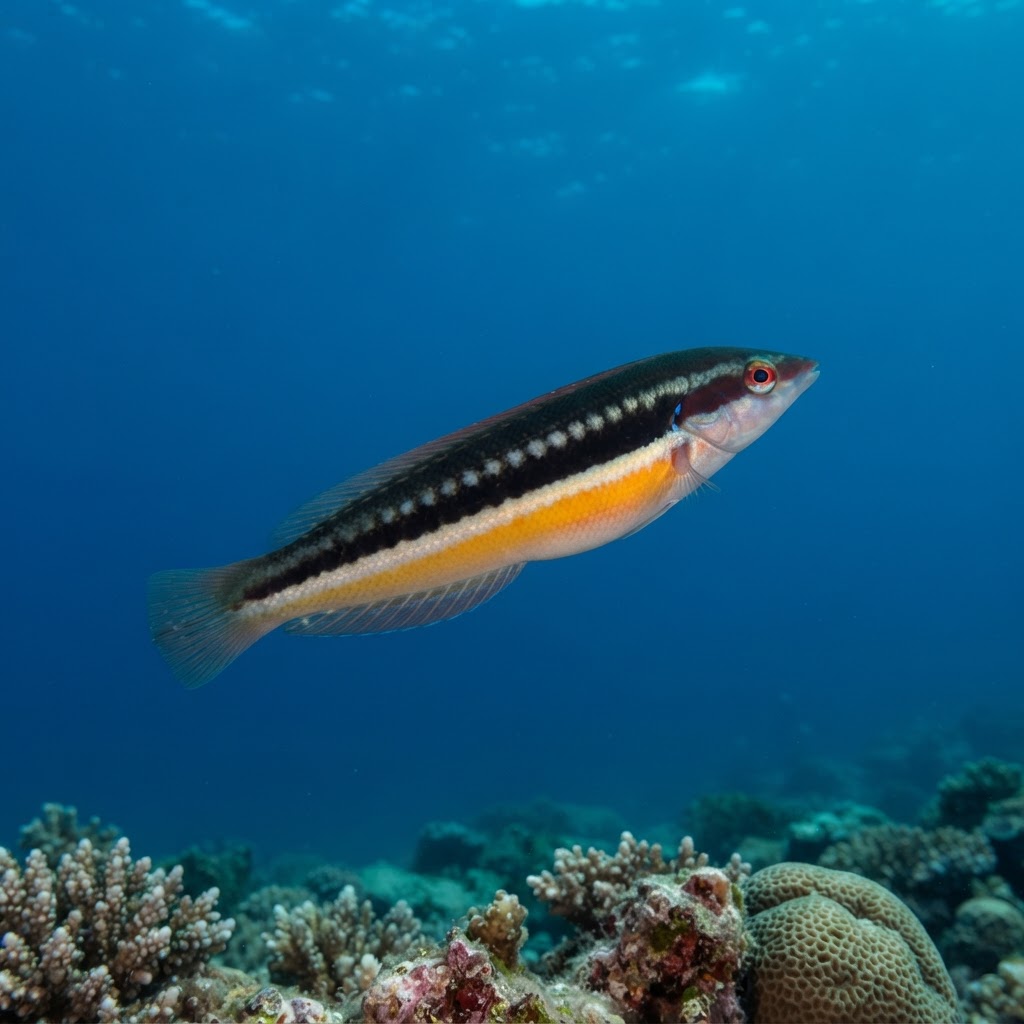
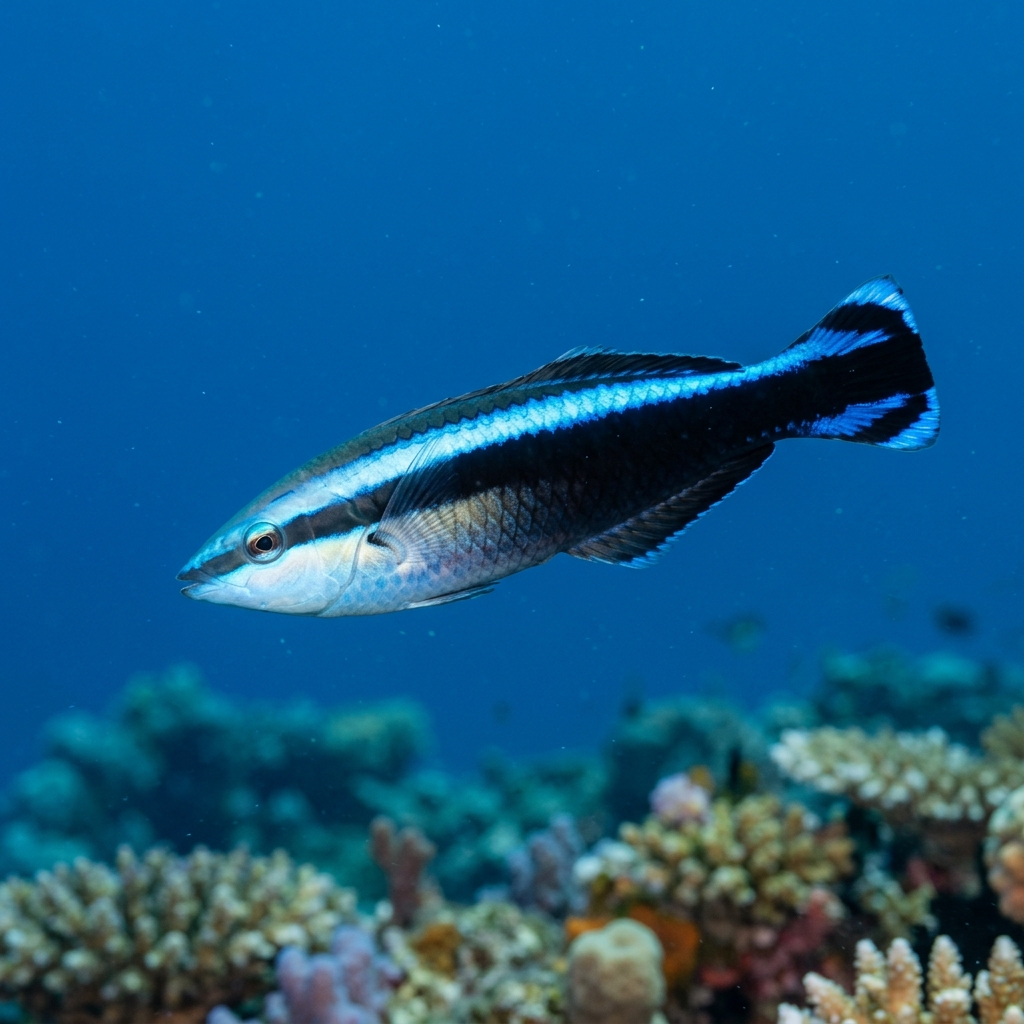
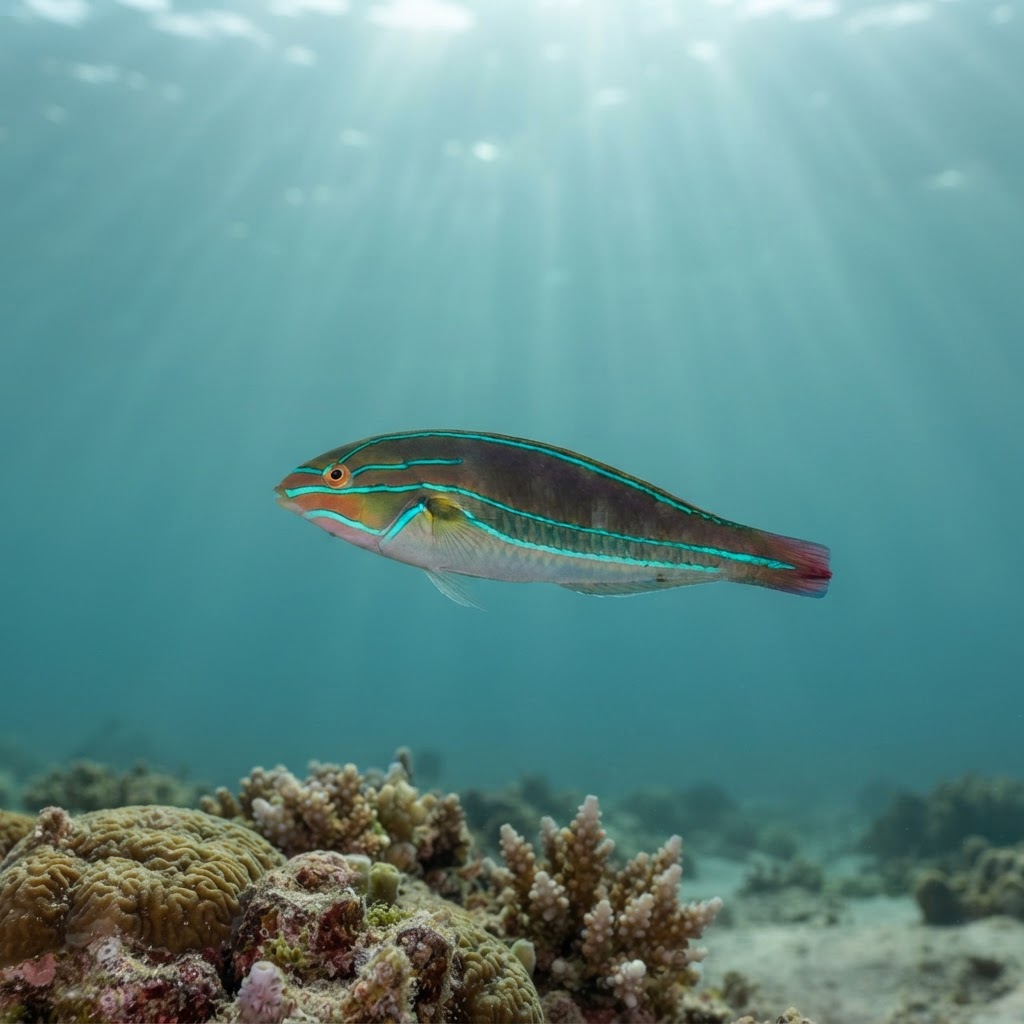
A small, torpedo-shaped wrasse rarely longer than 9 cm, with a greenish-brown body cut by several bright blue stripes running lengthwise from head to tail. The stripes catch the light as it darts between coral heads, which is usually the first thing that gives it away against the reef background. It moves in short, jerky bursts rather than gliding, typical of the smaller wrasse species.
Expect to see it picking over coral rubble and sand patches in the shallows, usually within the top 15 metres where light and small invertebrate prey are easiest to find. It is not shy exactly, but it rarely holds still, weaving through branching coral and darting for cover rather than approaching divers. Most sightings happen during the day on reef flats and slopes rather than deeper walls.
Like many wrasses, it hunts small invertebrates picked directly off the reef surface, using quick, precise bites rather than chasing prey in open water.
Comfortable across a 24.9 to 29.3 C range, so it stays on shallow reefs year-round with no strong seasonal pattern in the data. Plan around good visibility and calm shallows rather than a particular month.
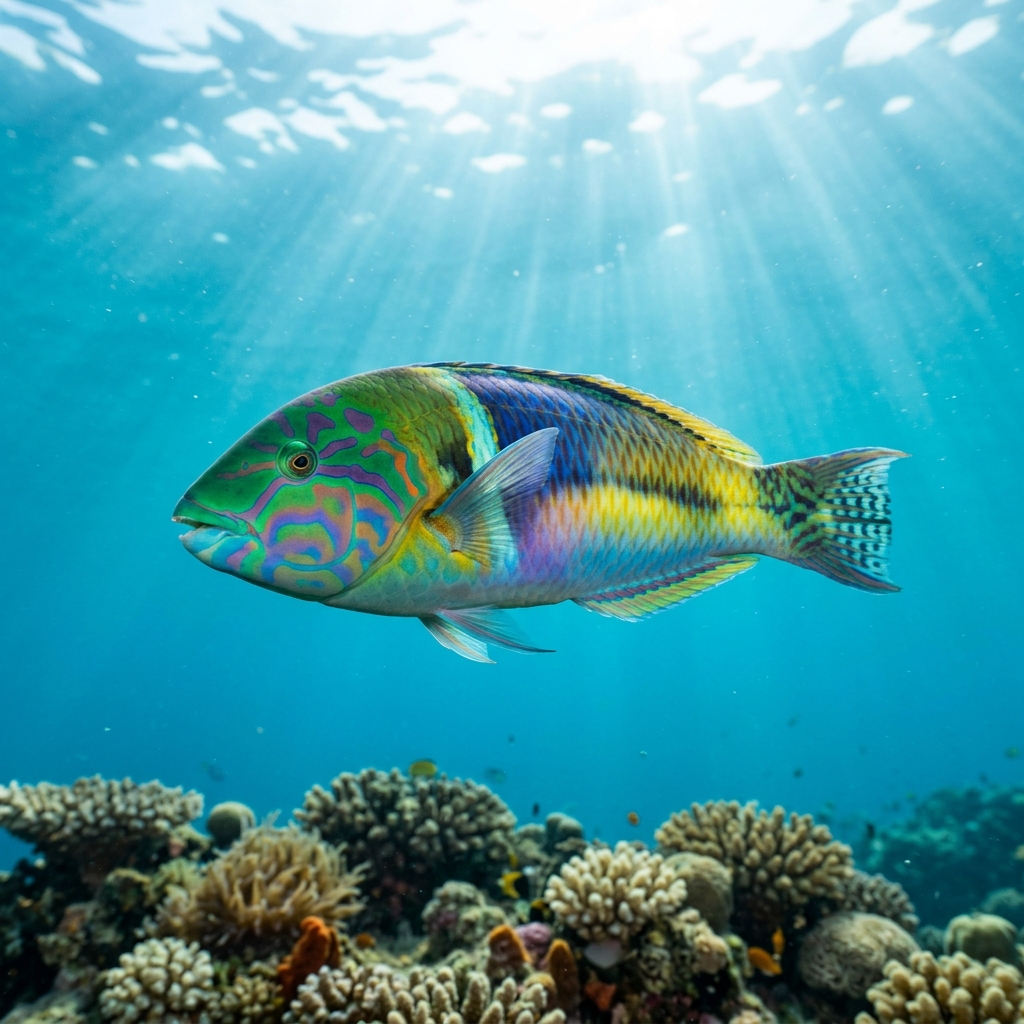
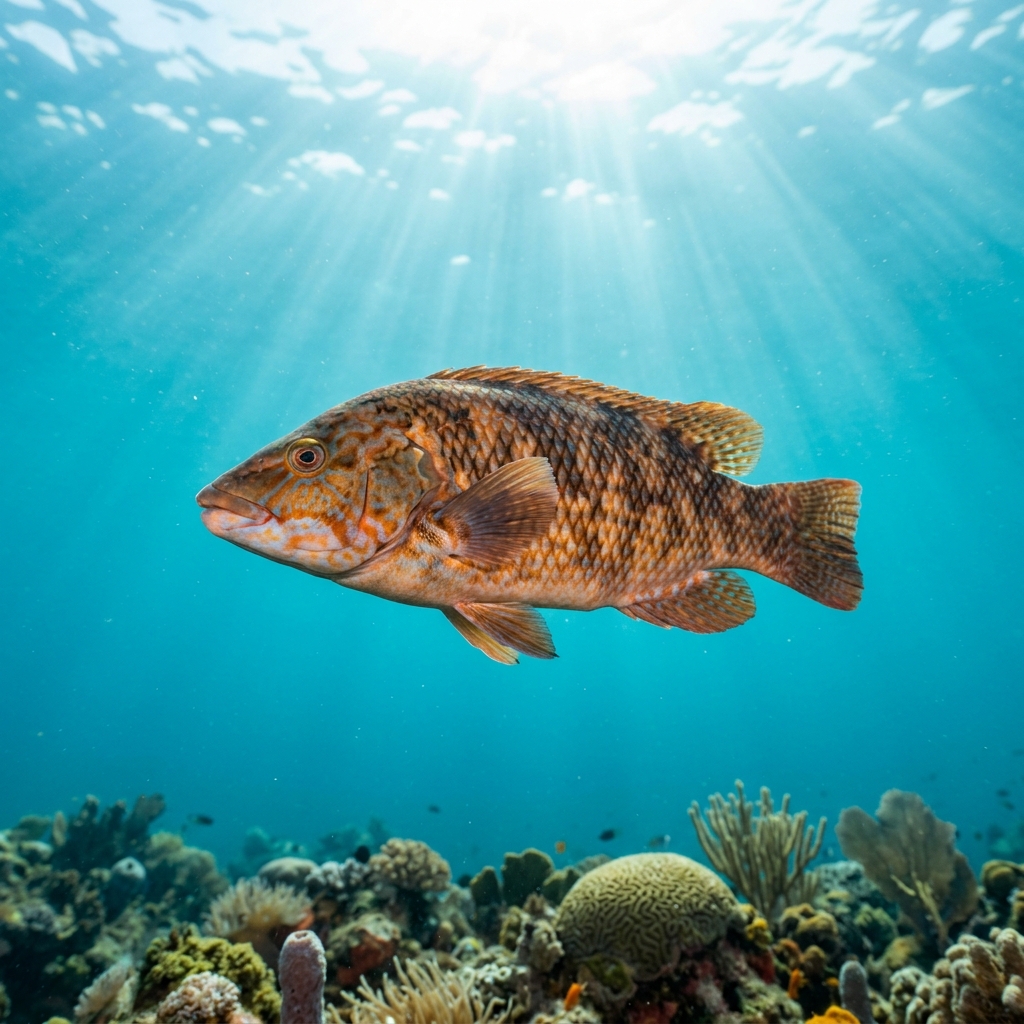
Reef neighbours a diver could mistake it for. Use the identification notes above to tell them apart.
Most commonly logged in the Maldives, particularly around the Central Atolls, and a reliable sighting in the Seychelles' Inner Islands. Strong populations also turn up in Egypt's South Sinai, Mauritius (notably Grand Baie and Trou aux Biches), Reunion's Saint-Leu, and the Red Sea coasts of Israel, Saudi Arabia and Jordan.
Mapping where Bluelined Wrasse is logged…
The Maldives and Seychelles are the strongest spots, especially the Central Atolls and Inner Islands. Egypt's South Sinai, Mauritius, and Reunion also have healthy populations, along with reefs in Israel, Saudi Arabia and Jordan along the Red Sea.
There is no strong seasonal pattern in sighting data, and its comfortable temperature range of roughly 25 to 29 C means it stays on shallow reefs throughout the year. Any time you are diving in its range should give you a decent chance.
Look for a small fish, under 10 cm, with a greenish-brown body marked by several distinct blue stripes running along its length. It moves in quick, darting bursts around coral rubble and sand patches rather than swimming smoothly.
They stay small, typically around 9 cm as adults, making them one of the more easily overlooked wrasses on a reef unless you are looking closely.
No, it poses no danger to divers. It is a small, reef-associated carnivore that feeds on tiny invertebrates and has no interest in interacting with people.
Site and sighting data is aggregated from diver logs, iNaturalist and GBIF. For taxonomy and conservation status:
Bird Wrasse
3,632 sites