Siganus puellus
Yellow face, blue-lined flanks: find this reef rabbitfish year-round in Raja Ampat, Sabah and Palau's Rock Islands.
Safety warning
The dorsal, anal and pelvic fin spines are venomous and can deliver a painful sting if you grab or corner the fish, so admire it from a distance and never attempt to touch or hand-feed it. A sting isn't typically life-threatening but causes sharp, lasting pain, so keep hands clear even when it's calm and slow-moving.
If you're stung
Venomous fin spinesGeneral first-aid guidance, not a substitute for professional medical care. In an emergency, call your local emergency number.
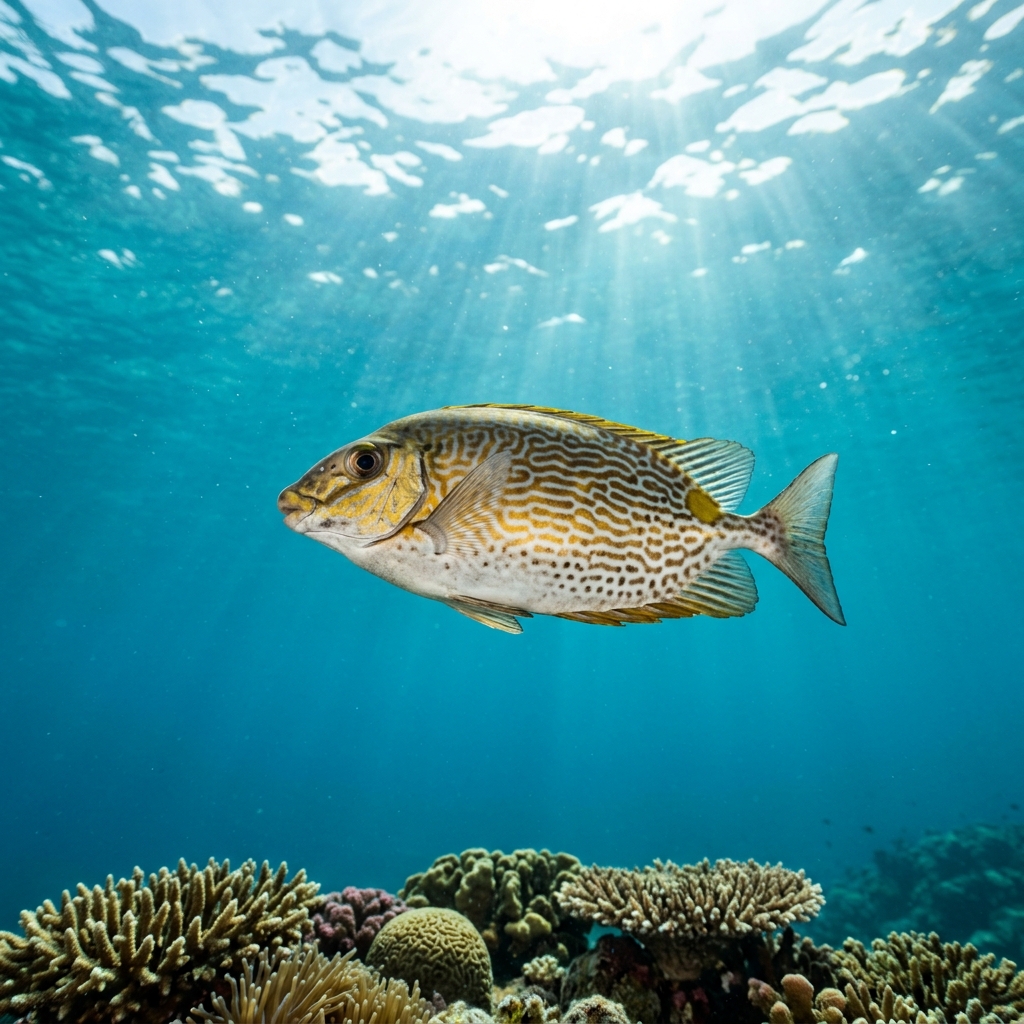
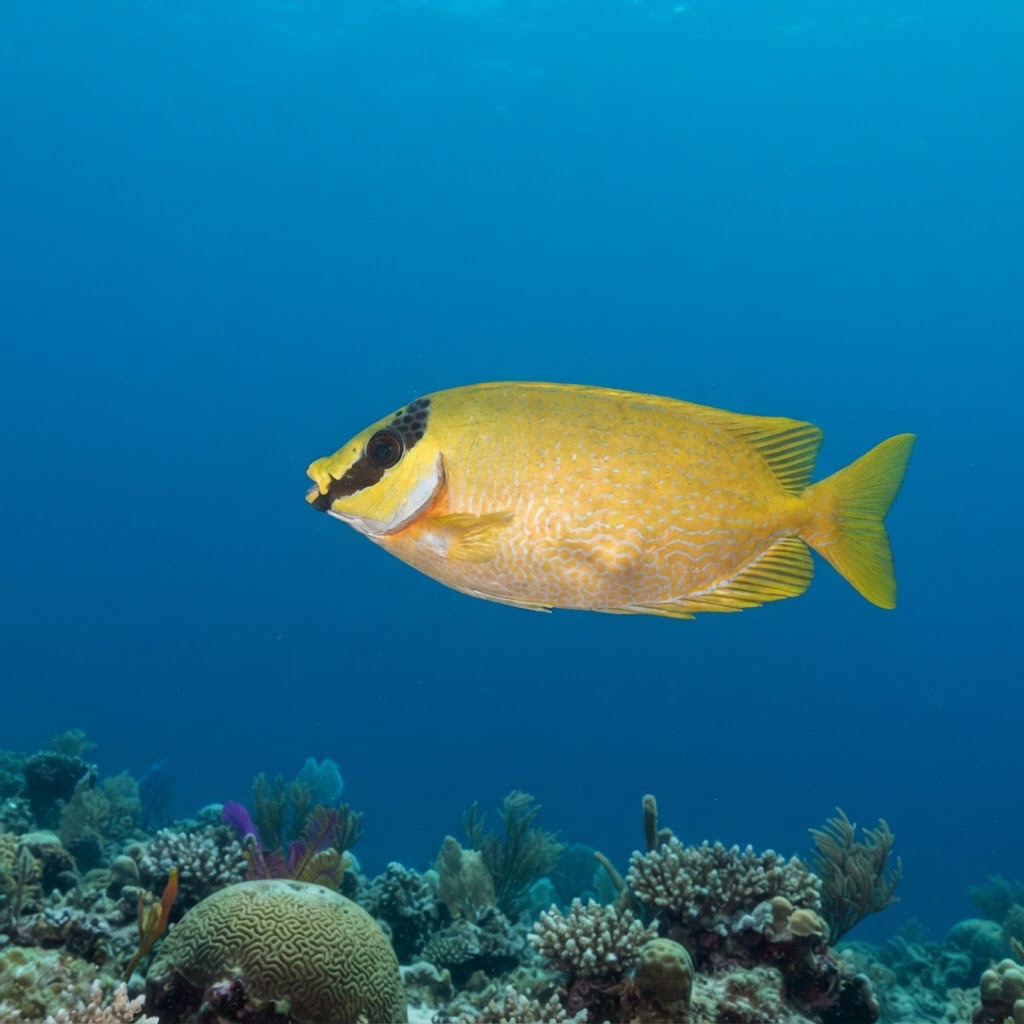
Grows to around 26 cm, with an oval, laterally flattened body that's easy to mistake for a butterflyfish at a glance. Look for the yellow face marked with wavy blue lines running back into a yellow body covered in fine blue horizontal stripes, plus a dark saddle-like patch near the tail base. It swims with slow, deliberate strokes rather than darting, which makes the pattern easy to study once you're close.
Usually seen browsing alone or in loose pairs over coral rubble and reef flats, picking at sponges and algae with unhurried, grazing movements. It tends to hold its distance from divers and will drift off into cover rather than bolt if you approach too fast, so a slow, low approach gives the best look at the blue-line pattern. Most sightings are during the day on shallow to mid-depth reef, well within recreational diving range.
Like other rabbitfish, it carries venomous spines in its dorsal, anal and pelvic fins that it erects when threatened rather than as an active weapon, so the danger is entirely in handling it, not in how it behaves around divers.
No clear seasonal pattern shows up in the sightings, and it sits comfortably in 24.7 to 29 C water, so it's a year-round reef fish wherever it occurs rather than a seasonal visitor.
Most reliably logged in Indonesia, especially Raja Ampat, Nusa Tenggara and Sulawesi, with strong numbers also out of Sabah in Malaysia and around Koror & Malakal and the Rock Islands in Palau. Divers also report it steadily in the Philippines, the Marshall Islands (Kwajalein Atoll) and Timor-Leste's Atauro Island, usually as an uncommon but findable reef resident rather than a guaranteed spot.
Mapping where Bluelined Rabbitfish is logged…
Indonesia is the strongest bet, particularly Raja Ampat, Sulawesi and Nusa Tenggara, followed by Sabah in Malaysia and Palau's Koror & Malakal and Rock Islands. It also turns up steadily in the Philippines, Timor-Leste's Atauro Island and Kwajalein Atoll in the Marshall Islands.
There's no strong seasonal pattern in sightings, and it lives comfortably in water from about 25 to 29 C, so it's present on tropical reefs throughout the year.
They carry venomous fin spines that sting painfully if handled, but they're not aggressive and pose no risk if you simply watch and don't touch. Keep hands away, especially if the fish looks cornered or agitated.
Look for a yellow face traced with wavy blue lines, a yellow body covered in fine blue horizontal stripes, and a dark saddle patch near the tail. It swims slowly over reef and rubble, usually alone or in pairs.
They typically reach around 26 cm in length, a mid-sized reef fish easily spotted once you know its blue-and-yellow pattern.
The name comes from their small, rounded mouth and grazing habit, nibbling at sponges and algae on the reef much like a rabbit browsing on land, rather than any resemblance in shape.
Site and sighting data is aggregated from diver logs, iNaturalist and GBIF. For taxonomy and conservation status:
Soldierfish
3,612 sites